
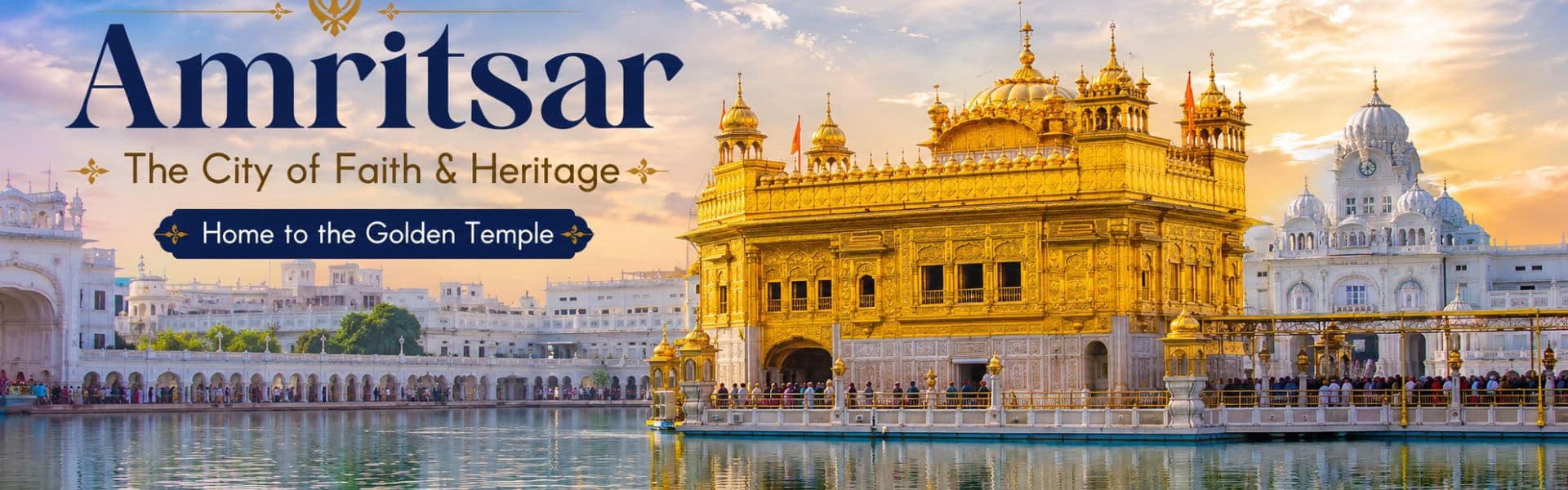
Amritsar is the spiritual centre of Sikhism, built around the Golden Temple (Harmandir Sahib) in the Indian state of Punjab, close to the border with Pakistan. Most people come for the temple itself, but the city holds together as a destination because of what sits around it: Jallianwala Bagh, the Partition Museum, and the Wagah Border ceremony are all within easy reach. This guide covers what the Golden Temple visit actually involves, what else is worth your time in Amritsar, and how to plan two days here properly.
Why Visit Amritsar
The Golden Temple is Sikhism's holiest shrine, and it functions very differently from most religious sites travellers visit in India. It's open around the clock, entry is free, and the temple's langar — a community kitchen that serves free meals to everyone regardless of religion or background — feeds an enormous number of people every day, entirely through volunteer labour. Beyond the temple, Amritsar carries real historical weight: Jallianwala Bagh, the site of the 1919 massacre, and the Partition Museum, documenting the 1947 partition of India and Pakistan, both sit within the old city, a short walk from the temple complex.
The Golden Temple: What to Know Before You Go
The temple complex is built around the Amrit Sarovar, a sacred pool, with the gold-plated sanctum — the Harmandir Sahib itself — set on a platform in the middle of the water, connected by a causeway. The Guru Granth Sahib, Sikhism's central scripture, is kept inside. The Akal Takht, the highest seat of temporal authority in Sikhism, stands within the same complex.
- Entry: Free, and the complex is open 24 hours a day.
- Dress code: Head covering is required for everyone, and shoes must be removed before entering — free cloth head coverings are usually available near the entrance if you don't bring your own.
- The langar: The community kitchen serves free meals continuously; visitors are welcome to eat and, if they want, help with the process of preparing or serving food.
- Best time of day: Early morning and late evening are quieter and the temple is lit at night, which is when it's most photographed — but expect meaningful crowds at almost any hour, since this is a working religious site, not a museum.
Other Places to Visit in Amritsar
Jallianwala Bagh
A public garden a short walk from the Golden Temple, and the site of the 1919 massacre in which British Indian Army soldiers fired on an unarmed crowd. It's now a memorial with a museum documenting the event. Plan for a reflective visit rather than a quick photo stop.
Partition Museum
Located in the Town Hall near the Golden Temple, this museum documents the 1947 partition of India and Pakistan through personal accounts and artefacts. It's one of the more substantive historical stops in the city and pairs naturally with Jallianwala Bagh on the same day.
Wagah Border
The Wagah–Attari border crossing, roughly 30 km from Amritsar, hosts a daily retreat ceremony at sunset where soldiers from India and Pakistan perform a coordinated flag-lowering routine in front of crowds on both sides. It's a genuinely unusual spectacle and one of the most-repeated recommendations for Amritsar visitors — but it involves a return trip out of the city and can mean long queues for seating, so factor in a full afternoon and evening.
Best Time to Visit Amritsar
October to March is the most comfortable stretch, with mild days and cool evenings. Summer (April to June) gets very hot on the Punjab plains, often into the mid-40s Celsius, which makes daytime sightseeing genuinely tough. The monsoon (July to September) brings humidity and periodic heavy rain. If your main goal is comfortable walking between sites, winter is the clear choice.
How to Get to Amritsar
- By air: Sri Guru Ram Das Jee International Airport is about 11 km from the city centre, with domestic and some international connections.
- By rail: Amritsar is well connected by train to Delhi and other major North Indian cities; several express trains run the Delhi–Amritsar route.
- By road: Amritsar sits on the main highway network connecting Punjab to Delhi and Chandigarh, making it a feasible stop on a longer North India road itinerary.
How Many Days Do You Need
Two days is a reasonable minimum: one day for the Golden Temple, Jallianwala Bagh, and the Partition Museum, all within walking distance of each other in the old city, and a second day (or a half-day extension) built around the Wagah Border ceremony in the late afternoon and evening. If you're short on time, the Golden Temple and Jallianwala Bagh alone can be covered in a single focused day.
Food and Local Experiences
Amritsar's food is a big part of why people extend their stay. Amritsari kulcha — a stuffed, buttery flatbread — is the dish most associated with the city, usually served with chole (spiced chickpeas). Lassi here tends to be thick and generously topped with butter, and Punjabi staples like sarson da saag with makki di roti show up widely, especially in winter. The old city's lanes around the Golden Temple are dense with small eateries worth wandering into rather than planning around.
Travel Tips
- Cover your head and remove your shoes before entering the Golden Temple complex — this applies to everyone, regardless of religion.
- If you plan to eat at the langar, be ready to sit on the floor in long communal rows, which is part of the tradition of equality the langar represents.
- For the Wagah Border ceremony, arrive early — seating fills up, particularly on weekends and around Indian public holidays.
- Photography is generally fine around the temple's outer areas, but be mindful and respectful near the inner sanctum and during acts of worship.
- Summer heat is intense; if you're visiting between April and June, plan sightseeing for early morning or evening and rest during the hottest hours.
Common Mistakes to Avoid
- Rushing the Golden Temple visit — it rewards slowing down, whether that's sitting by the sarovar for a while or spending time in the langar hall rather than just walking through.
- Skipping the Partition Museum because it sounds heavy — it's one of the more well-curated historical museums in North India and adds real context to the region.
- Underestimating travel time to Wagah Border and back, especially with ceremony crowds affecting the return journey.
- Not bringing a head covering, though this is a minor issue since they're usually provided free at the temple entrance.
Who Is Amritsar Good For
Amritsar works well for families, solo travellers, and pilgrims alike. The Golden Temple in particular is welcoming to visitors of any or no religion, and the flat, walkable old city makes it manageable for most fitness levels. For travellers of Sikh or Punjabi heritage visiting from abroad, Amritsar is often a deeply personal stop rather than just a sightseeing one — if that's part of your trip, our NRI travel services page covers practical guidance relevant to diaspora visitors returning to India.
Planning the Practical Side
If you're travelling from outside India, check current visa requirements well ahead of booking flights. A currency converter and trip budget calculator are useful for working out day-to-day costs, and if Amritsar is one stop on a longer North India route, the Itinerary Planner can help you sequence it against other cities. Check the weather forecast before you travel, particularly if your visit falls close to summer, when heat can affect how much walking is realistic in a day.
Frequently Asked Questions
Is the Golden Temple free to visit?
Yes. Entry is free and the complex is open 24 hours a day.
What should I wear to visit the Golden Temple?
Modest clothing, with your head covered and shoes removed before entering. Free head coverings are typically available near the entrance.
How many days do I need in Amritsar?
Two days covers the Golden Temple, Jallianwala Bagh, the Partition Museum, and the Wagah Border ceremony comfortably. One focused day is enough if you're only prioritising the Golden Temple and Jallianwala Bagh.
Is the Wagah Border ceremony worth the trip?
Most visitors find it worthwhile as a genuinely unusual spectacle, though it requires a round trip of roughly an hour each way from Amritsar and involves crowds and queues for seating.
Can non-Sikhs eat at the langar?
Yes. The langar serves free meals to everyone regardless of religion or background, and visitors are welcome to join.
What is the best time of year to visit Amritsar?
October to March, when temperatures are mild. Summer (April to June) is very hot, which makes extended walking between sites more difficult.
Is Amritsar suitable for families and solo travellers?
Yes. The main sites in the old city are walkable and welcoming, and the Golden Temple in particular is set up to be accessible and inclusive for all visitors.