
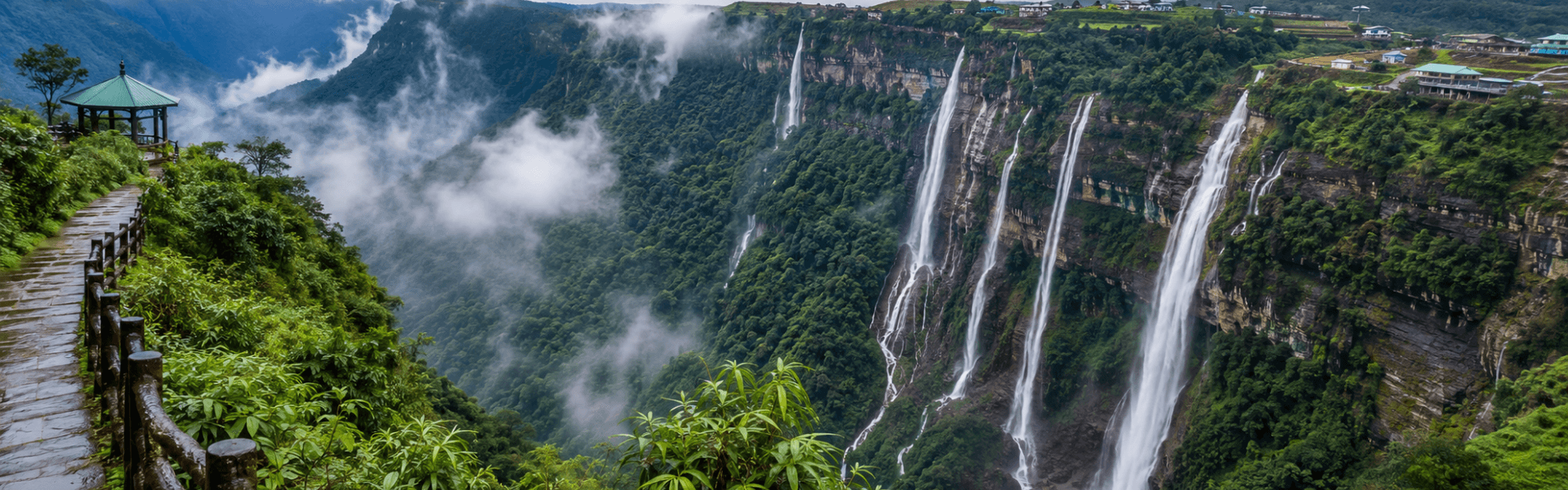
Introduction: Why Cherrapunji (Meghalaya) Deserves a Place on Your 2026 List
Commonly referred to by its traditional name, Sohra, Cherrapunji is more than just a footnote in geography textbooks as the 'wettest place on Earth'. In 2026, it stands as a pinnacle of regenerative travel, where the ancient Khasi culture meets breathtaking subtropical landscapes. The specific, compelling reason to visit right now? The Meghalaya government has recently formalised the 'Living Root Bridges' conservation zones, ensuring that your trek to the Double Decker Bridge in Nongriat is more sustainable and community-focused than ever before. Whether you are chasing waterfalls that plunge over 300 metres or seeking the quietude of a cloud-shrouded plateau, Cherrapunji offers a raw, ethereal beauty that few places on the planet can match.
Best Time to Visit
Timing your visit to Cherrapunji is critical, as the weather dictates everything from trek accessibility to waterfall volume. While the monsoon is iconic, it isn't for everyone.
- January: Cold and dry (5-15°C). Excellent for clear views of the Bangladesh plains. Low crowds and budget pricing.
- February: Similar to January. Great for long-distance trekking. Moderate crowds.
- March: The start of spring. Pleasant temperatures (12-20°C). Rhododendrons begin to bloom.
- April: Pre-monsoon showers begin. The landscape turns vibrant green. High demand for accommodation.
- May: Warm and humid. Frequent evening thunderstorms. Waterfalls start to regain their thunder.
- June: Peak monsoon. Intense rainfall. Spectacular for 'pluviophiles' but some trails become dangerous.
- July: The height of the rains. Roads can be misty; travel is slow. Waterfalls are at their maximum power.
- August: Heavy rains continue. Lush greenery is at its peak. Best for photography of misty landscapes.
- September: Rains begin to recede. The air is incredibly fresh. Great balance of greenery and accessibility.
- October: The 'Sweet Spot'. Post-monsoon clarity, roaring waterfalls, and pleasant trekking weather.
- November: Cool and crisp. Ideal for the 3500-step trek to Nongriat. Clear blue skies return.
- December: Peak tourist season for Indian travellers. Cold nights (under 5°C). Dry waterfalls but perfect for festivals.
The Sweet Spot: Late September to early November offers the perfect intersection of accessible trails, lush post-rain scenery, and manageable temperatures.
Travel Planning & Booking
Getting to this remote corner of North East India requires some logistical foresight. Most international travellers fly into Netaji Subhash Chandra Bose International Airport (CCU) in Kolkata or Indira Gandhi International (DEL) in Delhi before taking a domestic connection to Guwahati (GAU) or the smaller Umroi Airport (SHL) in Shillong.
Booking Lead Times: For 2026, book your accommodation at least 3-4 months in advance if visiting during October or December. Flight prices are best when booked 8-10 weeks out. Use Skyscanner for flight comparisons, Booking.com for homestays, and MakeMyTrip for local transport and niche regional hotels.
Visa Requirements: For 2026, most UK, US, and EU nationals require an e-Tourist Visa. UAE nationals also require a visa, while Indian nationals do not require a visa but must carry valid ID. All foreign nationals must register at the local police station or through their hotel's C-Form system upon arrival in Sohra.
Travel Insurance
Standard travel insurance is mandatory, but for Meghalaya, ensure it specifically covers 'Adventure Activities' and 'Medical Evacuation'. The terrain is rugged, and the nearest high-level medical care is in Shillong or Guwahati. We recommend World Nomads for backpackers, SafetyWing for digital nomads, and Allianz for comprehensive family cover. Tip: Check that your policy covers trekking up to 2,000 metres.
Packing Guide
The climate is temperamental. Even in the dry season, a sudden mist can soak you. Must-bring items include a high-quality breathable raincoat, sturdy waterproof hiking boots with excellent grip (essential for slippery root bridges), and a dry bag for electronics. Avoid over-packing heavy denim; it takes forever to dry in the humidity. Instead, opt for quick-dry synthetic fabrics.
Accommodation
Cherrapunji offers everything from luxury clifftop resorts to humble village homestays.
- Luxury: Polo Orchid Resort. Located near the Nohsngithiang Falls, offering infinity pools and panoramic views. (~£150/night)
- Mid-Range: Jiva Resort. Known for its exceptional service and green manicured lawns, perfect for those wanting comfort. (~£80/night)
- Boutique/Unique: Sai-Mika Resort. Set on an expansive old estate with stone cottages, it offers an authentic, rustic Sohra vibe. (~£40/night)
Getting Around Locally
From Shillong, you can take a shared 'Sumo' (taxi) for about ₹200-300 per seat, which takes 2-3 hours. Within Cherrapunji, hiring a dedicated local taxi for the day (₹2,500-₹3,500) is the most efficient way to see the sights. There are no reliable local bus schedules for tourists. Common mistake: Assuming you can walk between all attractions. They are spread out across a large plateau.
Top Tourist Attractions
- Nohkalikai Falls: India's tallest plunge waterfall. (9 AM - 5 PM; ₹20 entry). Tip: Go at 10 AM to avoid the afternoon mist.
- Double Decker Living Root Bridge: A feat of bio-engineering in Nongriat village. (Always open; ₹50 entry). Tip: Stay overnight in the village to avoid the brutal midday return climb.
- Mawsmai Cave: A limestone cave system. (9:30 AM - 5:30 PM; ₹40 entry). Tip: It’s well-lit but can be narrow; skip if you are claustrophobic.
- Wei Sawdong Falls: A three-tiered turquoise waterfall. (9 AM - 5 PM; ₹30 entry). Tip: The trek down is steep and involves bamboo ladders.
- Seven Sisters Falls: A symbolic seven-segmented waterfall. Best during monsoon. (Always visible from road; Free).
- Arwah Cave: Famous for fossils and stalactites. (9:30 AM - 5:30 PM; ₹20 entry). Tip: The walkway to the cave offers stunning valley views.
- Garden of Caves: A hidden spot with unique rock formations and small falls. (9 AM - 5 PM; ₹50).
- Mawkdok Dympep Valley Viewpoint: The gateway to Sohra. (Always open; Free). Tip: Try the zip-lining here for a quick thrill.
Local Food & Dining
Khasi cuisine is centred around pork, rice, and fermented flavours. Must-tries include Jadoh (red rice cooked with pork fat) and Dohkhlieh (a pork salad with onions and chillies). For dining, visit Orange Roots for excellent vegetarian thalis or Jiva Grill for high-end local and continental fusion. For street food, try the Sohra Soit (local pancakes) at the main market.
Safety & Emergency Contacts
Cherrapunji is exceptionally safe for solo travellers. However, be wary of slippery trails and flash floods during the monsoon.
- Police: 100
- Ambulance: 108
- Fire: 101
- National Emergency Number: 112
- Nearest Hospital: Civil Hospital Shillong (+91 364 222 4100).
Useful Apps & Resources
- Meghalaya Tourism App: Official government guide and booking portal.
- Google Maps: Essential for offline navigation.
- Zomato: Limited availability, but works in some Shillong-adjacent areas.
- WhatsApp: Primary way to communicate with local taxi drivers and homestays.
- AccuWeather: Crucial for monitoring the unpredictable rain patterns.
Explore the wonders of Cherrapunji and more at travelnexusworld.com, your guide to the world's most extraordinary destinations.