
Introduction
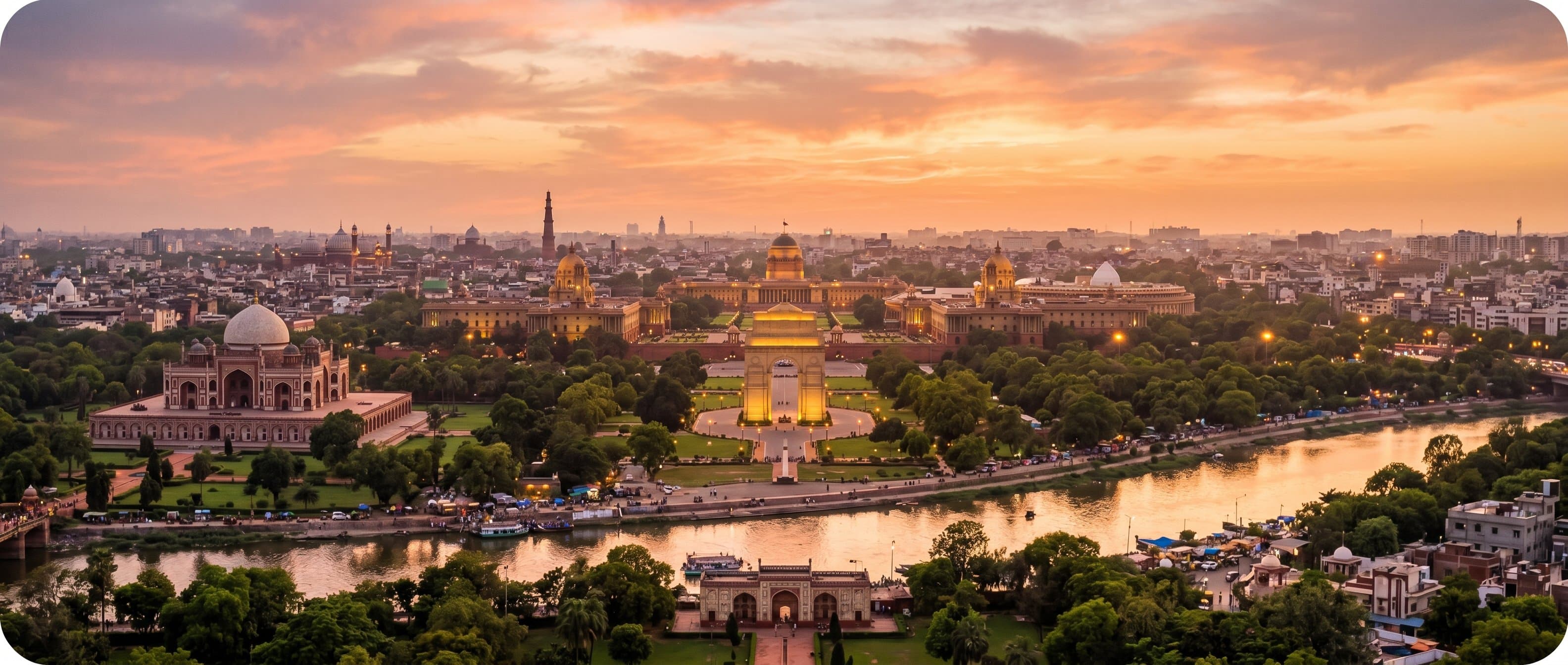
Delhi is not a city you simply visit; it is a city you experience with every fibre of your being. As we look towards 2026, India's sprawling capital has evolved remarkably. Following the massive infrastructure boosts of recent years, Delhi is more accessible than ever, boasting an expanded, world-class metro system and beautifully restored heritage precincts. Yet, beneath the gleaming new airport terminals and digital payment revolutions, Delhi retains its soul—a mesmerising tapestry of Mughal architecture, British colonial history, and vibrant street life.
Why does Delhi deserve a place on the budget backpacker's list right now? Beyond its immense historical pedigree, it is the city's unparalleled juxtaposition that captivates. In a single day, you can haggle in centuries-old bazaars, seek serenity in a 16th-century tomb complex, and sip artisanal coffee in a trendy Hauz Khas boutique. For the digitally savvy, internationally minded traveller, Delhi in 2026 offers seamless connectivity (UPI and 5G are ubiquitous) alongside raw, unfiltered cultural immersion. This is the ultimate gateway to the subcontinent—chaotic, colourful, and utterly unforgettable.
Best Time to Visit
Timing your trip to Delhi is critical; the city experiences weather extremes that can dramatically impact your experience. The absolute sweet spot is between late October and March. During this window, the stifling heat of the Indian summer has dissipated, leaving behind crisp, cool mornings and sun-drenched afternoons perfect for exploring ruins and monuments.
However, travellers should be acutely aware of the air quality index (AQI). November can often bring heavy smog due to crop burning in neighbouring states and Diwali fireworks, making late January to March the most reliable period for clearer skies and pleasant temperatures. If you visit in March, you will witness Holi, the spectacular festival of colours, an absolute bucket-list experience. Avoid May and June unless you are prepared for blistering temperatures exceeding 45°C, and July to August when the monsoon brings high humidity and waterlogged streets.
Travel Planning & Booking
Delhi's Indira Gandhi International Airport (DEL) is a major global aviation hub. The most efficient flight routes from Europe and North America are direct services via British Airways, Virgin Atlantic, Air India, and United. For budget backpackers, flying via Middle Eastern carriers like Emirates, Qatar Airways, or Etihad often yields the most competitive fares, albeit with a layover. You should aim to book flights 3 to 4 months in advance for the best rates.
When it comes to booking platforms, Skyscanner remains the champion for cross-referencing flight deals. For internal Indian travel (trains and domestic flights), MakeMyTrip is indispensable, while Booking.com offers the most robust inventory of hostels and guesthouses in the capital.
Visa Requirements for 2026: India's eVisa system is highly efficient. Nationals from the UK, US, EU, and UAE are eligible for the tourist eVisa (available in 30-day, 1-year, and 5-year increments). You must apply at least 4 days before arrival via the official government portal (indianvisaonline.gov.in). Have a printed copy of your ETA (Electronic Travel Authorisation), proof of onward travel, and a passport valid for at least six months from your date of entry. Indian diaspora may use OCI (Overseas Citizen of India) cards for visa-free entry.
Travel Insurance
Never travel to Delhi without comprehensive travel insurance. The city’s chaotic traffic, the infamous 'Delhi Belly' (gastrointestinal issues from unaccustomed local flora), and occasional extreme weather delays make robust coverage non-negotiable. Look for policies that explicitly cover medical evacuation, trip cancellation, and lost baggage.
We highly recommend World Nomads for backpackers needing flexible, comprehensive cover that can be extended on the road. SafetyWing is excellent for digitally savvy nomads looking for an affordable, subscription-based model. Finally, Heymondo offers a brilliant premium option with a 24/7 medical chat app—invaluable if you feel unwell in your hostel at 3 AM. Practical Tip: Ensure your policy covers treatment at private international-standard hospitals like Max Super Speciality or Apollo, as public hospitals can be severely overcrowded.
Packing Guide
Packing for Delhi requires balancing comfort, climate, and cultural sensitivity. The climate fluctuates wildly: bring lightweight, breathable cottons for summer, but if you visit between December and February, a warm fleece or mid-weight jacket is essential as nighttime temperatures can drop to 5°C.
Culturally, Delhi is conservative. Both men and women should dress modestly, particularly when visiting religious sites like Jama Masjid or Akshardham Temple. Women should pack a lightweight scarf (dupattas can be bought locally) to cover their heads and shoulders, while men should avoid wearing shorts in temples. Must-bring items specific to Delhi include a high-quality N95 pollution mask (crucial for winter visits), high-SPF sunscreen, and a universal travel adapter (India uses types C, D, and M). One item tourists over-pack: Heavy hiking boots. Unless you are heading straight to the Himalayas, comfortable walking trainers or sturdy sandals are all you need for Delhi's streets.
Accommodation
Delhi’s neighbourhoods each offer a distinct flavour. Paharganj (Main Bazaar) is the traditional backpacker hub—frantic, noisy, and cheap, but not for the faint-hearted. South Delhi (Hauz Khas/Green Park) offers a more relaxed, trendy vibe with leafy parks and boutique cafes. Aerocity is ideal for short layovers, boasting sleek hotels right by the airport.
For luxury, The Leela Palace New Delhi in Chanakyapuri is a masterclass in modern Indian opulence, though it stretches the backpacker budget. A fantastic mid-range/boutique pick is Haveli Dharampura, a breathtakingly restored 19th-century mansion in the heart of Old Delhi. For budget backpackers, Zostel Delhi (located near the New Delhi Railway Station) offers clean dorms, a vibrant social scene, and a safe haven from the street chaos. Booking Tip: Always check recent reviews for air-conditioning reliability (in summer) or hot water availability (in winter).
Getting Around Locally
Navigating Delhi has been revolutionised by the Delhi Metro. Upon arriving at Indira Gandhi International Airport, the Airport Express Line (Orange Line) is an absolute godsend. Costing just ₹60 ($0.75) and taking 20 minutes to reach the New Delhi Metro Station, it bypasses the city's notorious traffic entirely. Alternatively, an Uber or Ola cab to the city centre takes about 45 minutes and costs around $10-$15.
For daily exploration, the Metro is clean, air-conditioned, and incredibly cheap. Download the DMRC (Delhi Metro Rail Corporation) app to plan routes. For short, last-mile connectivity, auto-rickshaws are iconic. One common tourist mistake: Getting into an auto-rickshaw without agreeing on the fare first or demanding they use the meter. Always negotiate or use the Uber/Ola app to book an auto with a fixed price to avoid being scammed.
Top Tourist Attractions (Must-See)
Red Fort (Lal Qila): This massive red sandstone fortress was the primary residence of the Mughal Emperors. It matters because it is the birthplace of modern Indian independence (the Prime Minister raises the flag here every Independence Day). Open 9:30 AM to 4:30 PM (Closed Mondays). Entry: ₹600 ($7.50) for foreigners. Best time: Early morning. Insider tip: Skip the evening light and sound show, which feels dated; instead, spend that time wandering the adjacent Chandni Chowk.
Humayun’s Tomb: A spectacular precursor to the Taj Mahal, this UNESCO World Heritage site is a masterpiece of Persian-inspired Mughal architecture. Open sunrise to sunset. Entry: ₹600 ($7.50). Best time: Late afternoon. Insider tip: The golden hour light hitting the red sandstone and white marble makes for the best photography in Delhi.
Qutub Minar: A towering 73-metre high victory tower built in 1193. It showcases the architectural brilliance of the Delhi Sultanate. Open 7:00 AM to 5:00 PM. Entry: ₹600 ($7.50). Best time: Early morning to beat the crowds. Insider tip: Look out for the ancient Iron Pillar in the courtyard, which has remarkably resisted rust for over 1,600 years.
Jama Masjid: One of the largest mosques in India, capable of holding 25,000 devotees. Open 7:00 AM to 12:00 PM, and 1:30 PM to 6:30 PM. Entry is free, but camera/phone fees are ₹300 ($3.75). Insider tip: Pay the extra ₹100 to climb the southern minaret for a sweeping view of Old Delhi.
Lotus Temple: A Bahá'í House of Worship shaped like a floating lotus flower, noted for its stunning modern architecture and absolute silence inside. Open 9:00 AM to 5:30 PM (Closed Mondays). Entry: Free. Best time: Early morning. Insider tip: You must check your shoes at the entrance; wear socks if you don't want to walk barefoot on the hot marble.
India Gate & Rajpath: A 42-metre high war memorial resembling the Arc de Triomphe, dedicated to Indian soldiers who died in WWI. Open 24/7. Entry: Free. Best time: Evening. Insider tip: Visit after sunset when the monument is beautifully illuminated and locals gather for picnics and ice cream.
Akshardham Temple: A colossal modern Hindu temple complex showcasing millennia of traditional Hindu culture. Open 10:00 AM to 6:30 PM (Closed Mondays). Entry: Free (Exhibitions cost ₹250). Insider tip: Electronics, including phones and cameras, are strictly forbidden inside. You must leave them in the secure cloakroom, so arrange meeting points with friends beforehand.
Local Food & Dining
Delhi is arguably India's culinary capital, blending robust Punjabi flavours with delicate Mughlai cooking. You must try Butter Chicken (Murgh Makhani), a rich, creamy tomato-based curry born in Delhi. Chole Bhature (spicy chickpeas with fried bread) is the ultimate heavy breakfast, while Chaat (savoury street snacks featuring yoghurt, tamarind, and crispy dough) is a late-afternoon staple. To drink, a cold, frothy sweet Lassi is mandatory.
For a high-end, world-class experience, Indian Accent at The Lodhi offers an inventive, modernist tasting menu that redefines Indian cuisine. For a brilliant mid-range historical meal, brave the alleys of Old Delhi to find Karim's (near Jama Masjid), famous since 1913 for its mutton korma and kebabs. For street food, Paranthe Wali Gali in Chandni Chowk serves legendary deep-fried stuffed flatbreads. Dietary note: Vegetarians will find Delhi to be a paradise, but vegans must be vigilant—dairy (ghee, paneer, yoghurt) is pervasive in North Indian cooking. Always specify 'no dairy, no ghee'.
Safety & Emergency Contacts
Delhi is generally safe for tourists, provided you exercise common sense. The safety level is moderate, with caution required regarding petty theft and scams, particularly around transport hubs like the New Delhi Railway Station (beware of the 'fake official tourist office' scam). Women should exercise elevated caution: dress modestly, avoid walking alone in poorly lit or secluded areas at night, and rely on Uber or Ola rather than hailing street autos after dark.
LOCAL EMERGENCY NUMBERS (Real & Accurate for Delhi):
- Police: 112 / 100
- Ambulance: 102 / 112
- Fire: 101
- Tourist Police: 8750871111
- National Emergency: 112
The nearest international-standard hospital is Max Super Speciality Hospital in Saket (+91 11 2651 5050).
Embassy Contacts:
UK High Commission: Shantipath, Chanakyapuri, New Delhi 110021 (+91 11 2419 2100).
US Embassy: Shantipath, Chanakyapuri, New Delhi 110021 (+91 11 2419 8000).
UAE Embassy: 12, Chandragupta Marg, Chanakyapuri, New Delhi 110021 (+91 11 2411 1111).
Indian Citizens: Ministry of External Affairs, South Block, New Delhi 110011 (+91 11 2301 2113).
Useful Apps & Resources
To navigate Delhi like a local in 2026, load your smartphone with these five essential apps:
1. Uber / Ola: Crucial for safe, meter-free cab and auto-rickshaw rides.
2. Zomato: The ultimate restaurant discovery and food delivery app in India.
3. Delhi Metro Rail (DMRC) App: For navigating the massive metro network and buying QR tickets.
4. MakeMyTrip: For booking any domestic flights, trains, or buses out of Delhi.
5. Google Translate: Download the Hindi language pack for offline use.
Official Resource: The official Ministry of Tourism website, incredibleindia.org, remains an excellent resource for verified destination info and accredited tour guides.
Closing
Delhi is a city of staggering depth, capable of overwhelming your senses and stealing your heart in the same breath. It is a place where every corner tells a story, and every meal is a celebration. For the budget backpacker, it offers unparalleled value and an adventure that will resonate long after you have boarded your flight home. Embrace the chaos, respect the culture, and let India's capital reveal its magic to you.
Ready to plan the rest of your Indian adventure or explore other global destinations? Discover more expert guides, itineraries, and insider tips at www.ainexusworld.com.
FAQ
Is Delhi safe for tourists? Yes, but moderate caution is required. Petty theft and scams are common around tourist hubs. Use ride apps at night, ignore unsolicited touts, and women should dress modestly and avoid isolated areas after dark.
What is the best time to visit Delhi? The ideal window is from late October to March when the weather is cool and dry. Avoid May-June (extreme heat) and July-August (heavy monsoon rains).
How many days do I need in Delhi? Three to four full days are perfect to see the major historical monuments, explore the chaotic charm of Old Delhi, and enjoy the culinary scene without feeling overly rushed.
Do I need a visa to visit Delhi? Yes, most international tourists (including UK, US, EU, and UAE nationals) require an eVisa, which must be applied for online prior to arrival in India.
What is the local currency and can I use credit cards? The currency is the Indian Rupee (INR). While credit cards and UPI (digital payments) are widely accepted in modern establishments, always carry small denominations of cash for street food, markets, and auto-rickshaws.