
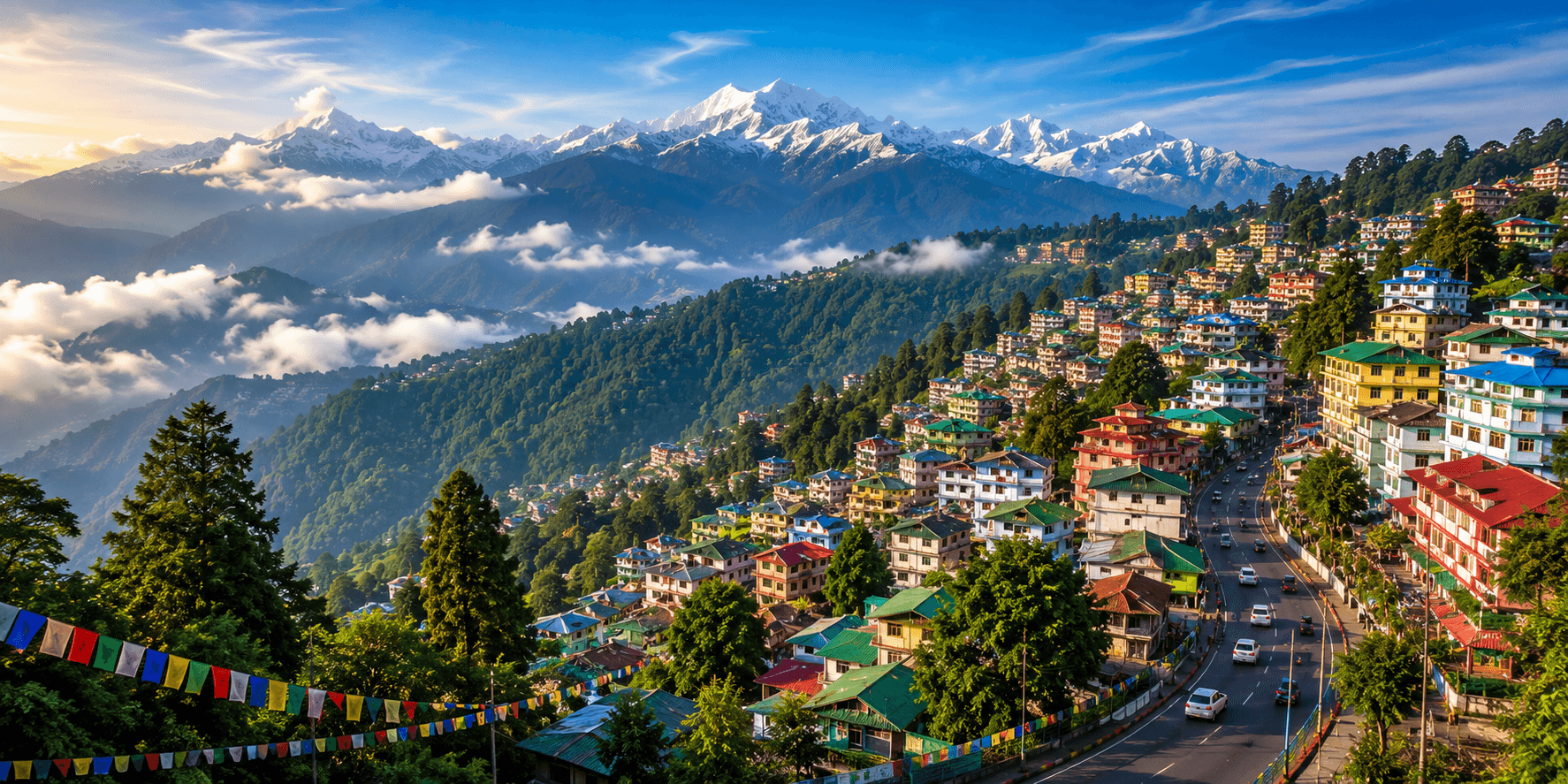
Introduction: The Himalayan Sanctuary
Gangtok, the capital of Sikkim, is not merely a destination; it is a sensory experience that defies the typical chaos associated with Indian urban centres. Perched at an altitude of 1,650 metres, this city serves as a clean, green, and smoke-free gateway to the Kangchenjunga range. Why does Gangtok deserve a spot on your 2026 list? It is currently the epicentre of India’s sustainable travel movement, being the first state in the world to be 100% organic. For the budget backpacker, it offers a rare blend of Swiss-like alpine order and deep-rooted Tibetan spiritualism, all while remaining accessible to those mindful of their purse strings.
Best Time to Visit: A Seasonal Breakdown
Timing is everything in the Himalayas. The weather dictates not just your comfort, but whether the mountain roads remain open.
- January: Cold (5-10°C). Ideal for snow lovers. Crowds are low, and pricing is at its most budget-friendly. Clear skies offer the best views of Kangchenjunga.
- February: Similar to January, but with the Losar Festival (Tibetan New Year) bringing vibrant mask dances to monasteries.
- March: Mild (10-15°C). The rhododendrons begin to bloom in the surrounding valleys. A sweet spot for hikers.
- April: Pleasant (15-20°C). Peak season begins. Ideal for Tsomgo Lake visits. Prices start to rise.
- May: Warm (18-25°C). The best month for high-altitude trekking before the rains. Expect high crowds.
- June: The monsoon begins. Frequent rain and potential for landslides make travel unpredictable. Pricing drops.
- July: Peak monsoon. Not recommended for those on a tight schedule as road blockages are common.
- August: Heavy rain continues. Lush greenery is at its peak, but mountain views are obscured by clouds.
- September: The rains recede. The air is incredibly fresh, and the 'Second Spring' begins.
- October: The 'Golden Month'. Perfect visibility, crisp air, and pleasant temperatures (15-22°C). High demand for accommodation.
- November: Cool and dry. Excellent for photography and monastery hopping without the April crowds.
- December: Cold but festive. The Sikkim Red Panda Winter Carnival often takes place, celebrating local culture and music.
The Sweet Spot: Late October to early November offers the perfect balance of crystal-clear mountain views, manageable crowds, and stable trekking conditions.
Travel Planning & Booking
Reaching Gangtok requires a bit of logistical finesse. The primary gateway is Bagdogra International Airport (IXB) in West Bengal. From there, it is a 4-5 hour winding drive (125km) to Gangtok. While Pakyong Airport (PYG) is closer to Gangtok, it remains highly weather-dependent in 2026; always have a backup plan via Bagdogra.
Flight Routes: Major carriers like IndiGo, Air India, and Akasa Air run daily flights from Delhi, Kolkata, and Bangalore. For international travellers, flying into Delhi (DEL) and taking a domestic connection is the standard route.
Visa & Permits: This is critical. Foreign nationals require a Restricted Area Permit (RAP) to enter Sikkim. In 2026, this can be obtained for free at the Rangpo border checkpost upon arrival (carry passport photos and photocopies) or applied for online via the Sikkim Tourism portal. The RAP is usually valid for 30 days. Note that protected areas like Nathu La or Gurudongmar Lake require a Protected Area Permit (PAP), which is usually only issued to groups of two or more through registered Sikkim travel agents.
Travel Insurance
Sikkim is an adventure destination. Standard insurance may not cover high-altitude trekking above 3,000 metres. Look for policies that specifically include Emergency Medical Evacuation and Adventure Sports cover. Landslides can cause trip delays, so Travel Delay coverage is essential.
- World Nomads: The gold standard for backpackers, covering over 200 activities.
- SafetyWing: Excellent for digital nomads on a budget with monthly subscription models.
- Allianz Travel: Best for comprehensive medical and cancellation protection.
Practical Tip: Always keep a digital and physical copy of your insurance policy; hospital staff in rural areas may need to see it before initiating non-emergency procedures.
Packing Guide
The key to Sikkim is layers. Even in summer, the wind at Tsomgo Lake can be biting.
- Clothing: Lightweight base layers, a high-quality fleece, and a waterproof/windproof outer shell. For temple visits, ensure your shoulders and knees are covered.
- Must-bring: A sturdy pair of broken-in hiking boots, a universal power adapter (Type D/M), and high-SPF sunscreen (the mountain sun is intense).
- Over-packed item: Heavy denim jeans. They are bulky, slow to dry in the humid mountain air, and impractical for walking the steep streets of Gangtok.
Accommodation: Where to Sleep
MG Marg (The Hub): The heart of the city. Pedestrianised and lined with shops. Best for those who want to be near the action. Pick: The Elgin Nor-Khill (Luxury) - A heritage property once the guesthouse of the Chogyal (King).
Development Area (Quiet & Residential): A 15-minute walk from the centre. Quieter and offers better views. Pick: Netuk House (Mid-range) - A charming family-run boutique hotel with traditional Sikkimese architecture.
Arithang (Budget Central): Steeper hills but significantly cheaper. Pick: Tagalong Backpackers (Budget) - The best social hub for solo travellers with dorms and a community kitchen.
Getting Around Locally
Gangtok is a vertical city. From Bagdogra, a shared taxi costs roughly ₹500 (£5), while a private Xylo or Innova costs around ₹4,000-5,000 (£40-50). Within the city, travel is dominated by shared Maruti 800s that ply fixed routes for ₹30-50 per seat. Most of the central area is best explored on foot, though your calves will feel the incline.
Top Tourist Attractions
- Rumtek Monastery: 24km from the city. The seat of the Karmapa Lama. Significant for its Golden Stupa. Open 9 AM - 6 PM. Entry: ₹20. Tip: Visit during morning prayers (around 6 AM) for a spiritual experience.
- Tsomgo Lake: A glacial lake at 3,753m. Entry via permit only. Best in early morning. Entry: Included in tour cost (approx ₹800 in shared taxi).
- MG Marg: The city's social lounge. Free. Best in the evening when the lights come on.
- Namgyal Institute of Tibetology: One of the world's leading institutes for Tibetan studies. Open 10 AM - 4 PM (Closed Sundays). Entry: ₹20.
- Enchey Monastery: Over 200 years old, situated above the city. Open 9 AM - 6 PM. Free. Provides great views of the town.
- Ban Jhakri Falls: A 100ft waterfall set in a landscaped park. Entry: ₹50. Open 8 AM - 6 PM.
Local Food & Dining
Sikkimese cuisine is a blend of Tibetan, Nepalese, and indigenous Lepcha flavours. Do not miss Momo (steamed dumplings) or Thukpa (noodle soup). For a local kick, try Phagshapa (pork fat stewed with radishes and chillies).
- High-end: Nimtho (MG Marg) - Authentic Sikkimese 'Slow Food'. Try the Thakali Thali.
- Mid-range: The Coffee Shop - Excellent Italian food and the best breakfast in town.
- Street Food: Roll House (MG Marg) - Famous for their veg and chicken rolls for over 20 years.
Safety & Emergency Contacts
Gangtok is one of the safest cities in India for solo female travellers and backpackers. The main risks are altitude sickness and road conditions during monsoon.
- Police: 100 / 03592-202022
- Ambulance: 102
- Fire: 101
- Tourist Police: 03592-203041
- National Emergency: 112
Hospital: STNM Hospital, Sochakgang (Modern facility with English-speaking staff).
Useful Apps & Resources
- RedBus: For booking buses from Siliguri.
- Zomato: Limited delivery, but great for restaurant menus.
- Google Maps: Reliable for walking routes.
- Sikkim Tourism Official Website: (sikkimtourism.gov.in) for latest permit updates.
- AccuWeather: Essential for monitoring mountain weather patterns.
Gangtok is a rare jewel that rewards the patient traveller. Whether you are spinning prayer wheels at Rumtek or sipping tea on MG Marg, the city invites you to slow down. Start your Himalayan journey today at ainexusworld.com.