
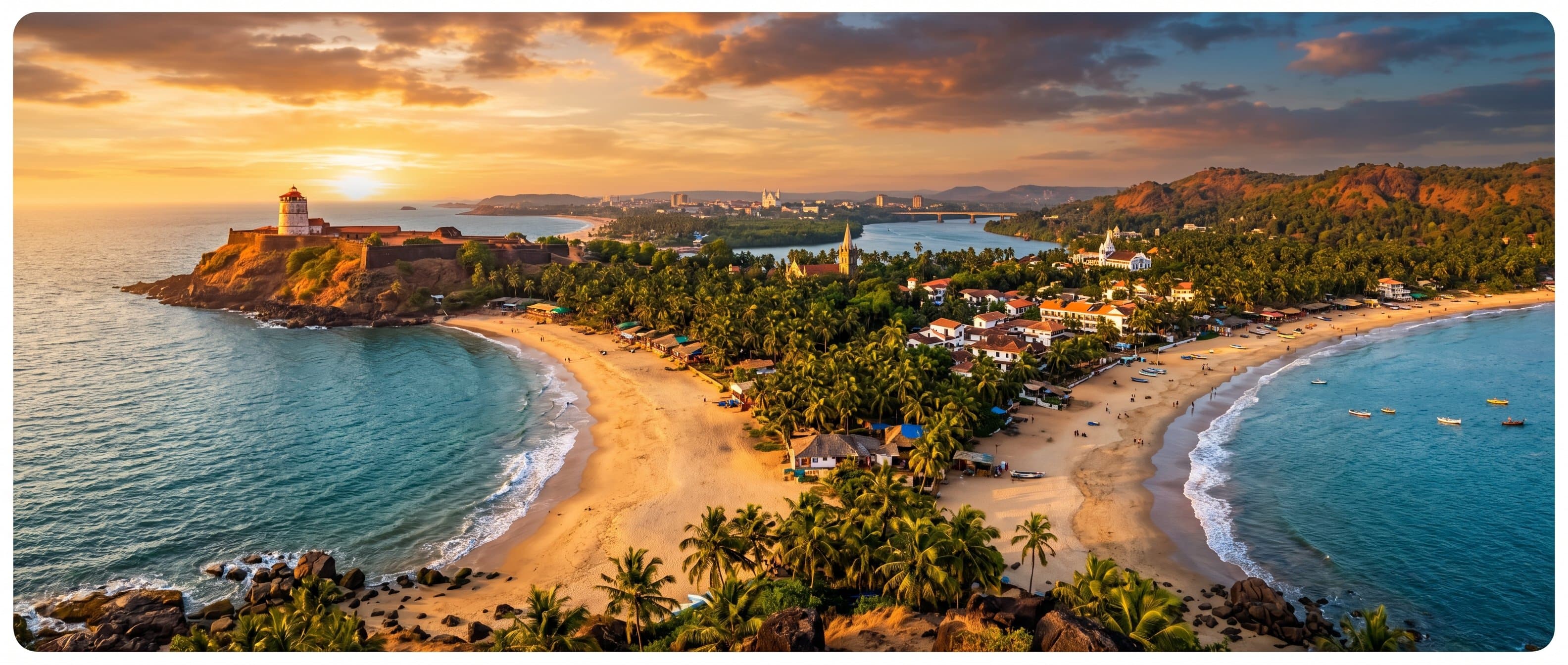
The Ultimate Goa Travel Guide 2026: Everything You Need to Know
Welcome to the definitive guide to exploring Goa in 2026. Whether you are seeking the rhythmic pulse of beachside drum circles or the silent majesty of ancient cathedrals, this guide will equip you with everything you need for a spectacular journey.
Introduction
Goa has long been the crown jewel of India's western coastline, a tiny state that casts a massive spell on global travellers. But why does Goa deserve a place on your itinerary right now? As we move through 2026, Goa has successfully shed its reputation as just a trance-party destination, evolving into a haven for conscious travellers, digital nomads, and culture enthusiasts. The compelling, unique reason to visit Goa today is its 'Hinterland Renaissance'. While the beaches remain beautiful, the real magic now lies inland—in restored Indo-Portuguese heritage homes turned into boutique cafes, sustainable spice plantations, and the lush, biodiverse Western Ghats. Goa offers a unique duality: you can surf the Arabian Sea at dawn and explore a 16th-century UNESCO World Heritage basilica by noon, all while fuelling up on world-class coastal cuisine that blends Indian spices with European techniques.
Best Time to Visit
Understanding Goa's tropical monsoon climate is the single most important factor in planning your trip. The year is neatly divided into three distinct phases: the dry winter, the scorching summer, and the torrential monsoon.
- January: Glorious weather, clear blue skies (20-30°C). High crowds, lingering New Year premium pricing.
- February: The 'Sweet Spot'. The weather remains perfect, but the peak winter crowds disperse. Prices drop by 15-20%, and the Goa Carnival brings vibrant parades to the streets of Panaji.
- March: Warming up significantly (24-33°C). Moderate crowds. Great for budget travellers who don't mind the heat. Shigmo festival (Goa's version of Holi) takes place.
- April: Hot and humid (26-34°C). Lower crowds. Accommodation prices drop significantly.
- May: Sweltering pre-monsoon heat. Very low international crowds, though domestic tourism peaks during school holidays.
- June: The monsoon arrives with dramatic thunderstorms. Lush green landscapes emerge. Very few tourists; rock-bottom prices.
- July: Heavy, relentless rain. Swimming in the sea is strictly prohibited due to dangerous rip currents. Ideal for yoga retreats and spice plantation tours.
- August: Continued heavy monsoon. The Sao Joao festival is celebrated with locals jumping into wells. Very budget-friendly.
- September: Rain begins to taper off. The landscape is incredibly lush and photogenic. Shoulder season pricing begins.
- October: Post-monsoon transition. Beach shacks start rebuilding. The weather is humid but pleasant. Moderate pricing.
- November: The start of the tourist season. Excellent weather, everything is open, and the vibe is electric. International flights resume full schedules.
- December: Peak season. Perfect weather, but massive crowds and premium pricing. The Sunburn Festival and Christmas/New Year celebrations dominate.
The Sweet Spot: Late February to early March. You get the flawless winter sunshine and vibrant cultural festivals, but avoid the crushing December/January crowds and peak accommodation rates.
Travel Planning & Booking
Getting to Goa has never been easier, thanks to the recent fully operational status of the Manohar International Airport (Mopa - GOX) in North Goa, which operates alongside the traditional Dabolim Airport (GOI) in the south. When booking, check which airport is closer to your accommodation to save on hefty taxi fares.
Best Flight Routes & Airlines: For UK travellers, Air India and Virgin Atlantic offer excellent routes from London Heathrow (LHR) to Mumbai (BOM) or Delhi (DEL), with seamless two-hour connections into Goa. Travellers from the UAE can utilise direct flights via Oman Air or Air India Express from Dubai (DXB) directly into GOI or GOX. From the US, United Airlines or Emirates (via Dubai) to Mumbai, followed by a domestic hop via IndiGo or Vistara, is the most efficient routing.
Booking Lead Times: For travel between November and February, book flights and accommodation at least 3 to 4 months in advance. For the shoulder and monsoon seasons, 4 to 6 weeks is sufficient.
Visa Requirements (2026): UK, US, EU, and UAE nationals must secure an Indian eVisa prior to departure. The process is entirely online via the official Indian government portal. You can choose a 30-day, 1-year, or 5-year tourist visa. Processing typically takes 72 hours, but apply at least a week in advance. Indian nationals obviously do not require a visa. Ensure your passport has at least six months of validity remaining and two blank pages. Entry documentation checklist: Printed eVisa copy, completed arrival card, return flight proof, and your accommodation address in Goa.
Travel Insurance
Never travel to India without comprehensive travel insurance. For Goa specifically, insurance matters immensely due to the high rate of scooter accidents involving tourists, the occasional bout of severe food/water-borne illness (like 'Delhi Belly'), and flight disruptions during the monsoon season. Your policy must cover emergency medical evacuation, trip cancellation, baggage loss, and crucially, adventure activities. If you plan to rent a scooter, ensure your policy covers motorcycle riding—and note that you must have an International Driving Permit (IDP) and wear a helmet for the insurance to be valid. One practical tip: Always carry a physical printout of your insurance policy and emergency contact numbers, as mobile data can be spotty in the dense jungles of South Goa.
Packing Guide
Goa's tropical, humid climate demands a specific wardrobe. Pack lightweight, breathable cotton and linen clothing. While the beaches are highly liberal and standard swimwear is perfectly acceptable, cultural dress considerations are vital when stepping off the sand. When visiting the temples of Ponda or the churches of Old Goa, both men and women must have their shoulders and knees covered. Must-bring items specific to Goa include high-DEET mosquito repellent (dengue is a risk during and after the monsoon), a robust power bank (power cuts are common), and a high-quality dry bag to protect your electronics from sudden downpours or boat trips. One item tourists consistently over-pack: heavy hiking boots. Unless you are doing serious multi-day treks in the Ghats, a sturdy pair of sports sandals or breathable trainers is more than enough.
Accommodation
Goa is effectively divided into North (bustling, nightlife, cafes) and South (serene, pristine beaches, luxury resorts). Here are three distinct neighbourhoods to consider:
- Assagao (North Goa): Known as the 'Beverly Hills of Goa', this leafy village is perfect for digital nomads and foodies. It is packed with restored Portuguese villas, high-end boutiques, and the state's best experimental restaurants.
- Palolem (South Goa): The ultimate backpacker haven. A stunning crescent-shaped beach lined with colourful, temporary beach huts. The vibe is incredibly relaxed, focusing on yoga, kayaking, and sunset beers.
- Fontainhas, Panaji (Central Goa): The Latin Quarter of Goa's capital. Ideal for culture seekers. Narrow cobbled streets, vibrant yellow and blue heritage homes, and charming bakeries.
Booking tip: When booking beach huts in South Goa, be aware that many are non-AC and dismantled during the monsoon. Always confirm if the property provides mosquito nets and secure lockers.
Getting Around Locally
Navigating Goa can be tricky if you are unprepared. Let's start with airport transfers. From either GOX or GOI, the cheapest option is the air-conditioned Kadamba Transport Corporation (KTC) electric buses, which run to major bus stands like Panaji, Mapusa, and Margao for around $3-$5. Alternatively, pre-paid airport taxis are available at official counters (approx $15-$25 depending on distance). Do not accept rides from touts in the arrivals hall.
For local exploration, renting a scooter is the quintessential Goan experience (approx $6-$10 per day). However, you must have an International Driving Permit. Alternatively, you can use 'Pilots'—unique motorcycle taxis where you ride pillion, identifiable by their yellow mudguards. One common tourist mistake: Assuming Uber or Ola works in Goa. They are banned due to local taxi union disputes. You must download the government-backed app, GoaMiles, to book cabs, though finding a ride in remote areas can still be challenging.
Top Tourist Attractions (Must-See)
Goa's attractions span crumbling forts, magnificent churches, and natural wonders. Here is your essential checklist:
- Basilica of Bom Jesus: Located in Old Goa, this 16th-century church holds the mortal remains of St. Francis Xavier. It matters because it is a UNESCO World Heritage site and a marvel of Baroque architecture. Open 9:00 AM - 6:30 PM. Free entry. Best time: 9:00 AM before the tour buses arrive. Insider tip: Don't miss the modern art gallery attached to the basilica.
- Dudhsagar Waterfalls: A majestic four-tiered waterfall on the Mandovi River, translating to 'Sea of Milk'. It's deeply embedded in the Bhagwan Mahaveer Sanctuary. Open 7:00 AM - 5:00 PM. Entry is roughly $5 (plus jeep safari costs). Best time: October/November when the flow is immense. Insider tip: Book your jeep safari online well in advance; daily visitor numbers are strictly capped.
- Aguada Fort: A 17th-century Portuguese fort standing on Sinquerim Beach, overlooking the Arabian Sea. Historically crucial for defending against the Marathas and the Dutch. Open 9:30 AM - 6:00 PM. Cost: $4 for foreigners. Best time: Late afternoon. Insider tip: Walk down the hidden path to the old lighthouse for uninterrupted sunset views without the crowds.
- Anjuna Flea Market: A legendary Wednesday market that started in the 1960s as a way for hippies to barter goods. Today, it's a sprawling labyrinth of textiles, spices, and jewellery. Open Wednesdays 9:00 AM - sunset. Free entry. Best time: Early morning. Insider tip: Haggling is expected—start at 30% of the initially quoted price.
- Mangeshi Temple: One of the largest and most visited Hindu temples in Goa, known for its stunning seven-story deepastambha (lamp tower). It highlights the pre-Portuguese cultural fabric of the region. Open 6:00 AM - 10:00 PM. Free entry. Best time: Evening Aarti (prayer). Insider tip: Strict dress codes apply; carry a sarong to cover your shoulders/legs.
- Fontainhas Heritage Walk: The old Latin Quarter in Panaji. Not a single attraction, but a living museum of pastel-coloured Portuguese colonial homes and winding alleys. Accessible 24/7. Free. Best time: Golden hour (4:30 PM). Insider tip: Stop at Confeitaria 31 De Janeiro for authentic Goan-Portuguese sweets like Bebinca.
Local Food & Dining
Goan cuisine is a magnificent collision of Konkani Hindu roots and Portuguese colonial influence, heavily reliant on coconut milk, fiery red chillies, kokum, and freshly caught seafood. You absolutely must try Goan Fish Curry, a tangy, coconut-based staple best eaten with local red unpolished rice. For meat eaters, Pork Vindaloo (authentic Goan style, which is garlicky and tangy with vinegar, not just purely spicy like British curry houses) is essential. Street food lovers should seek out Ros Omelette—a fluffy omelette drowned in spicy chicken xacuti gravy, served with soft local bread (poie). Wash it all down with Feni, a potent, GI-tagged local spirit made from cashew apples or coconut sap. Dietary note: While seafood and pork dominate traditional menus, modern North Goa (especially Anjuna and Assagao) is now one of the most vegan-friendly hubs in Asia, with abundant plant-based cafes.
Safety & Emergency Contacts
Goa is generally very safe for international travellers, earning a 'moderate to safe' rating. Violent crime against tourists is rare, but petty theft, particularly bag-snatching from scooters, can occur. The biggest physical dangers in Goa are the sea (rip currents are notoriously deadly, especially during monsoon—always swim between the red and yellow flags) and the roads (scooter accidents are tragically common; never drink and drive, and always wear a helmet). Beware of the 'ear-cleaning' scam on beaches and aggressive gem touts.
If things go wrong, healthcare in Goa is adequate, though complex emergencies may require transfer to Mumbai. Manipal Hospital in Dona Paula, Panaji, is the highest-rated international facility.
Useful Apps & Resources
To navigate Goa like a local, your smartphone needs a few specific tools. GoaMiles is non-negotiable for booking taxis. Swiggy and Zomato are brilliant for food delivery when you want a quiet night in your villa. MakeMyTrip is the best Indian app for booking intercity buses or domestic flights. Finally, use the official Goa Tourism website (goa-tourism.com) for verified updates on festival dates and state-run ferry schedules.
Closing
Goa is a state of mind as much as it is a destination. Whether you spend your days weaving through the spice plantations of Ponda, catching the surf at Ashwem, or simply watching the fiery sun dip below the Arabian Sea with a cold Kingfisher beer in hand, Goa will leave an indelible mark on your soul. Respect the local culture, travel slowly, and let the 'susegad' (the Goan concept of relaxed, contented living) wash over you. Ready to start planning? Discover more exclusive tips, budget hacks, and hidden gems for your 2026 adventure at www.ainexusworld.com.