
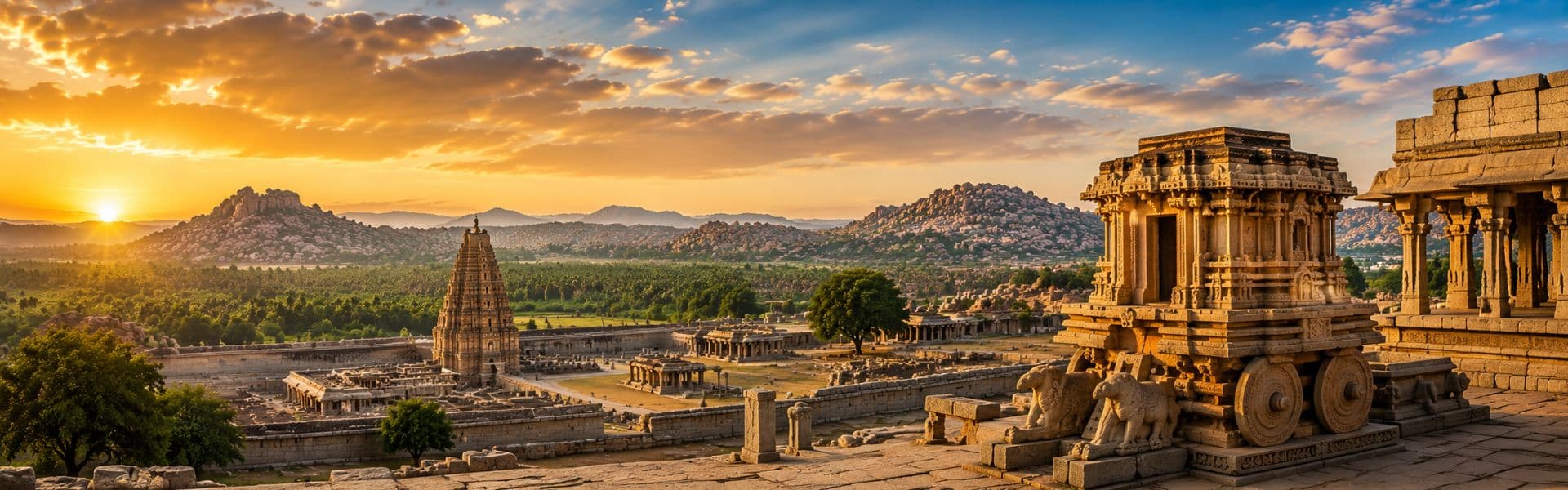
Introduction: Why Hampi Deserves a Place on Your 2026 Bucket List
Hampi is not merely a collection of ruins; it is a sprawling open-air museum set against a prehistoric landscape of ochre boulders and emerald-green paddy fields. Once the capital of the immensely powerful Vijayanagara Empire, it was one of the largest and wealthiest cities in the world during the 15th century. Today, it offers a travel experience that is both spiritually grounding and historically mind-bending.
The unique appeal of Hampi in 2026 lies in its 'Boulder-to-Temple' ratio. Unlike the manicured lawns of the Taj Mahal, Hampi allows for raw exploration. You can scramble over rocks to find a hidden 500-year-old shrine that isn't on any map, or watch the sunset from Matanga Hill, where the Tungabhadra River snakes through a landscape that feels like another planet. With the recent expansion of the nearby Jindal Vidyanagar Airport, accessing this remote UNESCO World Heritage site has never been easier for the modern traveller.
Best Time to Visit Hampi
Hampi's climate is tropical and can be unforgiving. Choosing the right month is critical for your comfort and your budget.
- The Sweet Spot (November to February): This is the prime trekking season. The weather is dry and temperatures range from a pleasant 15°C at night to 30°C during the day. This is also when the Hampi Utsav (cultural festival) typically takes place.
- The Shoulder Season (September to October): The landscape is incredibly lush after the monsoon, but humidity is high. Prices are lower before the November surge.
- The Burn (March to June): Avoid this period if possible. Temperatures frequently exceed 40°C, making bouldering and temple-hopping exhausting.
Travel Planning & Booking
For 2026, the most efficient way to reach Hampi is flying into Jindal Vidyanagar Airport (VDY), which now handles daily flights from Bengaluru and Hyderabad via Star Air and IndiGo. Alternatively, the Hampi Express remains the classic backpacker choice, running overnight from Bengaluru to Hosapete (Hospet).
Booking Lead Times: For travel during the peak months of December and January, book your accommodation at least three months in advance. Hampi’s guesthouses are charming but limited in number.
Travel Insurance
In Hampi, travel insurance isn't just a formality—it's a necessity. The terrain involves significant trekking over uneven boulders, and the local monkey population, while photogenic, can be aggressive. Ensure your policy covers: medical emergencies (including animal bites), trip cancellations, and 'adventure activities' if you plan on bouldering. World Nomads and SafetyWing are excellent for backpackers, while Allianz provides robust comprehensive coverage.
Packing Guide
Hampi requires a balance between functionality and cultural respect. Most sites are active religious shrines.
- Clothing: Lightweight linen or cotton trousers and t-shirts that cover shoulders. Avoid short shorts. A light fleece is necessary for early morning sunrises in December.
- Footwear: Sturdy hiking sandals or trail runners with good grip for boulder scrambling.
- Must-Bring: A high-quality power bank, a reusable water bottle with a built-in filter (like LifeStraw), and high-SPF mineral sunscreen.
- The Over-Packed Item: Heavy denim jeans. They are too hot for the day and take forever to dry in the humidity.
Top Tourist Attractions (Must-See)
- Virupaksha Temple: The only temple still used for worship. Famous for its 50-metre gopuram and the temple elephant, Lakshmi. Hours: 6 AM - 8 PM; Cost: ₹50.
- Vitthala Temple: Home to the iconic Stone Chariot and 'musical pillars'. Hours: 8:30 AM - 5:30 PM; Cost: ₹600 (includes Lotus Mahal). Tip: Take the electric buggy from the car park to save your energy.
- Matanga Hill: The highest point in Hampi. Hours: 24/7; Cost: Free. Tip: Start climbing 45 minutes before sunrise.
- Lotus Mahal & Elephant Stables: A stunning blend of Indo-Islamic architecture within the Royal Enclosure. Hours: 8:30 AM - 5:30 PM.
- Hazara Rama Temple: Known for the exquisite bas-reliefs depicting the Ramayana.
- Anjanadri Hill: Located across the river in Anegundi, believed to be the birthplace of Hanuman. Expect a climb of 575 steps.
Safety & Emergency Contacts
Hampi is generally safe, but be cautious of the 'monkey menace' at Virupaksha and Matanga Hill—do not carry visible food. Solo female travellers should avoid walking alone in the ruins after dark as lighting is non-existent.
Local Emergency Numbers:
Police: 100 / 08394-241244
Ambulance: 108
Fire: 101
National Emergency: 112
Useful Apps
- IndiGo/Star Air: For flight management to VDY airport.
- IRCTC Rail Connect: For booking the Hampi Express.
- Google Maps: Essential, but download offline maps as signal drops in the ruins.
- MakeMyTrip: For local hotel deals.
- WhatsApp: Primary communication with guesthouse owners and rickshaw drivers.