
Introduction
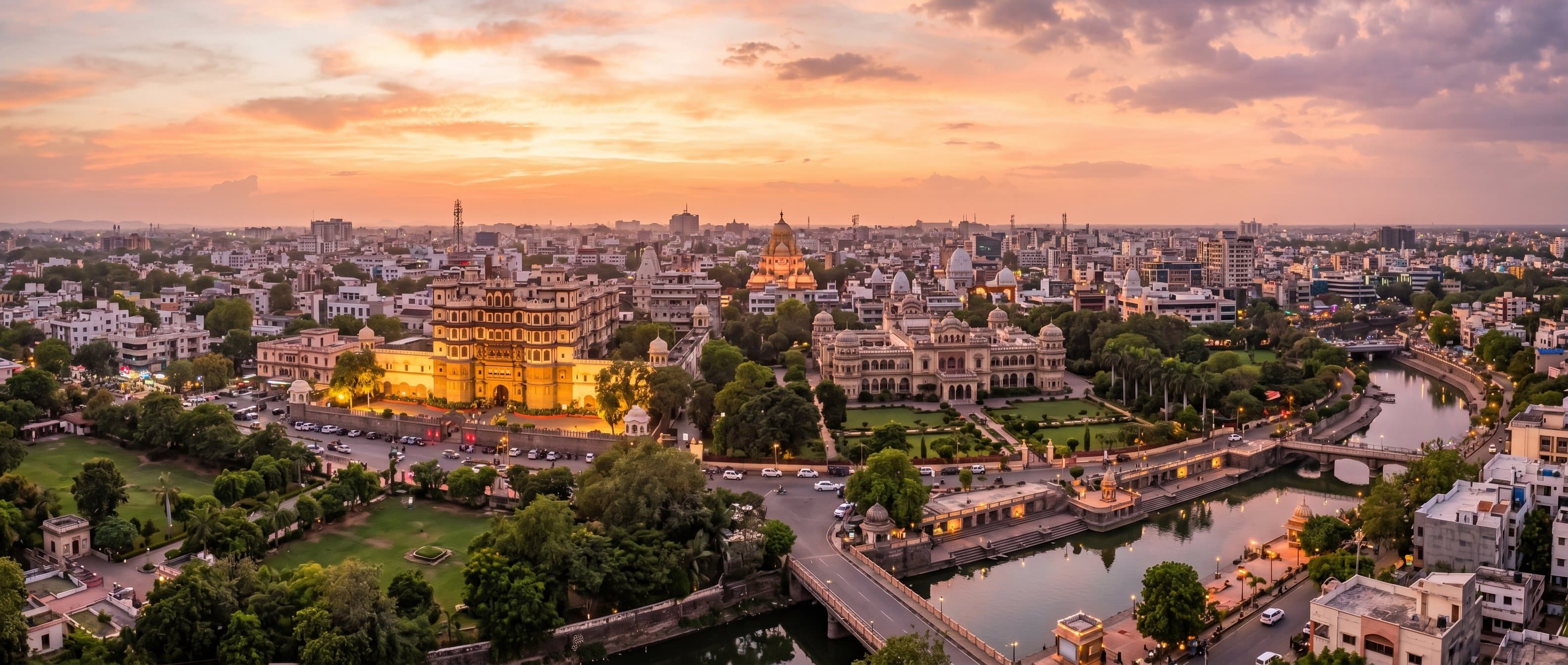
There is a quiet revolution happening in the heart of India, and it smells unmistakably of roasted spices, fresh coriander, and simmering ghee. Welcome to Indore. Crowned India's cleanest city for over half a decade, this vibrant metropolis in Madhya Pradesh is rapidly transforming from a regional industrial hub into a premier cultural and culinary destination. Indore deserves a prominent place on the modern traveller’s list right now because it shatters every preconceived notion about Indian cities. Here, pristine streets intersect with deep, palatial history, and the culinary scene is so deeply ingrained in the local psyche that night markets dictate the city's pulse.
For the internationally minded traveller in 2026, Indore is the ultimate 'insider' destination. It hasn’t been overwhelmed by the mass tourism that defines the Golden Triangle, yet it offers infrastructure that rivals—and in terms of civic cleanliness, surpasses—the megacities. The singular, most compelling reason to visit Indore is its nocturnal metamorphosis. At midnight, the city’s historic jewellery market, Sarafa Bazaar, shutters its gold vaults and transforms into a blazing, chaotic, and utterly magnificent street food paradise. It is an authentic, unapologetic celebration of Central Indian culture that you simply cannot experience anywhere else.
Best Time to Visit
Indore's climate dictates the rhythm of the tourist season. The undisputed 'sweet spot' for visiting is between November and February. During these winter months, the scorching Central Indian heat subsides, leaving behind crisp, cool mornings and incredibly pleasant afternoons that are perfect for palace-hopping and extended evening food walks. The daytime temperatures hover comfortably around 20°C to 25°C, making outdoor exploration effortless.
If you time your visit for late October or November, you will likely coincide with Diwali (the Festival of Lights). In Indore, Diwali is celebrated with an almost competitive zeal—markets are draped in marigolds, historic buildings are illuminated with millions of earthen lamps, and the city’s sweet shops work overtime to produce festive delicacies. Another notable event is Anant Chaudas (usually September), featuring magnificent nocturnal processions, though it falls during the humid post-monsoon phase. The summer months (April to June) should be strictly avoided by leisure travellers, as temperatures routinely soar past 40°C.
Travel Planning & Booking
Getting to Indore has never been easier, thanks to the expansion of Devi Ahilya Bai Holkar Airport (IDR), which now handles a growing number of international connections via major Indian hubs. For travellers coming from the UK, US, or EU, the most efficient routing is to fly into New Delhi (DEL) or Mumbai (BOM), followed by a swift 75-to-90-minute domestic hop to Indore. Premium carriers like Air India and Vistara (now integrated) offer seamless through-ticketing, while budget carrier IndiGo provides high-frequency connections. It is highly recommended to book international flights 3 to 4 months in advance, and domestic connections at least 4 weeks out to secure the best fares.
When it comes to booking, MakeMyTrip is essential for domestic Indian flights and local premium hotels, offering better regional inventory than western aggregators. Use Booking.com for seamless, reliable reservations at international chain hotels like the Marriott or Radisson Blu, where your Genius status can yield solid discounts. Agoda remains excellent for spotting flash deals on mid-range boutique properties.
Visa Requirements (2025/2026): The Indian e-Visa process is fully digital and highly efficient. UK, US, EU, and UAE nationals must apply for an e-Tourist Visa (typically valid for 30 days, 1 year, or 5 years) via the official government portal at least 4 days prior to arrival. Ensure your passport has at least six months of validity and two blank pages. You must carry a printed copy of your approved Electronic Travel Authorization (ETA). Indian expats with OCI (Overseas Citizen of India) cards enter visa-free.
Travel Insurance
Never travel to India without comprehensive travel insurance. While Indore is exceptionally clean and boasts excellent private healthcare facilities (like Bombay Hospital Indore), gastrointestinal adjustments—affectionately known as 'Delhi Belly'—are practically a rite of passage when diving into the street food culture. You need a policy that provides robust medical cover, including out-patient treatment and emergency evacuation. Furthermore, with the unpredictability of monsoon-affected domestic flights or sudden itinerary changes, trip cancellation cover is vital.
Recommended Providers:
- World Nomads: Ideal for the adventurous traveller. They cover a wide array of activities and allow you to buy or extend coverage while already on the road.
- SafetyWing: The go-to for digital nomads and long-term travellers. Their subscription model is highly flexible and cost-effective.
- Allianz Travel Insurance: Best for comprehensive, high-limit medical cover and robust trip cancellation policies, suited for luxury travellers.
Practical Tip: Ensure your policy specifically covers 'emergency medical evacuation' to your home country, and always keep a printed copy of your insurance certificate along with the 24/7 emergency assistance number in your day-bag.
Packing Guide
Packing for Indore requires balancing climate practicalities with cultural sensitivity. If visiting during the peak winter season (Nov-Feb), bring lightweight, breathable cottons for the daytime, but do not underestimate the evening chill—a high-quality fleece, a light down jacket, or a thick pashmina is essential for midnight food tours. For summer visits, loose-fitting linen is your only defence against the heat.
Culturally, India is conservative. While Indore is a modern city with a booming IT sector, traditional dress codes apply at heritage sites and temples. Both men and women should ensure their shoulders and knees are covered when visiting places like the Khajrana Ganesh Temple. Women will find a lightweight, wide scarf incredibly versatile—it can be draped over the shoulders, used to cover the head in religious sites, or used as a shield against dust.
Must-Bring Items for Indore: A high-capacity power bank (your phone will drain quickly taking photos and using ride apps), pharmaceutical-grade activated charcoal or probiotics to preempt stomach issues, and slip-on shoes for temple hopping. One item tourists over-pack: Heavy hiking boots. Unless you are heading deep into the state's national parks, lightweight, breathable walking trainers are far superior for navigating city streets and palaces.
Accommodation
Indore's accommodation scene has matured beautifully, catering to everyone from corporate high-flyers to intrepid backpackers. The city is largely defined by its main arterial roads, and choosing the right neighbourhood dictates your experience.
Vijay Nagar is the undisputed modern hub, bursting with high-end restaurants, malls, and wide, tree-lined avenues. It is the best place for luxury and business travellers. Palasia is slightly older, leafier, and oozes old-money charm, keeping you close to the historic centre without the chaos. AB Road (Agra-Bombay Road) serves as the commercial spine, offering great mid-range options with unbeatable connectivity.
For unadulterated luxury, the Indore Marriott Hotel in Vijay Nagar is unparalleled. It offers world-class amenities, exceptional Pan-Asian dining at Ni Hao, and a spectacular pool. If you seek a reliable, high-quality mid-range stay, the Sayaji Hotel (also in Vijay Nagar) is a local institution, famous for its grand buffet and excellent service. For a unique, boutique/budget experience, Moustache Hostel Indore provides a vibrant, clean, and highly social atmosphere tailored for the modern backpacker, featuring excellent local art and communal spaces.
Booking Tip: During the Indian wedding season (November to February), elite hotels like Marriott and Sayaji get booked out entirely for extravagant ceremonies. Book at least three months in advance if travelling during these months.
Getting Around Locally
Touching down at Devi Ahilya Bai Holkar Airport (IDR), you are merely 8 kilometres from the city centre. The absolute best way to reach your hotel is by booking an Uber or Ola directly from the arrivals terminal. The ride to Vijay Nagar or Palasia takes roughly 30-40 minutes and costs around ₹300-450 ($4-6). Alternatively, pre-paid taxis are available inside the terminal for a fixed, scam-free rate.
Within the city, Indore’s public transport crown jewel is the AICTSL iBus (Intelligent Bus Transit System). It runs on a dedicated BRTS (Bus Rapid Transit System) corridor straight down the middle of AB Road. It is air-conditioned, phenomenally cheap (around ₹15-20 / $0.20), and completely bypasses standard traffic. However, for door-to-door convenience, ride-hailing apps Ola and Uber are indispensable. You can book air-conditioned cars or, for shorter distances, nimble auto-rickshaws directly through the app, completely eliminating the need to haggle.
Common Tourist Mistake: Attempting to hail a traditional auto-rickshaw off the street without negotiating the price beforehand. Always use Ola or Uber to book autos—the price is fixed algorithmically, saving you from the inevitable 'tourist tax'.
Top Tourist Attractions (Must-See)
Indore's attractions weave a narrative of the powerful Holkar dynasty, juxtaposed against its modern foodie identity. 1. Rajwada Palace: This 7-storey structure is the historical soul of Indore, blending Maratha, Mughal, and French architectural styles. It matters because it is the literal and figurative centre of the city. Opening hours: 10:00 AM - 5:00 PM (Closed Mondays). Entry: ₹10 ($0.15). Best time: Late afternoon. Insider tip: Don't miss the spectacular light and sound show held in the evenings. 2. Lal Bagh Palace: The most grandiose residence of the Holkar rulers, reflecting a heavy European influence with Italian marble and Belgian stained glass. Opening hours: 10:00 AM - 5:00 PM (Closed Mondays). Entry: ₹250 ($3) for foreigners. Best time: Early morning. Insider tip: Look closely at the main gates—they are exact replicas of the gates at Buckingham Palace. 3. Sarafa Bazaar: A jewellery market by day, it transforms into a legendary vegetarian street food market at midnight. Opening hours: 9:00 PM - 2:00 AM. Entry: Free. Best time: 11:00 PM. Insider tip: Keep an eye on your belongings in the dense crowds, and always share portions so you have stomach space to try more dishes. 4. Chappan Dukan (56 Shops): A remarkably clean, pedestrianised street featuring exactly 56 food vendors. It is the daytime equivalent of Sarafa. Opening hours: 6:00 AM - 10:00 PM. Entry: Free. Best time: 8:00 AM for fresh breakfast. Insider tip: This is the definitive place to eat Indore's famous Poha Jalebi; go to Vijay Chaat House. 5. Khajrana Ganesh Temple: Built by the revered queen Ahilyabai Holkar, this is one of Central India's wealthiest and most important Hindu temples. Opening hours: 5:00 AM - 12:00 AM. Entry: Free. Best time: Early morning to avoid massive crowds. Insider tip: Dress modestly and prepare to check your shoes at the entrance booths. 6. Central Museum (Indore Museum): Houses an exceptional collection of Parmar sculptures, ancient coins, and medieval armour. Opening hours: 10:00 AM - 5:00 PM (Closed Mondays). Entry: ₹100 ($1.20) for foreigners. Best time: Midday, to escape the afternoon heat. Insider tip: The prehistoric artefact section contains fascinating remnants from the Narmada River valley civilizations. 7. Patalpani Waterfall: Located 30km from the city, a stunning 300-foot waterfall surrounded by lush greenery. Opening hours: 6:00 AM - 6:00 PM. Entry: Free. Best time: July to September (Monsoon). Insider tip: Avoid standing too close to the riverbed, as flash floods during monsoon are a known hazard.
Local Food & Dining
To visit Indore and not indulge in the food is missing the point of the city entirely. The cuisine is heavily vegetarian, deeply flavorful, and unapologetically rich. Must-try dishes include: Poha Jalebi, the ultimate Indori breakfast of flattened rice cooked with turmeric, onions, and topped with crunchy sev, served alongside piping hot, syrupy jalebis. Bhutte Ka Kees is a masterful creation of grated corn simmered in milk, mustard seeds, and green chillies. Dal Bafla features wheat balls boiled then roasted over dung cakes, crushed and drenched in pure ghee, served with spicy lentils. Khopra Patties are deep-fried potato spheres stuffed with tangy, spicy coconut.
For a high-end dining experience, book a table at Kebabsville at the Sayaji Hotel, offering an exceptional poolside barbecue and buffet that caters beautifully to both carnivores and vegetarians. For mid-range, Nafees Restaurant in Palasia is legendary for its Mughlai cuisine, offering some of the best Haleem and Biryani in Central India. For street food, Joshi Dahi Bada House in Sarafa Bazaar is an absolute must—not just for the taste of their yogurt-soaked lentil dumplings, but for the theatrical way the owner tosses the bowls into the air.
Dietary Note: Indore is a paradise for vegetarians and vegans (though vegans must explicitly ask to avoid ghee/butter). While the street food is generally safe, ease your stomach into it, stick to piping hot items, and only drink bottled or thoroughly filtered RO water.
Safety & Emergency Contacts
Indore is remarkably safe for tourists. As India's cleanest city, there is a palpable sense of civic pride that extends to public safety. Violent crime against tourists is exceedingly rare. The main hazards are crossing the chaotic roads and minor pickpocketing in hyper-crowded areas like Sarafa Bazaar. Female travellers should exercise standard global precautions: avoid deserted alleys late at night and use official ride-hailing apps rather than hailing random cabs post-midnight.
In case of emergencies, healthcare is excellent. The nearest international-standard medical facility is Bombay Hospital Indore (Ring Road, Vijay Nagar), equipped with state-of-the-art trauma and intensive care units.
Emergency Numbers: National Emergency: 112 Police: 100 Ambulance: 108 Fire: 101 Women's Helpline: 1091 MP Tourism Helpline: 1800-233-7777
Embassy Contacts (Nearest Diplomatic Missions): As a regional city, Indore does not host international embassies. You must contact missions in New Delhi or Mumbai: UK High Commission (New Delhi): +91 11 2419 2100 | Shantipath, Chanakyapuri, New Delhi 110021. US Consulate General (Mumbai): +91 22 2672 4000 | C-49, G-Block, Bandra Kurla Complex, Mumbai 400051. UAE Consulate (Mumbai): +91 22 6628 1111 | No 7, Jolly Maker Apartments 1, Cuffe Parade, Mumbai. Indian Citizens (Passport Office Indore): +91 755 258 3162 | ISBT Campus, Scheme 140, Indore.
Useful Apps & Resources
To navigate Indore like a local, your smartphone is your best asset. Download Uber and Ola before you arrive; they are essential for reliable, meter-free transportation. The Chalo App is brilliant if you wish to track the city's iBus network in real-time. For food delivery to your hotel when you are too tired to venture out, Zomato and Swiggy are the dominant forces, delivering from nearly every restaurant in the city. Finally, install MakeMyTrip for seamless domestic flight and train bookings.
For official information, check the Madhya Pradesh Tourism Board website (www.mptourism.com), which offers excellent regional itineraries and verified heritage hotel bookings.
Closing
Indore is a city that rewards the curious. It is a place where royalty echoes through marble corridors by day, and culinary magic ignites the streets by night. By visiting Indore, you are stepping off the heavily trodden tourist trail and immersing yourself in the authentic, dynamic, and spotlessly clean heart of modern India. Pack an appetite, bring an adventurous spirit, and get ready to fall in love with Central India. For more expert itineraries, destination guides, and travel hacks for the modern adventurer, explore more at www.ainexusworld.com.