
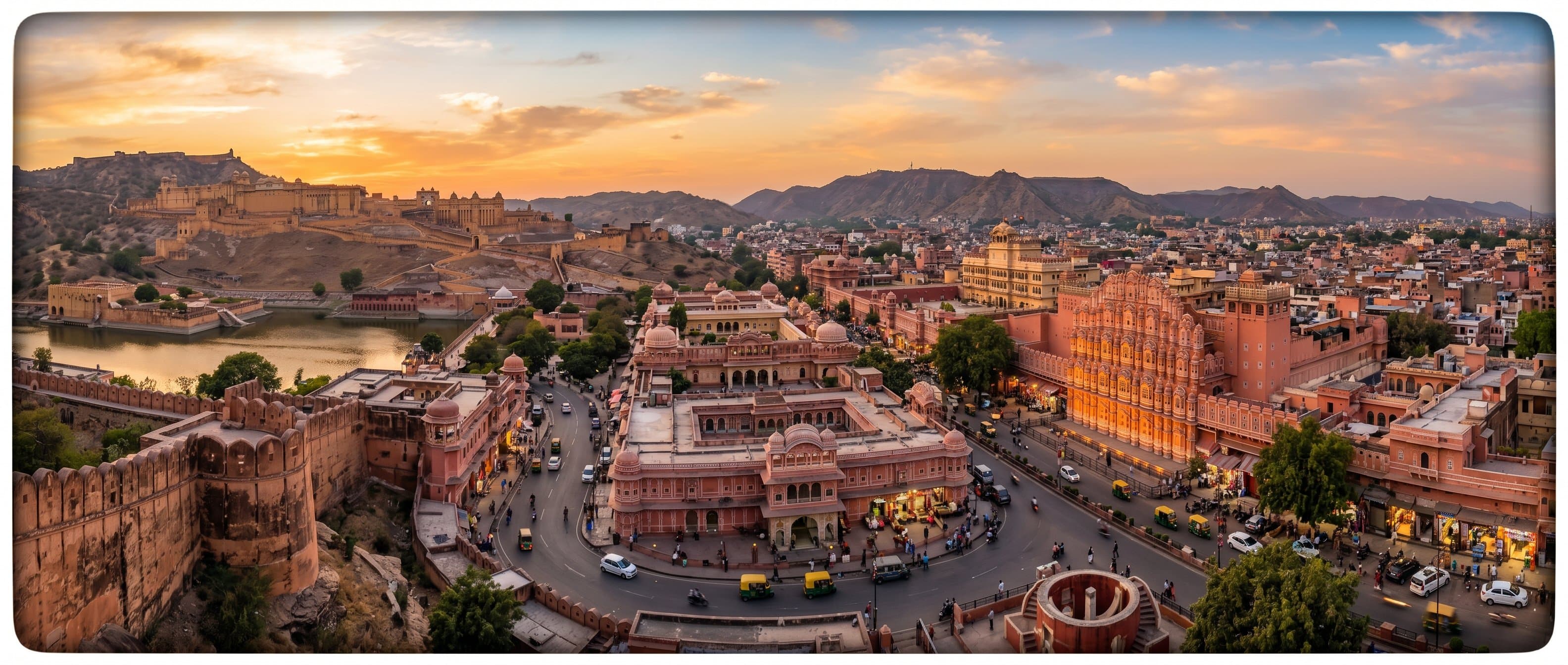
The Ultimate Jaipur Travel Guide 2026: Everything You Need to Know
Introduction
There has never been a better time to pack your rucksack for Jaipur. While the Pink City has long been a staple of India's famed Golden Triangle, 2026 sees the destination maturing beyond a mere stopover. With the recent completion of the Delhi-Mumbai Expressway significantly cutting road travel times, and a renaissance in boutique heritage restorations, Jaipur is demanding deeper exploration. Why does it deserve a place on your list right now? The city offers an unparalleled contrast: you can sip artisan cortados in C-Scheme alongside digital nomads in the morning, and by afternoon, find yourself haggling for hand-block prints in a chaotic 300-year-old bazaar. It is a city that tests your senses but rewards your patience with affordable luxury, immense history, and some of the finest cuisine in the subcontinent.
Best Time to Visit
Timing is everything when visiting Rajasthan. The climate swings from bitterly cold to unbearably hot. The traditional tourist season runs from October to March, but within this window, there are nuances. January to February brings crisp, clear days perfect for exploring exposed forts, with the added bonus of the spectacular Jaipur Literature Festival in late January. March ushers in warmer weather and the euphoric celebrations of Holi and the Elephant Festival. April to June is the blistering summer; temperatures regularly breach 40°C, making daytime exploration miserable, though hotel prices plummet. July to September is the monsoon season, transforming the arid Aravalli hills into a lush, vivid green. While it is highly photogenic, humidity is stifling and sudden downpours can disrupt plans.
The Sweet Spot: February. The daytime temperature hovers around a very comfortable 24°C, skies are perpetually blue, and the festival atmosphere in the city is electric.
Travel Planning & Booking
Reaching Jaipur is straightforward, though direct international flights from Europe or the Americas are non-existent. The most efficient route is flying into Indira Gandhi International Airport in New Delhi (DEL) and either taking a short 50-minute domestic hop on IndiGo or Air India, or utilising the new expressway (a 4-hour taxi ride). Booking lead times should be generous: for travel between November and February, secure your accommodation and domestic trains at least two to three months in advance, as the best boutique hostels and mid-range havelis sell out entirely.
When it comes to booking platforms, use MakeMyTrip for domestic flights and intercity trains (it interfaces best with Indian payment gateways), Hostelworld for vetted backpacker hubs in Bani Park, and Agoda which consistently offers the sharpest discounts on Asian properties.
Visa Requirements for 2026
- UK, US, EU Nationals: Must apply for an Indian e-Visa prior to arrival. Applications should be submitted at least 4 days in advance, though earlier is advised. Ensure your passport has 6 months validity and two blank pages.
- UAE Nationals: Eligible for the e-Visa facility, following the same process as UK/US citizens.
- Indian Nationals: No visa required. A valid Aadhaar Card, Voter ID, or Passport is necessary for domestic flight check-in and hotel registration.
Travel Insurance
Never travel to India without comprehensive insurance. Jaipur is generally safe, but the risk of severe gastrointestinal distress (the infamous 'Delhi Belly'), minor traffic accidents from unpredictable roads, or heatstroke is elevated. You need a policy that explicitly covers emergency medical evacuation, as the best hospitals in Jaipur are private and require upfront payment guarantees.
Top Providers for 2026:
- World Nomads: Essential for backpackers. They cover almost all adventurous activities, including hot air ballooning over Amer Fort.
- SafetyWing: The go-to for digital nomads. It functions as a flexible monthly subscription and covers standard medical and travel delays.
- Heymondo: Excellent for those who want an easy-to-use app with a 24/7 medical chat feature to consult a doctor before rushing to a clinic.
Practical Tip: Ensure your policy includes 'trip interruption' cover. Indian domestic flights and trains are notoriously subject to severe delays, particularly during the winter fog in Northern India.
Packing Guide
Jaipur requires strategic packing. During the peak season (winter), layering is essential. Mornings are frigid (around 8°C), demanding a fleece or light down jacket, while afternoons require breathable cottons. Modesty is crucial in Rajasthan. Both men and women should keep shoulders and knees covered, particularly when visiting temples and rural areas. Loose linen trousers, long maxi skirts, and breathable cotton shirts are ideal.
Must-Bring Items Specific to Jaipur:
- A high-quality filtering water bottle (like LifeStraw) to safely drink tap water and reduce single-use plastic.
- Slip-on walking shoes. You will be taking your shoes off constantly at temples and historic monuments.
- Activated charcoal and reliable probiotics for stomach acclimatisation.
What Tourists Over-pack: Heavy hiking boots. Unless you are doing a specific multi-day trek in the Himalayas beforehand, trainers or comfortable walking sandals are entirely sufficient for Jaipur's forts.
Accommodation
Where you sleep dictates your Jaipur experience. The Pink City (Old City) puts you in the chaotic heart of the action, close to major monuments but extremely noisy. Bani Park is the historic residential district, heavily favoured by travellers for its leafy streets and abundance of converted heritage havelis. C-Scheme is the modern, upscale neighbourhood, boasting the city's best third-wave coffee shops, co-working spaces, and boutique dining.
Booking Tip: When booking budget or mid-range havelis, specifically request a room on a higher floor facing away from the main road. Street noise in Jaipur begins at 5:00 AM.
Getting Around Locally
Arriving at Jaipur International Airport (JAI), the most stress-free option to the city centre (approx. 30–45 minutes) is a pre-paid taxi from the booth inside the terminal, costing around 500-600 INR ($6-8). Alternatively, utilise the free airport Wi-Fi to book an Uber or Ola cab. Do not attempt to walk out to the main road to hail a rickshaw with heavy luggage.
For daily exploration, Uber and its Indian rival Ola are essential. They eliminate the exhausting need to haggle and offer options for auto-rickshaws directly within the app. The Jaipur Metro is clean and efficient but currently has limited reach, primarily useful only for getting from Mansarovar to Chandpole.
Common Tourist Mistake: Hiring an auto-rickshaw driver for the whole day based on an unusually cheap quote (e.g., 200 INR). They will inevitably divert you to commission-paying textile and gem emporiums, wasting hours of your itinerary.
Top Tourist Attractions (Must-See)
Amer Fort (Amber Fort): A majestic sandstone and marble citadel that perfectly encapsulates Rajput architecture. Come right at opening time (8:00 AM) to beat the punishing tour-bus crowds. Entry: 550 INR ($7). Insider Tip: Skip the controversial elephant rides and walk the 15-minute cobbled incline; the views are stunning.
Hawa Mahal (Palace of Winds): The iconic five-storey pink facade designed so royal women could observe street festivals unseen. Best viewed from the street at sunrise. Entry: 200 INR ($2.50). Insider Tip: Cross the street to the Wind View Cafe to photograph the facade perfectly at eye level while sipping chai.
City Palace: The current residence of the Jaipur royal family. It is a stunning complex of courtyards and museums. Entry: 700 INR ($8.50) for standard museum access. Insider Tip: If budget allows, the Royal Grandeur tour (3500 INR) grants access to the breathtaking blue Chhavi Niwas room, a photographer's dream.
Jantar Mantar: An 18th-century UNESCO World Heritage astronomical observation site featuring the world's largest stone sundial. Entry: 200 INR ($2.50). Insider Tip: Hire an official guide here; without one, the magnificent instruments just look like abstract sculptures.
Nahargarh Fort: Perched high on the Aravalli hills, offering the definitive panoramic view of Jaipur. Entry: 200 INR ($2.50). Insider Tip: Visit late afternoon to explore the stepwell, then stay for an unparalleled sunset over the city.
Galtaji (Monkey Temple): A hauntingly beautiful series of ancient Hindu temples built into a narrow gorge, inhabited by thousands of macaques. Entry: 100 INR ($1.20) camera fee. Insider Tip: Keep all food and loose items strictly hidden; the monkeys are aggressive and fearless.
Local Food & Dining
Rajasthani cuisine is heavily influenced by the arid environment and royal hunting traditions. You must try Laal Maas (a fiery mutton curry cooked with Mathania chillies), Dal Baati Churma (hard wheat rolls served with lentils and sweet crumbled dough), and Pyaaz Kachori (a deep-fried pastry stuffed with spicy onions).
Dietary Note: Jaipur is incredibly hospitable to vegetarians and vegans, with much of the local diet being naturally meat-free. However, vegans should constantly check for ghee (clarified butter), which is liberally used in cooking and breads.
Safety & Emergency Contacts
Jaipur is considered safe for tourists, but it requires 'city smarts'. Violent crime against foreigners is exceedingly rare, but petty theft, elaborate gem scams, and aggressive touting are commonplace. Solo female travellers should exercise heightened caution after dark and avoid walking alone in poorly lit areas or accepting drinks from strangers. Be particularly wary of overly friendly locals offering to show you 'wholesale' gem markets.
In a medical emergency, the standard of private healthcare in Jaipur is excellent. Head immediately to Fortis Escorts Hospital or Manipal Hospital, both of which have English-speaking staff and deal regularly with international insurance companies.
Useful Apps & Resources
Your smartphone is your best survival tool in India. Download Ola and Uber for transparently priced transport. Zomato and Swiggy are essential for food delivery straight to your hostel or discovering high-rated local eateries. MakeMyTrip is invaluable for checking train statuses and booking domestic flights. WhatsApp is universally used in India—even for contacting your hotel reception or local guides. For official information, consult the Rajasthan Tourism website (tourism.rajasthan.gov.in).
Closing
Jaipur is not a city you simply observe; it is a city you dive into. Yes, the traffic is loud and the bazaars are intense, but the reward is a genuinely transformative travel experience. From the quiet majesty of Nahargarh Fort at sunset to the complex spices of a roadside street stall, the Pink City delivers memories that linger long after you have departed. Prepare smartly, pack light, and embrace the chaos. For more detailed itineraries, budget hacks, and hidden gems across Asia, continue exploring www.ainexusworld.com.
FAQ
- Is Jaipur safe for solo female travellers? Yes, but caution is required. Dress modestly, avoid walking alone at night, and use verified apps like Uber instead of hailing rickshaws off the street after dark.
- How many days do I need in Jaipur? Three full days is the minimum to see the major forts, the Pink City, and allow some time for shopping and cafe hopping without burning out.
- Can I drink the tap water in Jaipur? Absolutely not. Only consume sealed bottled water or use a high-quality purifier like a LifeStraw. Even use bottled water for brushing your teeth.
- What is the local currency and can I use cards? The Indian Rupee (INR). While credit cards and UPI (local digital payment) are widely accepted in hotels and restaurants, you must carry cash for street food, rickshaws, and small market purchases.
- Do I need to tip in Jaipur? Tipping is expected. Leave 10% at restaurants (if a service charge isn't already added), 50 INR a day for hotel housekeeping, and 200-300 INR for a full-day guide.