
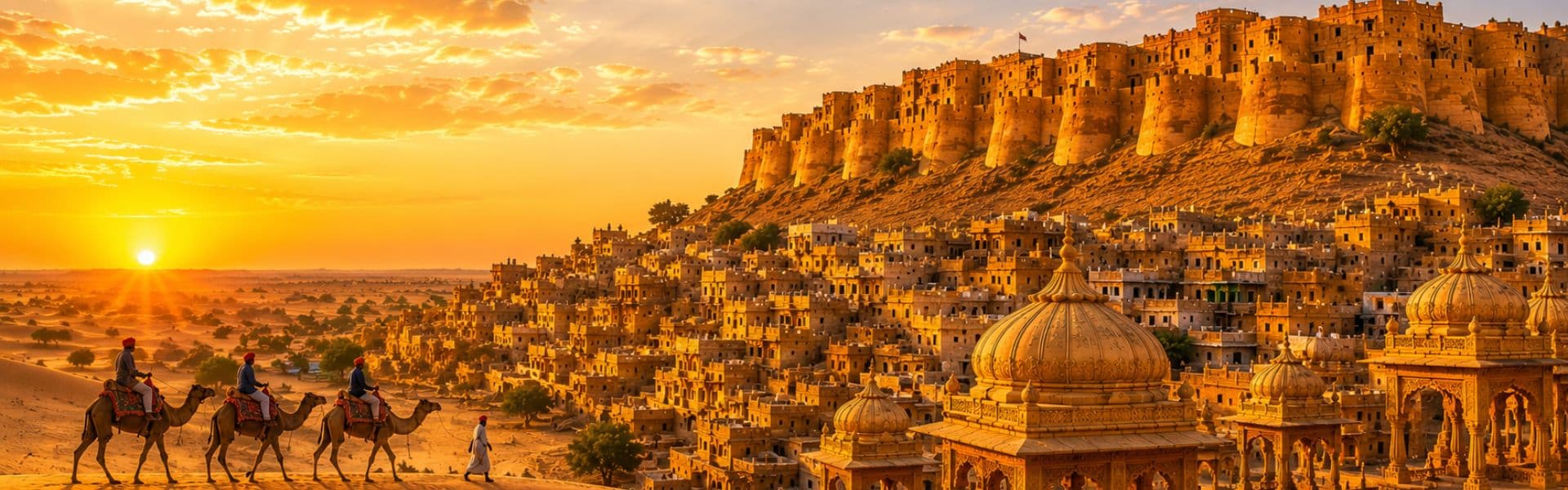
Introduction: The Golden Mirage of the Thar
Jaisalmer, often referred to as the 'Golden City', is not merely a destination; it is a time-travelling experience. In 2026, it remains one of the few places on Earth where you can inhabit a medieval fortress that is still buzzing with the daily lives of nearly 3,000 residents. Carved entirely from yellow sandstone, the city glows with an amber hue as the sun dips below the horizon of the Thar Desert. For the modern backpacker, Jaisalmer offers a rare blend of rugged adventure—think sleeping under the Milky Way in the desert—and sophisticated heritage that doesn't break the bank.
Why visit now? While Rajasthan's 'Pink' and 'Blue' cities (Jaipur and Jodhpur) have seen a surge in mass tourism, Jaisalmer’s remote location on the western frontier has preserved a grit and authenticity that caters perfectly to the digitally savvy, internationally minded traveller. In 2026, new sustainable desert camps and heritage restoration projects within the fort offer more ways to engage with the local community responsibly than ever before.
Best Time to Visit: Navigating the Desert Climate
The climate in Jaisalmer is extreme, and timing your visit is crucial for both comfort and your wallet. The 'sweet spot' for 2026 is late October or early March, when the weather is pleasant but the peak holiday crowds of December have either not arrived or have just departed.
- January: Cold nights (5°C), bright sunny days. Peak season pricing.
- February: The Desert Festival month. Vibrant, but accommodation must be booked 6 months ahead.
- March: Warming up (30°C). Great for deals before the heat hits.
- April: Hot (35°C+). Crowds thin out significantly.
- May & June: Brutal heat (45°C+). Many desert camps close. Not recommended.
- July & August: Monsoon season. Humidity rises, though rainfall is low. Very cheap prices.
- September: Humidity lingers. The desert begins to turn a rare shade of green.
- October: The season begins. Ideal for photographers.
- November: Perfect trekking weather. Moderate pricing.
- December: Cold nights, peak domestic tourism. Very expensive and crowded.
Travel Planning & Booking
In 2026, reaching Jaisalmer is easier thanks to expanded regional connectivity. Most travellers arrive via Delhi (DEL) or Jaipur (JAI). IndiGo and SpiceJet operate seasonal flights directly into Jaisalmer Airport (JSA) from October to March. For a more iconic experience, the 'Delhi-Jaisalmer Express' (Train 14659) offers a 17-hour overnight journey that is a rite of passage for backpackers.
Visa Requirements: For 2025/2026, most UK, US, and EU nationals can apply for the 30-day or 1-year e-Tourist Visa online. UAE nationals are also eligible for the e-Visa. Indian nationals require no permits, though carrying a valid Aadhar or PAN card is mandatory for hotel check-ins. Ensure your passport has at least 6 months validity from your date of arrival.
Travel Insurance: Non-Negotiable Protection
Desert travel carries unique risks. From camel-related accidents to heat exhaustion or the dreaded 'Delhi Belly', comprehensive insurance is vital. Ensure your policy covers 'adventure activities' if you plan on camel trekking or dune bashing. Recommended providers for 2026 include World Nomads (best for adventure), SafetyWing (best for digital nomads), and Allianz (best for comprehensive medical cover).
Packing Guide: Desert Essentials
The desert requires a 'layering' strategy. While days are scorching, desert nights, especially in winter, can drop to near freezing. Bring breathable linen or cotton clothing for the day, but a high-quality down jacket for overnight desert stays. Must-bring: A high-SPF mineral sunscreen, a reusable water filter bottle (to reduce plastic waste), and a sturdy scarf (Pashmina or Shemagh) to protect against sudden sand gusts. Tourists often over-pack heavy denim; it’s too hot for the day and doesn't dry quickly.
Accommodation: Where to Sleep in the Sands
Jaisalmer offers three distinct stay experiences. Staying inside the Fort is magical but puts pressure on the ancient sewage system—choose heritage properties that fund sustainable restoration. Outside the Fort offers better facilities and views of the citadel. For desert nights, head to Sam or Khuri Dunes.
- Luxury: Suryagarh Jaisalmer. A fortress-hotel that redefines Rajasthani opulence.
- Mid-Range: Jaisalmer Marriott Resort & Spa. Reliable luxury with a stunning pool and fort views.
- Boutique/Budget: Zostel Jaisalmer. Located just outside the fort, it’s the social hub for international backpackers in 2026.
Getting Around Locally
The core of Jaisalmer is incredibly walkable, especially within the fort's narrow winding alleys. For longer trips, Auto-rickshaws are the primary mode of transport. Negotiate the fare before starting; a typical cross-town trip should cost ₹100-₹150. For 2026, the 'Ola' app is operational for booking cabs, providing price transparency that street-hailing lacks.
Top Tourist Attractions
- Jaisalmer Fort (Sonar Qila): The world’s only living fort. Open 24/7. Free entry to the fort itself; Palace Museum is ₹500. *Tip: Get lost in the residential back lanes at sunrise.*
- Patwon Ki Haveli: A cluster of five grand havelis with intricate stone carving. Open 9 AM - 6 PM. Entry: ₹250.
- Gadisar Lake: An artificial reservoir surrounded by shrines. Best at sunset. Entry: Free; Boat rides: ₹100-₹300.
- Bada Bagh: Royal cenotaphs with stunning golden-hour views. Open 9 AM - 6 PM. Entry: ₹300.
- Sam Sand Dunes: The classic desert experience. 45 mins from the city. Go for the overnight 'non-tourist' camel trek to avoid the crowds.
- Kuldhara Abandoned Village: A haunted 13th-century village. Open 8 AM - 6 PM. Entry: ₹50.
Local Food & Dining
Rajasthani cuisine is hearty and spice-forward. Must-try dishes include Ker Sangri (desert beans and berries) and Laal Maas (spicy mutton curry). For a high-end experience, The Trio offers refined dining with views of the Gandhi Chowk. For mid-range, Desert Boy’s Dhani provides an atmospheric garden setting. Street food lovers should head to Hanuman Chowk for Pyaaz Kachori.
Safety & Emergency
Jaisalmer is generally very safe, even for solo female travellers, though standard precautions apply. Be wary of 'camel safari' touts who promise 'secret dunes'—always book through reputable hostels or hotels. In 2026, the local tourist police are very active near the Fort gate.
For more deep-dives into Indian heritage travel, explore ainexusworld.com.