
Introduction
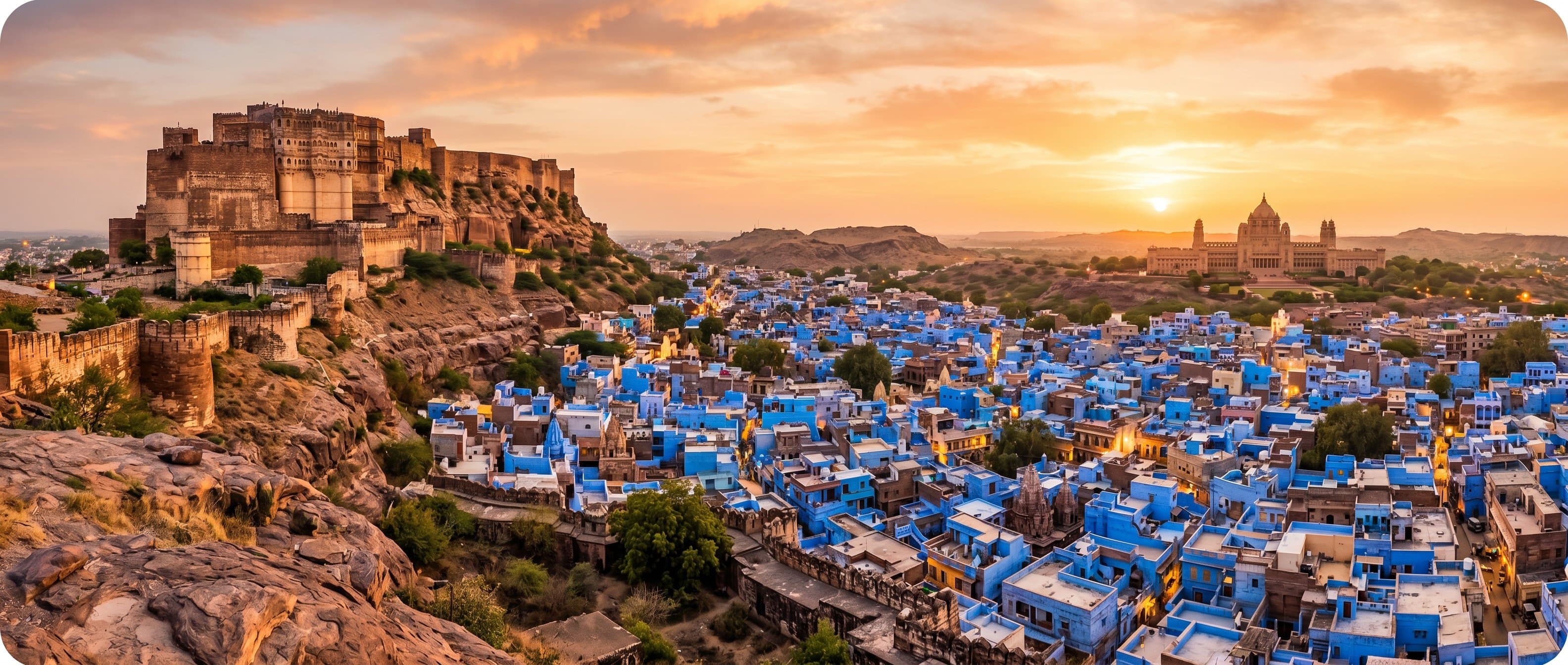
There is a singular moment every traveller experiences when arriving in Jodhpur: stepping onto a rooftop café in the Old City and seeing the sheer, colossal scale of Mehrangarh Fort rising hundreds of feet above a sea of indigo-washed houses. Jodhpur deserves a prominent place on your 2026 travel itinerary because it remains vividly, unapologetically authentic. While other Rajasthani cities have succumbed entirely to polished tourism, Jodhpur's Navchowkiya neighbourhood is a living, breathing medieval metropolis. Here, scent of frying spices mingles with the chime of temple bells, and beautifully restored stepwells serve as casual meeting spots for digitally savvy backpackers and local youth alike. It is the raw, unvarnished soul of the Thar Desert.
Best Time to Visit
Jodhpur is a desert city, meaning its climate dictates the rhythm of life. The sweet spot for a visit is between late October and November. During this window, the oppressive heat of the summer has dissipated, leaving crisp, sunny days perfect for exploring. More importantly, this period usually coincides with Diwali, transforming the Blue City into a twinkling canvas of oil lamps, and the internationally acclaimed Rajasthan International Folk Festival (RIFF), which brings incredible musical performances to the ramparts of Mehrangarh Fort under the full moon.
If you prefer fewer crowds, late January to February offers incredibly pleasant daytime temperatures (around 20-25°C), making it ideal for budget backpackers wanting to hike the Rao Jodha Desert Rock Park without melting. Avoid the brutal summer months from May to July unless you possess an extraordinary tolerance for temperatures soaring past 40°C.
Travel Planning & Booking
Reaching Jodhpur is easier than ever in 2026. Jodhpur Airport (JDH) connects seamlessly to major hubs. The best flight routes are via New Delhi (DEL) or Mumbai (BOM) on reliable domestic carriers like IndiGo or Air India. For a true backpacker experience, the overnight Mandore Express train from Old Delhi to Jodhpur is a rite of passage—book an AC 2-Tier or 3-Tier sleeper class ticket at least 30 days in advance via the IRCTC portal or 12Go Asia, as trains sell out rapidly.
For accommodation, Agoda remains the strongest platform for competitive rates in the Indian subcontinent, whilst Hostelworld is indispensable for securing beds in Jodhpur's thriving boutique hostel scene. For UK, US, EU, and UAE nationals, entry to India requires an e-Visa. You must apply via the official Indian Government e-Visa portal at least four days before arrival. The 30-day, 1-year, or 5-year tourist e-Visas are processed digitally. Ensure your passport has at least six months of validity and two blank pages.
Travel Insurance
Never travel to the fringes of the Thar Desert without comprehensive travel insurance. Jodhpur presents specific environmental challenges: extreme temperature fluctuations, the ubiquitous "Delhi Belly" (traveller's gastroenteritis), and the risk of bites from the aggressive macaque monkeys that roam the old town (which necessitate immediate rabies prophylaxis). Furthermore, if you plan to try the exhilarating Flying Fox zip-line over the fort's battlements, you need an insurance policy that explicitly covers adventure activities. World Nomads is excellent for backpackers requiring adventure cover, SafetyWing is ideal for long-term digital nomads on a budget, and Allianz offers robust medical evacuation cover—crucial if you plan to venture deeper into remote desert villages. Practical tip: Always ensure your policy covers medical treatment at private facilities like Goyal Hospital, as public hospitals can be overwhelming.
Packing Guide
Packing for Jodhpur requires a strategic approach to modesty and climate. The desert temperature swings wildly; a winter day in January might be 25°C at noon but plummet to 8°C by midnight. Bring breathable, loose-fitting cotton or linen trousers and long-sleeved shirts to protect against the fierce sun and respect local conservative norms. Women should pack a lightweight scarf or pashmina—it is invaluable for draping over shoulders when entering temples, shielding your face from dust on a rickshaw ride, or keeping warm on breezy rooftops. Do not forget hydration salts (electrolytes) and sturdy, slip-on sandals, as you will be removing your shoes frequently at religious sites. One item tourists consistently over-pack is heavy denim jeans; they are entirely impractical in the Rajasthani heat and take days to dry if washed.
Accommodation
Your experience of Jodhpur is heavily influenced by where you sleep. Navchowkiya is the heart of the Blue City, offering labyrinthine alleys and profound authenticity. Makrana Mohalla, near the Toorji Ka Jhalra stepwell, is the hip, gentrified centre of backpacker café culture. Ratanada sits outside the old city walls, offering wider streets, peace, and mid-range comfort. For a luxury splurge, the legendary Umaid Bhawan Palace (Taj) offers an unparalleled royal experience. Mid-range travellers should book Pal Haveli, a stunning heritage property right by the Clock Tower. Budget backpackers will find their tribe at Zostel Jodhpur, offering unbeatable rooftop fort views and immaculate dorms. Booking tip: If staying in Navchowkiya, confirm with your host how close a rickshaw can get, as cars cannot navigate the narrow blue alleys, meaning you will have to carry your backpack the rest of the way.
Getting Around Locally
From Jodhpur Airport (JDH) to the city centre, an Ola or Uber cab is the most hassle-free option, costing roughly INR 300-400 ($4-5) for the 30-minute journey. Pre-paid taxis are also available at the arrivals terminal. Once inside the old city walls, the absolute best mode of transport is your own two feet. The alleys are simply too narrow for cars. For slightly longer trips to Umaid Bhawan or Mandore Gardens, auto-rickshaws (tuk-tuks) are ubiquitous. Download the Ola app to bypass the exhaustion of haggling; if you must hail one off the street, firmly agree on the fare before getting in. A common tourist mistake is accepting a rickshaw driver's offer for a "free city tour" which inevitably ends at an overpriced textile emporium where you will be pressured to buy.
Top Tourist Attractions (Must-See)
1. Mehrangarh Fort: Arguably the most magnificent fort in India. Its history is steeped in battles, royal extravagance, and stunning architecture. Open 9:00 AM - 5:00 PM. Entry is INR 600 ($7). Visit at 9:00 AM to beat the crowds. Insider tip: Do not skip the exceptional audio guide (included in foreign entry tickets); it was narrated by the royal family and brings the citadel to life.
2. Toorji Ka Jhalra (Stepwell): Built in the 1740s, this restored architectural marvel drops nearly 200 feet into the earth. Open 24/7. Entry is free. Best at mid-morning. Insider tip: Grab an iced coffee at the adjacent Stepwell Café and watch local youths perform daring dives into the water.
3. Jaswant Thada: A breathtaking milky-white marble cenotaph built in 1899, often called the Taj Mahal of Marwar. Open 9:00 AM - 5:00 PM. Entry is INR 50. Best visited in the late afternoon when the setting sun makes the thin marble glow. Insider tip: The gardens here are incredibly peaceful—a perfect spot to read a book and escape the city noise.
4. Rao Jodha Desert Rock Park: A 70-hectare ecological restoration project showcasing native Thar desert flora. Open 7:00 AM - 6:30 PM. Entry is INR 100. Best in the early morning for bird watching. Insider tip: Take the yellow trail for the most dramatic, uncrowded angles of the fort walls above.
5. Sardar Market & Clock Tower (Ghanta Ghar): The chaotic, vibrant commercial heart of Jodhpur selling spices, textiles, and handicrafts. Open 10:00 AM - 8:00 PM. Free entry. Best at dusk. Insider tip: Keep a firm grip on your belongings here, as the crowded bazaar is a hotspot for pickpockets.
6. Mandore Gardens: The ancient, abandoned capital of the Marwar kings before Jodhpur was founded, featuring stunning dark-red cenotaphs. Open 8:00 AM - 8:00 PM. Entry is INR 50. Insider tip: Beware the aggressive langur monkeys; keep all food hidden away in a zipped bag.
Local Food & Dining
Jodhpuri cuisine is a fiery, ghee-laden revelation. You absolutely must try Makhaniya Lassi, a thick, saffron-infused yogurt drink. For savoury treats, the Mirchi Bada (a giant chilli stuffed with potato, battered and deep-fried) and Pyaaz Ki Kachori (crispy pastry filled with spiced onions) are non-negotiable. For fine-dining, book a table at Darikhana at RAAS Hotel, offering refined Rajasthani thalis ($$$) with the most spectacular illuminated fort view. Mid-range diners should head to Indique at Pal Haveli for excellent curries and sunset panoramas ($$). For street food, join the chaotic queue at Shahi Samosa near the Clock Tower ($) for the freshest, cheapest snacks in town. Dietary note: Jodhpur is a paradise for vegetarians, but vegans should explicitly ask for food cooked in oil rather than 'ghee' (clarified butter), which is used liberally.
Safety & Emergency Contacts
Jodhpur is generally very safe for tourists, and violent crime against foreigners is exceptionally rare. The main annoyances are aggressive touts around the Clock Tower, overcharging rickshaw drivers, and the street dogs/monkeys. Female travellers should dress modestly to avoid unwanted stares and stick to well-lit areas after dark, as the winding alleys of the old city can become disorienting.
Local Emergency Numbers (Valid 2026):
- National Emergency: 112
- Police: 100
- Ambulance: 102 (or 108)
- Fire: 101
- Tourist Police (Rajasthan): 1364
The nearest international-standard hospital is Goyal Hospital & Research Centre on Residency Road. Note that there are no international embassies in Jodhpur; all consular services are handled in New Delhi. Indian nationals requiring assistance can contact the local Foreigners Regional Registration Office (FRRO) at the Police Commissionerate in Ratanada.
Useful Apps & Resources
To navigate Jodhpur like a pro, download these five apps: Ola (crucial for fair-price tuk-tuks and cabs), Zomato (the best food delivery app if you are tired and want dinner at your hostel), MakeMyTrip (essential for booking domestic buses and flights), Google Translate (download the offline Hindi package), and UTS (unreserved train ticketing system to bypass station queues). For official updates, bookmark the Rajasthan Tourism official site (tourism.rajasthan.gov.in).
Closing
Jodhpur is not just a destination; it is an atmospheric shift. It is the sound of the azaan echoing against Hindu temple bells, the taste of fiery cumin, and the sight of endless blue walls baked by the desert sun. It challenges you, charms you, and ultimately rewards you with some of the most profound travel memories you will ever forge in India. Pack your bags, embrace the chaos, and let the Blue City cast its spell. Ready to plan your Rajasthani adventure? Explore more budget-savvy, in-depth itineraries right here on ainexusworld.com.
FAQ
Is Jodhpur safe for tourists?
Yes, Jodhpur is remarkably safe, especially regarding violent crime. Your main concerns will be avoiding scams from touts near major attractions, haggling with rickshaw drivers, and avoiding stray dogs and monkeys. Female solo travellers should dress conservatively to minimise unwanted attention.
What is the best time to visit Jodhpur?
The absolute best time to visit is from late October to March. The weather is dry, sunny, and pleasant (ranging from 15°C to 25°C). Avoid the scorching summer months of May to July when temperatures exceed 40°C.
How many days do I need in Jodhpur?
A solid 2 to 3 days is perfect for Jodhpur. This gives you ample time to explore Mehrangarh Fort, wander the Blue City alleys, visit Jaswant Thada, and soak in the cafe culture by the stepwells without rushing.
Do I need a visa to visit Jodhpur?
If you are a foreign national (UK, US, EU, UAE), yes. Jodhpur is in India, which requires an e-Visa for tourism. Ensure you apply online at least 4 to 7 days before your arrival in the country.
What is the local currency and can I use credit cards?
The currency is the Indian Rupee (INR). While major hotels, boutique cafes, and platforms like Uber accept international credit cards, Jodhpur remains a cash-heavy society. You will definitely need cash for rickshaws, street food, and small bazaar purchases. ATMs are widely available around the Clock Tower and Ratanada areas.