
Introduction
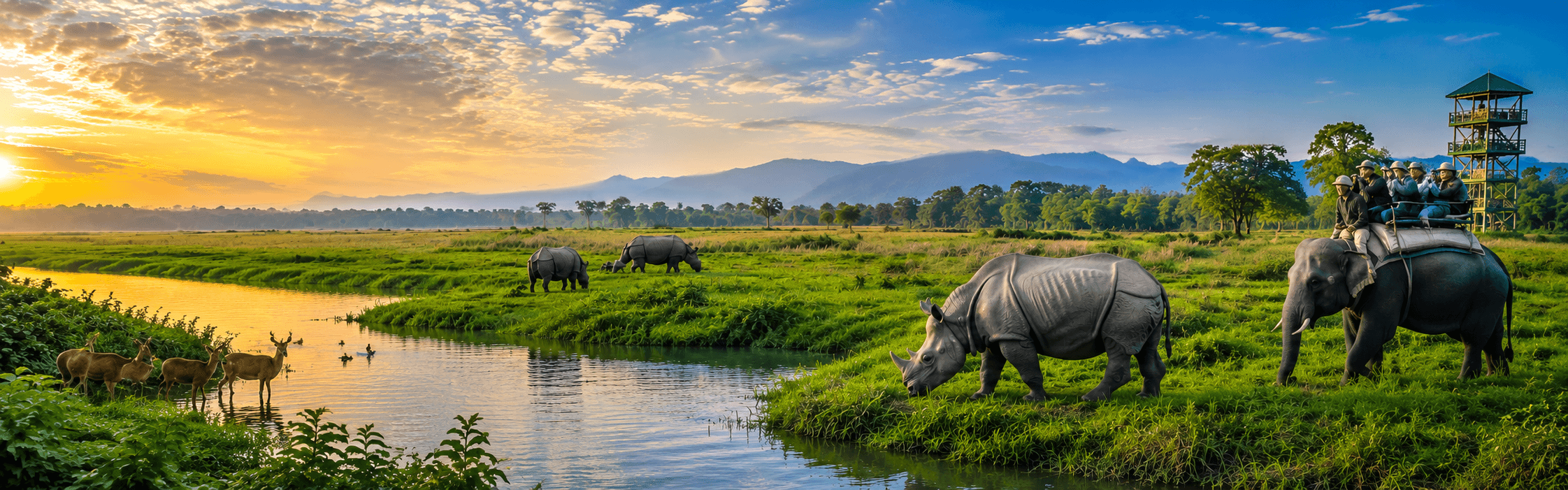
Kaziranga National Park in Assam is not merely a wildlife sanctuary; it is a conservation miracle. In an era of rapid biodiversity loss, Kaziranga stands as a fortress for the Great One-horned Rhinoceros. While the rest of the world struggles to protect its megafauna, Kaziranga’s population of rhinos has surged, now exceeding 2,600 individuals. For the 2026 traveller, it offers a raw, unfiltered encounter with 'The Big Five' of India: the Rhino, the Royal Bengal Tiger, the Asian Elephant, the Wild Water Buffalo, and the Swamp Deer (Barasingha). The compelling reason to visit now? Kaziranga’s increasingly successful community-led conservation models mean your tourism pounds directly support the fringe villages that protect these ancient landscapes.
Best Time to Visit
Kaziranga operates on a strict seasonal cycle dictated by the Brahmaputra River. The park is typically open from November 1st to April 30th.
- November: The park reopens. Vegetation is lush and green, though tall grass can make spotting animals slightly harder. Pricing is moderate.
- December: Perfect weather (10°C - 25°C). High demand; book safaris weeks in advance.
- January: Coldest month. Morning fog creates ethereal photography conditions. Crowds are high.
- February: Peak viewing. The grass is shorter, and animals congregate near water bodies.
- March: Getting warmer. Best for birdwatching as migratory species are still present.
- April: Hot (up to 35°C). Excellent for tiger sightings as predators stay near permanent pools.
- May to October: The Monsoon. The park is closed to the public as the Brahmaputra floods nearly 70% of the area. This is a vital ecological process but prevents all tourism.
The Sweet Spot: Late February offers the best balance of comfortable weather, lower grass heights for visibility, and manageable prices before the April heat.
Travel Planning & Booking
To reach Kaziranga, most international travellers fly into Lokpriya Gopinath Bordoloi International Airport (GAU) in Guwahati. From there, it is a 4.5 to 5-hour drive (190km). Alternatively, Jorhat Airport (JRH) is closer (90km) but has fewer flight connections.
For 2026, we recommend booking safaris at least 45 days in advance through the official Assam Forest Department portal or reputable local operators. Skyscanner remains the gold standard for flights to Guwahati, while MakeMyTrip is often better for regional Indian connections and local guesthouses.
Visa Requirements 2026
- UK/US/EU/UAE: Most nationals require an e-Tourist Visa. This should be applied for at least 4 days before arrival via the official Indian Government portal. The 30-day e-Visa is standard for backpackers.
- India: No visa required for Indian citizens; however, carrying a government-issued ID (Aadhar/Voter ID) is mandatory for park entry permits.
Travel Insurance
Standard travel insurance is essential, but for Kaziranga, ensure your policy specifically covers 'Wildlife Safaris' and 'Emergency Evacuation.' While the park is safe, its remote location means serious medical issues require transport to Guwahati. World Nomads and SafetyWing are excellent for backpackers. Allianz is better for those seeking comprehensive medical coverage.
Packing Guide
The Assam climate requires layers. Early morning safaris in January are freezing, but by noon, you will want light cotton. Must-bring items: High-SPF sunscreen, neutral-coloured clothing (khaki, olive, brown), binoculars (8x42 is ideal), and a power bank. One item tourists over-pack: Heavy formal wear. Kaziranga is casual and dusty; leave the dress shoes at home.
Top Tourist Attractions
1. Central Range (Kohora): The most popular zone for spotting rhinos. Hours: 7:30 AM - 4 PM. Cost: ₹3,500 - ₹4,500 per jeep.
2. Western Range (Bagori): Best for close-up rhino encounters and swamp deer. Insider Tip: Go for the afternoon slot for better lighting.
3. Eastern Range (Agaratoli): A birdwatcher's paradise. Home to the nesting sites of the Greater Adjutant Stork. Entry: ₹1,000 (Forest fee) + Jeep hire.
4. Burapahar Range: Famous for trekking and seeing the Hoolock Gibbon (India’s only ape).
5. Kaziranga National Orchid and Cultural Park: Over 600 species of orchids. Opening: 9 AM - 6 PM. Entry: ₹200.
6. Hathikuli Tea Estate: An organic tea garden bordering the park. Perfect for a sunset walk.
Local Food & Dining
Assamese cuisine is subtle, focusing on fermented flavours and fresh river fish. Must-try dishes include Masor Tenga (sour fish curry) and Khar. For a high-end experience, dine at The Tengani at Diphlu River Lodge. For a mid-range, authentic taste, visit Maihang Restaurant near the Kohora range. Street food lovers should head to the local markets for Pitha (rice cakes).
Safety & Emergency
Kaziranga is very safe for solo and female travellers. The primary risks are sun exposure and mosquitoes. Ensure you have your Malaria prophylaxis if staying for extended periods during the fringes of the monsoon.
Emergency Contacts
- Police: 100
- Ambulance: 102
- Fire: 101
- Tourist Police: +91 361 2633631
- National Emergency: 112
The nearest international-standard hospital is Apollo Hospitals Guwahati (+91 361 713 0000).
Useful Apps
- Ola/Uber: For getting around Guwahati.
- MakeMyTrip: For booking Indian trains and buses.
- Google Maps: Reliable for main roads, less so for safari tracks.
- IndiGo: For managing domestic flight connections.
- WhatsApp: Essential for communicating with local safari drivers.
Kaziranga is a destination that demands patience and rewards the observant. Whether it's the silhouette of a rhino in the mist or the call of a jungle owlet, it is a place that stays with you long after you leave. Plan your 2026 adventure today and witness the wild heart of Assam.