
The Ultimate Kerala Travel Guide 2026: Everything You Need to Know
Welcome to the definitive guide to exploring Kerala. Whether you are navigating the intricate backwaters of Alleppey or chasing the perfect cup of tea in the high-altitude estates of Munnar, this guide provides the verified, on-the-ground intelligence you need for 2026.
Introduction
Kerala deserves a top spot on your 2026 travel itinerary for a highly specific reason: the completion and expansion of the Kochi Water Metro. This revolutionary, sustainable transport system has completely transformed how travellers navigate the coastal and backwater regions, connecting 10 islands across the Kochi agglomeration with sleek, electric, air-conditioned ferries. Unlike the frenetic pace of northern India, Kerala forces you to slow down. It is a state where digital nomads can comfortably work from a cliffside café in Varkala on fibre-optic Wi-Fi in the morning, and spend the afternoon navigating centuries-old spice markets in Fort Kochi. With an exceptionally high literacy rate and a robust tourism infrastructure, Kerala is South India's most accessible, yet profoundly authentic, entry point for backpackers and international travellers.
Best Time to Visit
Kerala’s tropical climate is dictated by two distinct monsoon seasons, making timing critical to your experience.
- January to March (Peak Season): The sweet spot for traditional backpacking. Temperatures range from 24°C to 32°C. The humidity is manageable, and the skies are pristine blue. This is the ideal window for beach hopping in Varkala or Marari. Expect premium pricing on houseboats, but vibrant cultural events like the Thaipooyam Mahotsavam in February make the crowds worthwhile.
- April to May (Summer/Shoulder Season): Temperatures soar past 33°C with intense humidity. If you travel during these months, head straight to the hill stations of Munnar or Wayanad where the altitude keeps temperatures around a pleasant 20°C to 25°C. Accommodation drops by 20-30%, offering excellent mid-range value.
- June to August (Southwest Monsoon): Kerala receives torrential downpours. While trekking and beach swimming are off the table, this is the traditional, and scientifically optimal, time for Ayurvedic treatments, as the cool, dust-free atmosphere opens the pores. This is the absolute cheapest time to visit, with luxury resorts slashing rates by up to 50%.
- September to December (Post-Monsoon & Winter): The ultimate sweet spot. By late September, the heavy rains retreat, leaving the landscape a neon, pulsating green. The famous snake boat races (Vallam Kali) occur in September. November and December usher in cooler, crisp mornings, making it perfect for wildlife spotting in Periyar National Park before peak tourist prices hit in late December.
Travel Planning & Booking
Reaching Kerala is increasingly streamlined. The state boasts four international airports, though Cochin International Airport (COK) is the primary, entirely solar-powered hub. For 2026, the best flight routes from the UK are London Heathrow (LHR) to COK via Dubai (Emirates) or Doha (Qatar Airways). US travellers can utilise the John F. Kennedy (JFK) to COK route via Abu Dhabi (Etihad).
Booking lead times are crucial. While Kerala is backpacker-friendly, Alleppey houseboats must be booked at least two months in advance for January travel. Rely on Booking.com for secure guesthouse reservations with free cancellation, MakeMyTrip for navigating domestic Indian flights and intricate intercity bus routes, and Agoda for last-minute deals in major hubs like Trivandrum and Kochi.
Visa Requirements (2025/2026): UK, US, and EU citizens must apply for an Indian e-Visa (e-Tourist Visa) at least 4 days before arrival. The 30-day e-Visa is ideal for short trips, but the 1-year multiple-entry visa offers better value for nomads. UAE citizens also require an e-Visa. Indian nationals require no visa but must carry a valid Aadhaar card or Passport for hotel check-ins. Ensure your passport has at least six months' validity and two blank pages.
Travel Insurance
Do not travel to Kerala without comprehensive travel insurance. While the state has excellent private healthcare (such as Aster Medcity in Kochi), the primary risks are not violent crime, but rather gastrointestinal issues from adjusting to heavily spiced local diets, and road traffic accidents if you choose to rent a scooter. Ensure your policy covers "two-wheeled motor vehicle accidents" (often an add-on) and emergency medical evacuation. Providers like World Nomads are excellent for adventure coverage if you plan to trek the Western Ghats, while SafetyWing offers brilliant month-to-month flexibility for digital nomads basing themselves in Varkala. Practical Tip: Always request a printed, stamped medical report from the local clinic; insurers often reject digital or informal receipts from Indian pharmacies.
Packing Guide
Kerala is tropical, humid, and culturally conservative. Pack lightweight, breathable linens and cottons. A sturdy pair of slip-on sandals is essential, as you will be constantly removing your shoes before entering temples, guesthouses, and even some shops. Women should pack loose-fitting maxi skirts and lightweight scarves to cover shoulders when visiting religious sites like the Padmanabhaswamy Temple. A high-quality dry bag is vital if you are travelling during the monsoon or taking the backwater ferries. One item tourists over-pack: Heavy hiking boots. Unless you are doing a multi-day expedition in the Agasthyamala Biosphere, a pair of robust trail running shoes is more than sufficient and much more comfortable in the heat.
Accommodation
Kerala’s accommodation scene caters perfectly to the 'flashpacker'—offering boutique heritage character at budget-friendly rates.
- Fort Kochi: The historical, artistic heart of Kerala. Stroll past colonial architecture and contemporary art cafes. Stay here for culture and cafe-hopping.
- Varkala North Cliff: The epicentre of backpacker life. Perched above the Arabian Sea, it is packed with yoga shalas, vegan cafes, and budget hostels.
- Old Munnar: The gateway to the tea estates. Cooler, quieter, and deeply atmospheric, perfect for hikers and nature photographers.
For a splurge, Taj Kumarakom Resort and Spa offers unparalleled backwater luxury. Mid-range travellers should book the Dutch Bungalow in Fort Kochi for incredible heritage ambience and a courtyard pool. Budget backpackers cannot beat Zostel Kochi; it provides immaculate dorms, reliable Wi-Fi, and instant community. Booking tip: Always message the property via WhatsApp a week before arrival to confirm your booking and request an airport pickup, which is often cheaper when arranged directly.
Getting Around Locally
Arriving at Cochin International Airport (COK), you have three main options to reach the city centre (Fort Kochi/Ernakulam). The pre-paid taxi rank just outside the arrivals hall is safe and regulated (approx. ₹1200 / $15, taking 1 hour). Alternatively, take a feeder bus to the Aluva Metro Station, and ride the Kochi Metro into the city (₹60 / $0.80, 45 mins). For digital convenience, use the Uber or local Ola app, though wait times can be longer.
Locally, the auto-rickshaw (tuk-tuk) reigns supreme. Always negotiate the fare before getting in, or insist on the meter (though rarely used for tourists). For intercity travel, the AC Volvo buses operated by KSRTC are brilliant, but the real star is the local train network—cheap, incredibly scenic, and culturally immersive. Common tourist mistake: Boarding the 'General Unreserved' train carriage during rush hour (8 AM - 10 AM). Always book 'CC' (AC Chair Car) or 'Sleeper' class a few days in advance via the IRCTC app or MakeMyTrip.
Top Tourist Attractions (Must-See)
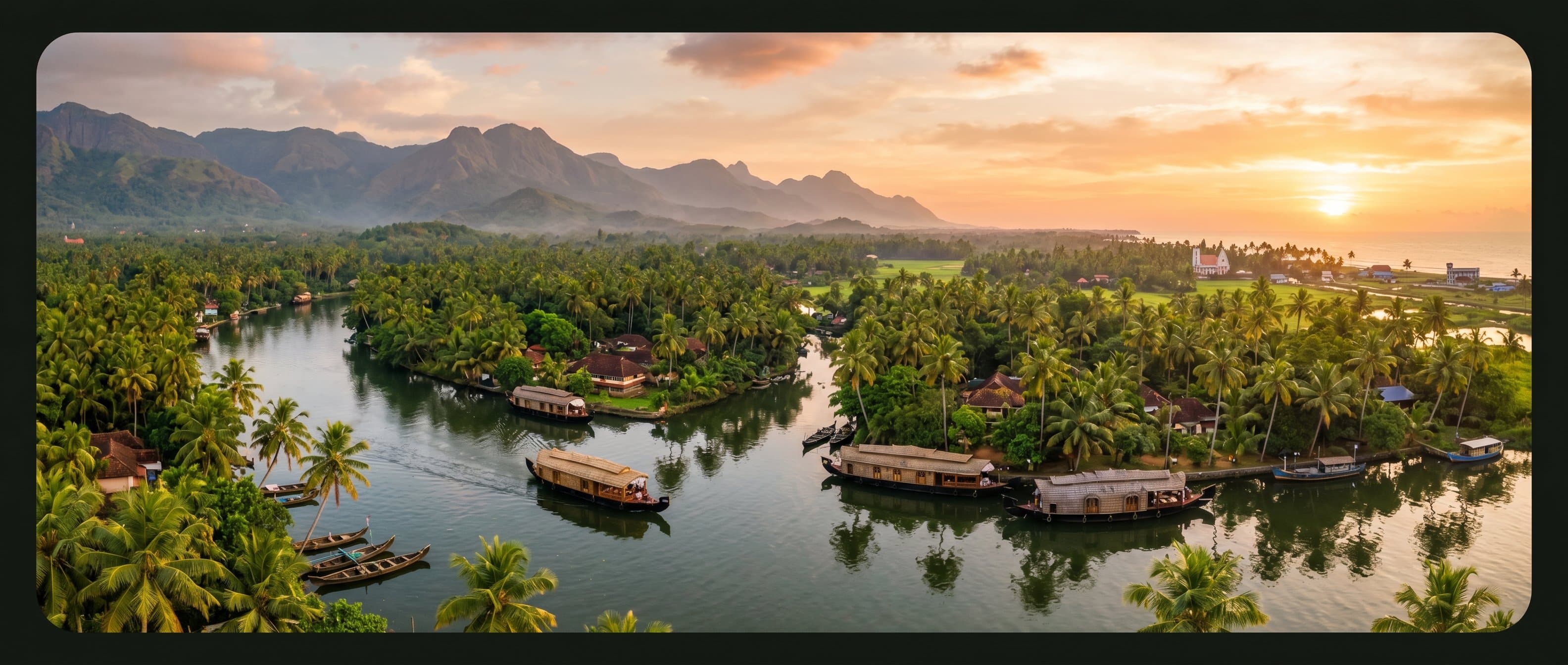
1. Alleppey Backwaters (Houseboats)
Why it matters: The quintessential Kerala experience; a 900km network of waterways connecting rural villages.
Hours: Overnight (check-in usually 12:00 PM, check-out 9:00 AM).
Cost: ₹8000–₹15000 ($95–$180) per night for a private boat including meals.
Best time: Boarding at noon, enjoying the sunset from the deck.
Insider Tip: Skip the massive, multi-bedroom boats. Hire a smaller, traditional 'Shikara' boat for a few hours in the early morning to navigate the narrow, peaceful canals the large houseboats cannot reach.
2. Mattancherry Palace (Fort Kochi)
Why it matters: Built by the Portuguese and gifted to the Raja of Kochi, it houses some of India's most exquisite and well-preserved mythological murals.
Hours: 9:45 AM - 1:00 PM & 2:00 PM - 4:45 PM (Closed Fridays).
Cost: ₹5 ($0.06).
Best time: 10:00 AM to beat the mid-day heat and cruise ship tour groups.
Insider Tip: Photography is strictly prohibited inside the mural rooms; leave your camera in your bag to avoid being shouted at by the guards.
3. Kolukkumalai Tea Estate (Munnar)
Why it matters: The highest organic tea plantation in the world, offering staggering sunrise views over the Western Ghats.
Hours: Jeep safaris usually start at 4:30 AM.
Cost: ₹2000-₹2500 ($24-$30) for the 4x4 jeep hire, plus ₹100 entry.
Best time: Pre-dawn for the sunrise.
Insider Tip: The road is brutally bumpy. If you have severe back issues, opt for the lower-altitude Kanan Devan Hills Plantations instead.
4. Periyar National Park (Thekkady)
Why it matters: One of India’s premier tiger and elephant reserves.
Hours: 6:00 AM - 5:00 PM.
Cost: ₹500 ($6) for foreign tourists, plus boating fees.
Best time: The 7:30 AM boat ride for the highest chance of seeing wild elephants drinking at the lake.
Insider Tip: Skip the crowded, noisy boat tours and book a 'Nature Walk' or 'Border Hiking' programme directly with the Forest Department for a genuine wilderness experience.
5. Varkala North Cliff
Why it matters: The only place in southern Kerala where cliffs are found adjacent to the Arabian Sea, creating a spectacular setting for sunset views and yoga.
Hours: 24/7 (Cafes usually open 7:30 AM - 11:00 PM).
Cost: Free to access the beach.
Best time: 5:00 PM to secure a cliffside table for sunset.
Insider Tip: The ocean currents here are notoriously strong. Only swim in designated areas where lifeguards are present, and never swim after dusk.
6. Jatayu Earth's Center (Chadayamangalam)
Why it matters: Houses the world’s largest bird sculpture, dedicated to the mythological eagle from the Ramayana who fought to protect women's honour.
Hours: 9:30 AM - 5:30 PM.
Cost: ₹500 ($6) for entry and cable car.
Best time: 4:00 PM for golden hour lighting on the massive sculpture.
Insider Tip: Book your cable car ticket online at least a day in advance during peak season to avoid queues that can last over an hour in the sweltering heat.
Local Food & Dining
Kerala's cuisine is a masterclass in the use of coconut, tamarind, curry leaves, and black pepper. The undisputed king is the Kerala Sadhya, a vegetarian banquet of up to 26 dishes served on a fresh banana leaf, traditionally eaten by hand. You must also try Karimeen Pollichathu (Pearl Spot fish marinated in spices and baked in a plantain leaf), Appam with Vegetable Stew, and the famous flaky Malabar Parotta with Beef Fry.
For fine dining, reserve a table at The Rice Boat (Taj Malabar Resort, Kochi) for world-class seafood served on a stationary wooden boat. For mid-range, digital-nomad-friendly dining, Kashi Art Café in Fort Kochi offers legendary chocolate cake, brilliant coffee, and a lush courtyard. For street food, seek out Pai Brothers Fast Food in Kochi; they serve over 36 varieties of dosa late into the night. Dietary Note: Kerala is highly accommodating for vegans (many dishes are naturally dairy-free, relying on coconut milk) and gluten-free diets (rice-based appams and puttu are ubiquitous).
Safety & Emergency Contacts
Kerala is widely considered one of the safest states in India for foreign travellers, including solo female backpackers. The most significant hazards are environmental: strong ocean undertows at beaches and aggressive driving on single-lane highways. Be cautious of 'spice garden' scams near Thekkady where taxi drivers receive massive commissions to take you to overpriced, low-quality tourist traps.
LOCAL EMERGENCY NUMBERS:
- Police: 112
- Ambulance: 108
- Fire: 101
- Tourist Police: +91 9846100100 (Ernakulam) or 112
- National Emergency: 112
The nearest world-class international hospital is Aster Medcity in Kochi (+91 484 669 9999). For consular emergencies, the UK Deputy High Commission (+91 44 2822 2351) and US Consulate General (+91 44 2857 4000) are located in nearby Chennai. Indian citizens requiring passport services can visit the Regional Passport Office in Panampilly Nagar, Kochi.
Useful Apps & Resources
To navigate Kerala like a local in 2026, download these essential apps: MakeMyTrip for all bus and train bookings; Swiggy for reliable food delivery to your guesthouse; Ola and Uber for transparently priced cab rides; Namma Yatri (a game-changer for booking local auto-rickshaws without haggling); and Kochi1 for seamless ticketing on the Kochi Metro and Water Metro. Always bookmark the official Kerala Tourism website (keralatourism.org) for verified updates on festival dates and state-run accommodation.
Closing
Kerala remains a rare destination that genuinely lives up to its hype. It is a place that recalibrates your pace, offering lush geography, complex history, and incredible culinary depth on a backpacker's budget. Pack light, embrace the monsoon showers if they catch you, and allow the languid rhythm of the backwaters to dictate your days. For more deep-dive itineraries, hidden gem maps, and 2026 budget hacks across South Asia, continue exploring www.ainexusworld.com.
FAQ
Is Kerala safe for tourists?
Yes, Kerala is statistically one of the safest states in India for international tourists. Solo female travellers frequently backpack the region safely. However, standard precautions apply: avoid walking on unlit beaches at night, negotiate auto-rickshaw fares upfront, and never swim in areas marked with red flags due to dangerous rip currents.
What is the best time to visit Kerala?
The peak and most comfortable time is from December to February, when the weather is dry and temperatures range from 24°C to 32°C. September to November is also excellent, offering lush, post-monsoon green landscapes and fewer crowds.
How many days do I need in Kerala?
A minimum of 7 to 10 days is recommended. This allows you to spend 2 days exploring the heritage of Fort Kochi, 2 days in the Munnar tea estates, 1 night on an Alleppey houseboat, and 3 days relaxing on the beaches of Varkala or Marari.
Do I need a visa to visit Kerala?
Unless you hold an Indian passport or an OCI card, yes. Travellers from the UK, US, EU, and UAE must apply online for an Indian e-Visa prior to departure. The process takes roughly 3-4 days, but applying at least two weeks in advance is highly recommended.
What is the local currency and can I use credit cards?
The currency is the Indian Rupee (INR). While upscale hotels, large restaurants, and supermarkets in Kochi or Trivandrum accept Visa and Mastercard, Kerala runs heavily on cash and the local UPI (Unified Payments Interface) digital system. Tourists should carry small-denomination cash (₹100 and ₹500 notes) for auto-rickshaws, street food, and rural tea stalls.