
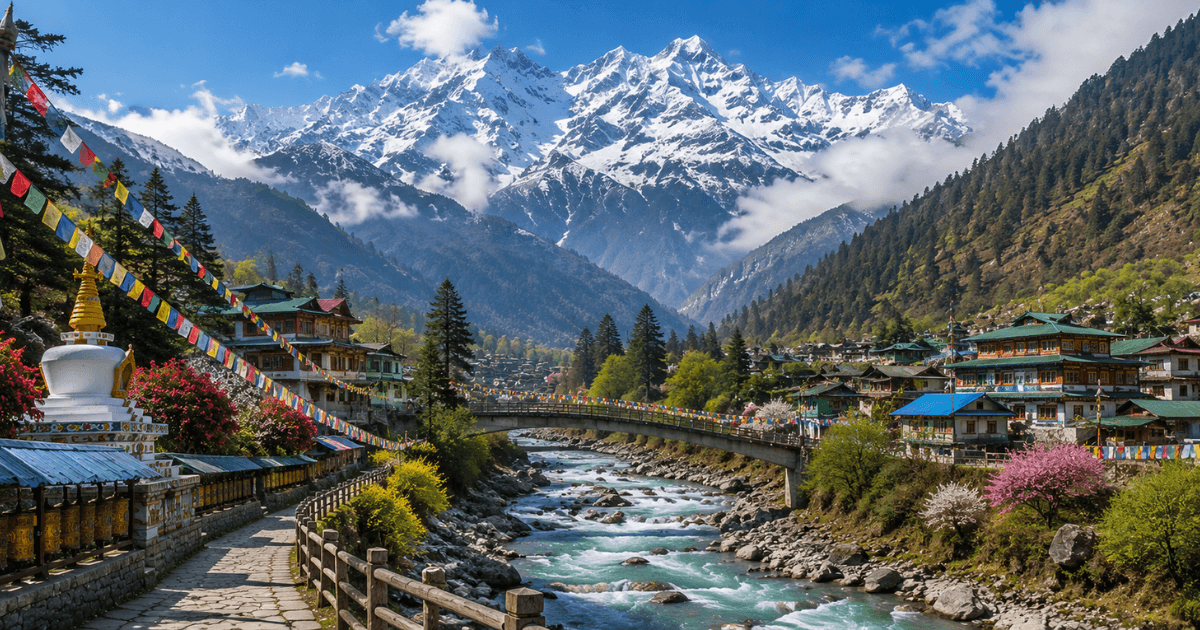
Introduction: Why Lachung (Sikkim) Deserves Your Attention in 2026
Lachung is no longer just a stopover; it is a destination that captures the raw, unyielding soul of the Eastern Himalayas. As we move into 2026, travellers are increasingly seeking 'deep travel' experiences—places where the air is thin, the culture is thick, and the digital world feels a lifetime away. Lachung, a Bhutia village near the Tibetan border, offers exactly this. What makes it unique right now is its commitment to high-value, low-impact tourism, ensuring that while you stand amongst the 17,000-foot peaks, you aren't fighting crowds of tour buses. It is the gateway to the Yumthang Valley of Flowers, yet it retains a quiet, prayer-flag-strewn dignity that is rare in modern tourism.
Best Time to Visit: A Seasonal Breakdown
Lachung’s personality shifts dramatically with the calendar. For the budget backpacker, timing is everything regarding both cost and accessibility.
- January: Heavy snow. Temperatures drop to -10°C. Roads to Yumthang are often blocked. Perfect for hardcore winter photographers. (Crowds: Low, Pricing: Budget)
- February: Similar to January. Snow remains deep. Many guesthouses remain closed. (Crowds: Low, Pricing: Budget)
- March: The thaw begins. Rhododendrons start to bud at lower elevations. (Crowds: Moderate, Pricing: Moderate)
- April: Peak Rhododendron season. The Shingba Sanctuary is a riot of colour. Best for hikers. (Crowds: High, Pricing: Expensive)
- May: Pleasant weather (10-18°C). The clearest views of the peaks before the clouds roll in. (Crowds: High, Pricing: Expensive)
- June: Pre-monsoon showers. Humidity increases, but the valley is lush and green. (Crowds: Moderate, Pricing: Moderate)
- July: Peak Monsoon. High risk of landslides on the North Sikkim Highway. Not recommended. (Crowds: Very Low, Pricing: Budget)
- August: Heavy rains continue. Roads are frequently cut off. (Crowds: Very Low, Pricing: Budget)
- September: The rain eases. Waterfalls are at their most thunderous. (Crowds: Moderate, Pricing: Moderate)
- October: Post-monsoon clarity. The most stable weather for photography and Zero Point visits. (Crowds: High, Pricing: Expensive)
- November: Crisp air and golden light. Excellent for budget travellers as prices dip before winter. (Crowds: Moderate, Pricing: Moderate)
- December: First snowfalls. Magical atmosphere, but bring heavy woollens. (Crowds: Moderate, Pricing: Moderate)
The Sweet Spot: Late October to early November offers the perfect intersection of crystal-clear mountain views, accessible roads, and slightly lower shoulder-season accommodation rates.
Travel Planning & Booking
Getting to Lachung is an adventure in itself. There is no airport or railway station in the village. You must fly into Bagdogra International Airport (IXB) in West Bengal or the domestic Pakyong Airport (PYG) near Gangtok (note: Pakyong is weather-dependent and frequently cancelled). From there, it is a 6-8 hour drive to Gangtok, followed by another 6-7 hour drive to Lachung the next day. All travellers require a Protected Area Permit (PAP) to visit North Sikkim, which must be organised via a registered Sikkimese tour operator. You cannot drive your own vehicle; you must hire a local luxury or shared jeep.
Booking Lead Times: Book your Gangtok-Lachung tour at least 3-4 weeks in advance for 2026, as the government has strictly capped the number of daily permits to preserve the ecology.
Travel Insurance for the Himalayas
Standard insurance often excludes altitudes above 2,500m. Ensure your policy specifically covers 'High Altitude Trekking/Travel' up to 5,000m (necessary for Zero Point). Look for 'Trip Interruption' coverage, as landslides frequently cause 24-48 hour delays in North Sikkim. Recommended providers include World Nomads (excellent for adventure), SafetyWing (best for long-term nomads), and Allianz (comprehensive medical). Pro Tip: Carry a physical copy of your insurance; digital files are useless when phone batteries die in the sub-zero temperatures of Yumthang.
Packing Guide: Himalayan Essentials
The key is the 'Three-Layer System'. Bring a moisture-wicking base layer, a fleece mid-layer, and a wind/waterproof outer shell. Even in May, temperatures at Zero Point can be freezing. Cultural note: While Sikkim is progressive, modest dress is expected in the Lachung Monastery. Avoid short skirts or tank tops. Must-bring: High-SPF sunscreen (the mountain sun is fierce), portable power banks, and 'Diamox' (after consulting a doctor) for altitude sickness. What to leave behind: Heavy suitcases; use a rugged backpack as you'll often be walking on unpaved paths to reach your homestay.
Top Tourist Attractions
- Yumthang Valley: Known as the 'Valley of Flowers'. Best visited at 7:00 AM for the best light. Entry included in permit. Insider tip: Walk past the main tourist parking to find the hidden hot springs across the pedestrian bridge.
- Zero Point (Yumesamdong): The end of the civilian road at 15,300ft. Costs an extra ₹3,000 per vehicle. Best for snow even in summer. Tip: Eat a light breakfast; the altitude can cause nausea.
- Lachung Monastery: An 1880s Buddhist gem. Open 7:00 AM - 5:00 PM. Free entry. The murals here are some of the finest in the region.
- Shingba Rhododendron Sanctuary: 43 species of Rhododendron. Best in April. Insider tip: The 'Bhutia' trail offers better birdwatching than the main road.
- Bhim Nala Waterfalls: Located on the way to Lachung. Towering falls with a small tea stall. Great for a 20-minute leg stretch.
- Katao: Often called the Switzerland of Sikkim. Requires an additional army permit. Dramatic cliffs and year-round snow.
Local Food & Dining
Sikkimese cuisine is a hearty blend of Tibetan and Nepalese influences. Must-try: Thukpa (noodle soup), Momos (dumplings), and Phagshapa (pork with radish). For a unique experience, try Chang—a fermented millet beer served in a bamboo tumbler. The Apple Orchard Resort Restaurant offers high-end local fare, while Season House provides excellent mid-range comfort food. For street food, the stalls near the Lachung Bridge serve the best 'spicy wai-wai' (dry noodle salad) in the North.
Safety & Emergency Contacts
Lachung is exceptionally safe from crime, but the environment is volatile. Altitude Sickness (AMS) is the primary risk. If you feel a persistent headache or nausea, descend immediately.
Emergency Numbers:
Police: 100 / 03592-202022 (Sikkim Police)
Ambulance: 102
Fire: 101
National Emergency: 112
Nearest Hospital: Mangan District Hospital (approx. 3 hours away).
Embassy Contacts (Kolkata/Delhi):
UK: +91 33 2288 5172 (Kolkata)
US: +91 33 6825 1000 (Kolkata)
UAE: +91 11 2467 0007 (Delhi)
Closing
Lachung is a place that demands patience and rewards it with grandeur. Whether you are watching the sunrise hit the peaks of Mt. Katao or sharing butter tea with a local Bhutia family, the village stays with you long after you descend to the plains. For more off-the-beaten-path guides and 2026 travel trends, explore more at ainexusworld.com.