
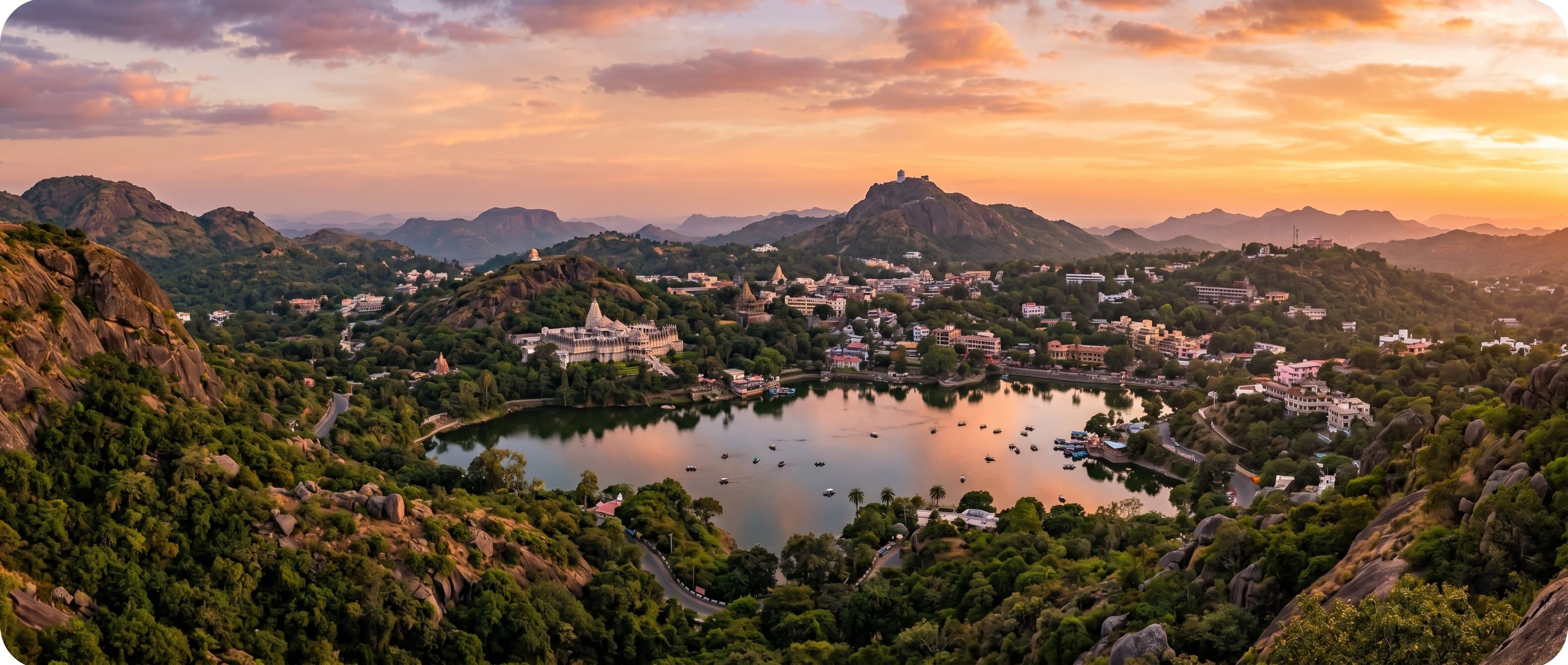
Mount Abu is Rajasthan's only hill station, set in the Aravalli Range in Sirohi district at an elevation of roughly 1,220 metres. It draws three very different kinds of travellers at once: honeymooners heading to Nakki Lake and Sunset Point, pilgrims visiting the Dilwara Jain Temples and the Brahma Kumaris headquarters, and families looking for cooler weather than the rest of desert Rajasthan. This guide covers what to actually do here, when to go, how to get there, and how to plan a trip that doesn't waste a day of it.
Why Visit Mount Abu
Mount Abu is known for three things: its climate, its temples, and its lake. Because it sits at altitude in the Aravallis, it stays noticeably cooler than Udaipur, Jodhpur, or Ahmedabad for most of the year, which is exactly why it became a hill retreat in the first place. The Dilwara Jain Temples are considered among the finest examples of marble carving in India, and Nakki Lake gives the town a walkable, laid-back centre that most Rajasthan destinations don't have. It's also one of the few places in the state that works equally well as a quick weekend escape from Gujarat or a stop on a longer Rajasthan itinerary.
Best Things to Do in Mount Abu
Dilwara Jain Temples
A complex of five Svetambara Jain temples built between the 11th and 13th centuries, known for ceiling and pillar carvings cut directly into marble rather than added afterward. The two most visited are Vimal Vasahi and Luna Vasahi. Photography is restricted inside the temples, and modest dress is expected. Plan for a couple of unhurried hours here rather than a quick stop.
Nakki Lake
An artificial lake at the centre of town, said to have been carved out by deities using their nails, which gives it its name. Paddle boats and rowboats operate on the lake, and the surrounding promenade is where most evening foot traffic in Mount Abu ends up. Toad Rock, a rock formation shaped like a toad about to leap into the water, sits on the hillside beside it.
Guru Shikhar
The highest point in the Aravalli Range, reached by road and a short flight of steps. The Atri Rishi Temple sits at the top, and on a clear day the views extend across the surrounding hills. Go early or late in the day, as the viewpoint can get hazy by midday.
Sunset Point and Honeymoon Point
Two viewpoints on the western edge of town, both oriented for evening light over the hills. They get busy right before sunset, particularly in peak season, so arriving 30–45 minutes early secures a better spot.
Achalgarh Fort and Achaleshwar Mahadev Temple
A hilltop fort a short drive from the town centre, with an adjoining Shiva temple. It sees a fraction of the visitors that Dilwara or Nakki Lake do, which makes it a good stop if you want somewhere quieter.
Brahma Kumaris Headquarters and Peace Park
Mount Abu is the world headquarters of the Brahma Kumaris spiritual movement. The Peace Park (Shantivan) and the main campus are open to visitors and give a different, calmer side of the town than the lake area.
Trevor's Tank and Mount Abu Wildlife Sanctuary
A reservoir set inside the wildlife sanctuary surrounding the town, worth visiting for birdlife rather than for guaranteed larger animal sightings. Early morning is the best window.
Best Time to Visit Mount Abu
The most comfortable months are between October and March, when daytime temperatures are mild and evenings are cool enough for a light jacket. Summer (April to June) is warmer, though still generally more bearable than the Rajasthan plains, which is the main reason people travel up here at all in that season. The monsoon (July to September) turns the hillsides green and brings out waterfalls in the surrounding hills, but travel can be affected by heavy rain and low visibility at viewpoints. Since conditions can shift close to your travel dates, it's worth checking a live weather forecast a few days before you go.
| Season | Months | What to expect |
|---|---|---|
| Winter | October–March | Cool, clear days; best visibility at viewpoints; peak tourist season |
| Summer | April–June | Warmer, but cooler than the rest of Rajasthan; still visited for the relief from the heat |
| Monsoon | July–September | Green landscapes and seasonal waterfalls; possible travel disruption in heavy rain |
How to Get to Mount Abu
Mount Abu has no railway station or airport of its own.
- By rail: The nearest railway station is Abu Road, roughly 28 km away, connected to major cities including Ahmedabad, Udaipur, Jaipur, and Delhi. From Abu Road, taxis and shared jeeps run up to Mount Abu.
- By air: The closest airports are Udaipur (Maharana Pratap Airport) and Ahmedabad, both a few hours away by road; from either, you'll continue by taxi or bus.
- By road: Mount Abu is well connected to Ahmedabad, Udaipur, and Jodhpur by state and private buses, and the drive up from Abu Road involves a series of hairpin bends through the hills.
How Many Days Do You Need
Two full days cover the main sights comfortably: Dilwara Temples, Nakki Lake, and one of the sunset viewpoints on day one, and Guru Shikhar, Achalgarh, and the wildlife sanctuary on day two. A third day is worth adding if you want to visit the Brahma Kumaris campus without rushing, or if you'd rather explore at a slower pace than a checklist.
Where to Stay
Most visitors base themselves near Nakki Lake or along the Sunset Point road, both within walking distance of the main sights and restaurants. Accommodation ranges from simple guesthouses to heritage properties and resort-style hotels, with prices rising sharply during peak winter weekends and around major holidays. Booking a few weeks ahead for winter weekend visits is worth doing, since Mount Abu is a popular short getaway for travellers from Gujarat and southern Rajasthan. Our AI Hotel Finder can help narrow down options near Nakki Lake based on your budget and dates.
Food and Local Experiences
Mount Abu's food leans strongly vegetarian, shaped by both its Jain pilgrim traffic and its proximity to the Gujarat border. Expect Rajasthani thalis alongside Gujarati-style thalis, and a fair number of restaurants that don't serve onion or garlic, catering to Jain dietary preferences. For casual eating, kachori and poha are common breakfast options around the market area, and the Nakki Lake market is the best place for an evening walk with food stalls. Alcohol is restricted in parts of the town given its religious significance to the Brahma Kumaris and Jain communities, so don't expect it to be widely available.
Suggested Itinerary
The outline below covers the essentials over two to three days. If you're combining Mount Abu with other Rajasthan or Gujarat stops, our Itinerary Planner can help you fit it into a longer route without wasting travel days.
Day 1
- Morning: Dilwara Jain Temples
- Afternoon: Nakki Lake — boating and a walk around Toad Rock
- Evening: Sunset Point or Honeymoon Point
Day 2
- Morning: Guru Shikhar
- Midday: Achalgarh Fort and Achaleshwar Mahadev Temple
- Afternoon: Trevor's Tank and the wildlife sanctuary
- Evening: Nakki Lake market for dinner and shopping
Day 3 (optional)
- Brahma Kumaris headquarters and Peace Park
- A slower second visit to Nakki Lake or the market
Budget Considerations
Costs in Mount Abu vary widely by season — a winter weekend will cost noticeably more for accommodation than a weekday visit in the off-season. Beyond the room rate, budget for boating on Nakki Lake, local taxi or shared jeep transfers from Abu Road, and entry where applicable at sites like the wildlife sanctuary. If you're travelling from outside India, our currency converter is useful for checking rates before you book, and the budget calculator can help you plan overall trip costs once you know your dates and travel style.
Travel Tips
- Dress modestly at Dilwara Temples and other religious sites; photography is not permitted inside Dilwara.
- Book accommodation in advance for winter weekends, when Mount Abu fills up with visitors from Gujarat and nearby Rajasthan cities.
- Carry a light jacket even in the warmer months, since evenings at altitude are cooler than the daytime temperature suggests — our AI Packing List tool can help you build a list suited to the season you're travelling in.
- Confirm current opening hours for Dilwara Temples and other sites locally or with your hotel, as timings can change seasonally.
- If you're driving up from Abu Road, allow extra time for the hairpin road, especially after dark or in monsoon rain.
Common Mistakes to Avoid
- Trying to fit Mount Abu into a single half-day stop between other Rajasthan cities — the drive up and down alone takes a meaningful chunk of a day.
- Skipping Guru Shikhar because it's slightly further out — it's one of the better viewpoints in the area and is often left off shorter itineraries.
- Visiting Sunset Point without arriving early during peak season, then finding the best spots already taken.
- Assuming alcohol or non-vegetarian food will be as widely available here as in other Rajasthan towns.
Who Is Mount Abu Good For
Mount Abu works well for families thanks to its relatively easy sightseeing and mild climate, for couples given its long-standing reputation as a honeymoon spot, and for pilgrims visiting Dilwara or the Brahma Kumaris headquarters. Solo travellers will find it easy to get around on foot or by shared taxi, though it's a quieter, more low-key destination than Rajasthan's bigger cities, so it suits a slower pace rather than a nightlife-driven trip.
Frequently Asked Questions
What is Mount Abu known for?
It's known for being Rajasthan's only hill station, for the Dilwara Jain Temples and their marble carving, and for Nakki Lake at the centre of town.
What is the best time to visit Mount Abu?
October to March offers the most comfortable weather, with clear skies and cool temperatures. Summer is warmer but still cooler than the Rajasthan plains, and the monsoon brings green hills but occasional travel disruption.
How many days are enough for Mount Abu?
Two days cover the main sights; three allows a slower pace and time for the Brahma Kumaris campus without rushing.
How do you get to Mount Abu?
By train to Abu Road station (about 28 km away) followed by a taxi or shared jeep, by air via Udaipur or Ahmedabad airport followed by a road journey, or directly by road from Ahmedabad, Udaipur, or Jodhpur.
Is Mount Abu good for families?
Yes. The sightseeing is manageable, the climate is mild for most of the year, and the main attractions are close together around Nakki Lake.
Is non-vegetarian food or alcohol available in Mount Abu?
Availability is limited compared with other Rajasthan destinations, given the town's significance to the Jain community and the Brahma Kumaris. Vegetarian food, including Rajasthani and Gujarati thalis, is the mainstay.
What should first-time visitors know before visiting Mount Abu?
Photography is not allowed inside the Dilwara Temples, modest dress is expected at religious sites, and winter weekends get busy enough that advance hotel booking is worth it.