
Introduction
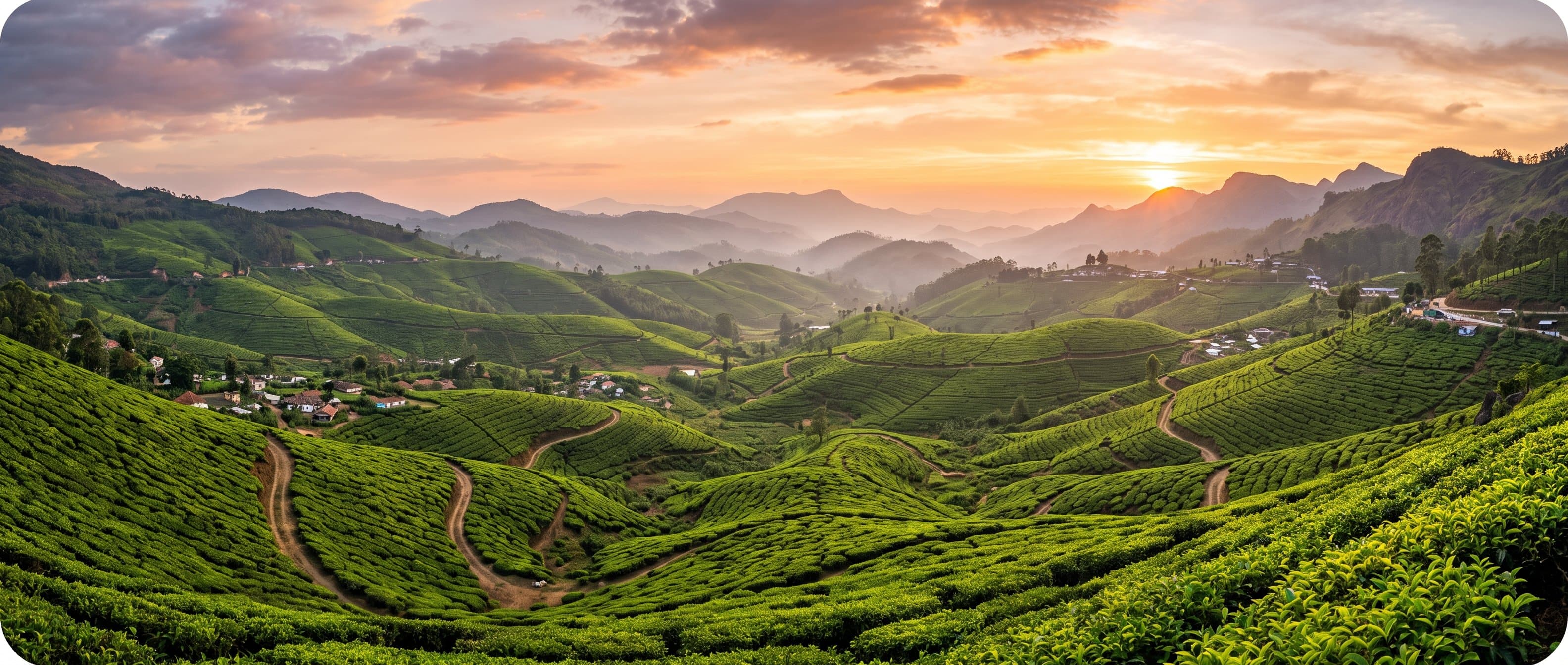
Rising dramatically from the tropical plains of Kerala, Munnar sits at the confluence of three mountain streams — Mudrapuzha, Nallathanni, and Kundala — elevated 1,600 metres above sea level in the Western Ghats, a UNESCO World Heritage biodiversity hotspot. Long celebrated as the summer resort of the British Raj, today’s Munnar has matured into South India’s undisputed capital of high-altitude serenity. The defining lure of Munnar in 2026 is its unmatched landscape architecture: manicured, undulating green tea carpets contoured over jagged granite peaks, punctuated by pockets of primeval Shola forests and cloud-kissed valleys.
Beyond its iconic visual allure, Munnar offers discerning travellers a distinct contrast to the sun-drenched backwaters of coastal Kerala. Here, the air carries the fragrance of crushed tea leaves, cardamom, and wild lemongrass. Whether you are scaling South India’s highest peak, sipping single-estate orthodox teas in colonial manor houses, or tracking the endangered Nilgiri Tahr along high-altitude ridges, Munnar delivers a refined, nature-centric retreat crafted for slow, deliberate exploration.
Best Time to Visit
Munnar’s high-altitude climate renders it a year-round destination, though distinct seasons cater to radically different travel preferences. Understanding these subtle shifts ensures you align your trip with the ideal weather, crowd dynamics, and pricing structures.
Seasonal Breakdown
- January: Crisp, cold mornings and crystal-clear skies. Daytime temperatures average 15°C–22°C, dipping to 5°C at night. Moderate crowds, premium pricing for winter stays. Ideal for trekking and plantation walks.
- February: Warm, sunny days and cool evenings (12°C–25°C). Excellent visibility for panoramic mountain vistas. Crowds begin to thin out; accommodation rates transition to mid-tier.
- March: Mild weather signaling the end of winter (15°C–28°C). Dry conditions make this a fantastic month for photography and birdwatching, with lower hotel rates before the summer rush.
- April: Summer season commences (18°C–30°C). Escaping the heat of the Indian plains, domestic travellers flock to the hills. High crowds and peak pricing across mid-range and luxury properties.
- May: Warmest month with afternoon pre-monsoon showers (18°C–28°C). Valleys stay lush, but humidity rises. High hotel occupancy early in the month, tapering off toward June.
- June: Arrival of the Southwest Monsoon. Heavy downpours transform the landscape into a vibrant, misty green. Temperatures hover between 16°C and 22°C. Low crowds and deep discounts available.
- July: Peak monsoon season with torrential rainfall and dramatic mist. Monsoons bring cascading waterfalls and surging rivers (15°C–20°C). Perfect for monsoon tourism enthusiasts; bargain pricing across all luxury resorts.
- August: Rainfall begins to subside into intermittent misty showers (15°C–21°C). The vibrant green landscape reaches its absolute aesthetic peak. Onam festival celebrations late in the month bring cultural festivities.
- September: Post-monsoon freshness (16°C–23°C). Skies clear up, waterfalls remain fully charged, and trekking trails reopen. A excellent shoulder-month choice for off-peak luxury deals.
- October: Autumn mist and crisp air return (15°C–24°C). Clear days make this ideal for outdoor excursions. Moderate to high crowds as regional festival holidays begin; early booking essential.
- November: Cool, pleasant climate (12°C–22°C) with morning fog sweeping through tea valleys. Peak international arrival season begins; high pricing and advance bookings required.
- December: Festive season brings cold temperatures (8°C–20°C), with occasional frost in high-altitude zones like Mattupetty. Peak crowds, vibrant holiday atmosphere, and absolute premium pricing across all sectors.
The Sweet Spot
The ultimate 'sweet spot' for international travellers is late September through November. During these months, the intense monsoon rains have refreshed the tea estates into an incredible shade of neon green, air clarity is superb for photography, and temperature drops create ideal morning trekking conditions without the heavy holiday crowds of late December.
Travel Planning & Booking
Reaching Munnar requires traversing Kerala’s coastal plains before ascending the scenic mountain roads of the Western Ghats. Because Munnar has no direct commercial airport or railway station, journeys are typically routed via Kochi (Cochin).
Flights & Arrivals
The primary gateway is Cochin International Airport (COK), located approximately 110 kilometres west of Munnar. COK is a world-class, fully solar-powered international airport with direct flights connecting London Heathrow (Air India), Dubai (Emirates, flydubai, IndiGo), Singapore (Singapore Airlines), and major Indian metros including Mumbai, Delhi, and Bengaluru.
Booking Lead Times
For travel during the peak window (October to January) or the domestic summer vacation rush (April to May), luxury boutique resorts and private estate stays should be reserved 4 to 6 months in advance. Mid-range properties and private drivers can typically be booked 2 to 3 months out.
Visa Requirements (2025/2026 Rules)
- UK Nationals: Eligible for the Indian e-Tourist Visa (30-day, 1-year, or 5-year options). Must apply online at least 4 days prior to travel via the official Indian e-Visa portal. Passport must have 6 months validity.
- US Citizens: Eligible for 30-day, 1-year, and 10-year e-Tourist Visas. Online application required prior to departure.
- EU Passport Holders: Eligible for standard e-Tourist Visas online. Processing usually takes 24 to 72 hours.
- UAE Citizens: Eligible for e-Visa online, as well as Visa-on-Arrival services at designated international airports including Kochi (COK), provided pre-registration criteria or US/UK/Schengen visa requirements are fulfilled under updated diplomatic protocols.
- Indian Nationals: No visa required. Valid government-issued photo ID (Aadhaar, Passport, Driving Licence) required at check-in. Note that specific wildlife buffer treks require forest department permits obtainable locally.
Travel Insurance
Travelling through high-altitude hill stations requires tailored insurance coverage. While Munnar is exceptionally peaceful, winding mountain routes, sudden monsoon weather shifts, and adventure activities like trekking and rock climbing warrant robust protection.
Key Cover Considerations
Ensure your policy explicitly covers high-altitude trekking (up to 3,000 metres), trip interruptions due to seasonal landslides during monsoon months, emergency medical evacuation to Kochi, and loss or delay of baggage on connecting flights.
Recommended Providers
- World Nomads: Exceptional for adventurous travellers intending to trek Anamudi perimeter trails, camp, or mountain bike. Covers high-altitude activities and medical evacuation.
- SafetyWing: Ideal for long-stay digital nomads and flexible travellers, offering seamless rolling monthly coverage including unexpected travel delays and high-country illness.
- Allianz Global Assistance: Preferred for luxury travellers seeking high limit protection for premium estate stays, flight cancellations, and comprehensive private healthcare coverage.
Packing Guide
Munnar’s elevation creates a distinct microclimate: warm during sunny afternoons, but noticeably chilly once the sun drops behind the Western Ghats peaks.
- Layered Outerwear: A high-quality fleece jacket or light down coat for early morning plantation tours and evenings (essential November–February).
- Waterproof Gear: A breathable, high-grade waterproof jacket (Gore-Tex) and small packable umbrella, especially if travelling between May and October.
- Footwear: Sturdy, broken-in trail shoes or hiking boots with aggressive tread; estate paths can be slippery with dew or mud. Lightweight sandals for resort wear.
- Cultural Dress Considerations: When visiting religious sites (such as temples in nearby Marayoor or local shrines), dress modestly with shoulders and knees covered. Casual resort wear in hotels is widely accepted.
- Must-Bring Items: High-SPF eco-friendly sunscreen, UV-blocking sunglasses, DEET-free insect repellent, re-usable insulated water flask, and a compact headlamp for early morning treks.
- What Tourists Over-pack: Heavy, bulky winter coats. Layering lightweight thermals under a windproof shell is far more effective and versatile than carrying massive parkas.
Accommodation
Munnar’s hospitality landscape is defined by conversion tea planter bungalows, heritage estates, eco-luxury treehouses, and cliffside sanctuary resorts. Choosing the right zone is critical to avoiding localized traffic bottlenecks near Old Munnar Town.
Top Stay Neighbourhoods
- Chithirapuram / Pallivasal: Located 10–12 km before Munnar town. Characterised by dramatic cliff drop-offs, historic tea gardens, quiet boutique stays, and spectacular sunset views away from urban noise.
- Muthirapuzha Valley / Devikulam: South of Munnar town, famous for pristine lakes, pine forests, and high-end heritage bungalows surrounded by organic tea foliage.
- Suryanelli / Anayirangal: Situated east near Kolukkumalai. Ideal for soft adventure seekers, off-grid glamping, and immediate access to high-altitude sunrise treks.
Getting Around Locally
Munnar does not have metro systems or ride-hailing apps like Uber or Ola. Transport relies on private vehicles, auto-rickshaws, and specialized four-wheel-drive jeeps.
From Cochin International Airport (COK)
The 110-km journey takes roughly 3.5 to 4 hours via National Highway 85 (NH 85). Options include pre-booked private air-conditioned cars (₹3,200–₹4,500), prepaid airport taxis, or direct KSRTC AC Electric Super Fast buses running from Aluva bus stand near the airport to Munnar Central Bus Stand (₹250–₹400, 4.5 hours).
Local Transport Options
- Private Driver / Hired Taxi: The most comfortable and efficient way to explore sprawling tea estates. Day rentals cost ₹2,500–₹3,500 ($30–$42) including fuel and driver allowances.
- Auto-Rickshaw: Perfect for short point-to-point journeys around Old Munnar or short hops to nearby tea stalls. Expect ₹100–₹300 ($1.20–$3.60). Always agree on pricing before stepping in.
- 4WD Jeeps: Mandatory for rugged, off-road terrain such as the ascent to Kolukkumalai or inner plantation tracks. Available at Suryanelli or Munnar Jeep Stand (₹2,000–₹3,000 per vehicle hire).
Top Tourist Attractions
Munnar’s attractions showcase a mix of biodiversity, industrial tea history, and breathtaking mountain geography.
1. Eravikulam National Park (Rajamalai)
Home to the largest surviving population of the endangered Nilgiri Tahr (mountain goat). Spread across 97 square kilometres of Shola-grassland ecosystem, the park offers paved walking trails with sweeping mountain vistas.
- Opening Hours: 7:30 AM – 4:00 PM daily (Closed annually Feb 1 – Mar 31 for Tahr calving season).
- Entry Cost: ₹200 (Indian Nationals), ₹500 (Foreign Nationals). Online booking recommended.
- Best Time: 7:30 AM arrival to clear morning mist and spot grazing wildlife before crowds arrive.
- Insider Tip: Board the official park eco-bus early; seating is first-come, first-served, and fog sets in heavily by midday.
2. Tea Museum (KDHP Nallathanni Estate)
Operated by Kanan Devan Hills Plantation Company, this museum traces Munnar's evolution from a dense wilderness in the 1880s to an industrial tea hub, displaying antique machinery, hand-operated tea rollers, and historical photographs.
- Opening Hours: 9:00 AM – 4:00 PM (Closed Mondays).
- Entry Cost: ₹125 adults, ₹20 photography permit. Tasting sessions extra ₹100.
- Best Time: 10:00 AM to align with live black tea manufacturing demonstrations.
- Insider Tip: Pay for the specialized tea-tasting room experience at the end of the tour to sample rare single-origin orthodox leaves.
3. Mattupetty Dam & Lake
A concrete gravity dam constructed in the 1940s, nestled among tea fields and pine woods. Renowned for calm waters, speedboating, and frequent sightings of wild elephant herds drinking at the reservoir edge.
- Opening Hours: 9:30 AM – 5:00 PM daily.
- Entry Cost: ₹10 entry; Speedboat rentals ₹500–₹1,000 per boat (15 mins).
- Best Time: Late afternoon (3:30 PM) when wild elephants often emerge from nearby forests.
- Insider Tip: Skip the main crowded boat pier and head 1 km further east along Kundala Road for quieter roadside viewpoints.
4. Kolukkumalai Tea Estate & Sunrise Point
Perched at 2,170 metres, Kolukkumalai holds the world record for the highest elevated tea plantation. The 75-year-old factory still uses traditional orthodox tea processing methods.
- Opening Hours: 24/7 access via Jeep; sunrise tours leave Suryanelli by 4:30 AM. Factory open 8:00 AM – 4:00 PM.
- Entry Cost: ₹2,000–₹2,500 per jeep (seats up to 6 people); Factory tour ₹100.
- Best Time: 5:30 AM at the summit peak for an extraordinary cloud-bed sunrise experience.
- Insider Tip: The off-road jeep track is intensely bumpy; hold on tight and request your driver to go slowly if needed.
5. Top Station Viewpoint
Located on the Kerala-Tamil Nadu border, 32 km from Munnar town. Named as the highest railway station on the historic Kundala Valley Light Railway. Offers spectacular panoramic views over the Western Ghats and the Theni valley below.
- Opening Hours: 6:00 AM – 6:00 PM daily.
- Entry Cost: ₹25 per person.
- Best Time: Early morning before mountain clouds roll up from the Tamil Nadu plains.
- Insider Tip: Walk past the crowded upper commercial platform down the steep stone stairs to reach the lower viewing deck for unobstructed shots.
6. Marayoor Sandalwood Forests & Dolmens
Located 40 km north of Munnar, Marayoor features natural sandalwood forests alongside prehistoric Megalithic dolmens (burial chambers) dating back to the Stone Age.
- Opening Hours: 24/7 (Roadside/Open air historic site).
- Entry Cost: Free access.
- Best Time: Mid-morning on a clear day.
- Insider Tip: Combine Marayoor with a visit to the nearby Chinnar Wildlife Sanctuary for dry-thorn scrubland safari walks.
Local Food & Dining
Keralan cuisine in the hill stations mixes classic coastal coconut flavours with warm mountain spices like black pepper, cardamom, cloves, and ginger. Fresh mountain produce and traditional banana leaf lunches define the local food scene.
Must-Try Dishes
- Kerala Sadya: An elaborate vegetarian feast featuring up to 24 dishes served on a fresh banana leaf, including red matta rice, sambar, avial, thoran, and sweet payasam.
- Appam with Malabar Stew: Soft, lacy rice-pancake bowls served with a delicate stew of fresh coconut milk, potatoes, curry leaves, and tender mutton, chicken, or vegetables.
- Malabar Parotta with Kerala Beef Fry (or Mushroom Fry): Flaky, layered flatbread paired with slow-cooked, dark spiced coconut beef or local wild mushrooms.
- Karimeen Pollichathu / Fresh Trout: Pearlspot or fresh mountain stream trout marinated in rich red chili and shallot paste, wrapped in banana leaves, and pan-seared over coals.
Safety & Emergency Contacts
Munnar is one of the safest travel destinations in India, with exceptionally low violent crime rates. The primary safety precautions involve driving along narrow mountain switchbacks, respecting wildlife boundaries, and remaining aware during monsoon downpours.
Emergency Contacts
- National Emergency Unified Number: 112
- Police: 100 / +91 4865 230321 (Munnar Local Police Station)
- Ambulance Service: 108
- Fire Brigade: 101 / +91 4865 230299
- District Tourist Information Office (DTPC Munnar): +91 4865 231516
Medical Facilities
For primary medical care, local injuries, and minor ailments: Tata Global Beverages High Range Hospital (KDHP Hospital), Mattupetty Road, Munnar (Phone: +91 4865 230270). Features 24/7 casualty care and English-speaking doctors. For critical trauma or specialized procedures, patients are transferred via ambulance to Aster Medcity or VPS Lakeshore Hospital in Kochi (3.5 hours away).
Embassy & Diplomatic Contacts (In India)
- UK: British Deputy High Commission Chennai (Serves Kerala), 20 Anna Salai, Chennai. Phone: +91 44 2433 0200.
- US: US Consulate General Chennai, 220 Anna Salai, Chennai. Phone: +91 44 2857 4000.
- India: Ministry of Tourism Tourist Information Counter, Cochin International Airport. Phone: +91 484 2610115.
Useful Apps & Resources
- Uber / Ola: Essential for transport bookings within Kochi before heading up to Munnar or returning to the airport.
- Google Maps: Download offline maps for Munnar and Idukki district; cellular signal can drop in deep valleys.
- MakeMyTrip / Goibibo: Helpful local apps for comparing private intercity car hire rates and boutique homestays.
- Kerala Tourism Official Portal: www.keralatourism.org — The definitive resource for official state events, forest trekking permit bookings, and heritage alerts.
Closing
With its vast green valleys, refreshing climate, and timeless heritage, Munnar remains an unforgettable retreat in South India. Whether standing above a blanket of clouds at sunrise or relaxing on a heritage estate veranda with freshly brewed tea, this highland gem offers a serene change of pace. Plan your high-altitude escape today, and discover more curated Indian itineraries and luxury travel insights across www.ainexusworld.com.