
Introduction
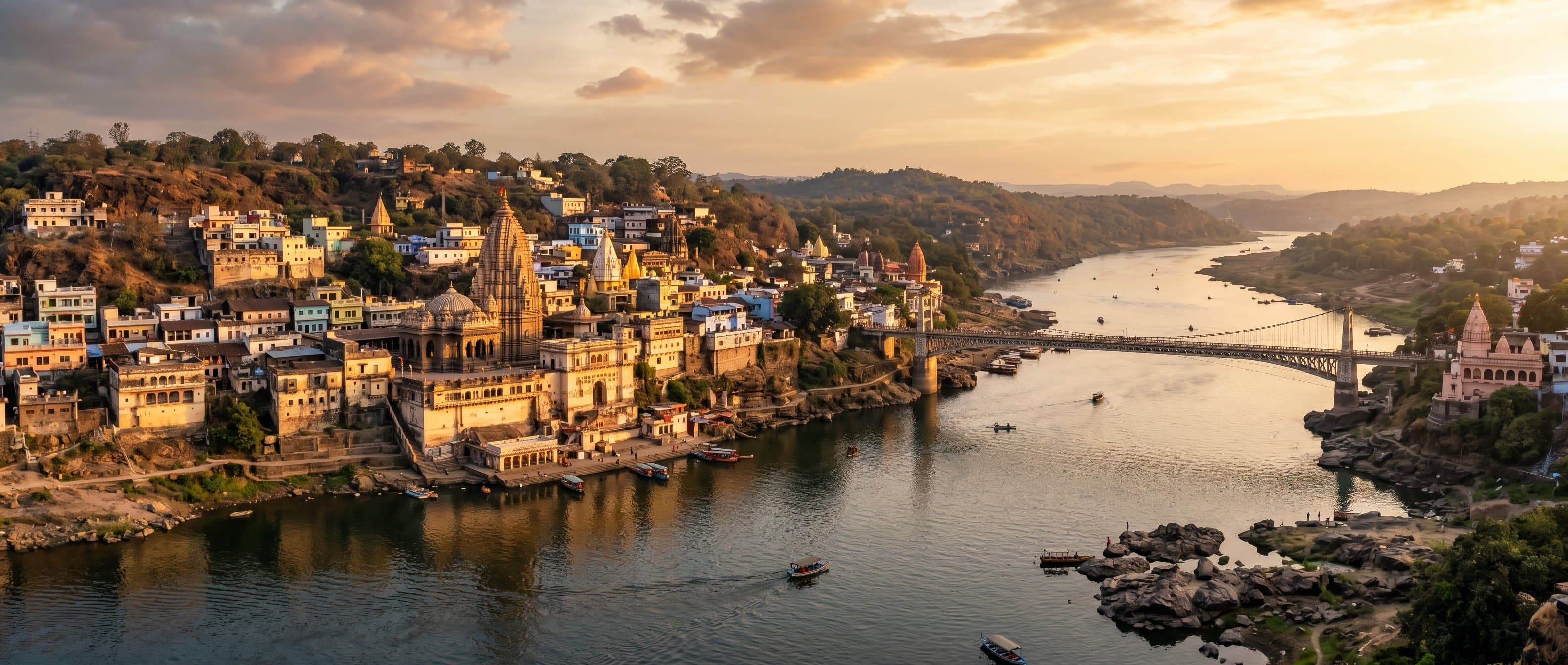
There are few places in the world where geography and spirituality intertwine quite as literally as they do in Omkareshwar. Viewed from above, this sacred riverine island in the heart of Madhya Pradesh naturally forms the shape of 'Om' (ॐ) — the most revered symbol in Hinduism. For the modern, internationally minded family seeking more than just a typical holiday, Omkareshwar offers a gateway into the ancient, beating heart of India, far removed from the overwhelming chaos of larger pilgrimage cities.
Why does Omkareshwar deserve a place on your 2026 travel itinerary? Beyond its undisputed significance as home to one of the 12 sacred Jyotirlingas, the town has recently undergone sensitive infrastructure upgrades that make it far more accessible for family travellers. You can now experience the profound tranquillity of a sunrise boat ride on the Narmada River, walk the ancient Parikrama path with safely paved trails, and introduce your children to a living, breathing tapestry of Indian mythology without sacrificing basic comforts. It is the perfect blend of slow travel, cultural immersion, and spiritual wonder.
Best Time to Visit
Omkareshwar's climate dictates the rhythm of life here. The ultimate 'sweet spot' for family travellers is between November and February. During these winter months, the weather is delightfully crisp and pleasant, with daytime temperatures hovering around 20°C to 25°C, making temple-hopping and the 7-kilometre island circumambulation (Parikrama) a joy rather than a chore.
If you are travelling to experience India's vibrant festival culture, aim for Mahashivratri (usually falling in late February or early March) or Kartik Purnima (November). The town transforms into a mesmerising spectacle of illuminated ghats, chanting priests, and thousands of oil lamps floating down the Narmada. However, families travelling with young children or those averse to massive crowds should carefully avoid the peak festival days and instead visit during the shoulder weeks of early December or late January for a more peaceful experience.
The summer months (April to June) are brutally hot, often exceeding 40°C, making daytime exploration deeply uncomfortable. The monsoon season (July to September) paints the surrounding Vindhya mountains a brilliant, emerald green, but the Narmada River often swells to dangerous levels, halting the essential boat rides and occasionally submerging the lower ghats.
Travel Planning & Booking
Omkareshwar is best accessed via Indore's Devi Ahilya Bai Holkar Airport (IDR), located roughly 85 kilometres (a 2.5-hour drive) away. For international travellers coming from the UK, US, or UAE, you will typically fly into a major hub like New Delhi (DEL) or Mumbai (BOM) before taking a short, 90-minute domestic connection via IndiGo or Air India to Indore.
When booking, aim for a lead time of 2 to 3 months, especially if you plan to visit during the winter peak season or around major festivals, as the better-quality accommodations sell out rapidly. For booking platforms, MakeMyTrip is unmatched for securing domestic Indian flights and highly rated local hotels; Booking.com is reliable for reading international reviews on boutique properties; and RedBus is brilliant if you intend to explore Madhya Pradesh further by premium coach.
Visa Requirements for 2026: Ensure your paperwork is flawless. UK, US, EU, and UAE nationals must apply for an Indian e-Visa (specifically the e-Tourist Visa) at least 4 to 5 days prior to arrival. It is a straightforward online process, but ensure your passport has at least six months of validity and two blank pages. Print your approved e-Visa ETA (Electronic Travel Authorisation) before boarding your flight to India. Indian nationals, naturally, require no visa but must carry a valid government ID (Aadhar or Passport) for hotel check-ins.
Travel Insurance
Never travel to rural or semi-rural India without comprehensive travel insurance. While Omkareshwar is incredibly safe in terms of crime, it is a small town with basic healthcare facilities. If a family member requires serious medical attention, they will need to be transported to a multi-speciality hospital in Indore.
Look for policies that explicitly cover medical evacuation, trip cancellation, and lost baggage. If you plan on taking local boat rides or embarking on rural trekking trails around the Vindhyas, ensure your policy covers minor adventure activities. World Nomads remains excellent for those taking a more adventurous route; Allianz Travel Insurance offers robust, family-focused comprehensive cover; and SafetyWing is a great, flexible option for digitally savvy travelling parents.
Practical Tip: Always keep digital copies of your insurance policy and emergency contact numbers saved offline on your phone, as mobile data reception can occasionally drop while circumambulating the dense, hilly parts of the island.
Packing Guide
Packing for Omkareshwar requires balancing the Indian climate with strict cultural modesty. The dress code is conservative, especially as the entire town revolves around a sacred temple complex. Both men and women must cover their shoulders and knees. Light, breathable cotton or linen trousers, long skirts, and kurtas are ideal. Women should always carry a lightweight scarf or dupatta to cover their heads when entering specific temple sanctums.
Must-bring items for Omkareshwar include robust, slip-on walking sandals (you will be taking your shoes off constantly at temple entrances), high-quality mosquito repellent, a reusable water bottle (preferably with a built-in filter, though bottled water is ubiquitous), and unscented wet wipes for dusty feet.
One item tourists consistently over-pack? Heavy trekking boots. The Parikrama path is paved and features many stone steps; heavy boots are cumbersome to constantly remove and lace back up. Stick to supportive sandals or slip-on trainers.
Accommodation
Omkareshwar's accommodation scene ranges from basic pilgrim guesthouses to comfortable government-run resorts. The town is divided into three main zones: the Mainland (near the bus stand, noisy but convenient), the Island (Shivapuri, deeply atmospheric but harder to access with heavy luggage), and the surrounding natural retreats.
For a luxury-adjacent, highly unique stay, the MPT Sailani Island Resort (run by Madhya Pradesh Tourism) is unmatched. Situated about 45 minutes from the main temple, it offers premium waterfront cottages, absolute tranquillity, and fantastic family facilities. For a reliable mid-range stay right in the heart of the action, MPT Temple View on the mainland offers clean, air-conditioned rooms, a decent restaurant, and magnificent views of the temple across the river. If you are travelling on a budget but want cleanliness and charm, Hotel Shri Radhe Krishna offers warm hospitality and basic, comfortable rooms near the ghats.
Booking Tip: Always confirm with your hotel whether they provide a direct boat shuttle to the temple, as this saves families the hassle of navigating the crowded public bridges.
Getting Around Locally
Your journey begins at Indore Airport (IDR). The absolute best way for a family to reach Omkareshwar is by booking a pre-paid, air-conditioned private taxi from the airport counters (approx. $30-$40, 2.5 hours). It is safe, direct, and avoids the hassle of navigating local bus stations with children and luggage.
Once in Omkareshwar, your primary modes of transport are your feet and local wooden boats. The town is highly pedestrianised by necessity; narrow, stepped alleys wind up and down the hillsides. To cross the Narmada River between the mainland and the island, you can either walk across the Jhula Pul (suspension bridge) or pay a few rupees for a scenic motorboat crossing.
Common Tourist Mistake: Do not attempt to drive a rental car onto the island itself. Parking is a nightmare, streets are overwhelmingly narrow, and driving in pedestrian-heavy pilgrim zones will cause immense stress. Leave your vehicle at the designated mainland parking lots.
Top Tourist Attractions (Must-See)
1. Omkareshwar Jyotirlinga Temple: The spiritual epicentre of the town. This multi-storied temple features intricate pillars and houses the sacred Shiva lingam. Opening Hours: 5:00 AM - 9:30 PM (closes briefly in the afternoon). Cost: Free (VIP darshan available for approx. $3.50). Best Time: 6:00 AM. Insider Tip: Pay for the VIP/Special Darshan ticket to bypass the hours-long queues, especially crucial when travelling with impatient children.
2. The Parikrama Path: A 7-kilometre walking trail that circles the island, passing ruins, shrines, and offering spectacular river views. Opening Hours: Sunrise to Sunset. Cost: Free. Best Time: Early morning (7:00 AM). Insider Tip: Hire a local guide for the walk to explain the mythology; carry sticks to gently shoo away overly curious monkeys.
3. Mamleshwar Temple: Located on the mainland, this temple is technically the other half of the Jyotirlinga. It boasts stunning ancient stonework and is far less crowded. Opening Hours: 5:30 AM - 9:00 PM. Cost: Free. Best Time: Late afternoon. Insider Tip: Look for the ancient Sanskrit inscriptions carved into the outer walls.
4. Siddhanath Temple: An extraordinary 13th-century architectural marvel featuring a frieze of elephants carved into its base, located on the island plateau. Opening Hours: 24/7 (best visited during daylight). Cost: Free. Best Time: 4:00 PM for the golden hour light. Insider Tip: It involves a steep climb; take frequent water breaks.
5. Gauri Somnath Temple: Known for its colossal, 6-foot-tall Shiva lingam and unique star-shaped architecture. Opening Hours: 6:00 AM - 8:00 PM. Cost: Free. Best Time: Mid-morning. Insider Tip: Legend says you can see your previous life in the lingam, a fun story to share with older kids.
6. Triveni Sangam & Boating: The confluence of the Narmada and Kaveri rivers. Hiring a private boat to explore the gorges is magical. Opening Hours: 7:00 AM - 6:00 PM. Cost: $10-$15 for a private family boat. Best Time: Sunset. Insider Tip: Negotiate the price with the boatmen *before* boarding and ensure everyone gets a life jacket.
Local Food & Dining
Omkareshwar is a holy town, which means the cuisine is 100% vegetarian, and alcohol is strictly prohibited. The food here is deeply rooted in the hearty, flavourful traditions of Madhya Pradesh. Start your morning with the iconic Indori Poha (flattened rice cooked with turmeric, mustard seeds, and topped with crunchy sev) and a plate of hot, syrupy Jalebi. For lunch, a traditional MP Thali offers an array of lentils, seasonal vegetables, and freshly baked flatbreads.
For a clean, reliable, 'high-end' (by local standards) dining experience, the restaurant at MPT Temple View offers excellent paneer dishes, thalis, and filtered water in a hygienic, air-conditioned setting. For mid-range comfort, Vyanjan Restaurant serves brilliant North Indian and South Indian staples. For street food, explore the stalls near Gomukh Ghat for freshly roasted maize (Bhutte ki Kees) and masala chai served in earthen clay pots (kullhad).
Dietary Note: While the town is entirely vegetarian, vegans should specify 'no ghee' (clarified butter) and 'no paneer' (cheese) when ordering, as dairy is heavily used in North Indian cooking.
Safety & Emergency Contacts
Omkareshwar is generally very safe, with crime against tourists being exceedingly rare. The main safety concerns are environmental. The currents of the Narmada River can be deceptively strong; only bathe in designated ghats holding onto safety chains, and never let children swim unsupervised. Secondly, macaque monkeys are everywhere. They are wild animals—do not feed them, avoid making aggressive eye contact, and never walk around holding exposed food or plastic rustling bags, which they associate with snacks.
Local Emergency Numbers:
- Police: 100 (or 112 for National Emergency)
- Ambulance: 108
- Fire: 101
- Tourist Police / Helpline: 1363 (Incredible India Tourist Helpline)
The nearest world-class international medical facility is Apollo Rajshree Hospitals in Indore (+91 731 244 5566). In the event of a lost passport or consular emergency, the nearest embassies are located in New Delhi.
Useful Apps & Resources
To navigate India in 2026 smoothly, a few digital tools are non-negotiable. Download MakeMyTrip for booking any domestic flights or last-minute hotels. Google Maps is essential, though be prepared for some island footpaths not to be perfectly mapped. IRCTC Rail Connect is mandatory if you plan to travel onwards by Indian Railways. Zomato is useful in nearby Indore for food delivery, though its reach in Omkareshwar itself is limited. Lastly, install Google Translate with the Hindi language pack downloaded for offline use, as English proficiency drops significantly outside of major hotels.
For official tourism updates, bookmark www.mptourism.com, the exceptional official site for Madhya Pradesh Tourism.
Closing
Omkareshwar is not just a destination; it is an experience that lingers in your soul long after you have boarded your flight home. It offers families a rare chance to unplug, to marvel at ancient architectural feats, and to witness a profound, living spirituality that has echoed along the banks of the Narmada for millennia. Pack light, keep an open mind, and embrace the gentle rhythm of island life. For more curated family itineraries, expert packing lists, and exclusive travel tips, continue exploring www.ainexusworld.com.
FAQ
Is Omkareshwar safe for tourists?
Yes, it is very safe regarding crime. Tourists should exercise standard caution, respect the river's strong currents, and be mindful of the local monkey population.
What is the best time to visit Omkareshwar?
The winter months from November to February offer the most pleasant weather, with daytime temperatures around 20°C-25°C, perfect for sightseeing.
How many days do I need in Omkareshwar?
For family travellers, 2 to 3 days (e.g., a weekend trip from Indore) is the perfect amount of time to take boat rides, complete the Parikrama, and visit the main temples without rushing.
Do I need a visa to visit Omkareshwar?
International visitors (UK, US, EU, UAE) must obtain an Indian e-Visa prior to arriving in India. Indian citizens need only a valid ID.
What is the local currency and can I use credit cards?
The local currency is the Indian Rupee (INR). While major hotels accept credit cards, you must carry sufficient cash for small temple donations, local boat rides, and street food.