
Introduction: Why the Rann of Kutch is Your 2026 Must-Visit
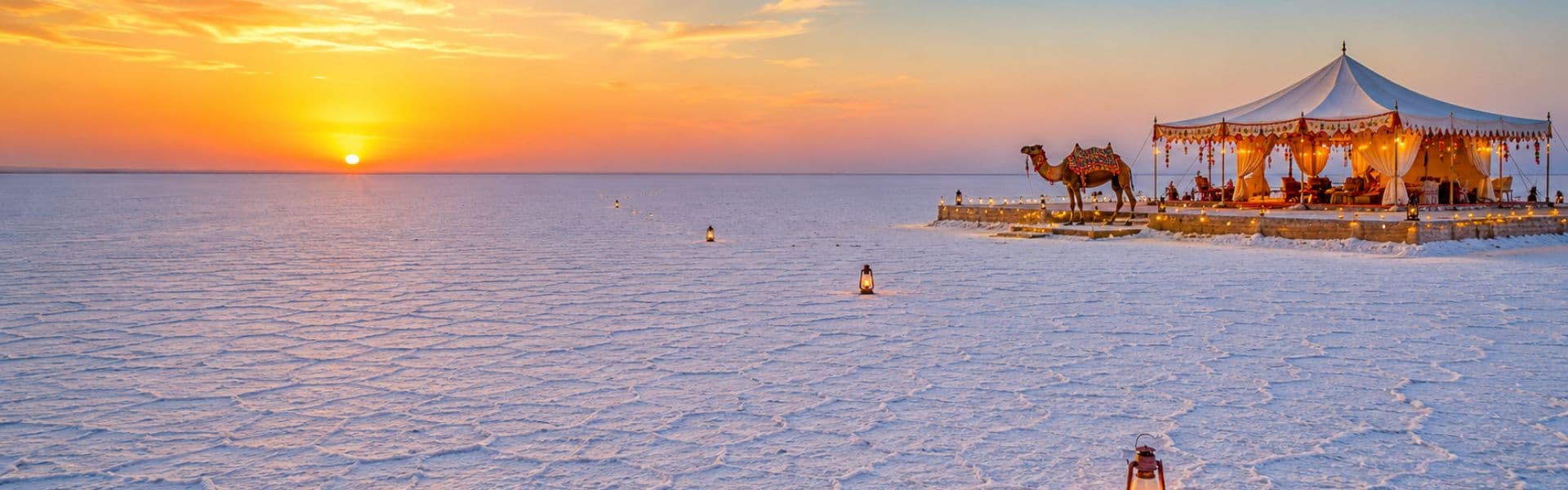
The Rann of Kutch is not merely a destination; it is a sensory phenomenon. As one of the largest salt deserts in the world, this vast expanse of cracked white earth transforms under the moonlight into something otherworldly. For the budget backpacker and culturally curious traveller, the Rann offers a rare intersection of stark natural beauty and some of the world's finest artisanal craftsmanship. In 2026, the region is more accessible than ever, yet it retains a frontier feel that is increasingly hard to find elsewhere in India. The specific reason to visit now? The emerging sustainable 'glamping' initiatives and community-led tourism in villages like Hodka and Dhordo, which allow you to support local craftspeople directly while staying in traditional 'Bhungas'.
Best Time to Visit: A Month-by-Month Breakdown
The Rann of Kutch is seasonal. During the monsoon, the desert is submerged in seawater, making it inaccessible. The 'White Desert' effect only occurs as the water evaporates.
- January: Peak season. Cold nights (5°C), pleasant days. Perfect for Rann Utsav. Pricing is at its highest.
- February: Excellent weather. The salt crust is thick and brilliant white. Crowds begin to thin slightly toward late February.
- March: The 'Sweet Spot'. Festivals wind down, prices drop, and the salt is still visible, though daytime temperatures rise to 35°C.
- April - June: Off-season. Brutally hot (45°C+). Most resorts close. Not recommended for travel.
- July - September: Monsoon season. The desert fills with water. Great for birdwatching in the Banni grasslands but the White Rann is submerged.
- October: Shoulder season. The water begins to recede. Humidity is high, but prices are low.
- November: The start of Rann Utsav. The desert is fresh, and the atmosphere is electric with cultural performances.
- December: Extremely popular. Book 4 months in advance. The full moon night in December is the most sought-after date.
Travel Planning & Booking
To reach the Rann, your primary hub is Bhuj. From London, New York, or Dubai, fly into Ahmedabad (AMD) or Mumbai (BOM), then take a domestic connection or train to Bhuj.
Flight Routes & Airlines
Star Air and IndiGo operate daily flights from Mumbai and Ahmedabad to Bhuj (BHJ). For international travellers, Qatar Airways and Emirates offer excellent connections to Ahmedabad via Doha or Dubai.
Visa Requirements 2025/2026
- UK, US, EU Nationals: Requires an e-Visa (30-day, 1-year, or 5-year options). Apply at least 4 days before travel via the official Indian government portal.
- UAE Nationals: e-Visa available.
- Indian Nationals: No visa, but a Permit is mandatory to visit the White Rann (Dhordo) due to its proximity to the border. This can be obtained online at the 'Rann Permit' portal or at the Bhirandiyara check post.
Accommodation: Where to Stay
In Kutch, your choice of stay defines your experience. We recommend staying in 'Bhungas'—traditional mud huts with conical roofs that are naturally climate-controlled.
- Luxury: Rann Utsav Tent City (Dhordo). The ultimate glamping experience with luxury tents, inclusive meals, and cultural shows. Cost: ₹15,000 - ₹25,000 per night.
- Mid-Range: Shaam-e-Sarhad Village Resort (Hodka). An award-winning community-owned resort. Authentic, beautiful, and supports local families. Cost: ₹5,000 - ₹8,000 per night.
- Budget/Boutique: Rann Kandhi Home Stay. Located close to the desert, offering home-cooked Kutchi meals and clean, basic Bhungas. Cost: ₹2,000 - ₹3,500 per night.
Top Tourist Attractions
- The White Rann (Dhordo): The main attraction. Visit at sunrise or sunset. Hours: 6:00 AM - 8:00 PM. Entry: Included in Rann Permit (approx ₹100).
- Kala Dungar (Black Hill): The highest point in Kutch, offering a panoramic view of the desert and the Indo-Pak border. Insider Tip: Watch the priest feed the jackals at the Dattatreya Temple at noon.
- Dholavira: A UNESCO World Heritage site featuring ruins of the Indus Valley Civilisation. Located on Khadir Bet island. Cost: Free (Museum has a small fee).
- Aina Mahal (Mirror Palace), Bhuj: An 18th-century palace with intricate glasswork. Hours: 9:00 AM - 11:45 AM, 3:00 PM - 5:45 PM. Entry: ₹20.
- Vijaya Vilas Palace, Mandvi: A stunning beachside palace used in many Bollywood films. Hours: 9:00 AM - 6:00 PM. Entry: ₹50.
- Bhujodi Handicraft Village: Meet National Award-winning weavers. Best place to buy authentic shawls and fabrics.
Local Food & Dining
Kutchi cuisine is vegetarian, hearty, and designed for the desert climate. Must-try items include Kutchi Dabeli (spicy mashed potato in a bun), Bajra no Rotlo (pearl millet flatbread) served with garlic chutney, and Khichdi-Kadhi.
- High-End: The Prince Hotel (Bhuj) for an authentic Gujarati Thali.
- Mid-Range: Green Rock (Bhuj) – iconic for its unlimited Thali.
- Street Food: Any stall near Hamirsar Lake in Bhuj for Dabeli and Ganthiya.
Getting Around Locally
From Bhuj Airport or Railway Station, the best way to reach the desert (80km away) is by hiring a private taxi. A return trip costs approximately ₹3,000 - ₹4,500. For budget travellers, 'Chakdas' (modified three-wheelers) run between villages but aren't ideal for long distances. App Tip: Use Uber in Bhuj for short city hops, but for the desert, rely on local operators booked through your guest house.
Safety & Emergency Contacts
Kutch is incredibly safe for solo travellers. The main risks are dehydration and sun exposure. Alcohol is strictly prohibited in Gujarat; do not attempt to carry it into the state without a liquor permit (available for foreigners at major hotels in Ahmedabad).
- Police: 100 / 112
- Ambulance: 108
- Fire: 101
- Nearest International Hospital: GK General Hospital (Bhuj)
For more deep-dives into Indian heritage and offbeat travel, visit ainexusworld.com.