
Introduction
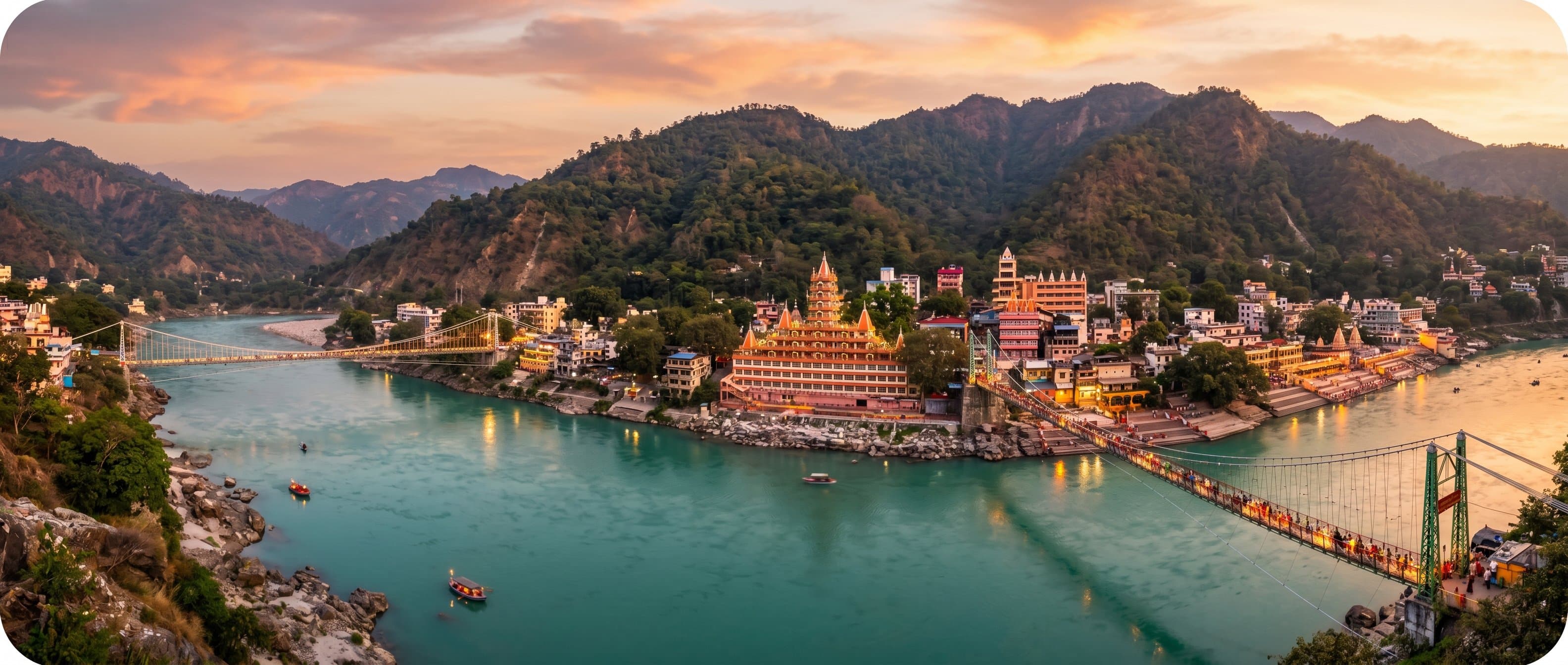
Rishikesh has long been etched into the global consciousness as the Yoga Capital of the World, a title cemented when The Beatles arrived in 1968 seeking transcendental meditation. However, heading into 2026, Rishikesh deserves a place on your itinerary for a completely different reason: its unparalleled evolution into a high-vibe digital nomad and adventure hub that refuses to lose its spiritual authenticity. Where else can you answer morning emails overlooking the emerald waters of the Ganges, spend your afternoon white-water rafting through Himalayan gorges, and end the day chanting at a riverside Aarti? For the modern budget backpacker and internationally-minded traveller, it offers the ultimate balance of affordable living, deep cultural immersion, and high-speed connectivity.
Best Time to Visit
Rishikesh experiences distinct seasons that dramatically alter the landscape and experience. The monsoon season (July to August) brings lush greenery but halts adventure sports and makes trekking treacherous. Winter (December to January) is crisp and cool, perfect for spiritual retreats but chilly for water activities. The undeniable sweet spot is late February to early April. During these weeks, the winter chill dissipates, the Ganges is perfectly clear for rafting, and the city hums with energy as it hosts the International Yoga Festival in March. You get the best of the weather before the blistering heat of May sets in.
Travel Planning & Booking
Most international travellers will fly into New Delhi's Indira Gandhi International Airport (DEL). From there, the quickest route is a 45-minute domestic flight to Dehradun's Jolly Grant Airport (DED), serviced frequently by IndiGo and Air India. Alternatively, the Vande Bharat Express train from New Delhi to Haridwar is a highly efficient, scenic five-hour rail journey. Booking lead times for flights should be 2-3 months, but ashrams and popular hostels (like Zostel) require booking at least 4 months ahead if visiting during the March yoga festivals. For visas, the Indian Government offers a streamlined e-Visa process for UK, US, EU, and UAE nationals, available in 30-day, 1-year, and 5-year tourist increments. Ensure your passport has at least six months' validity and two blank pages. Indian nationals require no visa or permits for Rishikesh.
Travel Insurance
Travel insurance is strictly non-negotiable for Rishikesh. The primary draw for many visitors is adventure tourism—specifically white-water rafting, bungee jumping at Mohan Chatti, and Himalayan trekking. Standard travel insurance often excludes these 'high-risk' activities, so you must secure a policy that explicitly covers adventure sports. You also want robust cover for medical evacuation; whilst local clinics are fine for minor ailments, severe injuries require transport to New Delhi. World Nomads is exceptional for its comprehensive adventure tier. SafetyWing is the go-to for extended nomad stays, and Allianz provides unparalleled medical evacuation cover. Practical tip: Always carry a printed copy of your insurance certificate in your daypack, as local adventure operators often request proof before allowing you on the rafts.
Packing Guide
Packing for Rishikesh requires balancing the practicalities of an outdoor adventure town with the modest requirements of a deeply religious city. A climate-specific checklist should include breathable cotton or linen layers, a lightweight fleece for cool evenings by the river, and robust sandals (like Tevas). Culturally, both men and women must keep shoulders and knees covered in ashrams and temples. A versatile sarong or pashmina is essential for impromptu temple visits. Must-bring specific to Rishikesh: Slip-on shoes. You will be taking your shoes off constantly to enter cafes, temples, and ashrams; lace-up hiking boots will quickly become a nuisance. What tourists over-pack: Heavy, professional-grade hiking boots. Unless you are heading deep into the high Himalayas (like the Valley of Flowers), a good pair of trail runners is more than sufficient for local waterfall treks.
Accommodation
The city is split by the Ganges. Tapovan is the bustling, modern backpacker and digital nomad hub, teeming with vegan cafes and hostels. Swarg Ashram is the spiritual epicentre, offering quietude and strict ashram living on the eastern bank. For a true luxury escape, the Taj Rishikesh Resort & Spa, Uttarakhand sits majestically on a quiet bend of the river 30km from the chaos. For a superb mid-range option, Aloha on the Ganges offers resort amenities with direct river access in Tapovan. The boutique backpacker pick is Zostel Rishikesh (Tapovan), famous for its immaculate dorms and vibrant community events. Booking tip: If you value sleep, ensure your accommodation is set back from the main Badrinath Highway, which suffers from chronic horn-honking traffic from dawn until dusk.
Getting Around Locally
Arriving at Dehradun's Jolly Grant Airport, a prepaid taxi to Rishikesh (approx. 45 minutes) is the safest and most transparent option. Locally, Rishikesh is highly walkable, especially along the pedestrianised ghats. For longer distances, the shared auto-rickshaws (known locally as 'Vikrams') are cheap and run fixed routes. Scooters are available for rent at £4/$5 a day, offering ultimate freedom to explore surrounding waterfalls. While Uber operates in nearby Dehradun, the local Rapido bike-taxi app or Ola is far more reliable in Rishikesh. One common tourist mistake: Renting a scooter without an International Driving Permit. Local police frequently set up checkpoints on the bridges, and the fines for unlicensed tourists are steep.
Top Tourist Attractions (Must-See)
1. Triveni Ghat: The most sacred bathing spot in Rishikesh. Visit at 6:00 PM for the mesmerising Maha Aarti, a fire-offering ceremony. Entry is free. Insider tip: Arrive by 5:15 PM to secure a seat on the steps before the local crowds descend.
2. The Beatles Ashram (Chaurasi Kutia): An abandoned ashram now covered in stunning graffiti art where the band wrote the 'White Album'. Open 9:00 AM - 4:00 PM. Cost: 600 INR for foreigners. Insider tip: Take mosquito repellent; the jungle reclaims this space quickly.
3. Parmarth Niketan: The largest ashram in the area. Open 24/7. Free entry. Insider tip: Their sunset Aarti is heavily geared towards foreigners and features English commentary, making it highly accessible.
4. Neer Garh Waterfall: A multi-tiered waterfall perfect for a refreshing dip. Open 8:00 AM - 6:00 PM. Entry: 50 INR. Insider tip: Hike past the first pool to the second tier to escape the domestic tourist crowds.
5. Vashishta Gufa: An ancient meditation cave located 25km outside the city. Open 9:00 AM - 12:00 PM, 3:00 PM - 6:00 PM. Free entry. Insider tip: Absolute silence is enforced inside; it's the perfect antidote to the noisy city centre.
6. Kunjapuri Devi Temple: A hilltop temple offering panoramic views of the Himalayan peaks. Best visited at 5:00 AM for sunrise. Free entry. Insider tip: Book a one-way taxi up, watch the sunrise, and hike the 14km downhill path back into Tapovan.
Local Food & Dining
Rishikesh is a holy city; therefore, it is strictly vegetarian and entirely alcohol-free by law. Embrace the local fare: you must try crispy Chole Bhature, sweet Jalebi, unlimited vegetarian Thali, and steaming cups of Masala Chai. For a high-end experience, Jal & Jalebi at the Ganga Kinare hotel offers refined North Indian cuisine in a stunning setting. The mid-range backpacker favourite is The Sitting Elephant, boasting sweeping river views and excellent fusion dishes. For street food, head to the stalls surrounding Triveni Ghat Market at dusk for the best Aloo Tikki in town. Dietary note: Vegans will find Rishikesh incredibly easy to navigate, with almost every cafe in Tapovan offering almond milk and plant-based alternatives.
Safety & Emergency Contacts
Rishikesh is generally considered very safe for international tourists, including solo female travellers. The most significant risks are traffic accidents (crossing the busy Badrinath road) and aggressive macaque monkeys. Do not carry food openly in plastic bags, as monkeys will aggressively snatch them. In the monsoon, avoid bathing in the Ganges due to deadly undercurrents.
LOCAL EMERGENCY NUMBERS:
- Police: 112 / 100
- Ambulance: 108
- Fire: 101
- Tourist Police: 1364 (Uttarakhand Helpline)
- National Emergency: 112
The nearest international-standard hospital is AIIMS Rishikesh (All India Institute of Medical Sciences) on Virbhadra Road, which handles all major traumas.
Useful Apps & Resources
Arm your smartphone before arrival: Rapido for cheap bike taxis, MakeMyTrip for booking domestic flights and hotels, Zomato for local food delivery to your hostel, IRCTC Rail Connect for booking trains, and Google Translate (download the Hindi pack offline). For official updates, the Uttarakhand Tourism Board website (uttarakhandtourism.gov.in) is the definitive resource.
Closing
Rishikesh is a rare destination that simultaneously demands introspection and inspires adrenaline. Whether you are seeking a quiet corner of an ashram to reset your mind, a churning rapid to test your nerve, or a vibrant cafe to code your next project, the banks of the Ganges have a place for you. Don't rush your time here; let the slow, rhythmic pace of the mountains sink in. For more expert guides, travel hacks, and destination deep-dives, continue exploring www.ainexusworld.com.
FAQ
Is Rishikesh safe for solo female travellers? Yes, it is one of the safest cities in India for solo females, thanks to its spiritual nature and heavy backpacker presence. However, standard precautions like avoiding isolated alleys at night apply.
Can you drink alcohol in Rishikesh? No. Rishikesh is a holy city; the sale and consumption of alcohol and non-vegetarian food are strictly prohibited by law within city limits.
How many days do I need in Rishikesh? A minimum of 4-5 days is recommended to experience an ashram, try white-water rafting, visit the Beatles Ashram, and enjoy the cafe culture without rushing.
Do I need to be interested in yoga to visit? Not at all. While yoga is prominent, Rishikesh is equally famous for hiking, rafting, cafe-hopping, and stunning Himalayan scenery.
Are the suspension bridges (Laxman Jhula / Ram Jhula) safe? Ram Jhula and Janki Jhula are fully operational and safe. Laxman Jhula was permanently closed to pedestrians in 2022 for safety reasons, though a new glass-bottom bridge is currently under construction nearby.