
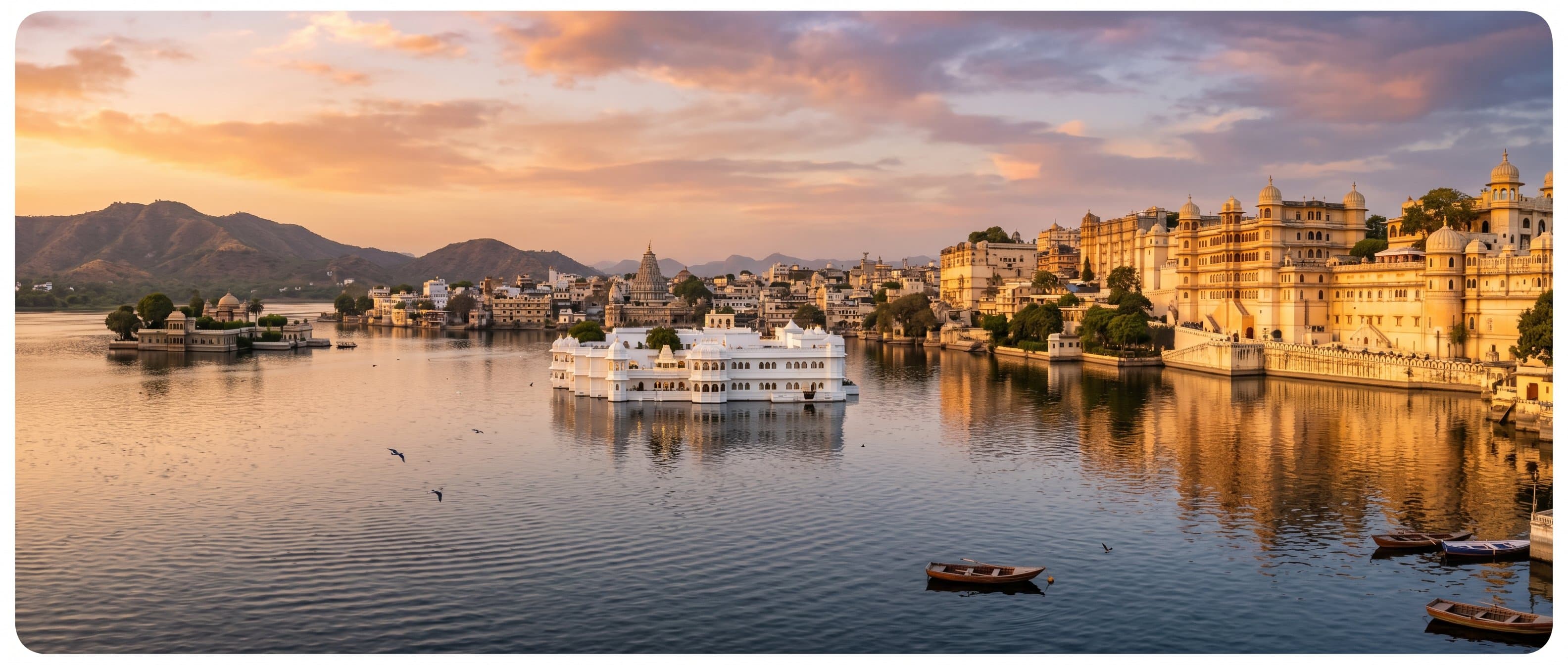
The Ultimate Udaipur Travel Guide 2026: Everything You Need to Know
Welcome to Udaipur, the undeniable crown jewel of Rajasthan. Often referred to as the 'Venice of the East', this mesmerising city of lakes, palaces, and centuries-old havelis offers an intoxicating blend of Rajputana history and serene natural beauty. For the modern backpacker or digitally savvy traveller in 2026, Udaipur deserves a spot at the very top of your Indian itinerary. Why right now? Beyond its timeless romanticism, Udaipur has recently completed a massive restoration of its Old City heritage walking trails, connecting hidden step-wells and lesser-known havelis that were previously inaccessible to the public. You can now explore the architectural triumphs of the Mewar dynasty on foot, far away from the standard tourist coaches.
Best Time to Visit
Timing your trip to Udaipur is the difference between an ethereal, comfortable experience and sweltering in extreme Rajasthani heat. The city experiences three primary seasons: a scorching summer, a revitalising monsoon, and a pleasant winter. The sweet spot for visiting is undeniably October to November. During this post-monsoon window, the lakes are filled to the brim, the surrounding Aravalli hills are lush green, and the daytime temperatures hover around a very comfortable 25°C. Furthermore, you can time your visit to align with Diwali (the festival of lights), when the entire City Palace and the surrounding ghats are illuminated by thousands of earthen lamps.
Seasonal Breakdown
Winter (October to March): This is the peak tourist season. The weather is spectacular, with crisp mornings, sunny afternoons, and chilly evenings. You will need a light jacket for rooftop dinners. However, this is also when accommodation prices peak, and attractions like the City Palace are at their most crowded. Summer (April to June): Not for the faint-hearted. Temperatures regularly soar above 40°C. The intense sun bakes the city, and daytime exploration becomes almost impossible. On the flip side, luxury hotels slash their prices, making it a viable time for budget travellers looking to score a five-star stay at a fraction of the cost. Monsoon (July to September): Udaipur transforms into a moody, romantic paradise. The dust is washed away, and the lakes replenish. It rarely rains all day; rather, you will experience heavy, refreshing downpours followed by dramatic, cloudy skies. It is highly photogenic and significantly less crowded.
Travel Planning & Booking
Getting to Udaipur is straightforward, thanks to Maharana Pratap Airport (UDR), located about 22 kilometres east of the city centre. There are no direct international flights to Udaipur; you will need to transit through a major Indian hub. The most efficient flight routes are via New Delhi (DEL) or Mumbai (BOM), with domestic carriers like IndiGo, Air India, and Vistara operating multiple daily flights. Flight time from Delhi is roughly 1 hour 15 minutes.
For the budget backpacker, Indian Railways is the classic alternative. The Mewar Express from New Delhi is a popular overnight journey. Booking lead time is critical in India. For trains, you can and should book up to 120 days in advance via the IRCTC platform or a foreigner-friendly app like MakeMyTrip. For domestic flights, booking 4–6 weeks ahead secures the best fares.
Visa Requirements and Entry
Entering India requires preparation. As of 2026, the Indian e-Visa system is highly efficient but strict on documentation. Citizens of the UK, US, EU, and UAE are eligible for the e-Tourist Visa (valid for 30 days, 1 year, or 5 years depending on your selection). You must apply at least 4 days before your arrival. Ensure your passport has at least six months of validity and two blank pages. You will need a digital passport photo (square format, white background) and a PDF scan of your passport's bio page. Indian citizens visiting from other states, naturally, require no visa but should carry their Aadhaar card or passport for hotel check-ins.
Travel Insurance
Never travel to India without comprehensive travel insurance. While Udaipur is generally very safe, the specific environment poses unique challenges. You are navigating chaotic traffic, consuming street food that your stomach may not be accustomed to, and potentially encountering stray animals (macaques and street dogs are common). Your cover must include medical evacuation, as complex emergencies might require transfer to New Delhi or Mumbai. Ensure your policy covers minor medical visits (for issues like 'Delhi Belly') and trip cancellations, especially if you are travelling during the monsoon when domestic flights can occasionally be delayed.
Recommended Providers
World Nomads: The gold standard for backpackers, offering flexible extensions and covering a wide range of adventure activities (like horseback riding in the Aravallis). SafetyWing: Ideal for digitally savvy, long-term travellers; it operates on a subscription model and is incredibly cost-effective. Allianz Travel: Best for older travellers or those wanting robust, traditional coverage with excellent customer support for high-value claims.
Packing Guide
Packing for Udaipur requires balancing the climate with cultural sensitivity. Rajasthan is a deeply traditional state. Women should avoid short shorts, low-cut tops, or bare shoulders when outside their hotels, particularly near temples. Men should avoid walking around shirtless, and wearing shorts is generally seen as overly casual outside tourist enclaves. Bring lightweight, breathable fabrics like linen and cotton. A pashmina or large scarf is essential for covering your head or shoulders when entering places like the Jagdish Temple. Bring slip-on shoes or sandals, as you will be taking them off frequently at temples and even some shops. One item tourists consistently over-pack: Heavy hiking boots. Unless you are doing a multi-day trek in the remote Aravallis, sturdy walking sandals or lightweight trainers are far more practical.
Accommodation
Udaipur’s accommodation scene is largely clustered around Lake Pichola. Lal Ghat is the epicentre of backpacker life, packed with hostels, budget cafes, and narrow, bustling alleyways. Hanuman Ghat, located across the footbridge, is slightly quieter, offers spectacular sunset views facing the City Palace, and is a favourite for mid-range travellers. For unadulterated luxury, the islands on the lake and the shores of Fateh Sagar provide opulent five-star retreats.
For pure luxury, the Taj Lake Palace is peerless—a floating marble fantasy that offers an unforgettable, albeit expensive, experience. For a mid-range heritage feel, Jagat Niwas Palace Hotel offers stunning haveli architecture with exceptional lake views from its rooms and restaurant. For the budget backpacker, Zostel Udaipur at Swaroop Sagar is brilliant, offering clean dorms, a vibrant social scene, and a spectacular rooftop cafe. Booking tip: Always request a 'Lake View' room in advance, as heritage properties often have interior rooms with no windows at all.
Getting Around Locally
From Maharana Pratap Airport, a pre-paid taxi from the official booth inside the terminal will cost around ₹800-1000 ($10-12) to the city centre. Alternatively, you can book an Uber or Ola via the app for slightly less, though wait times can vary. Once in the city, the Old City is incredibly compact and best explored on foot. The narrow lanes are totally unsuitable for cars. For longer distances, auto-rickshaws (tuk-tuks) are the quintessential mode of transport. Common tourist mistake: Accepting a tuk-tuk driver's offer to take you to a 'special' gem or textile shop. These are high-pressure commission traps. Always insist firmly on your destination, and agree on the fare before getting in, or use the Uber/Ola app to book your rickshaw at a fixed, fair price.
Top Tourist Attractions
1. City Palace
The largest palace complex in Rajasthan, this architectural marvel was built over 400 years. It offers a labyrinth of courtyards, pavilions, terraces, and hanging gardens. It matters because it is the historical heart of the Mewar kingdom. Hours: 09:30 - 17:30. Entry: ₹400 for adults. Best time: 09:30 sharp to beat the crowds. Insider tip: Enter via the Badi Pol gate and hire an official audio guide; the signage inside is notoriously sparse.
2. Lake Pichola Boat Ride
An artificial fresh water lake created in 1362, offering the most iconic views of the city's ghats and palaces. Hours: 10:00 - 17:00. Entry: ₹500-800 depending on the time. Best time: Sunset (approx 16:30). Insider tip: The municipal boats from Rameshwar Ghat (inside City Palace) are more expensive; walk to Lal Ghat for cheaper private boat operators.
3. Bagore Ki Haveli Dharohar Dance Show
An 18th-century haveli that hosts a spectacular nightly showcase of traditional Rajasthani folk dance, including the famous Chari and Bhavai dances. Hours: Museum 09:30-17:30, Dance Show 19:00-20:00. Entry: ₹100 for the show. Best time: Arrive by 18:15. Insider tip: Tickets sell out daily; buy them at the counter at 18:00 sharp to secure front-row floor seating.
4. Jagdish Temple
A massive, intricately carved Hindu temple dedicated to Lord Vishnu, located in the absolute centre of the Old City. Hours: 05:00 - 14:30, 16:00 - 22:00. Entry: Free. Best time: Early morning for the Aarti (prayer). Insider tip: Ignore the 'priests' asking for mandatory large donations; a small ₹10-20 offering in the main box is culturally sufficient.
5. Sajjangarh (Monsoon Palace)
Perched high on a hill overlooking the city, it was built to watch the monsoon clouds approach. Hours: 09:00 - 17:00. Entry: ₹110 plus ₹100 for the shared jeep ride up the hill. Best time: Late afternoon. Insider tip: The palace itself is quite bare; you are paying entirely for the panoramic, breathtaking sunset view over the Aravalli range.
6. Saheliyon Ki Bari
The 'Garden of the Maidens', featuring beautifully manicured lawns, lotus pools, and marble pavilions with elephant-shaped fountains. Hours: 09:00 - 19:00. Entry: ₹50. Best time: Mid-morning. Insider tip: It provides a wonderfully cool, shaded escape when the midday heat of the city gets too intense.
Local Food & Dining
Rajasthani cuisine is rich, flavourful, and heavily reliant on ghee, dairy, and spices. You absolutely must try Dal Baati Churma (hard wheat rolls served with lentils and sweetened crushed bread), Laal Maas (a fiery, bright red mutton curry), and Pyaaz Kachori (deep-fried pastry stuffed with spiced onions). For a high-end experience, book a table at Ambrai. Located right on the water at Hanuman Ghat, it offers unparalleled views of the lit-up City Palace and excellent Laal Maas. For mid-range, healthy, and alternative dining, Millets of Mewar is a backpacker institution serving gluten-free and vegan local delicacies. For street food, head to the evening market at Sukhadia Circle, where you can sample Pav Bhaji and Falooda alongside local families. Dietary Note: Udaipur is an absolute paradise for vegetarians. Ensure you specify 'pure veg' if you avoid eggs, as in India, vegetarian typically means lacto-vegetarian.
Safety & Emergency Contacts
Udaipur is generally very safe, even for solo female travellers. Violent crime against tourists is exceedingly rare. However, you must be cautious of petty theft in crowded markets and aggressive touts. Be particularly wary of 'gemstone scams', where you are asked to buy jewels to post to another country to bypass export taxes—it is always a fraud. Avoid walking alone late at night around the darker, unlit edges of the lakes.
Emergency Numbers
- Police: 100
- Ambulance: 108
- Fire: 101
- Tourist Police: 1364
- National Emergency: 112
The nearest international-standard medical facility is GBH American Hospital on Bhatt Ji Ki Bari road. Note: Udaipur does not host foreign embassies. All major embassies are located in New Delhi.
Useful Apps & Resources
To navigate Udaipur like a local, download these essential apps before you arrive: Uber/Ola for transparent, haggle-free transport; Zomato or Swiggy for discovering restaurant reviews and ordering food delivery right to your hostel; MakeMyTrip for booking domestic buses and flights; Google Maps (download the offline map of Udaipur as reception drops in thick haveli walls); and Google Translate (download the Hindi language pack). For official information, check out tourism.rajasthan.gov.in.
Closing Thoughts
Udaipur is a city that demands to be savoured, not rushed. Take the time to sip masala chai on a rooftop as the call to prayer echoes across Lake Pichola, get lost in the winding, brightly painted alleys of the Old City, and immerse yourself in the warm hospitality of Rajasthan. By travelling smart, respecting the local culture, and stepping slightly off the beaten path, your 2026 trip will be nothing short of magical. Ready to plan the rest of your adventure? Continue exploring our expert guides and hidden gems at www.ainexusworld.com.
FAQ
Is Udaipur safe for tourists? Yes, Udaipur is considered one of the safest cities in India for tourists. Exercise standard precautions against pickpockets and ignore persistent touts.
How many days do I need in Udaipur? A minimum of 3 full days is recommended to see the City Palace, enjoy the lakes, and take a day trip to the surrounding Aravalli hills.
Can I drink the tap water? Absolutely not. Always drink bottled or strictly filtered RO water to avoid waterborne illnesses.
Do I need to book the City Palace tickets in advance? While not strictly necessary, arriving early at the ticket counter (9:30 AM) saves you from long queues during the peak winter months.
Are credit cards widely accepted? Major hotels and upscale restaurants accept cards, but you will need cash (INR) for street vendors, auto-rickshaws, and small entry fees.