
Introduction
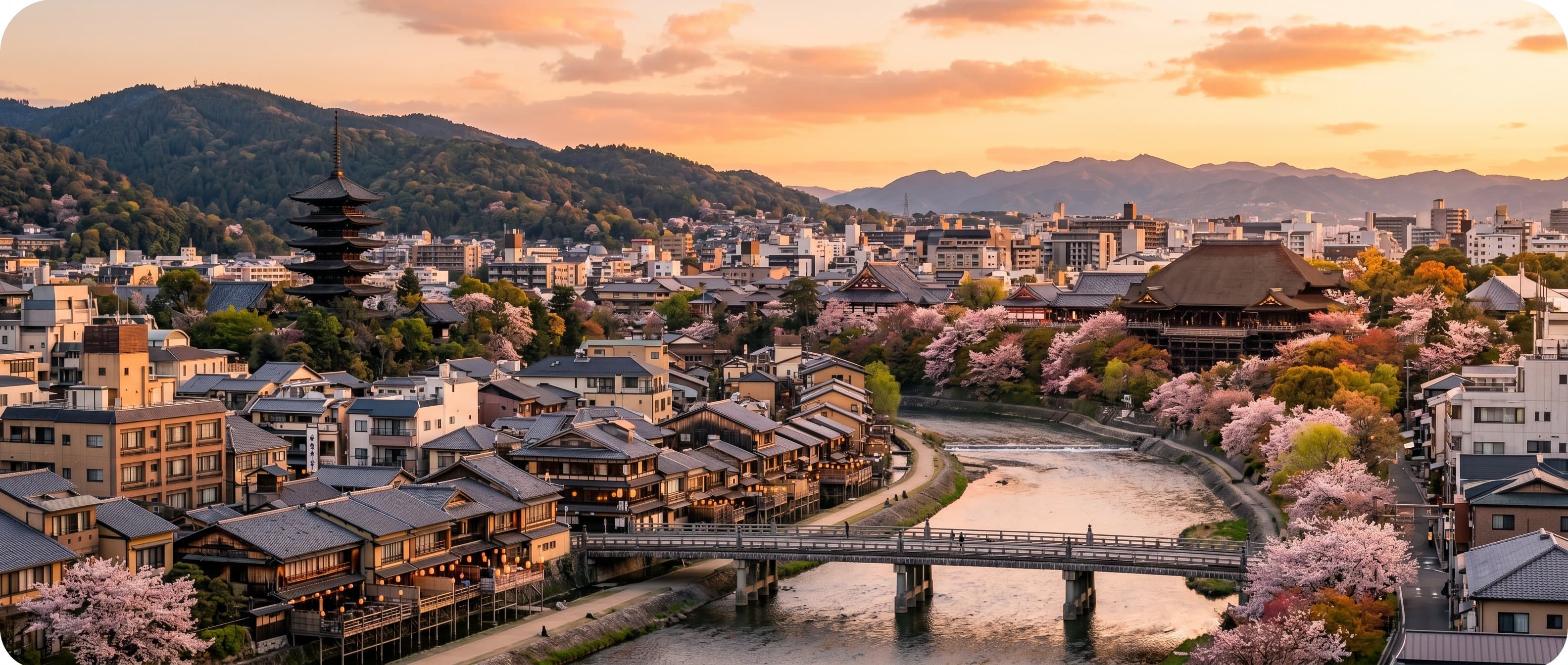
Kyoto is more than just a city; it's a living canvas of Japan's rich history, where ancient traditions seamlessly blend with contemporary life. For the budget-conscious, internationally-minded backpacker, Kyoto in 2026 presents an incredible opportunity to immerse oneself in a culture renowned for its meticulous detail, serene beauty, and profound hospitality. What truly sets Kyoto apart right now is its unwavering commitment to preserving its heritage while subtly embracing modern accessibility, making deep cultural exploration more feasible than ever, even on a tighter budget. Experience an unmatched sense of calm amidst bustling shrines and a quiet reverence for beauty that permeates every corner, from a perfectly raked zen garden to a meticulously prepared bowl of matcha.
Best Time to Visit
Choosing the right time to visit Kyoto can significantly impact your experience, balancing beautiful weather with crowd levels and pricing.
- January: Cold (5-10°C), often with clear skies. Low crowds means better temple viewing. Budget pricing for flights and accommodation. Festivals: Hatsumōde (New Year's shrine visit), Tōshiya (archery event).
- February: Still cold (5-12°C), but plum blossoms begin to appear towards the end of the month. Low crowds. Budget pricing. Festivals: Setsubun (bean-throwing festival).
- March: Mild (10-15°C) and progressively warmer. Cherry blossom season begins late March, bringing moderate to high crowds. Pricing starts to climb. Festivals: Higashiyama Hanatouro (lantern festival).
- April: Pleasant (15-20°C) and prime cherry blossom season. Expect very high crowds and peak pricing. Book well in advance. Festivals: Miyako Odori (Geisha dance).
- May: Warm (18-25°C) with lush greenery. Still high crowds, but less intense than April. Expensive pricing. Festivals: Aoi Matsuri (one of Kyoto's three great festivals).
- June: Hot and humid (22-30°C), start of the rainy season. Moderate crowds due to rain. Moderate pricing. Festivals: Takigi Nō (open-air Nō theatre).
- July: Hot and humid (25-32°C). Crowds remain moderate, picking up for Gion Matsuri. Pricing is moderate. Festivals: Gion Matsuri (Kyoto's most famous festival).
- August: Very hot and humid (24-31°C). Moderate crowds, but many locals are on holiday. Pricing is moderate. Festivals: Gozan Okuribi (bonfire festival).
- September: Warm and comfortable (20-26°C), less humidity. Moderate crowds. Pricing is moderate. Festivals: Hōkyō-ji Doll Memorial Service.
- October: Pleasant (15-22°C) with vibrant autumn foliage starting. Moderate crowds. Pricing is moderate. Festivals: Jidai Matsuri (Festival of Ages).
- November: Cool (10-16°C) and peak autumn foliage. Very high crowds for leaf viewing. Expensive pricing. Festivals: Arashiyama Momiji Festival.
- December: Cold (5-12°C). Crowds decrease towards mid-month. Moderate pricing. Festivals: Kyoto Arashiyama Hanatouro.
Sweet Spot Recommendation: Early to mid-May, after the cherry blossom rush, offers excellent weather, beautiful fresh greenery, and slightly fewer crowds than April, allowing for comfortable exploration before the summer heat. Alternatively, late October for stunning autumn colours with pleasant temperatures, though crowds will be significant.
Travel Planning & Booking
Getting to Kyoto, primarily via Kansai International Airport (KIX), requires some foresight, especially for budget-conscious travellers.
Flight Routes & Airlines
Major international routes fly into KIX (Osaka), which is just an hour away from Kyoto. For 2026, expect routes like:
- London (LHR/LGW) to Osaka (KIX): Airlines include British Airways (via Helsinki), Finnair, KLM, Air France, Lufthansa (with connections). Direct flights are rare but connections are plentiful. Expect 12-15 hour journey times.
- New York (JFK/EWR) to Osaka (KIX): Airlines like United, Delta, ANA, JAL, Korean Air, Cathay Pacific (with connections). Expect 14-17 hour journey times.
Consider flying into Tokyo (NRT/HND) and taking the Shinkansen (bullet train) to Kyoto if direct KIX flights are more expensive – a 2.5-hour journey costing around ¥13,000-14,000.
Booking Lead Times
For best prices, book flights 4-6 months in advance, especially if travelling during peak seasons (cherry blossom, autumn foliage). Accommodation should also be secured 3-5 months ahead.
Top 3 Booking Platforms
- Skyscanner: Best for comparing flight prices across airlines and finding the cheapest days to fly. Its 'Everywhere' search is great for exploring options.
- Booking.com: Excellent for hotels, hostels, and guesthouses, offering a wide range of accommodation with robust review systems.
- Agoda: Specialises in Asia-Pacific travel, often having competitive deals on hotels and ryokans that might not appear prominently elsewhere.
Visa Requirements (for 2025/2026)
Japan's visa policy is generally stable, but always check the latest official information from the Ministry of Foreign Affairs of Japan.
- UK Nationals: Visa-exempt for stays up to 90 days for tourism, business, or visiting relatives. Requires a valid passport.
- US Nationals: Visa-exempt for stays up to 90 days for tourism, business, or visiting relatives. Requires a valid passport.
- EU Nationals (Schengen Area): Visa-exempt for stays up to 90 days for tourism, business, or visiting relatives. Requires a valid passport.
- Indian Nationals: A visa is generally required for tourism. This must be obtained in advance from a Japanese Embassy or Consulate in India. Requirements typically include a valid passport, visa application form, passport-sized photos, flight itinerary, proof of accommodation, and financial solvency.
- UAE Nationals: Visa-exempt for stays up to 30 days for tourism, business, or visiting relatives. Requires a valid passport.
Entry Documentation Checklist
- Valid passport (at least 6 months validity from entry date).
- Confirmed onward/return flight tickets.
- Proof of accommodation (hotel bookings).
- Sufficient funds for your stay.
- Completed disembarkation card and customs declaration (often digital via 'Visit Japan Web' for faster processing).
Travel Insurance
Travel insurance isn't just a recommendation for Kyoto; it's a necessity, particularly given potential high medical costs and the complexity of international travel. While Japan is safe, unforeseen circumstances can arise.
Cover to Look For
- Medical Emergencies: Comprehensive cover for hospital stays, doctor visits, and emergency medical evacuation. Japanese healthcare is excellent but expensive without insurance.
- Trip Cancellation/Interruption: Protects against losses from unforeseen events like illness, natural disasters (typhoons can affect Japan), or family emergencies.
- Lost/Stolen Baggage: Covers replacement costs for lost luggage, essential electronics, and important documents.
- Adventure Activities: If you plan any hiking, cycling, or unique experiences, ensure your policy covers these specifically.
3 Recommended Providers
- World Nomads: Renowned for backpackers and adventure travellers, offering flexible policies that can be extended or purchased even after starting your trip.
- SafetyWing: Ideal for digital nomads and long-term travellers, offering an affordable monthly subscription model with good medical and travel delay coverage.
- Allianz Travel Insurance: A reputable provider offering comprehensive plans with strong medical and emergency assistance benefits, suitable for those seeking robust coverage.
Practical Tip: Always carry a physical copy of your insurance policy details, including emergency contact numbers, and store a digital copy on your phone and in the cloud.
Packing Guide
Packing smart for Kyoto means blending practicality with cultural sensitivity.
Climate-Specific Clothing Checklist
- Spring (March-May): Layers are key. Light jacket, long-sleeved shirts, comfortable walking shoes.
- Summer (June-August): Lightweight, breathable fabrics (cotton, linen). Shorts and t-shirts are fine. A light rain jacket or umbrella is essential for the rainy season. Good sun protection (hat, sunscreen).
- Autumn (September-November): Similar to spring, with slightly warmer layers. Cardigans, light sweaters, comfortable trousers.
- Winter (December-February): Warm layers. Thermal underwear, wool jumpers, a heavy coat, scarf, gloves, and warm, waterproof shoes.
Cultural Dress Considerations
While Japan is modern, modesty is appreciated, especially when visiting temples, shrines, and traditional establishments. Avoid overly revealing clothing. When entering homes, some restaurants, and temples, you'll often need to remove your shoes, so comfortable, easy-to-slip-on footwear is recommended. Clean socks are a must!
Must-Bring Items Specific to Kyoto
- Portable Wi-Fi Device or eSIM: Essential for navigation, translation, and staying connected on the go.
- Comfortable Walking Shoes: You'll do a lot of walking, especially exploring temples and gardens.
- Small Backpack/Daypack: For daily essentials, souvenirs, and snacks.
- Reusable Water Bottle: Stay hydrated and reduce plastic waste.
- Power Bank: Keep your phone charged for maps and photos.
- Compact Umbrella: Rain showers can be sudden, especially in spring and summer.
One Item Tourists Over-Pack: Formal wear. Unless you plan a specific high-end dining experience that requires it, smart casual is sufficient for almost all situations in Japan.
Accommodation
Kyoto offers a diverse range of accommodation, from budget-friendly hostels to luxurious ryokans. Booking well in advance is crucial, especially during peak seasons.
3 Best Neighbourhoods to Stay
- Downtown Kyoto (Kawaramachi/Shijo): Best for first-time visitors and those who want easy access to shopping, dining, nightlife, and major transport hubs. It's bustling and convenient.
- Gion/Higashiyama: Ideal for cultural immersion. Stay close to historic streets, traditional wooden houses, geisha districts, and numerous temples. Quieter evenings, but still walkable to many attractions.
- Kyoto Station Area: Perfect for those planning day trips (e.g., to Osaka, Nara) or needing quick access to the Shinkansen. A bit more modern, but with good transport links and dining options.
Accommodation Picks
- Luxury Pick: The Ritz-Carlton Kyoto (200-400 USD per night). Located on the banks of the Kamogawa River in Nakagyo Ward, offering exquisite service, elegant rooms with traditional Japanese touches, and Michelin-starred dining. Amenities include a spa, indoor pool, and exceptional river views.
- Mid-Range Pick: Hotel Gracery Kyoto Sanjo (80-150 USD per night). Situated in the bustling downtown area of Nakagyo Ward, this modern hotel offers comfortable, well-designed rooms with excellent amenities, including free Wi-Fi and a convenient location near shopping and dining.
- Boutique/Unique Pick: The Millennials Kyoto (20-50 USD per night). A trendy, high-tech capsule hostel in the heart of Nakagyo Ward, offering spacious 'smart pods' with projectors and comfortable mattresses. It boasts excellent communal areas, a co-working space, and a vibrant atmosphere popular with digital nomads and backpackers.
Booking Tip: Consider staying in a traditional ryokan or guesthouse (minshuku) for a truly authentic experience. Look for places slightly off the main tourist drags for better value. Check for properties with communal kitchens to save on food costs.
Getting Around Locally
Kyoto's public transport system is efficient and reliable, making it easy to navigate the city without breaking the bank.
Airport to City Centre (Kansai International Airport - KIX)
- JR Haruka Limited Express Train: Your fastest and most comfortable option. Takes approximately 75-80 minutes to Kyoto Station. Cost: around ¥2,900 for a non-reserved seat, or ¥3,630 for reserved (approximate 2026 pricing). Frequency: roughly every 30 minutes.
- Airport Limousine Bus: A direct bus service from KIX to various points in Kyoto, including Kyoto Station. Takes approximately 90-120 minutes, depending on traffic. Cost: around ¥2,600 (approximate 2026 pricing). Frequency: every 20-30 minutes.
- Taxi: Convenient for door-to-door service, but significantly more expensive. Cost: ¥18,000-25,000 to central Kyoto. Time: 70-90 minutes. Not recommended for budget travellers.
Best Local Transport Modes
- Kyoto City Bus: Extensive network covering most major attractions. Cost: Flat fare of ¥230 per ride (approximate 2026 pricing). Day Pass: ¥700, excellent value if you plan 3+ rides. Tips: Enter from the rear, pay at the front when exiting.
- Kyoto Municipal Subway: Two main lines (Karasuma and Tozai) that intersect at Karasuma-Oike. Connects some key areas but less comprehensive than the bus network for tourist sights. Cost: ¥220-360 depending on distance. Day Pass: ¥900 (subway only) or ¥1,100 (bus+subway).
- Bicycle: Kyoto is relatively flat and very cycle-friendly in many areas. Renting a bicycle is a fantastic way to explore, especially in areas like Arashiyama or along the Kamogawa River. Rental cost: ¥800-1,500 per day.
Recommended Apps
- Japan Transit Planner (Jorudan or HyperDia): Essential for planning train, subway, and bus routes with accurate timings and costs.
- Google Maps: Reliable for walking directions, bus routes, and identifying nearby amenities.
One Common Tourist Mistake: Underestimating the sheer size and spread of Kyoto's attractions and trying to walk everywhere. While walkable within districts, inter-district travel often requires public transport or a bicycle. Don't be afraid to use the buses!
Top Tourist Attractions (Must-See)
- Fushimi Inari Taisha
- Why it matters: Famous for its thousands of vibrant orange torii gates winding up sacred Mount Inari. It's an iconic and deeply spiritual site, dedicated to the Shinto god of rice.
- Opening Hours: 24/7
- Entry Cost: Free
- Best Time: Early morning (before 8 AM) or late afternoon (after 4 PM) to avoid crowds and capture the best light.
- Insider Tip: Walk beyond the main photo-op areas; the further you go up the mountain, the fewer people you'll encounter, offering a more serene experience.
- Location: 68 Fukakusa Yabunouchicho, Fushimi Ward, Kyoto
- Kinkaku-ji (Golden Pavilion)
- Why it matters: A stunning Zen Buddhist temple entirely covered in gold leaf, set against a tranquil pond and exquisite gardens. It's an architectural masterpiece and World Heritage Site.
- Opening Hours: 9:00 AM - 5:00 PM
- Entry Cost: ¥400 (approx. 2026)
- Best Time: First thing in the morning (9 AM) to beat the tour buses.
- Insider Tip: The best views are from across the pond; take your time to appreciate it from various angles as you walk the garden path.
- Location: 1 Kinkakujicho, Kita Ward, Kyoto
- Kiyomizu-dera Temple
- Why it matters: Another UNESCO World Heritage Site, famous for its wooden stage offering panoramic views of Kyoto, especially during cherry blossom and autumn foliage seasons. It dates back to 780 AD.
- Opening Hours: 6:00 AM - 6:00 PM
- Entry Cost: ¥400 (approx. 2026)
- Best Time: Early morning for solitude and stunning views before the crowds, or late afternoon for sunset views.
- Insider Tip: Don't miss the Otowa Waterfall at the base of the main hall, where visitors drink from three streams for longevity, success, and love.
- Location: 1-294 Kiyomizu, Higashiyama Ward, Kyoto
- Arashiyama Bamboo Grove
- Why it matters: A mesmerising natural forest of towering bamboo stalks, creating an ethereal atmosphere. It's one of Kyoto's most photographed spots.
- Opening Hours: 24/7
- Entry Cost: Free
- Best Time: Very early morning (before 7 AM) for a peaceful experience, as it gets incredibly crowded.
- Insider Tip: Combine your visit with Tenryu-ji Temple (entrance adjacent to the grove) and a stroll through the charming Arashiyama district.
- Location: Sagaogurayama Tabuchiyamacho, Ukyo Ward, Kyoto
- Gion District
- Why it matters: Kyoto's most famous geisha district, with traditional wooden machiya houses, exclusive tea houses, and a chance to spot geiko (geisha) or maiko (apprentice geisha) in the evening.
- Opening Hours: Always open, but best experienced in the late afternoon/evening.
- Entry Cost: Free (specific shows or tea houses will have costs)
- Best Time: From 4 PM onwards, particularly on Hanamikoji Street.
- Insider Tip: Be respectful and do not chase or photograph geiko/maiko without permission. Observe from a distance. Consider a cultural show at Gion Corner.
- Location: Higashiyama Ward, Kyoto
- Nishiki Market
- Why it matters: Known as 'Kyoto's Kitchen', this vibrant covered market offers a sensory overload of traditional foods, fresh produce, and unique culinary delights. Great for lunch and snacking.
- Opening Hours: Generally 9:00 AM - 6:00 PM (individual stalls vary)
- Entry Cost: Free to enter, food costs vary (¥300-1000 per item)
- Best Time: Mid-morning (10 AM - 11 AM) for a lively atmosphere before the peak lunch rush. Avoid Sundays as many stalls are closed.
- Insider Tip: Try various samples from different vendors. Look for freshly made senbei (rice crackers), tamago (omelette), and local pickles.
- Location: Nakagyo Ward, Kyoto (between Teramachi and Takakura streets)
Local Food & Dining
Kyoto's cuisine is refined, seasonal, and deeply rooted in Buddhist traditions (Kyō-ryōri). Even on a budget, incredible culinary experiences await.
4-5 Must-Try Dishes/Drinks
- Yudofu (Boiled Tofu): A quintessential Kyoto dish, reflecting its Zen Buddhist heritage. Simple yet exquisite, featuring delicate tofu simmered in kombu broth, often served with dipping sauces and vegetables.
- Matcha (Green Tea): Kyoto is famous for its Uji matcha. Experience a traditional tea ceremony or simply enjoy a matcha latte, ice cream, or various matcha-infused sweets.
- Kyō-kaiseki: While often high-end, even a budget backpacker can find simplified versions or lunch sets (Bento boxes) that offer a taste of this multi-course, artfully presented dining.
- Okonomiyaki & Yakisoba: Hearty, affordable, and delicious. Okonomiyaki is a savoury pancake filled with cabbage and various ingredients, grilled right at your table. Yakisoba is stir-fried noodles with pork and vegetables.
- Yatsuhashi: A traditional Kyoto confectionery, often given as a souvenir. It's a sweet, soft mochi-like dough flavoured with cinnamon, folded around red bean paste.
Dining Recommendations
- High-End Restaurant: Kikunoi Honten (Kyoto, Higashiyama Ward). A prestigious 3-Michelin-starred restaurant offering exquisite Kyō-kaiseki. While pricey (¥30,000+ per person), it represents the pinnacle of Kyoto's culinary artistry for a truly special occasion. Must try their seasonal multi-course menu.
- Mid-Range Restaurant: Gion Tanto (570-128 Gionmachi Minamigawa, Higashiyama Ward, Kyoto). A popular spot in Gion known for its delicious and reasonably priced okonomiyaki and yakisoba. Enjoy a lively atmosphere and watch your food cooked in front of you. Must try: the 'Tanto Special Okonomiyaki'.
- Street Food/Market Recommendation: Nishiki Market (Nakagyo Ward, Kyoto). This 'Kitchen of Kyoto' is the ultimate street food experience. Wander through, sampling various delights like fresh seafood skewers, tamagoyaki (rolled omelette), warabi mochi (jelly-like dessert), and matcha sweets. Must try: Pick up some freshly grilled unagi (eel) or a skewer of takoyaki (octopus balls).
Dietary Note: Japan can be challenging for vegetarians and vegans, as dashi (fish broth) is a staple in many dishes. Always communicate your dietary needs clearly, and consider using translation apps or carrying a printed card explaining your requirements.
Safety & Emergency Contacts
Japan is consistently ranked among the safest countries in the world, and Kyoto is no exception. It is remarkably safe for solo travellers, day or night.
Specific Areas or Situations to be Aware Of
- Polite Theft: While rare, opportunistic theft (like a phone left on a table) can occur. Always be vigilant with your belongings.
- Bicycle Theft: Bicycles left unlocked, even for a short time, can be stolen. Always lock your rented bike.
- Typhoon Season: From late summer to early autumn (August-October), typhoons can bring heavy rain and strong winds, disrupting travel. Stay informed about weather warnings.
LOCAL EMERGENCY NUMBERS (REAL, ACCURATE FOR KYOTO):
- Police: 110
- Ambulance: 119
- Fire: 119
- Tourist Police (direct line not available for Kyoto, use 110 for all police matters): 110
- National Emergency: 110 (Police), 119 (Ambulance/Fire)
Nearest International Hospital/Clinic
Kyoto University Hospital
Address: 54 Shogoin Kawaharacho, Sakyo Ward, Kyoto, 606-8507, Japan
Phone: +81 75-751-3111
Description: A large, well-equipped public hospital. While not exclusively 'international', it has departments and staff capable of assisting foreign patients, especially in emergencies. It's a highly reputable facility.
Embassy Contacts (Located in Tokyo for broader access)
- UK Embassy:
Name: British Embassy Tokyo
Phone: +81 3 5211 1100
Address: No. 1 Ichiban-cho, Chiyoda-ku, Tokyo 102-8381, Japan
Email: (Contact via website form for security, general enquiries [email protected]) - US Embassy:
Name: Embassy of the United States of America in Tokyo
Phone: +81 3 3224 5000
Address: 1-10-5 Akasaka, Minato-ku, Tokyo 107-8420, Japan
Email: (Contact via website for security) - Indian Embassy:
Name: Embassy of India in Tokyo
Phone: +81 3 3262 2391 to 97
Address: 2-2-11 Kudan-Minami, Chiyoda-ku, Tokyo 102-0074, Japan
Email: [email protected]
Useful Apps & Resources
- Google Maps: Indispensable for navigation, public transport directions, and finding local spots.
- Japan Transit Planner (Jorudan / HyperDia): Provides precise train and bus schedules, routes, and fares across Japan.
- Google Translate: Essential for overcoming language barriers, with features like real-time conversation and image translation.
- Tabelog: Japan's most popular restaurant review app (similar to Yelp), great for finding authentic local eateries.
- LINE: The most popular messaging app in Japan; useful if you connect with locals or some tour operators.
Official Tourism Board Website: kyoto.travel/en/ - The official website for Kyoto tourism, packed with information on attractions, events, and practical tips.
Closing
Kyoto is a city that lingers in the soul long after you've left. Its serene temples, vibrant traditions, and culinary delights offer a journey not just through a city, but through centuries of Japanese culture. Armed with these practical insights, you're ready to explore its ancient pathways and modern marvels, creating your own unforgettable story. Start planning your epic Kyoto adventure today and let the beauty of Japan's cultural heart captivate you. For more incredible travel guides and planning tools, keep exploring ainexusworld.com.