
Introduction
For the internationally minded, digitally savvy backpacker, Mount Fuji isn't just a picturesque peak; it's a living canvas of Japan's soul, demanding exploration. Right now, Mount Fuji offers an unparalleled blend of accessible natural beauty and a spiritual journey that resonates deeply. What truly makes it compelling for 2026 is the evolving network of eco-tourism initiatives and improved public transport links around the Fuji Five Lakes region, making it easier than ever for independent travellers to explore sustainably and affordably, moving beyond just a fleeting glimpse to a truly immersive experience.
Best Time to Visit
Choosing the right time to visit Mount Fuji can dramatically alter your experience, impacting everything from visibility to crowd levels and pricing.
- January: Crisp, clear skies offer some of the best visibility of Fuji, albeit with freezing temperatures (0-5°C). Crowds are low, and budget travellers will find accommodation at its cheapest. Perfect for winter photography.
- February: Similar to January, cold (0-6°C) but often sunny. The Fuji Shibazakura Festival (late April-May) starts preparation, but the area is quiet. Low crowds, budget pricing.
- March: Temperatures begin to rise (5-12°C), but it's still chilly. Plum blossoms start to appear. Moderate crowds, as cherry blossom season approaches elsewhere in Japan. Pricing remains budget to moderate.
- April: A beautiful time, with milder weather (10-18°C) and the stunning Fuji Shibazakura (moss phlox) Festival beginning in mid-April. Crowds increase significantly, and prices jump. Book well in advance.
- May: Warm and pleasant (15-22°C), with the Shibazakura Festival in full bloom. Excellent visibility and popular for hiking the lower trails. High crowds, expensive pricing.
- June: Marks the start of the rainy season (tsuyu), but also the official climbing season for Mt. Fuji begins around early July. Temperatures are warm (20-26°C). Crowds are very high, and prices are at their peak for climbing season access.
- July: Peak climbing season for Mt. Fuji. Hot and humid (25-30°C) with occasional thunderstorms. The trails are open, but incredibly crowded. Expect peak pricing and book everything months ahead.
- August: Continues as peak climbing season. Very hot (25-32°C) and humid. Crowds remain very high. Still peak pricing. Visibility can be obscured by haze.
- September: Post-climbing season, but still pleasant (20-27°C). Fewer crowds than summer, but still popular. Autumn leaves start to show at higher altitudes. Moderate to high pricing.
- October: Often considered a 'sweet spot'. The weather is cool and clear (15-22°C), offering stunning autumn foliage views and excellent Fuji visibility. Crowds are moderate, and pricing is reasonable.
- November: Cooler temperatures (10-16°C) and vibrant autumn colours reach their peak around the lakes. Clear days are common. Low to moderate crowds, budget to moderate pricing.
- December: Cold (5-10°C) and dry, similar to January. Beautiful winter scenery, with snow-capped Fuji. Moderate crowds around Christmas/New Year, otherwise low. Budget to moderate pricing.
Sweet Spot Recommendation: Early October is ideal. The autumn colours are spectacular, the weather is crisp and clear, crowds have thinned after the climbing season, and prices are more manageable.
Travel Planning & Booking
Getting to the Mount Fuji region typically involves flying into one of Tokyo's international airports and then taking ground transport. The closest major international airports are Tokyo Narita (NRT) and Tokyo Haneda (HND).
Best Flight Routes and Airlines:
- London (LHR) to Tokyo (NRT/HND): Direct flights with British Airways, Virgin Atlantic, and Japan Airlines (JAL), All Nippon Airways (ANA). Expect flight durations around 12-13 hours.
- New York (JFK/EWR) to Tokyo (NRT/HND): Direct flights with JAL, ANA, United Airlines, and Delta Air Lines. Flight durations are typically 13-14 hours.
Booking Lead Times: For the best prices, particularly during peak seasons (Cherry Blossom, Golden Week, Mt. Fuji Climbing Season, Autumn Leaves), book international flights 6-9 months in advance. Accommodation should be booked 3-6 months out, especially if you have specific preferences or are travelling during a festival. For budget-friendly travel, aim for off-peak months like January, February, or November.
Top 3 Booking Platforms with Use Cases:
- Skyscanner: Excellent for comparing flight prices across a vast range of airlines and finding the cheapest days/months to fly. Ideal for flexible budget travellers.
- Booking.com: Your go-to for accommodation, offering everything from hostels and ryokans to hotels. Features extensive reviews and free cancellation options.
- GetYourGuide: Perfect for pre-booking tours, activities, and experiences around Mount Fuji, such as lake cruises, cultural workshops, or guided hikes. Helps secure popular spots and often offers skip-the-line access.
Visa Requirements for 2025/2026:
- UK Nationals: Visa-free for stays up to 90 days for tourism.
- US Nationals: Visa-free for stays up to 90 days for tourism.
- EU Nationals (Schengen Area): Visa-free for stays up to 90 days for tourism.
- Indian Nationals: Visa required. Typically, a short-term tourist visa obtained in advance from a Japanese embassy or consulate in India. Processing times can vary, so apply well in advance (3-6 months before travel).
- UAE Nationals: Visa-free for stays up to 30 days for tourism.
Entry Documentation Checklist:
- Valid passport (with at least 6 months validity beyond your intended stay).
- Return or onward ticket.
- Proof of sufficient funds (bank statements, credit card copies).
- Accommodation booking confirmations.
- Travel insurance details.
- Completed Disembarkation Card and Customs Declaration (usually provided on the flight).
Travel Insurance
For a trip to Mount Fuji, travel insurance isn't merely a suggestion; it's an essential safeguard. Climbing or even hiking around the Fuji Five Lakes region carries inherent risks, from minor slips to unexpected weather changes. Furthermore, Japan's healthcare system is world-class but can be expensive without proper coverage.
Cover to Look For:
- Medical Emergencies: Crucial for any unexpected illness or injury. Ensure it covers hospital stays, doctor's visits, and emergency medical evacuation.
- Trip Cancellation/Interruption: Protects your investment if you have to cancel or cut short your trip due to unforeseen circumstances like illness, family emergency, or natural disasters.
- Baggage Loss/Delay: Covers the cost of essential items if your luggage is delayed or lost.
- Adventure Activities: If you plan to hike or climb Mount Fuji, ensure your policy specifically covers these activities, as many standard policies exclude them. Check for altitude limits.
3 Recommended Providers with Standout Features:
- World Nomads: Widely recommended for backpackers and adventure travellers. Offers flexible policies that can be extended or purchased while already travelling. Excellent coverage for a wide range of adventure sports, including high-altitude trekking.
- SafetyWing: Ideal for digital nomads and long-term travellers. Offers an affordable monthly subscription model with a strong focus on medical coverage abroad. Provides good value for those on extended trips or multiple destinations.
- Allianz Travel Insurance: A reputable provider with comprehensive plans. Known for strong customer service and a variety of plans, including those with robust medical evacuation and extensive trip cancellation benefits. Good for those seeking broad, reliable coverage.
Practical Tip: Always read the policy's Product Disclosure Statement (PDS) carefully to understand what is and isn't covered, especially regarding adventure activities. Keep a digital and physical copy of your policy details and emergency contact numbers.
Packing Guide
Packing smartly for Mount Fuji, especially if you're a budget backpacker, is key to a comfortable and efficient trip. The climate can vary dramatically depending on the season and altitude.
Climate-Specific Clothing Checklist:
- Layering is Key: Even in summer, evenings can be cool. Bring base layers, a fleece or insulated jacket, and a waterproof/windproof outer shell.
- Hiking Gear: If climbing Fuji, sturdy hiking boots (broken in!), moisture-wicking socks, and suitable hiking trousers are essential. Even for lake walks, comfortable shoes are a must.
- Warm Hat & Gloves: Even in summer on the mountain, temperatures can drop below freezing at the summit.
- Swimsuit: For onsen (hot springs) if you plan to visit.
Cultural Dress Considerations:
- Modesty: While Japan is generally modern, aim for respectful attire when visiting temples, shrines, or traditional villages like Oshino Hakkai. Shoulders and knees covered is a good rule of thumb.
- Footwear: Be prepared to remove shoes frequently when entering homes, ryokans, and sometimes even restaurants or specific areas of temples. Easy slip-on/slip-off shoes are practical.
Must-Bring Items Specific to Mount Fuji:
- Portable Power Bank: For keeping your phone charged while navigating or taking photos of the epic scenery.
- Reusable Water Bottle: Stay hydrated and reduce plastic waste. Refill stations are becoming more common.
- Small Daypack: For day hikes, snacks, and essentials.
- Sunscreen & Hat: The sun's intensity increases at altitude, even on cloudy days.
- Cash (JPY): While cards are accepted in many places, smaller shops, rural eateries, and some bus services might be cash-only.
- Travel Adapter: Type A/B for Japan.
One Item Tourists Over-Pack: Too many formal outfits. Japan is generally casual, and as a backpacker, comfort and versatility are prioritised. Unless you plan specific high-end dining, you won't need multiple dressy ensembles.
Accommodation
Staying near Mount Fuji means choosing between scenic lakeside towns or more bustling transit hubs. As a budget backpacker, you'll find excellent value in hostels and guesthouses, especially outside of peak climbing season.
3 Best Neighbourhoods to Stay:
- Kawaguchiko: The most popular and convenient base, offering stunning lake views of Fuji, numerous restaurants, shops, and direct bus/train access. It's lively and well-equipped for tourists. Type: Scenery / Activities / Convenience.
- Fujiyoshida City: A more authentic, less touristy experience. Known for its charming retro streets, craft breweries, and the iconic Chureito Pagoda. Offers a local vibe with good train links. Type: Culture / Local Experience / Budget.
- Motohakone (Lake Ashi, Hakone): While technically in the Hakone region, it offers incredible views of Fuji across Lake Ashi on clear days and is accessible via bus. Great for combining hot springs and art museums with Fuji views. Type: Relaxation / Hot Springs / Art.
1 Luxury Pick:
- Hoshinoya Fuji (Kawaguchiko): An award-winning glamping resort with private cabins offering unparalleled views of Mount Fuji and Lake Kawaguchiko. Expect exquisite dining, bespoke outdoor activities, and top-tier service. Price: £400-800+ per night.
1 Mid-Range Pick:
- Mystays Fuji Onsen Resort (Fujikawaguchiko): Located right by Kawaguchiko Station with fantastic views of Mount Fuji (request a Fuji-facing room). Features an onsen (hot spring) and spacious, modern rooms. Price: £80-150 per night.
1 Boutique/Unique Pick (Budget-friendly):
- Hostel & Salon Saruya (Fujiyoshida): A charming, renovated traditional Japanese house in the retro Honcho street area of Fujiyoshida. Offers clean dorms and private rooms, a communal kitchen, and a cosy salon. It's budget-friendly with a unique, local feel. Price: £25-50 for a dorm bed, £60-100 for a private room.
Booking Tip: Always check if your chosen accommodation offers Mount Fuji views – some rooms will have them, others won't. If a view is important to you, explicitly request it upon booking and be prepared to pay a little extra. For budget stays, look for hostels that include simple breakfasts to save on daily food costs.
Getting Around Locally
Navigating the Mount Fuji region from Tokyo is straightforward, with several reliable and scenic options. Once there, local transport is efficient.
Airport to City Centre (Tokyo to Kawaguchiko):
- Highway Bus (Most Recommended for Budget): Direct highway buses operate from Shinjuku Bus Terminal (Tokyo) to Kawaguchiko Station. This is the most direct and economical option.
- Cost: ¥2,200 - ¥2,500 (£12-14) one-way.
- Time: Approximately 2 hours.
- Train (JR + Fujikyu Railway): Take a JR Chuo Line Rapid train from Shinjuku to Otsuki Station (covered by JR Pass). From Otsuki, transfer to the Fujikyu Railway line to Kawaguchiko Station.
- Cost: JR portion (if no pass): ¥1,340. Fujikyu Railway: ¥1,170 (£7) one-way. Total ~£15.
- Time: Approximately 2.5-3 hours.
- Taxi/Private Transfer: Highly convenient but very expensive, typically from Tokyo directly to your accommodation.
- Cost: ¥25,000 - ¥35,000+ (£140-200+) one-way.
- Time: Approximately 1.5-2 hours, depending on traffic.
Best Local Transport Modes (around Kawaguchiko/Fuji Five Lakes):
- Sightseeing Buses (Red Line, Green Line, Blue Line): These loop buses connect major attractions around Lake Kawaguchiko and further afield. A 2-day pass is excellent value.
- Cost: ¥1,700 (£9) for a 2-day pass.
- Frequency: Every 15-30 minutes.
- Rental Bicycle: Perfect for exploring Lake Kawaguchiko at your own pace. Numerous rental shops near the station.
- Cost: ¥1,000-1,500 (£5-8) for a full day.
- Local Buses: Connect towns like Kawaguchiko, Fujiyoshida, and attractions like Oshino Hakkai and Fuji-Q Highland.
- Cost: Varies by distance, e.g., Kawaguchiko to Oshino Hakkai ~¥630 (£3.50).
Recommended Apps:
- Japan Transit Planner (Jorudan or Navitime): Essential for real-time train and bus schedules, routes, and fares throughout Japan.
- Google Maps: Reliable for walking, cycling, and public transport directions in the region.
One Common Tourist Mistake: Underestimating the distances between attractions around the Fuji Five Lakes. While they appear close on a map, walking between them can be time-consuming. Utilise the sightseeing buses or rent a bike for efficient travel.
Top Tourist Attractions (Must-See)
The Mount Fuji area is rich with cultural sites, natural wonders, and thrilling activities. Here are some top picks for the budget backpacker:
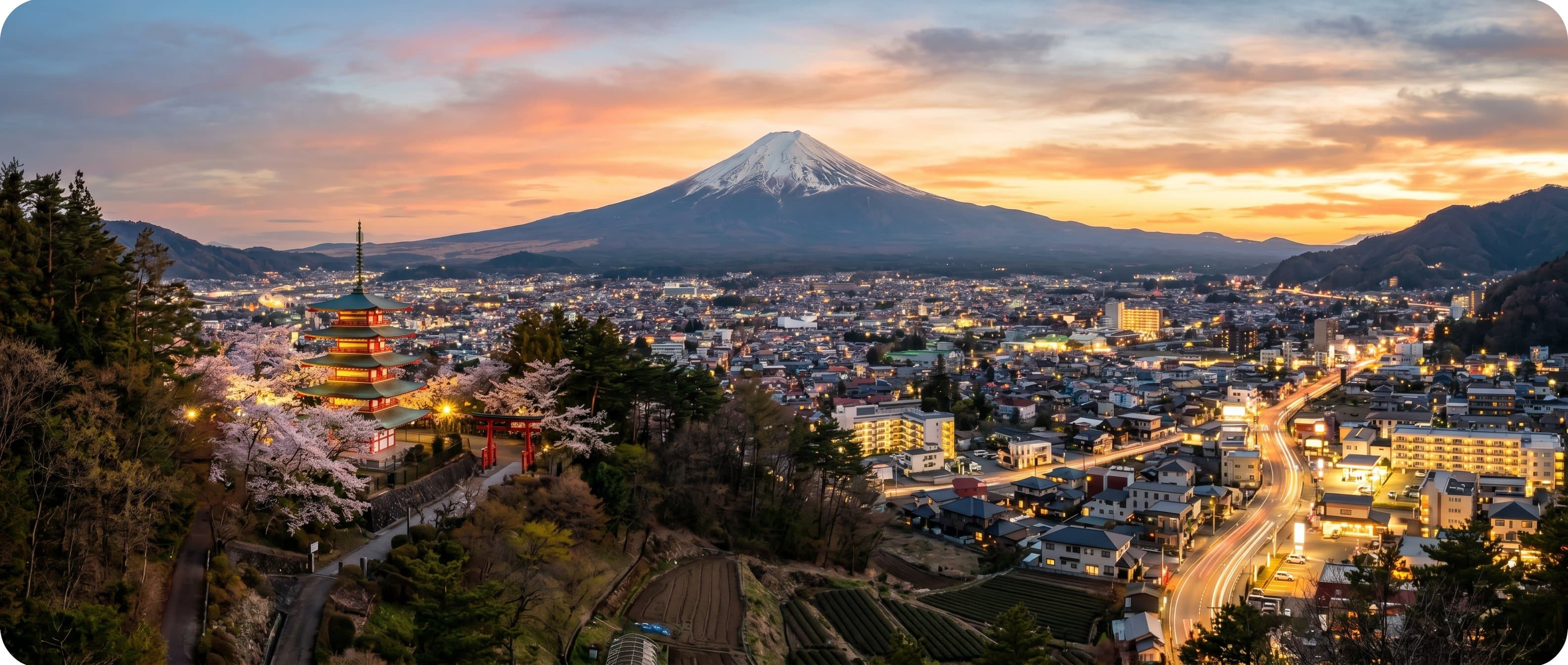
- Chureito Pagoda at Arakurayama Sengen Park
- Why it matters: Offers one of Japan's most iconic views – a stunning red pagoda with Mount Fuji perfectly framed in the background, especially beautiful during cherry blossom or autumn foliage seasons. It's a photographer's dream.
- Opening Hours: Park is 24/7. Climb is always accessible.
- Entry Cost: Free.
- Best Time of Day: Early morning for fewer crowds and soft light, or late afternoon for sunset views.
- Insider Tip: Don't just stay at the famous viewpoint. Explore the Arakura Sengen Shrine at the base for a deeper cultural experience.
- Location: 3353-1 Arakura, Fujiyoshida, Yamanashi 403-0011.
- Lake Kawaguchiko
- Why it matters: The most accessible of the Fuji Five Lakes, offering various activities with incredible reflections of Fuji on clear days. Known for its promenade, boat cruises, and museums.
- Opening Hours: Lake is 24/7. Boat cruises 9:00 AM - 5:00 PM (seasonal variations).
- Entry Cost: Lake access free. Boat cruise: ¥1,100 (£6) adults.
- Best Time of Day: Morning for clear reflections, or sunset for dramatic colours.
- Insider Tip: Rent a bicycle from Kawaguchiko Station and cycle around the lake (approx. 20km) to discover hidden viewpoints and quieter spots.
- Location: Fujikawaguchiko, Yamanashi.
- Oshino Hakkai (Eight Ponds of Oshino)
- Why it matters: A traditional Japanese village featuring eight crystal-clear spring water ponds fed by melting snow from Mount Fuji. It's a designated National Natural Treasure, offering picturesque thatched-roof houses and vibrant koi.
- Opening Hours: Village is open 24/7, souvenir shops typically 9:00 AM - 5:00 PM.
- Entry Cost: Free, but some small museums may charge a nominal fee (e.g., ¥300-500).
- Best Time of Day: Early morning to avoid tourist crowds, which can be significant.
- Insider Tip: Bring an empty water bottle! You can taste the fresh, purified spring water from Mount Fuji at designated spots.
- Location: Shibokusa, Oshino, Minamitsuru District, Yamanashi 401-0511.
- Fuji-Q Highland Amusement Park
- Why it matters: Home to some of the world's most thrilling roller coasters, set against the backdrop of Mount Fuji. A fantastic option for adrenaline junkies looking for a break from nature.
- Opening Hours: 9:00 AM - 6:00 PM (hours vary seasonally and on weekends, check website). Closed on Tuesdays/Wednesdays (check calendar).
- Entry Cost: Admission only: ¥1,500 (£8). Free Pass (rides included): ¥6,000-7,800 (£35-45) adults, depends on day.
- Best Time of Day: Weekdays are less crowded. Go straight for your favourite rides upon opening.
- Insider Tip: Purchase the 'Free Pass' in advance online for a slight discount and to save time. Be prepared for long queues for popular rides.
- Location: 5-6-1 Shin-Nishihara, Fujiyoshida, Yamanashi 403-0017.
- Mount Fuji 5th Station (Yoshida Trail)
- Why it matters: The most popular starting point for climbing Mount Fuji via the Yoshida Trail. Even if you're not climbing, it offers fantastic views, souvenir shops, and a taste of the mountain atmosphere.
- Opening Hours: Generally 24/7 access during climbing season (early July - early September). Shops typically 7:00 AM - 6:00 PM.
- Entry Cost: Free to visit the station area. Climbing requires a voluntary donation of ¥1,000 (£5.50).
- Best Time of Day: Late morning for shops, or early evening for sunset views before heading down.
- Insider Tip: Buses from Kawaguchiko Station run frequently during climbing season. The air is thinner here, so take it easy and acclimatise if you plan to hike.
- Location: Yamanashi, Minamitsuru District, Fujikawaguchiko, Narusawa.
- Kitaguchi Hongu Fuji Sengen Shrine
- Why it matters: A historic and atmospheric shrine that serves as the traditional starting point for the Yoshida climbing trail. Nestled in a ancient cedar forest, it exudes a tranquil and spiritual energy.
- Opening Hours: Shrine grounds 24/7. Main hall 9:00 AM - 4:00 PM.
- Entry Cost: Free.
- Best Time of Day: Morning to enjoy the peaceful atmosphere and explore the grounds thoroughly.
- Insider Tip: Look out for the massive ancient cedars and moss-covered stone lanterns. It's a wonderful place for quiet reflection away from the crowds.
- Location: 5558 Kamiyoshida, Fujiyoshida, Yamanashi 403-0005.
Local Food & Dining
The Mount Fuji region, particularly around Kawaguchiko, offers a delightful array of Japanese cuisine, with a focus on local specialities. Budget travellers can find delicious and filling meals without breaking the bank.
4 Must-Try Dishes/Drinks:
- Hoto Noodles: A hearty, warming dish unique to Yamanashi Prefecture. Thick, flat wheat noodles are stewed with various vegetables (pumpkin, potatoes, mushrooms) and sometimes meat in a rich miso-based broth. It's incredibly comforting after a day of exploring.
- Fujinomiya Yakisoba: A regional variation of stir-fried noodles from nearby Fujinomiya City. Characterised by its chewy noodles, pork scraps, and unique sardine powder topping (bonito flakes are often used as well), giving it a distinct umami flavour.
- Koshu Wine: Yamanashi Prefecture is Japan's premier wine-producing region. Try a glass of local Koshu wine, a crisp white variety that pairs well with Japanese food. Numerous wineries offer tastings.
- Matcha & Traditional Sweets: Indulge in authentic matcha tea, often served with wagashi (traditional Japanese confections) at a local tea house. It's a cultural experience as much as a culinary one.
1 High-End Restaurant:
- Restaurant La Montagne (Fuji View Hotel, Kawaguchiko): Offers fine French cuisine with an emphasis on local ingredients, served in an elegant setting with panoramic views of Mount Fuji. A perfect splurge for a special occasion.
- Cuisine: French.
- Price: £££ (£50-100+ per person for dinner).
- Location: 506 Misaka Higashi-Kubota, Fujikawaguchiko, Yamanashi 401-0301.
- Description: Impeccable service, sophisticated ambiance, and exquisitely presented dishes focusing on seasonal Japanese produce with a French twist.
- Must-Try: Their seasonal tasting menu is highly recommended for the full experience.
1 Mid-Range Restaurant:
- Hoto Fudo (Kawaguchiko Ekimae branch): Famous for its rustic, atmospheric setting and generous portions of Hoto noodles. It’s a local institution, often busy but efficient.
- Cuisine: Local Japanese (Hoto noodles).
- Price: ££ (£10-20 per person).
- Location: 3631-2 Funatsu, Fujikawaguchiko, Minamitsuru District, Yamanashi 401-0301 (near Kawaguchiko Station).
- Description: Distinctive cloud-shaped building, communal seating, and huge bowls of steaming Hoto noodles perfect for refuelling. Vegetarian options are often available upon request.
- Must-Try: The original Hoto Fudo, with pumpkin and vegetables.
1 Street Food/Market Recommendation:
- Fujisan Station Food Stalls (Fujiyoshida): While not a dedicated market, the area around Fujisan Station and along the nearby shopping streets in Fujiyoshida often features small eateries and food stalls selling quick, tasty bites. Look for local snacks, yakitori, or freshly made senbei (rice crackers).
- Cuisine: Local Japanese snacks.
- Price: £ (£2-8 per item).
- Location: Near Fujisan Station, Fujiyoshida.
- Description: Grab-and-go options perfect for a budget-conscious traveller. You might find takoyaki, taiyaki, or seasonal street foods.
- Must-Try: Any freshly grilled yakitori from a local stall.
Dietary Note: While Japan can be challenging for strict vegetarians/vegans, the Fuji region has seen an increase in awareness. Use translation apps for dietary needs and look for Buddhist temple cuisine (shojin ryori) for plant-based options, although these can be expensive. Hoto noodles are often vegetarian if you confirm no dashi (fish stock) is used, or ask for a specific vegetable-only broth.
Safety & Emergency Contacts
Japan is renowned for its exceptional safety, and the Mount Fuji region is no exception. It's considered a very safe destination for travellers.
Safety Level: Very Safe.
Specific Areas or Situations to be Aware Of:
- Hiking/Climbing Mount Fuji: While trails are well-maintained, weather conditions can change rapidly. Always be prepared with appropriate gear, sufficient water, and inform someone of your plans. Altitude sickness can also be a risk.
- Wildlife: While rare, bears can be present in very remote hiking areas. Make noise and carry bear bells if venturing far off main trails.
- Natural Disasters: Japan is prone to earthquakes and typhoons, though significant events are rare in the Fuji region during typical tourist seasons. Stay informed via local news or weather apps.
LOCAL EMERGENCY NUMBERS (accurate for Japan):
- Police: 110
- Ambulance: 119
- Fire: 119
- Tourist Police (if applicable): There is no dedicated 'Tourist Police' number, but you can call 110 for police assistance and request English-speaking officers if available.
- National Emergency: 110 (Police) / 119 (Medical/Fire)
Nearest International Hospital/Clinic:
- Yamanashi Central Hospital (Yamanashi Chuo Byoin): While not specifically 'international', it is a major general hospital with comprehensive services, located in Kofu, approximately 1 hour from Kawaguchiko. They can often arrange translation services.
- Address: 1-1-1 Fujimi, Kofu, Yamanashi 400-8506, Japan
- Phone: +81 55-253-7111
UK Embassy Contacts:
- Name: British Embassy Tokyo
- Phone: +81 3-5211-1100
- Address: 1 Ichibancho, Chiyoda City, Tokyo 102-8381, Japan
- Email: (General enquiries via website form)
US Embassy Contacts:
- Name: U.S. Embassy Tokyo
- Phone: +81 3-3224-5000
- Address: 1-10-5 Akasaka, Minato City, Tokyo 107-8420, Japan
- Email: (General enquiries via website)
Indian Embassy Contacts:
- Name: Embassy of India, Tokyo
- Phone: +81 3-3262-2391 to 97
- Address: 2-2-11 Kudan Minami, Chiyoda-ku, Tokyo 102-0074, Japan
- Email: (General enquiries via website)
UAE Embassy Contacts:
- Name: Embassy of the United Arab Emirates, Tokyo
- Phone: +81 3-5489-0808
- Address: 9-10 Nanpeidai-cho, Shibuya-ku, Tokyo 150-0036, Japan
- Email: [email protected]
Useful Apps & Resources
Leveraging technology will greatly enhance your Mount Fuji backpacking experience, from navigation to communication.
- Japan Transit Planner (Jorudan or Navitime): Absolutely essential for public transport in Japan. Provides accurate train and bus schedules, routes, and fares, including real-time updates.
- Google Maps: Reliable for walking, cycling, and general navigation. Offline maps can be downloaded in advance.
- Google Translate: While English is increasingly common, having a translation app is invaluable, especially for reading menus or asking directions in more rural areas. The camera function for instant translation is a lifesaver.
- PayPay: A popular QR code payment app in Japan. While cash is still important, many smaller shops and restaurants now accept PayPay, offering convenience and sometimes discounts.
- Weather Apps (e.g., Japan Meteorological Agency app or standard phone weather app): Crucial for checking mountain conditions if planning any hikes, as weather can change rapidly.
Official Tourism Board Website:
- Yamanashi Tourism Organisation: www.yamanashi-kankou.jp/english/ - Offers comprehensive information on attractions, events, and transport specific to the Fuji Five Lakes region.
Closing
Mount Fuji isn't just a destination; it's an adventure, a spiritual journey, and a testament to Japan's enduring beauty. As a digitally savvy backpacker, you're perfectly positioned to embrace its unique blend of ancient tradition and modern convenience, all while keeping a keen eye on your budget. From sunrise vistas over Lake Kawaguchiko to the thrill of a high-speed coaster with Fuji as your backdrop, this iconic region promises memories that will last a lifetime. So, pack your bags, download those apps, and prepare to be captivated. The majestic slopes of Fuji await. For more curated travel insights and planning tools for your next grand adventure, keep exploring www.ainexusworld.com – your compass to the world.
FAQ
- Is Mount Fuji safe for tourists?
Yes, Mount Fuji and the surrounding region are exceptionally safe for tourists. Japan has one of the lowest crime rates globally. Standard precautions should always be taken, especially when hiking or climbing, such as being aware of weather changes and informing others of your route. Natural disasters like earthquakes are possible, but significant events are rare, and local infrastructure is built to withstand them.
- What is the best time to visit Mount Fuji?
The 'sweet spot' for visiting Mount Fuji is generally early October. This period offers clear skies, comfortable temperatures for exploring, vibrant autumn foliage around the lakes, and fewer crowds compared to the peak summer climbing season. If climbing is your priority, the official season is early July to early September, but expect significant crowds.
- How many days do I need in Mount Fuji?
For a budget backpacker looking to explore the highlights of the Fuji Five Lakes region without climbing the mountain, a 3-4 day itinerary is ideal. This allows time to visit Lake Kawaguchiko, Chureito Pagoda, Oshino Hakkai, and perhaps one other attraction like Fuji-Q Highland, with travel time factored in. If you plan to climb Mount Fuji, allocate an additional 2 days.
- Do I need a visa to visit Mount Fuji?
Visa requirements for Japan depend on your nationality. For UK, US, and EU citizens, a visa is generally not required for tourist stays of up to 90 days in 2025/2026. UAE nationals can enter visa-free for up to 30 days. Indian nationals, however, will require a visa, which must be obtained in advance from a Japanese embassy or consulate.
- What is the local currency and can I use credit cards?
The local currency in Mount Fuji and throughout Japan is the Japanese Yen (JPY, symbol ¥). While major credit cards (Visa, MasterCard, Amex) are widely accepted in larger hotels, restaurants, and shops, cash is still very important, especially for smaller local eateries, rural shops, and some public transport. It's advisable to always carry a good amount of cash for convenience, as some ATMs might not accept foreign cards.