
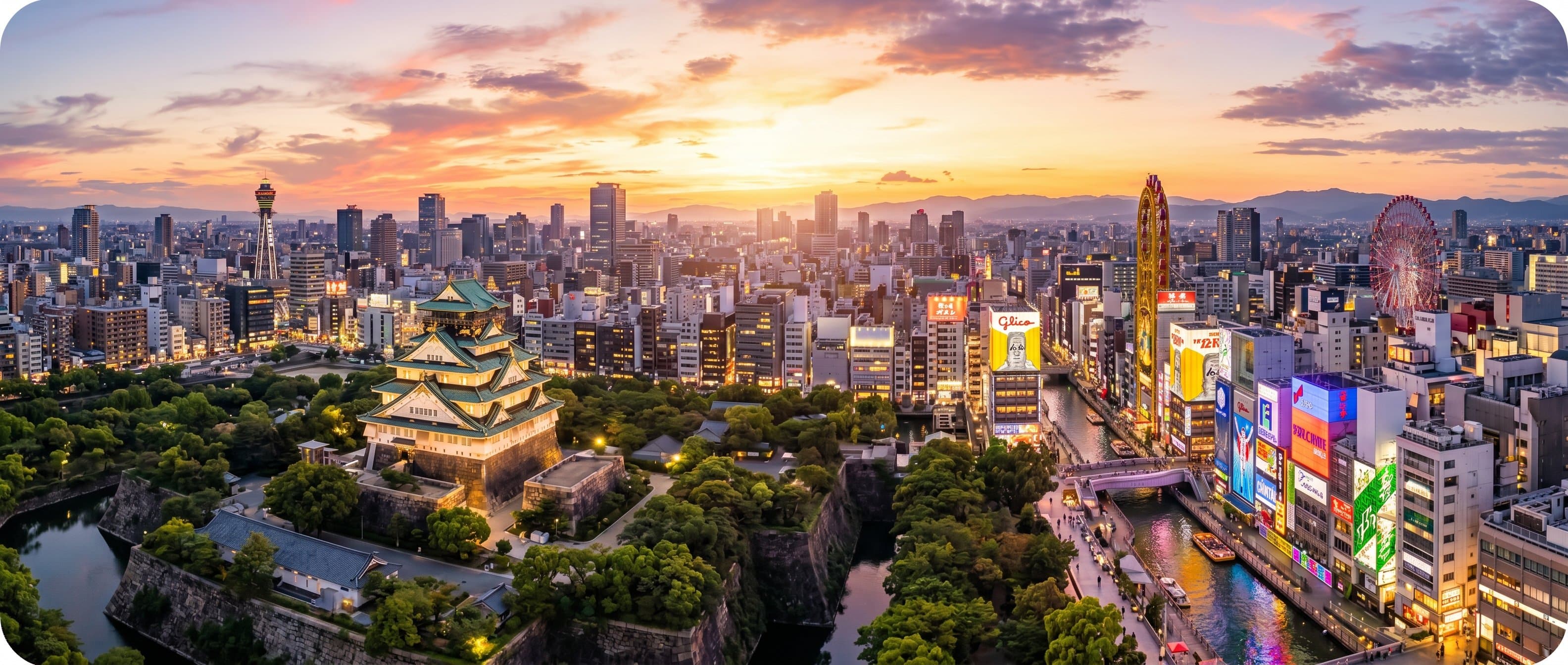
Introduction
Osaka isn't just another Japanese city; it's a personality. Known as 'Japan's Kitchen' and 'Venice of the East', it boasts a boisterous, straightforward charm that stands in delightful contrast to the more reserved nature of Tokyo or Kyoto. For the internationally minded, digitally savvy backpacker, Osaka deserves a place on your list right now because it offers an incredible value proposition: world-class dining, electric nightlife, and fascinating history, all wrapped up in a package that's significantly more budget-friendly than its major counterparts. The city's extensive and efficient public transport makes navigating a breeze, allowing you to maximise your yen and soak in every vibrant detail.
Best Time to Visit
Osaka truly shines in its shoulder seasons, balancing pleasant weather with manageable crowds and reasonable pricing. Here's a month-by-month breakdown to help you pick your perfect timing for 2026:
- January: Cold (5-10°C), often sunny, low crowds after New Year. Pricing is budget-friendly. Great for indoor attractions and warm ramen.
- February: Cold (5-12°C), still relatively low crowds. Pricing remains budget. Plum blossoms start appearing towards the end of the month.
- March: Mild (10-15°C), crowds start to increase as cherry blossom season approaches. Pricing moderate. Ideal for comfortable walking tours.
- April: Pleasant (15-20°C), peak cherry blossom season (late March to early April) brings high crowds. Pricing expensive. Book well in advance!
- May: Warm (18-25°C), 'Golden Week' (early May) sees very high domestic crowds; otherwise high. Pricing expensive. Lush greenery, perfect for outdoor exploration.
- June: Hot and humid (22-30°C), rainy season begins, but crowds can be moderate to high. Pricing is still expensive. Great for indoor activities and food tours.
- July: Hot and humid (25-32°C), occasional typhoons. Crowds are very high due to summer holidays. Pricing peak. Enjoy festivals like Tenjin Matsuri.
- August: Hot and humid (24-31°C), peak summer, some typhoon risk. Crowds very high. Pricing peak. Lively atmosphere, fireworks festivals.
- September: Warm (20-26°C), humidity eases, but typhoon season continues into early month. Crowds start to decline from high to moderate. Pricing expensive. Excellent for outdoor activities once typhoons pass.
- October: Pleasant (15-22°C), clear skies, gorgeous autumn foliage starts. Moderate crowds. Pricing moderate. The 'sweet spot' for many, balancing weather and crowds.
- November: Cool (10-16°C), vivid autumn colours. Low crowds. Pricing budget-friendly. Ideal for exploring parks and temples.
- December: Cold (5-12°C), festive atmosphere, moderate crowds for Christmas/New Year preparations. Pricing moderate. Christmas illuminations are spectacular.
Sweet Spot Recommendation: Early October or Late April/Early May (avoiding Golden Week). You'll catch fantastic weather, beautiful scenery, and avoid the peak summer humidity and winter chill.
Travel Planning & Booking
Getting to Osaka is straightforward, with Kansai International Airport (KIX) serving as a major hub.
- Best Flight Routes and Airlines: From Europe, direct flights are rare, so look for connections through major Asian or Middle Eastern hubs. Popular airlines include Japan Airlines (JAL), ANA (All Nippon Airways), British Airways, Lufthansa, Emirates, Qatar Airways, Turkish Airlines, and Cathay Pacific. From North America, direct flights are common from major cities like Los Angeles and San Francisco via JAL, ANA, or United.
- Booking Lead Times: For the best prices, book flights 4-6 months in advance, especially if travelling during peak seasons (cherry blossom, Golden Week, summer). Accommodation should be booked at least 3 months ahead.
- Top 3 Booking Platforms:
- Skyscanner: Excellent for comparing flight prices across countless airlines and finding the cheapest days to fly. Use the 'Everywhere' or 'Cheapest Month' features for flexibility.
- Booking.com: Your go-to for diverse accommodation, from hostels to hotels and apartments, often with free cancellation options. Great for securing deals and managing reservations.
- Agoda: Particularly strong for deals on hotels and guesthouses across Asia, often offering competitive prices that might beat other platforms. Ideal for finding unique budget stays.
- Visa Requirements (2025/2026): Please note these are general guidelines; always check the latest official information from the Japanese Ministry of Foreign Affairs or your local embassy/consulate.
- UK Nationals: Visa-free for stays up to 90 days for tourism. Must have a valid passport and proof of onward travel.
- US Nationals: Visa-free for stays up to 90 days for tourism. Must have a valid passport and proof of onward travel.
- EU Nationals (Schengen Area): Visa-free for stays up to 90 days for tourism. Must have a valid passport and proof of onward travel.
- Indian Nationals: Visa required. Typically, a short-term tourist visa is required, which needs to be applied for in advance at the Japanese Embassy or Consulate in India. Requirements include a valid passport, visa application form, recent photographs, flight itinerary, accommodation details, and financial proof.
- UAE Nationals: Visa-free for stays up to 30 days for tourism. Must have a valid passport and proof of onward travel.
- Entry Documentation Checklist: Valid passport (with at least 6 months validity), return/onward flight ticket, proof of accommodation, sufficient funds for your stay, and potentially a completed arrival card (though often digital now).
Travel Insurance
Travel insurance is not just a recommendation for Osaka; it's an essential safeguard. Japan's healthcare system is excellent but can be expensive for foreigners without cover. Specifically, look for policies that include:
- Medical Emergencies: Comprehensive cover for illness, accidents, and emergency evacuation.
- Trip Cancellation/Interruption: Protects against unforeseen events impacting your travel plans.
- Lost/Stolen Baggage: Reimbursement for essential items if your luggage goes astray.
- Adventure Activities: If you plan activities like hiking or skiing (though less common in Osaka itself, day trips might include it), ensure these are covered.
3 Recommended Providers:
- World Nomads: Best for adventure travelers and backpackers. Known for comprehensive coverage, including a wide range of adventure sports and flexibility to extend policies on the road.
- SafetyWing: An affordable monthly subscription model ideal for digital nomads and long-term travelers. Offers health and travel insurance that you can start and stop as needed.
- Allianz Travel Insurance: A well-established provider offering various plans, including comprehensive coverage that can include medical evacuation, trip cancellation, and baggage protection.
Practical Tip: Always carry a physical and digital copy of your insurance policy details, including emergency contact numbers, separate from your main wallet.
Packing Guide
Osaka's climate means your packing list will vary significantly by season. Focus on layers and practical items.
- Climate-Specific Clothing Checklist:
- Spring (March-May) & Autumn (Sept-Nov): Light jackets, sweaters/cardigans, comfortable walking shoes, long-sleeved shirts, trousers/jeans.
- Summer (June-August): Lightweight, breathable fabrics (cotton, linen), shorts, t-shirts, rain jacket/umbrella (for sudden downpours), comfortable sandals, sun hat, sunglasses.
- Winter (Dec-Feb): Warm coat, thermal layers, scarves, gloves, hats, waterproof boots, sweaters.
- Cultural Dress Considerations: Generally, Japan is modest. While Osaka is more relaxed, opt for respectful clothing when visiting temples, shrines, or more traditional neighbourhoods. Shoulders and knees covered are always a good idea in sacred spaces.
- Must-Bring Items Specific to Osaka:
- Portable Power Bank: For navigating, translating, and capturing all the Dotonbori neon.
- Comfortable Walking Shoes: You'll be doing a lot of walking, from temple grounds to bustling markets.
- Small Backpack/Day Bag: For daily essentials and souvenirs.
- Reusable Water Bottle: Stay hydrated and reduce plastic waste.
- Adapter (Type A/B): Japan uses Type A and B sockets (two flat pins or two flat pins with a round ground pin) with 100V.
- Small Towel: Japanese public toilets don't always have hand dryers or paper towels.
- One Item Tourists Over-Pack: Too many heavy jeans. Opt for lighter, quick-dry trousers that are versatile and easier to hand wash if needed.
Accommodation
Osaka offers a fantastic array of accommodation options for backpackers, from capsule hotels to trendy hostels and boutique stays.
- 3 Best Neighbourhoods to Stay:
- Namba: The heart of Osaka's entertainment and nightlife, especially around Dotonbori. Excellent transport links, endless dining, and vibrant atmosphere. Perfect for first-timers and those who want to be in the thick of it.
- Umeda: Osaka's main business and commercial district, home to towering skyscrapers, major department stores, and excellent transport hubs (Osaka Station). Great for shopping, upscale dining, and easy access to other cities via JR lines.
- Shinsekai: A nostalgic, retro district with an old-school Osaka vibe, centred around Tsutenkaku Tower. More budget-friendly options, lively street food, and a distinctly local atmosphere. It's a bit gritty but safe and full of character.
- 1 Luxury Pick: Conrad Osaka. Perched on the highest floors of the Nakanoshima Festival Tower West, offering breathtaking city views, exceptional service, and sophisticated design. Located between Umeda and Namba, making it convenient. Price: ¥40,000-80,000+ per night.
- 1 Mid-Range Pick: Cross Hotel Osaka. Strategically located in Namba, just a minute's walk from Dotonbori. Modern, comfortable rooms with great amenities, perfect for those wanting comfort without the luxury price tag. Price: ¥12,000-25,000 per night.
- 1 Boutique/Unique Pick: The Lively Osaka Honmachi. A stylish, modern boutique hotel/hostel hybrid with a co-working space, communal lounge, and regular social events. Offers a vibrant atmosphere, private rooms, and dorm options. Located in a quieter business district but with good metro access. Price: ¥4,000-10,000 (dorm), ¥10,000-20,000 (private) per night.
Booking Tip: Look for hotels/hostels within a 5-minute walk of a major metro station. This makes exploring incredibly easy, especially after a long day.
Getting Around Locally
Osaka boasts one of the most efficient public transportation systems in the world, making it a joy to navigate.
- Airport to City Centre (Kansai International Airport - KIX):
- JR Haruka Limited Express: Fastest option to Tennoji, Shin-Osaka, and Kyoto. Cost: ¥1,300-2,330 (to Shin-Osaka, depending on pass). Time: Approx. 50 minutes to Shin-Osaka.
- Nankai Rapid Express: Best for Namba. Offers comfortable seating. Cost: ¥930 (Rapid Express), ¥1,450 (Rapi:t Limited Express). Time: Approx. 34-45 minutes to Namba.
- Airport Limousine Bus: Direct service to major hotels and transport hubs across the city. Convenient if you have a lot of luggage. Cost: ¥1,600 (to Osaka Station/Namba). Time: Approx. 50-70 minutes, depending on traffic and destination.
- Best Local Transport Modes:
- Osaka Metro (Subway): Extensive, efficient, and covers almost all major attractions. Clean, safe, and punctual. Costs typically ¥180-370 per ride, or consider a one-day pass for ¥820.
- JR Lines: Japan Railways operate commuter lines, including the Osaka Loop Line, which circles the city centre. Covered by the Japan Rail Pass if you have one.
- Buses: Useful for areas not covered by the subway, but generally slower.
- Recommended Apps:
- Google Maps: Indispensable for real-time public transport directions, walking routes, and estimated travel times.
- Japan Transit Planner (Norikae Annai): Highly accurate for train and subway schedules, platforms, and connections across Japan.
- One Common Tourist Mistake: Buying individual subway tickets for every journey. For frequent travel, invest in an ICOCA card (a rechargeable IC card usable on most trains, subways, and buses) or a one-day Osaka Amazing Pass which also offers discounts on attractions.
Top Tourist Attractions (Must-See)
- Osaka Castle: A magnificent reconstruction of Japan's most famous castle, rich in history and offering panoramic city views.
Opening Hours: 9:00 AM - 5:00 PM (last admission 4:30 PM).
Entry Cost: ¥600 (castle tower).
Best Time: Early morning (9:00-10:00 AM) to avoid crowds, or late afternoon for sunset views from the top.
Insider Tip: Explore the surrounding Osaka Castle Park for free, especially beautiful during cherry blossom or autumn foliage. - Dotonbori: Osaka's iconic entertainment district, famous for its dazzling neon lights, giant crab signs, and bustling food stalls.
Opening Hours: 24/7 (shops/restaurants typically 11:00 AM - late).
Entry Cost: Free to explore.
Best Time: Evening for the full immersive neon spectacle and vibrant atmosphere.
Insider Tip: Don't miss the famous Glico Running Man sign – it's an Osaka photo op legend. Try a canal cruise for a different perspective. - Universal Studios Japan (USJ): A world-class theme park with thrilling rides, live shows, and hugely popular themed zones like The Wizarding World of Harry Potter and Super Nintendo World.
Opening Hours: Varies seasonally, typically 9:00 AM - 7:00 PM.
Entry Cost: ¥8,600-9,800 for a 1-day studio pass (prices fluctuate).
Best Time: Weekdays during off-peak seasons (January, February, May, September). Arrive before opening.
Insider Tip: Purchase an Express Pass if your budget allows to skip long queues, especially for popular attractions like Mario Kart: Koopa's Challenge. - Shinsekai: A retro entertainment district evocative of old Osaka, featuring the Tsutenkaku Tower and a vibrant street food scene.
Opening Hours: Shops/restaurants typically 10:00 AM - 9:00 PM. Tsutenkaku Tower: 9:00 AM - 9:00 PM (last entry 8:30 PM).
Entry Cost: Free to explore. Tsutenkaku Tower: ¥900.
Best Time: Late afternoon to early evening, as the lights come on and the district truly comes alive.
Insider Tip: Try kushikatsu (deep-fried skewers) from a local shop here. Remember the golden rule: no double dipping! - Umeda Sky Building: An architectural marvel featuring a unique 'Floating Garden Observatory' that offers incredible 360-degree views of Osaka.
Opening Hours: 9:30 AM - 10:30 PM (last entry 10:00 PM).
Entry Cost: ¥1,500.
Best Time: Sunset for spectacular golden hour views and the transition to city lights. Weekday evenings are less crowded.
Insider Tip: The basement level features 'Takimi Koji', a charming replica of an early Showa-period Japanese town with traditional restaurants. - Shitennoji Temple: One of Japan's oldest Buddhist temples, founded in 593 AD, offering a serene escape and beautiful traditional architecture.
Opening Hours: 8:30 AM - 4:30 PM (Apr-Sept), 8:30 AM - 4:00 PM (Oct-Mar). Treasure House: 10:00 AM - 4:00 PM.
Entry Cost: Temple grounds are free. Inner precinct & Treasure House: ¥300 each.
Best Time: Early morning for peaceful reflection and fewer visitors.
Insider Tip: Visit on the 21st of each month for a lively flea market held on the temple grounds. - Kuromon Ichiba Market: Known as 'Osaka's Kitchen', this vibrant covered market offers an astounding array of fresh seafood, local produce, and ready-to-eat street food.
Opening Hours: Typically 9:00 AM - 6:00 PM (individual stalls vary).
Entry Cost: Free to enter.
Best Time: Lunchtime for a diverse and delicious culinary experience.
Insider Tip: Be adventurous and try freshly grilled scallops, sea urchin, or fugu (pufferfish) sashimi. Many vendors offer small tasting portions. - Hozenji Yokocho: A narrow, atmospheric alleyway near Dotonbori, preserving a slice of old Osaka with traditional restaurants, bars, and a moss-covered Buddhist statue.
Opening Hours: Always open, but shops/restaurants typically 5:00 PM - late.
Entry Cost: Free to explore.
Best Time: Evening for a quiet, traditional Japanese ambiance in contrast to bustling Dotonbori.
Insider Tip: Pour water over the Fudomyo statue (Mizukake Fudo) for good luck – it's why it's covered in moss!
Local Food & Dining
Osaka is a food paradise, famous for its hearty and delicious regional specialities.
- 4-5 Must-Try Dishes/Drinks:
- Okonomiyaki: A savoury pancake made with flour, eggs, and shredded cabbage, mixed with various ingredients (pork, seafood), then grilled and topped with special sauce, mayonnaise, bonito flakes, and nori.
- Takoyaki: Ball-shaped wheat flour dough filled with diced octopus, tempura scraps, pickled ginger, and green onion, cooked in a special moulded pan, then drizzled with takoyaki sauce and mayonnaise.
- Kushikatsu: Deep-fried skewers of various meats, vegetables, and seafood, served with a communal sauce (remember: NO double-dipping!).
- Udon: Thick, chewy wheat flour noodles served in a hot, savoury broth, often with toppings like tempura, aburaage (fried tofu), or green onions.
- Sake: While not unique to Osaka, it's widely available. Try local varieties, especially 'Jizake' (local sake).
- 1 High-End Restaurant: Fujiya 1935. Michelin-starred, offering exquisite modern Japanese cuisine with a French influence. Expect an innovative tasting menu focusing on seasonal ingredients. Price: ¥15,000-25,000 per person. Location: 2 Chome-4-14 Uchihonmachi, Chuo Ward.
- 1 Mid-Range: Ajinoya Honten (Okonomiyaki). A legendary spot in Namba, consistently lauded for its authentic and delicious okonomiyaki. Expect a short wait but a truly rewarding experience. Price: ¥1,500-2,500 per person. Location: 1 Chome-7-16 Namba, Chuo Ward.
- 1 Street Food/Market Recommendation: Kuromon Ichiba Market. As mentioned above, it's the ultimate destination for fresh seafood and an array of ready-to-eat street food. Wander, graze, and experience Osaka's culinary soul. Price: ¥500-2,000 per item. Location: 2 Chome-4-1 Nipponbashi, Chuo Ward.
- Dietary Note: Japan can be challenging for vegetarians/vegans due to dashi (fish stock) being a base for many dishes. Learn key phrases like 'dashi-nuki' (without dashi) or 'niku nuki' (without meat) and use translation apps. Look for specialized vegan/vegetarian restaurants.
Safety & Emergency Contacts
Osaka is an incredibly safe city, even for solo travelers or at night. Japan consistently ranks among the safest countries in the world.
- Safety Level: Very safe.
- Specific Areas or Situations to be Aware Of: While generally safe, exercise caution in crowded areas like Dotonbori at night, as petty theft can occasionally occur (though rare). Shinsekai has a slightly grittier reputation historically, but is perfectly safe for tourists during the day and evening. Be aware of overly enthusiastic touts around entertainment districts.
LOCAL EMERGENCY NUMBERS (REAL, ACCURATE FOR OSAKA):
- Police: 110
- Ambulance: 119
- Fire: 119
- Tourist Police (if applicable): There is no specific 'Tourist Police' number, but 110 will connect you to the regular police who can assist.
- National emergency: 110 (Police), 119 (Fire & Ambulance)
Nearest International Hospital/Clinic:
- Osaka General Medical Center: Known for having an international department and English-speaking staff. Address: 3-1-56 Bandai-Higashi, Sumiyoshi-ku, Osaka 558-8558. Phone: +81 6-6692-1201.
- Kishiwada City Hospital: Also has an international medical department. Address: 4-27-1 Kamikoya-cho, Kishiwada, Osaka 596-8501. Phone: +81 72-441-1191.
UK Embassy/Consulate:
- British Consulate General Osaka: Name: British Consulate General Osaka. Phone: +81 6-6120-5600. Address: Shinkosan Bldg. 8F, 1-2-6 Dojima, Kita-ku, Osaka 530-0003, Japan. Email: [email protected]
US Embassy/Consulate:
- US Consulate General Osaka-Kobe: Name: US Consulate General Osaka-Kobe. Phone: +81 6-6315-5900. Address: 2-11-5 Nishitenma, Kita-ku, Osaka 530-8543, Japan. Email: [email protected] (for American Citizen Services)
Indian Embassy/Consulate:
- Consulate General of India, Osaka-Kobe: Name: Consulate General of India, Osaka-Kobe. Phone: +81 6-6261-7299. Address: Oriental Shinonome Bldg. 10F, 1-1-14 Higashi-Hommachi, Chuo-ku, Osaka 540-0029, Japan. Email: [email protected]
Note for UAE: The UAE Embassy is located in Tokyo. Embassy of the United Arab Emirates in Tokyo, Japan. Phone: +81 3-5489-0845. Address: 9-10 Nanpeidai-cho, Shibuya-ku, Tokyo 150-0036, Japan.
Useful Apps & Resources
- Japan Official Travel App: Operated by the Japan National Tourism Organization (JNTO), offers comprehensive tourist information, route search, and safety tips.
- Google Maps: Essential for navigation, public transport directions, and finding local businesses.
- Google Translate: Crucial for overcoming language barriers, with features like camera translation and real-time conversation.
- Navitime Transit: Excellent for detailed public transport planning, including JR and private lines, with exact platform numbers.
- PayPay/Rakuten Pay: While cash is still widely used, mobile payment apps are gaining traction. Good for convenience at smaller shops.
Official Tourism Board Website: Osaka Info (operated by the Osaka Convention & Tourism Bureau) is an excellent resource for events, attractions, and local guides.
Closing
Osaka is a city that embraces life with gusto – a dynamic blend of tradition and relentless innovation, all served with a generous side of phenomenal food. It’s a place where every corner promises a new discovery, every meal is an adventure, and every interaction leaves you feeling a little more connected to the heart of Japan. So pack your bags, fire up your sense of adventure, and prepare to immerse yourself in the intoxicating energy of Osaka. You won't just visit; you'll experience. Ready to plan your next incredible journey? Head back to www.ainexusworld.com for more unparalleled travel insights and inspiration.
FAQ
- Is Osaka safe for tourists?
Osaka is exceptionally safe for tourists, consistently ranked among the safest major cities globally. Violent crime is rare. However, like any popular destination, it's wise to be aware of your belongings in crowded areas and exercise general caution. - What is the best time to visit Osaka?
The best times to visit Osaka are during the spring (late March to early May) for cherry blossoms and pleasant weather, and autumn (October to November) for comfortable temperatures and stunning fall foliage. These shoulder seasons offer a balance of good weather and manageable crowds. - How many days do I need in Osaka?
A recommended stay in Osaka is typically 3 to 5 days. This allows ample time to explore the city's main attractions, delve into its renowned food scene, and even take a day trip to nearby destinations like Nara or Kyoto. - Do I need a visa to visit Osaka?
Visa requirements for Osaka (Japan) depend on your nationality. Nationals from the UK, US, EU, and UAE can typically enter visa-free for short tourist stays (e.g., 90 days for UK/US/EU, 30 days for UAE). Indian nationals generally require a visa, which must be obtained prior to travel. Always check the latest requirements with the Japanese Ministry of Foreign Affairs or your local embassy/consulate. - What is the local currency and can I use credit cards?
The local currency in Osaka, and throughout Japan, is the Japanese Yen (JPY). While major credit cards (Visa, Mastercard, Amex) are accepted in most larger hotels, department stores, and some restaurants, cash is still widely preferred, especially at smaller shops, local eateries, and some attractions. It's always advisable to carry a good amount of cash.