
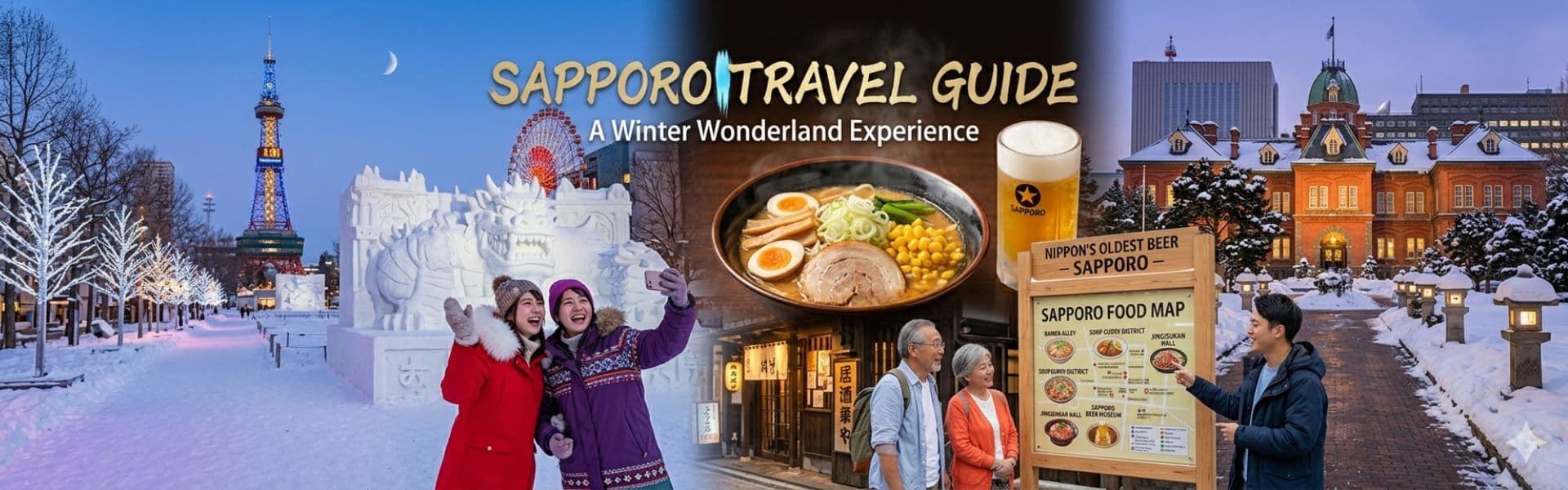
The Ultimate Sapporo Travel Guide 2026: Everything You Need to Know
Ah, Sapporo. Often overshadowed by the bright lights of Tokyo or the cultural depth of Kyoto, Hokkaido's capital is a true hidden gem for the discerning budget backpacker. Why does Sapporo deserve a place on your travel list right now? Simple: it offers an unparalleled, authentic Japanese experience without the sky-high prices or overwhelming crowds of the mainland's mega-cities. You'll find world-class food, stunning natural escapes, and a relaxed, welcoming vibe that feels a world away, yet remains perfectly connected for the modern traveller.
Best Time to Visit
Sapporo truly offers something in every season, but knowing when to visit can profoundly shape your experience and budget. Here's a month-by-month breakdown:
- January: Bitterly cold (-8°C to -1°C), heavy snowfall. Low crowds, excellent for winter sports enthusiasts and the Sapporo Snow Festival preparation. Budget-friendly pricing on accommodation before the festival.
- February: Still very cold (-7°C to 0°C), peak snowfall. High crowds for the Sapporo Snow Festival (early February). Prices for accommodation and flights surge during this period. Book well in advance.
- March: Cold but gradually warming (-3°C to 4°C), snow begins to melt. Moderate crowds, good for skiing/snowboarding without the peak season rush. Accommodation prices start to drop to moderate levels.
- April: Cool and crisp (3°C to 11°C), cherry blossoms begin to bloom late in the month. Moderate crowds, as the city shakes off winter. Pricing is moderate, offering good value.
- May: Pleasant and mild (8°C to 17°C), full bloom of cherry and plum blossoms. Moderate crowds, fantastic for outdoor activities. Moderate pricing.
- June: Warm and comfortable (12°C to 21°C), generally sunny. Low to moderate crowds, before the domestic summer holidays begin. Good value pricing.
- July: Warm to hot (17°C to 25°C), humid. Moderate crowds, as summer festivals begin. Pricing increases slightly to moderate-expensive.
- August: Hot and humid (19°C to 26°C), peak summer. High crowds due to Japanese school holidays. Peak pricing, expect higher costs for everything.
- September: Mild and pleasant (14°C to 22°C), autumn colours begin to emerge. Moderate crowds, excellent weather for hiking. Moderate pricing.
- October: Cool and vibrant (7°C to 16°C), full autumn foliage. Moderate crowds, ideal for photography and exploring parks. Good value pricing.
- November: Cold (1°C to 9°C), first snowfalls. Low crowds, quiet period before winter sports season. Budget-friendly pricing.
- December: Cold ( -4°C to 3°C), significant snowfall. Moderate crowds around Christmas and New Year. Pricing can be moderate, increasing around holidays.
Sweet Spot Recommendation: For budget backpackers, the 'sweet spot' is late May to early June or late September to early October. You'll avoid peak crowds and prices, enjoy fantastic weather, and witness beautiful cherry blossoms or autumn foliage.
Travel Planning & Booking
Navigating flights and accommodation efficiently is key to a budget-friendly trip to Sapporo.
Best Flight Routes and Airlines
Sapporo's main gateway is New Chitose Airport (CTS). While direct international flights are increasing, most travellers from Europe or North America will connect via a major Asian hub like Tokyo (Narita NRT or Haneda HND), Seoul (Incheon ICN), or Shanghai (PVG).
- From London (LHR/LGW): Typically involves 1 stop via Tokyo (JAL, ANA, British Airways + JAL/ANA domestic codeshare) or Seoul (Korean Air, Asiana Airlines). Expect travel times of 14-18 hours.
- From New York (JFK/EWR): Usually 1 stop via Tokyo (ANA, JAL, United, Delta) or Seoul (Korean Air, Asiana Airlines). Total travel time 15-20 hours.
Airlines like JAL and ANA offer domestic connections from Tokyo to Sapporo. Budget airlines like Peach Aviation and Jetstar Japan also fly frequently between Tokyo and Sapporo, often at significantly lower prices if booked in advance.
Booking Lead Times
For the best prices, book international flights 4-6 months in advance, especially if travelling during peak seasons (Snow Festival, Golden Week, August). Domestic flights within Japan can be secured 2-3 months out. Accommodation should also be booked at least 3 months in advance for peak times, or 1-2 months for shoulder seasons.
Top 3 Booking Platforms
- Skyscanner: Excellent for comparing flight prices across countless airlines and finding the cheapest dates. Use their 'Everywhere' or 'Cheapest Month' features.
- Booking.com: Your go-to for a vast selection of accommodation, from hostels to hotels. Look out for their Genius loyalty program for discounts.
- Agoda: Particularly strong for deals on accommodation in Asia, often offering competitive rates for hostels and budget hotels in Japan.
Visa Requirements (2025/2026)
Always verify the latest requirements on the official Ministry of Foreign Affairs of Japan (MOFA) website, as policies can change.
- UK Nationals: Visa-free for short-term stays (up to 90 days) for tourism, business, or visiting friends/relatives.
- US Nationals: Visa-free for short-term stays (up to 90 days) for tourism, business, or visiting friends/relatives.
- EU Nationals: Visa-free for short-term stays (up to 90 days) for tourism, business, or visiting friends/relatives for most Schengen Area countries.
- Indian Nationals: Visa required for short-term stays. Applications must be made through a Japanese Embassy or Consulate in India. eVisa is generally not available for tourism.
- UAE Nationals: Visa-free for short-term stays (up to 30 days) for tourism, business, or visiting friends/relatives.
Entry Documentation Checklist
- Valid passport (with at least six months' validity beyond your intended stay).
- Proof of onward or return ticket.
- Proof of sufficient funds for your stay.
- Accommodation bookings/itinerary.
- Completed Arrival Card (distributed on flights or at immigration).
- Visit Japan Web registration (for smoother immigration/customs, not mandatory but highly recommended).
Travel Insurance
Why is travel insurance particularly crucial for Sapporo? Beyond the usual risks, Sapporo's distinct seasons bring specific considerations. Winter sports carry inherent risks, and summer hiking could lead to unexpected incidents. Medical care in Japan is excellent but can be expensive without proper coverage. Always prioritise medical emergencies, trip cancellation, and lost baggage coverage.
Cover to Look For
- Medical Emergencies: Crucial for unexpected illnesses or accidents, covering hospital stays, doctor fees, and emergency transport.
- Trip Cancellation/Interruption: Protects your investment if your trip is cut short or cancelled due to unforeseen circumstances like illness or natural disasters.
- Baggage & Personal Belongings: Covers loss, theft, or damage to your luggage.
- Adventure Activities: If planning to ski, snowboard, or hike, ensure your policy covers these specific activities.
3 Recommended Providers
- World Nomads: Designed for adventurous travellers and backpackers, offering flexible policies that can be extended or purchased mid-trip.
- SafetyWing: Ideal for digital nomads and long-term travellers, offering a monthly subscription model for health and travel insurance.
- Allianz Travel Insurance: A globally recognised provider offering a wide range of comprehensive policies, often with robust medical evacuation options.
Practical Tip: Always read the Product Disclosure Statement (PDS) carefully to understand what is and isn't covered before purchasing a policy.
Packing Guide
Your packing list will heavily depend on the season you visit Sapporo, but some essentials remain constant.
Climate-Specific Clothing Checklist
- Spring/Autumn (April-May, Sep-Oct): Layers are key. Light jacket, sweaters/fleeces, long-sleeved tops, comfortable walking shoes.
- Summer (June-August): Light, breathable clothing (cotton, linen). Shorts, t-shirts, sun hat, sunglasses, a light rain jacket or umbrella for sudden showers.
- Winter (Nov-March): Heavy winter coat, waterproof and windproof, thermal underwear, warm sweaters, waterproof trousers, hat, gloves, scarf, waterproof winter boots with good grip.
Cultural Dress Considerations
Japan is generally a modest country. While Sapporo is quite relaxed, avoid overly revealing clothing, especially when visiting temples, shrines, or more traditional establishments. Comfortable, presentable clothing is always a safe bet. You'll likely remove your shoes before entering many indoor spaces (restaurants, some accommodations, homes), so easy-to-remove footwear is practical.
Must-Bring Items Specific to Sapporo
- Portable Power Bank: Essential for keeping your phone charged for navigation, translation, and photos.
- Reusable Water Bottle: Stay hydrated and reduce plastic waste. Tap water in Japan is safe to drink.
- Small Umbrella: Useful year-round for unexpected rain or snow.
- Cash (Yen): While cards are widely accepted, many smaller shops, restaurants, and street food vendors prefer or only accept cash.
- Comfortable Walking Shoes: You'll be doing a lot of exploring on foot.
One Item Tourists Over-Pack: Formal wear. Unless you're attending a specific event, even high-end restaurants in Sapporo are often accommodating to smart casual attire. Save space in your backpack for souvenirs!
Accommodation
Sapporo offers a range of accommodation for budget backpackers, from modern hostels to comfortable business hotels. Booking early, especially for peak season, is paramount.
3 Best Neighbourhoods to Stay
- Sapporo Station/Odori Park: The absolute heart of the city. Excellent transport links, close to major shopping, dining, and attractions like the TV Tower and Odori Park. Ideal for first-timers and those prioritising convenience.
- Susukino: Sapporo's vibrant entertainment district, known for its nightlife, restaurants, and bars. A lively choice for those who enjoy evening strolls and late-night eats. Still well-connected by subway.
- Nakajima Park: A slightly quieter, greener option located south of Susukino. Offers beautiful park views, a more relaxed atmosphere, and good subway access. Ideal for those seeking a balance of nature and urban convenience.
Accommodation Picks
- Luxury Pick: JR Tower Hotel Nikko Sapporo (Sapporo Station Area): Directly above Sapporo Station, offering unparalleled convenience, sophisticated rooms, and breathtaking city views, often including Mount Moiwa. Prices from ¥25,000-40,000 per night.
- Mid-Range Pick: Dormy Inn Premium Sapporo Hot Spring (Susukino): Known for its comfortable rooms, excellent central location, and especially for its complimentary hot spring (onsen) baths and free nightly ramen service. Prices from ¥8,000-15,000 per night.
- Boutique/Unique Pick: The Stay Sapporo (Odori Park Area): A highly-rated, stylish hostel offering both dormitory beds and private rooms. It boasts a social atmosphere, modern design, and a fantastic location just a short walk from Odori Park. Prices from ¥3,500 for a dorm bed, ¥7,000 for a private room.
Booking Tip: Look for hotels that include breakfast or have an on-site convenience store for budget savings. Hostels often have communal kitchens, allowing you to prepare your own meals.
Getting Around Locally
Sapporo's public transport system is efficient, clean, and easy to navigate.
Airport to City Centre (New Chitose Airport - CTS)
- JR Rapid Airport Express Train: The fastest and most convenient option. Connects New Chitose Airport Station directly to Sapporo Station.
- Cost: Approx. ¥1,150 (unreserved seat), ¥1,920 (reserved U-Seat).
- Time: Approx. 37 minutes.
- Airport Limousine Bus: Connects CTS to various hotels and bus terminals in central Sapporo. Can be more convenient if your accommodation is on a bus route.
- Cost: Approx. ¥1,100-1,500.
- Time: Approx. 60-80 minutes, depending on traffic and destination.
- Taxi: A direct, but considerably more expensive option. Good for groups or if you have a lot of luggage.
- Cost: Approx. ¥7,000-9,000 (fixed rate options may exist).
- Time: Approx. 45-60 minutes.
Best Local Transport Modes
- Sapporo Subway: Comprises three lines (Namboku, Toho, Tozai) covering most major attractions. Extremely efficient and easy to use. Fares start from ¥210. Purchase an IC card (Kitaca, Suica, Pasmo) for seamless travel.
- Sapporo Streetcar (Tram): A charming loop line that serves the central and southern parts of the city, connecting to Susukino and Nakajima Park. Flat fare of ¥210.
- Buses: Extensive network, good for reaching areas not covered by the subway or for shorter distances.
- Walking: Central Sapporo is very walkable, especially around Odori Park and Susukino.
Recommended Apps
- Google Maps: Indispensable for walking directions, public transport routes, and real-time schedules.
- Japan Transit Planner (Jorudan/Navitime): Excellent for detailed public transport planning, including train lines, platforms, and exact timings.
One Common Tourist Mistake: Underestimating how much walking you'll do, even with great public transport. Always wear comfortable shoes!
Top Tourist Attractions (Must-See)
Sapporo boasts a diverse array of attractions that cater to all interests, from historical sites to nature escapes.
- Sapporo Beer Garden & Museum: Why it matters: Discover the history of Japan's oldest beer brand in a red-brick former brewery. Enjoy beer tastings and delicious Genghis Khan lamb BBQ.
- Opening Hours: Museum 11:30 AM - 6:00 PM (last entry 5:30 PM), closed Mondays. Beer Garden restaurants vary, typically 11:30 AM - 10:00 PM.
- Entry Cost: Museum is free (guided tour ¥500 with tasting). Restaurants extra.
- Best Time of Day: Late afternoon to early evening for a museum visit followed by dinner.
- Insider Tip: Book a table at the Beer Garden restaurants in advance, especially for dinner.
- Location: 9-2-10 Kita 7 Johigashi, Higashi Ward, Sapporo.
- Odori Park: Why it matters: A beautiful, sprawling urban oasis running through the city centre. It's the main venue for the Sapporo Snow Festival and Lilac Festival, and home to the Sapporo TV Tower.
- Opening Hours: 24/7.
- Entry Cost: Free (TV Tower observation deck: ¥1,000 adults).
- Best Time of Day: Anytime, but particularly vibrant during festivals or for a sunset view from the TV Tower.
- Insider Tip: Grab a bento box or snack from a nearby convenience store and enjoy a picnic on the park benches.
- Location: Odori Nishi 1-12 Chome, Chuo Ward, Sapporo.
- Sapporo Snow Festival Museum (Jieitai Makomanai Ice & Snow Festival Museum): Why it matters: While the main Snow Festival is in February, this museum provides year-round insights into its history, techniques, and past sculptures.
- Opening Hours: 9:00 AM - 5:00 PM, closed Mondays (check seasonal closures).
- Entry Cost: Free.
- Best Time of Day: Anytime during opening hours, it's rarely crowded.
- Insider Tip: Combine with a visit to Makomanai Park, especially if you're interested in military history or large green spaces.
- Location: Makomanai Park, Minami Ward, Sapporo.
- Shiroi Koibito Park: Why it matters: A whimsical, European-themed confectionery park dedicated to Hokkaido's famous white chocolate cookie. Take a factory tour, decorate cookies, and enjoy the beautiful gardens.
- Opening Hours: 10:00 AM - 5:00 PM (last entry 4:00 PM), daily.
- Entry Cost: ¥800 (adults), ¥400 (children 4-12).
- Best Time of Day: Morning to avoid crowds, or late afternoon for smaller queues at the factory tour.
- Insider Tip: Don't miss the fantastic rose garden in summer and the illuminated winter display. The café offers delicious pastries.
- Location: 2-11-36 Miyanosawa 2 Jo 2 Chome, Nishi Ward, Sapporo.
- Moerenuma Park: Why it matters: A stunning, artistic park designed by sculptor Isamu Noguchi, featuring monumental land art, playgrounds, and the iconic 'Glass Pyramid'. It's a vast space perfect for walking, cycling, and picnics.
- Opening Hours: Park open 24/7 (Glass Pyramid 9:00 AM - 5:00 PM, closed Mondays).
- Entry Cost: Free.
- Best Time of Day: Late morning to early afternoon to fully explore the grounds. Sunset for incredible views.
- Insider Tip: Rent a bicycle near the East Entrance to cover the vast park efficiently (seasonal).
- Location: 1-1 Moerenuma-koen, Higashi Ward, Sapporo.
- Nijo Market: Why it matters: Sapporo's bustling public market, famous for fresh seafood, local produce, and small eateries. It's a sensory feast and a great place for a casual breakfast or lunch.
- Opening Hours: Market stalls typically 7:00 AM - 6:00 PM. Restaurants 6:00 AM - 9:00 PM (individual variations).
- Entry Cost: Free to enter, food costs extra.
- Best Time of Day: Morning for the freshest catch and fewer crowds at the restaurants.
- Insider Tip: Try a 'kaisendon' (seafood rice bowl) at one of the small, authentic restaurants like Donburi Chaya or Ohiso.
- Location: 1 Chome Minami 3 Johigashi, Chuo Ward, Sapporo.
- Jozankei Onsen: Why it matters: A picturesque hot spring town nestled in the mountains an hour from Sapporo. Perfect for a relaxing day trip, offering public foot baths, traditional ryokan, and beautiful river scenery.
- Opening Hours: Varies by facility. Public foot baths typically 24/7.
- Entry Cost: Free for public foot baths. Day-use onsen (hot springs) at ryokan cost ¥1,000-2,000.
- Best Time of Day: Full day trip.
- Insider Tip: Take the Kappa Liner bus from Sapporo Station for direct access. Look for the many kappa (water imps) statues around town!
- Location: Jozankeionsenhigashi, Minami Ward, Sapporo.
Local Food & Dining
Sapporo's culinary scene is a star attraction in itself, boasting unique Hokkaido specialities that are hearty and delicious.
4-5 Must-Try Dishes/Drinks
- Miso Ramen: Sapporo is the birthplace of miso ramen. Rich, flavourful broth, thick noodles, often topped with corn, butter, sliced pork, and bean sprouts.
- Soup Curry: A unique Sapporo invention, featuring a thin, spicy broth loaded with large pieces of vegetables and meat (chicken, pork, lamb). Eaten with rice.
- Genghis Khan (Jingisu Kan): Hokkaido's signature lamb BBQ. Thinly sliced lamb cooked on a dome-shaped grill, often with vegetables, and dipped in a savoury sauce.
- Fresh Seafood (Kaisendon): Given Hokkaido's location, the seafood is incredibly fresh. Try a 'kaisendon' – a rice bowl topped with an array of sashimi like sea urchin, salmon roe, crab, and scallops.
- Sapporo Beer: As the name suggests, the city is home to Sapporo Breweries. Enjoy a crisp, refreshing pint directly from the source.
Dining Recommendations
- High-End Restaurant: Sushi Tanabe (Chuo Ward): For an exquisite omakase sushi experience, Sushi Tanabe offers expertly crafted sushi using premium Hokkaido seafood. Expect intimate counter seating and meticulous service. Reservations are essential. Prices from ¥15,000-25,000+ per person.
- Mid-Range Restaurant: Picante (Kita Ward): Consistently rated as one of Sapporo's best soup curry restaurants. Choose your broth, spiciness level, and toppings for a customisable and incredibly satisfying meal. Prices from ¥1,200-2,000 per person.
- Street Food/Market Recommendation: Nijo Market (Chuo Ward): While not strictly 'street food', the market is packed with small, casual eateries offering fresh seafood bowls (kaisendon), grilled scallops, and other local delicacies. Perfect for a bustling, authentic experience. Prices from ¥1,000-3,000 per dish.
Dietary Note: While Japan can be challenging for vegetarians/vegans, Sapporo is becoming more accommodating. Look for 'vege-friendly' signs or use translation apps to communicate your needs. Many ramen and soup curry restaurants have vegetarian options, but confirm the broth base.
Safety & Emergency Contacts
Japan is globally recognised as one of the safest countries in the world, and Sapporo is no exception. Crime rates are very low, even at night.
Specific Areas or Situations to Be Aware Of
- Minor Scams: Very rare, but be wary of overly pushy touts in entertainment districts like Susukino, especially late at night. Stick to reputable establishments.
- Earthquakes: Hokkaido is an active seismic zone. Familiarise yourself with earthquake procedures (drop, cover, hold) and emergency exits in your accommodation.
- Weather Extremes: Intense snowfall in winter requires caution on icy pavements. Summers can be hot and humid, necessitating hydration.
LOCAL EMERGENCY NUMBERS (Sapporo/Japan)
- Police: 110
- Ambulance: 119
- Fire: 119
- Tourist Police: While there isn't a dedicated 'Tourist Police' number, you can report issues at any police box (koban) or call 110.
- National Emergency: 110 (Police), 119 (Fire/Ambulance)
Nearest International Hospital/Clinic
Hokkaido University Hospital: (北海道大学病院)
Address: Kita 15 Jonishi 7 Chome, Kita Ward, Sapporo, Hokkaido 060-8648
Phone: +81 (0)11 716 1161
Description: A major university hospital with comprehensive services, often equipped to assist foreign patients with some English-speaking staff or access to translation services. It's centrally located and easily accessible.
UK, US, Indian, UAE Embassy Contacts (located in Tokyo, main contacts for Japan)
- British Embassy Tokyo:
Name: British Embassy Tokyo
Phone: +81 (0)3 5211 1100
Address: 1 Ichiban-cho, Chiyoda-ku, Tokyo 102-8381
Email: [email protected] - US Embassy Tokyo:
Name: Embassy of the United States of America in Tokyo
Phone: +81 (0)3 3224 5000
Address: 1-10-5 Akasaka, Minato-ku, Tokyo 107-8420
Email: [email protected] (American Citizen Services) - Indian Embassy Tokyo:
Name: Embassy of India, Tokyo
Phone: +81 (0)3 3262 2391-97
Address: 2-2-11 Kudanminami, Chiyoda-ku, Tokyo 102-0074
Email: [email protected] - UAE Embassy Tokyo:
Name: Embassy of the United Arab Emirates in Tokyo
Phone: +81 (0)3 5489 0805
Address: 9-10 Nanpeidaicho, Shibuya-ku, Tokyo 150-0036
Email: [email protected]
Useful Apps & Resources
- Google Maps: Essential for navigation, public transport, and finding attractions or restaurants.
- Japan Transit Planner (Jorudan/Navitime): For precise train and subway schedules, fares, and platform numbers.
- Google Translate: Invaluable for communicating with locals, reading menus, and understanding signs. Download Japanese for offline use.
- PayPay: A popular digital payment app in Japan. While cash is still king in many places, PayPay is widely accepted and convenient for some purchases.
- Line: The most popular messaging app in Japan. Useful for connecting with any new local friends you might make.
Official Tourism Board Website: www.sapporo.travel/ (Sapporo Travel Official Website) is your best resource for up-to-date local information, events, and recommendations.
Closing
Sapporo truly is a treasure, offering a captivating blend of urban sophistication, untouched nature, and a culinary journey unlike any other. For the budget-savvy backpacker, it represents an opportunity to delve deep into a unique facet of Japanese culture without breaking the bank. From its snow-dusted landscapes and vibrant festivals to its steaming bowls of ramen and serene parks, Sapporo promises an adventure that’s both enriching and unforgettable. Now that you're armed with the knowledge, it's time to start planning! Explore more incredible destinations and practical tips right here at ainexusworld.com to make your next journey extraordinary.
FAQ
- Is Sapporo safe for tourists?
- Yes, Sapporo is exceptionally safe for tourists. Japan consistently ranks as one of the safest countries globally, and Sapporo is no exception. You can feel comfortable walking around day or night, but always exercise common sense.
- What is the best time to visit Sapporo?
- The "best" time depends on your interests. For winter sports and the famous Snow Festival, February is ideal (though expensive). For pleasant weather, fewer crowds, and beautiful foliage (cherry blossoms or autumn colours), late May to early June or late September to early October are highly recommended for budget travellers.
- How many days do I need in Sapporo?
- A minimum of 3-4 full days allows you to cover the main city attractions, enjoy the local cuisine, and perhaps take a day trip to Jozankei Onsen or Otaru. If you plan to explore more of Hokkaido, allocate 5-7 days for Sapporo as a base.
- Do I need a visa to visit Sapporo?
- Visa requirements vary by nationality. Many countries, including the UK, US, EU, and UAE, enjoy visa-free entry for short-term tourist stays (typically 30-90 days). However, nationals from countries like India generally require a visa. Always check the official Ministry of Foreign Affairs of Japan (MOFA) website well in advance of your trip for the most current information.
- What is the local currency and can I use credit cards?
- The local currency is the Japanese Yen (JPY, ¥). While major credit cards (Visa, Mastercard, Amex) are accepted in most hotels, department stores, and larger restaurants, cash is still widely used and preferred in smaller shops, local eateries, and some street food stalls. It's always wise to carry a good amount of cash.