
Introduction
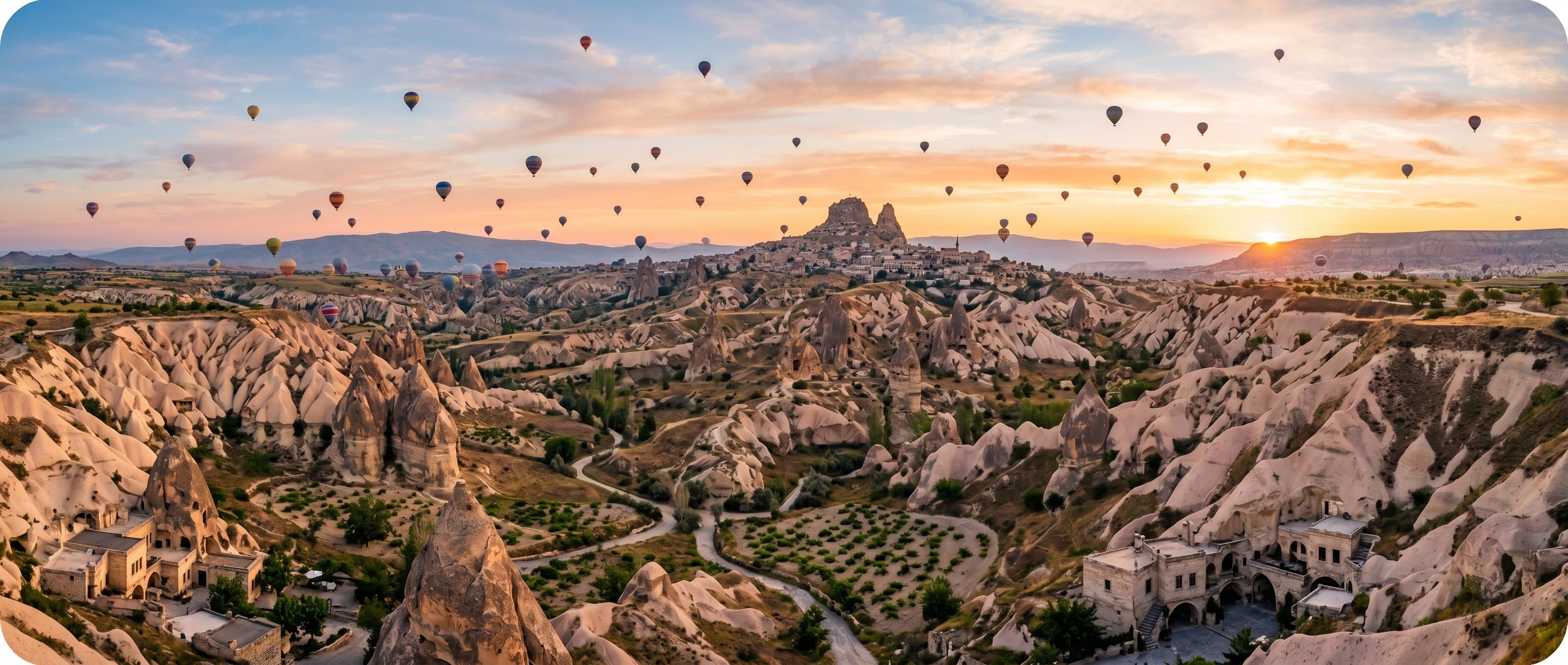
Cappadocia, a surreal region in central Turkey, defies the conventional parameters of a travel destination. For the internationally minded traveller in 2026, it is no longer just an Instagram backdrop; it is a profound historical crossroads where Byzantine art, ancient subterranean architecture, and early Christian heritage converge. Why does Cappadocia deserve a paramount spot on your travel itinerary right now? Because as global travel becomes increasingly homogenised, the experience of sleeping in a millennia-old cave and wandering through the volcanic tuff of Love Valley remains fiercely, stubbornly unique. For budget backpackers and digitally savvy explorers aged 28 to 55, the region offers a rare blend of affordable adventure, robust digital infrastructure, and authentic cultural immersion.
Best Time to Visit
Timing your visit to Cappadocia dictates your entire experience, from the likelihood of balloon flights (which are heavily weather-dependent) to accommodation costs. The sweet spot for 2026 is late September to mid-October. During this window, the oppressive heat of July and August has dissipated, leaving crisp, golden days perfect for hiking the Rose Valley. The crowds are thinner, meaning mid-range cave hotels are suddenly accessible on a backpacker's budget, and the skies are typically clear enough for daily balloon ascents. Spring (April to May) is similarly beautiful, though often slightly wetter, while winter transforms the region into a snowy, magical, albeit freezing, wonderland where you'll want to ensure your cave room has excellent heating.
Travel Planning & Booking
Reaching Cappadocia usually involves flying into one of two regional airports: Kayseri Erkilet (ASR) or Nevşehir Kapadokya (NAV). Kayseri is larger, with more frequent flights from Istanbul (IST or SAW) via Turkish Airlines or Pegasus Airlines, while Nevşehir is closer to the tourist hub of Göreme. For maximum savings, book your domestic legs 6 to 8 weeks in advance. When planning, use Skyscanner for flight comparisons across budget Turkish airlines, Booking.com for securing cave hotels (as Airbnb options can sometimes lack standard hotel amenities crucial for cave living), and GetYourGuide for booking highly-rated, safety-vetted hot air balloon flights.
As of late 2025/2026, visa requirements are incredibly favourable for many nationalities. UK, US, EU, and UAE citizens can enjoy visa-free entry for tourism up to 90 days. Indian nationals typically require an e-Visa, which is straightforward to obtain online provided they hold a valid Schengen, US, UK, or Ireland visa. Always ensure your passport is valid for at least 150 days from your date of arrival in Turkey.
Travel Insurance
Never skip travel insurance when visiting Cappadocia. The region's primary allure lies in its outdoor adventures—from sunrise hot air ballooning to ATV tours through rugged valleys and hiking uneven, steep terrain. You need coverage that explicitly includes adventure activities. World Nomads is exceptional for backpackers, covering ballooning under their standard tiers. SafetyWing is ideal for digital nomads staying longer, offering affordable, rolling monthly cover. Heymondo provides excellent medical coverage with a 24/7 doctor chat app. Always read the fine print to ensure 'activities at altitude' (specifically hot air ballooning) are explicitly covered; it is a common exclusion in budget policies.
Packing Guide
Cappadocia's high-altitude, semi-arid climate means drastic temperature swings. Even in summer, mornings before dawn (when you'll wake for balloon watching) are bone-chillingly cold, while afternoons are blistering. Layering is non-negotiable. Bring a lightweight thermal jacket, breathable hiking trousers, and excellent walking boots with ankle support—the volcanic rock is notoriously slippery. Culturally, Turkey is secular but conservative in rural areas. When visiting local villages or mosques, women should carry a lightweight scarf to cover their hair and shoulders, and both men and women should wear clothing that covers the knees. Do not overpack heavy denim; instead, favour lightweight, quick-drying fabrics.
Accommodation
Göreme is the undisputed backpacker and traveller hub, brimming with budget-friendly cave hostels, tour operators, and rooftop terraces. Ürgüp offers a slightly more sophisticated, mid-range vibe with excellent local wineries, while Uçhisar is the pinnacle of luxury, boasting the highest vantage points in the region. A crucial booking tip: check if your 'cave room' has a window. Authentic cave rooms often do not, which can trigger claustrophobia for some; if this is a concern, book a 'stone room' instead.
Getting Around Locally
Landing at Kayseri or Nevşehir, the most efficient transfer is a pre-booked shared shuttle (often arranged through your hotel for around $10-$15). Taxis from the airport are exorbitantly expensive. Locally, the dolmuş (shared minibus) network connects Göreme, Uçhisar, Avanos, and Ürgüp affordably (under $2 a ride). However, for exploring valleys, renting a scooter or ATV is highly recommended for those with experience. A common tourist mistake is relying solely on taxis between valleys—they operate on fixed, inflated tourist rates. Instead, download offline maps and hike or use the dolmuş where possible.
Top Tourist Attractions (Must-See)
Begin with the Göreme Open Air Museum, a UNESCO World Heritage site featuring breathtaking 10th-century rock-cut churches adorned with Byzantine frescoes. Visit right at opening time (8:00 AM) to avoid the colossal tour bus crowds. Next, descend into Derinkuyu Underground City. Reaching 85 metres deep, it once sheltered 20,000 people. It is essential to go with a guide to understand the complex ventilation and defence systems. Uçhisar Castle, the highest point in Cappadocia, offers unparalleled panoramic views—ideal for a late afternoon visit just before sunset. Do not miss Pasabag (Monks Valley) for the most striking, multi-headed fairy chimneys, and hike the Ihlara Valley, a lush 16km gorge following the Melendiz River, which feels wonderfully detached from the arid landscapes above.
Local Food & Dining
Cappadocian cuisine is hearty and agricultural. You must try Testi Kebabı (Pottery Kebab), a meat and vegetable stew slow-cooked in a sealed clay pot that is theatrically cracked open at your table. Mantı (tiny Turkish ravioli topped with garlic yoghurt and chilli butter) is a quintessential comfort food. For a quick, cheap eat, grab Gözleme (stuffed flatbread) from a street vendor. Pair these with Ayran (a salty yoghurt drink) or a glass of local Emir wine. Dietary note: While meat-heavy, Turkish cuisine is incredibly accommodating to vegetarians, with mezes, stuffed vine leaves, and lentil soups widely available.
Safety & Emergency Contacts
Cappadocia is exceedingly safe for tourists, with very low rates of violent crime. The main hazards are environmental: dehydration, heatstroke, and slipping on loose scree while hiking off-trail. Stray dogs are common; while usually docile and tagged by the local government, it is best to leave them alone. Avoid exploring unmarked caves deep in the valleys alone after dark.
Useful Apps & Resources
To navigate 2026 seamlessly, download WhatsApp (the primary mode of communication for all local businesses and tour guides), Obilet (for booking bus tickets across Turkey), Google Translate (download the Turkish offline dictionary), Maps.me (essential for offline hiking trails in the valleys), and Yemeksepeti (for local food delivery). The official tourism board website, GoTürkiye, remains an excellent resource for updated cultural event listings.
Closing
Cappadocia is a destination that rewards the curious and the prepared. By planning your transport, securing your balloon ride early, and wandering beyond the main tourist arteries, you'll discover a landscape that feels profoundly ancient yet dynamically alive. Ready to explore further? Dive into more expert itineraries and travel hacks at www.ainexusworld.com to make your 2026 adventure extraordinary.