
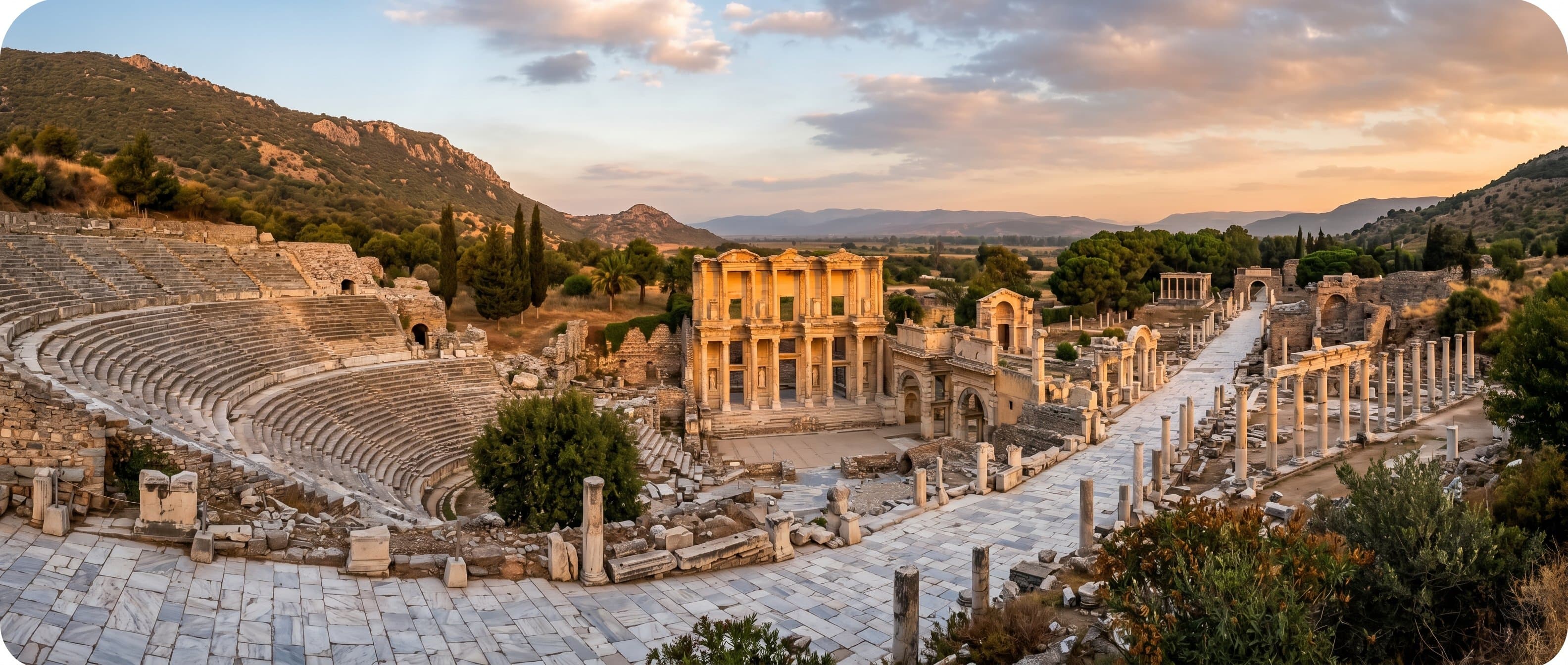
Introduction: Why Ephesus is 2026's Must-Visit Site
For decades, Ephesus has been the crown jewel of Turkey’s Aegean coast, but 2026 introduces a transformative way to experience antiquity. The recent rollout of the 'Ephesus Night' initiative now allows travellers to wander the marble streets of the Curetes and the Library of Celsus under state-of-the-art architectural lighting, effectively doubling the site’s accessibility and avoiding the sweltering midday heat. For the budget backpacker, this means more than just a photo op—it means a chance to see one of the world's best-preserved Roman cities without the crushing humidity and cruise ship crowds that traditionally dominate the 10:00 AM to 2:00 PM window.
Beyond the ruins, the local hub of Selçuk has evolved. It remains a quintessentially Turkish town where the call to prayer echoes over Byzantine aqueducts, but it now boasts a savvy digital nomad scene and improved rail links to Izmir. Whether you are here for the biblical history or the legendary 1,500-year-old hospitality, Ephesus in 2026 is a masterclass in how the ancient world meets modern travel needs.
Best Time to Visit: The 2026 Seasonal Breakdown
Timing your arrival is the difference between a meditative walk through history and a claustrophobic struggle in the sun. For 2026, the 'sweet spot' is May or late September.
- January - February: Cold and occasionally rainy (5-12°C). While the ruins are hauntingly empty and accommodation is at its cheapest, the wind off the Aegean can be biting.
- March - April: Spring brings wild flowers to the amphitheatre. Moderate crowds and pleasant walking temperatures (15-20°C).
- May: The ultimate month. Lush greenery, vibrant markets, and long daylight hours without the peak summer heat.
- June - August: Peak season. Temperatures frequently exceed 35°C. Expect high prices and massive crowds. If visiting now, the new night tours (8:00 PM - Midnight) are non-negotiable.
- September - October: The second peak. The sea is still warm enough for a post-ruin dip at Pamucak Beach, and the harvest season in nearby Şirince village is in full swing.
- November - December: Quiet and atmospheric. Perfect for those who prioritise solitude over sunshine.
Travel Planning & Booking
Flying into Izmir Adnan Menderes Airport (ADB) is your most efficient route. Major carriers like Turkish Airlines and Pegasus offer frequent domestic connections from Istanbul, while SunExpress and EasyJet provide direct seasonal flights from London, Berlin, and Amsterdam.
Booking Lead Times: For 2026, we recommend booking flights 4 months in advance. Use Skyscanner for price tracking and Google Flights for its 'Explore' feature. For accommodation, Booking.com remains the most reliable in Turkey, but ensure you book before entering the country or use a VPN, as the site is frequently restricted for domestic bookings once you are on Turkish soil.
Visa Requirements for 2026
Turkey’s visa landscape is increasingly digital. Ensure your passport has at least 6 months' validity from your date of entry.
- UK Nationals: Visa-free for up to 90 days within a 180-day period.
- US Nationals: Visa-free for up to 90 days (new policy effective from 2024).
- EU Nationals: Most (including Germany, France, Italy) are visa-free. Some can even enter with a national ID card.
- Indian Nationals: Eligible for a 30-day e-Visa if they hold a valid visa or residence permit from the Schengen area, USA, UK, or Ireland. Otherwise, a sticker visa is required.
- UAE Nationals: Visa-free for 90 days.
Travel Insurance
Never skip insurance for Turkey. While the medical facilities in nearby Izmir are world-class, the costs for non-residents are high. Look for policies covering 'Adventure Activities' if you plan on paragliding in nearby Fethiye or hot air ballooning in Cappadocia. Recommended providers for 2026 include World Nomads (best for backpackers) and SafetyWing (best for long-term nomads).
Packing for Ephesus
The marble streets of Ephesus are polished by two millennia of footsteps—they are incredibly slippery. Shoes with excellent grip are mandatory.
- Clothing: Lightweight linen or moisture-wicking fabrics. Even in summer, bring a light scarf or wrap for visiting religious sites like the House of the Virgin Mary or the Basilica of St. John.
- Gear: A high-quality refillable water bottle (fountains are available but limited), a wide-brimmed hat, and a power bank for your phone—you will be taking more photos than you anticipate.
- Over-packed Item: Heavy hiking boots. Unless you are trekking the Lycian Way, lightweight trail runners are sufficient.
Getting Around Locally
Transport in the Ephesus region is remarkably intuitive. From Izmir Airport, the IZBAN suburban train runs directly to Selçuk station for roughly 60 TRY—a journey of about 80 minutes. Locally, the Dolmuş (shared minibus) is your best friend. These depart from the Selçuk Otogar (bus station) every 15 minutes for the ruins, Pamucak Beach, and the village of Şirince. A one-way fare is typically 25-40 TRY. Avoid taking taxis for the short 3km trip to the ruins; the walk is flat and lined with beautiful mulberry trees, though hot in summer.
Local Food & Dining: Beyond the Kebab
Selçuk is famous for Çöp Şiş—small cubes of grilled lamb or beef served on wooden skewers with charred peppers. For an authentic experience, head to Selçuk Köftecisi near the aqueducts. For breakfast, don't miss Gözleme (savoury pancakes) at the Saturday market. If you are looking for a high-end sunset dinner, Güllü Konakları in Şirince offers farm-to-table Aegean cuisine that is worth the splurge.
Safety and Cultural Etiquette
Selçuk is exceptionally safe, even for solo female travellers. The main 'danger' is the persuasive nature of carpet and leather shop owners. A polite but firm 'Hayır, teşekkürler' (No, thank you) is usually enough. Culturally, Turkey is a tipping society; 10% in restaurants is standard. Always remove your shoes when entering a local home or a mosque.