
Introduction
There is nowhere on earth quite like Istanbul. Straddling the Bosphorus Strait, it is the only metropolis in the world to span two continents, standing with one foot in Europe and the other in Asia. For the budget backpacker, digital nomad, or culturally curious traveller in 2026, Istanbul presents an intoxicating blend of antiquity and relentless modernity. But why does Istanbul deserve a place on your itinerary right now? Following major infrastructural developments over the past few years—including the fully operational M11 metro line directly linking the new mega-airport to the city centre, and the vibrant Galataport cultural district—Istanbul has never been more accessible. Coupled with the introduction of Turkey's new digital nomad visa and a highly favourable exchange rate for international visitors, you can experience world-class dining, centuries-old hammams, and vibrant nightlife at a fraction of the cost of Western European capitals. It is a city where you can wake up to the hauntingly beautiful call to prayer, spend the afternoon sipping third-wave coffee in a trendy Kadıköy café, and end the night eating sizzling kebabs on the street. Zero generic padding: this guide delivers the verified, actionable intelligence you need to conquer Istanbul in 2026.
Best Time to Visit
Istanbul’s climate is surprisingly diverse, heavily influenced by the Marmara and Black Seas. The absolute 'sweet spot' for a visit is September to October. During this autumn window, the brutal summer humidity dissipates, leaving balmy days around 20–25°C. The massive summer tourist crowds thin out, making the labyrinthine corridors of the Grand Bazaar breathable again, and accommodation prices drop from their August peaks. If you prefer spring, April is spectacular due to the annual International Istanbul Tulip Festival, when millions of blooms carpet the city's parks, particularly Emirgan Park. Winter (December to February) can be bitterly cold with biting winds off the Bosphorus and occasional snowfall, though it offers the lowest prices and a beautifully moody atmosphere for photographers. High summer (July and August) is punishingly hot, heavily congested with cruise ship passengers, and sees peak pricing across all sectors. Plan your trip for late September, and you will experience the city at its absolute best.
Travel Planning & Booking
Reaching Istanbul is incredibly straightforward, largely thanks to the colossal Istanbul Airport (IST) on the European side, and Sabiha Gökçen (SAW) on the Asian side. Turkish Airlines and Pegasus Airlines provide extensive, direct global connectivity. From the UK, British Airways and easyJet run highly competitive routes from London Heathrow and Gatwick, whilst direct flights from New York via Turkish Airlines operate daily. To secure the best rates, book your flights 2–3 months in advance. When it comes to accommodation, Booking.com is excellent for finding boutique hotels in Beyoğlu, whilst Hostelworld remains the gold standard for budget backpackers seeking social hostels in Sultanahmet or Kadıköy. Be aware: Booking.com operates differently within Turkey—you cannot book domestic Turkish properties while you are already physically on Turkish Wi-Fi due to local regulations, so secure your stays before you arrive or use a VPN. Visas are straightforward but strict. As of 2025/2026, UK and EU nationals enjoy visa-free entry for up to 90 days within any 180-day period. US nationals must purchase an eVisa online (approx. $50) prior to travel. Indian nationals require a sticker visa, unless they hold a valid US, UK, or Schengen visa, in which case they qualify for a swift eVisa. UAE nationals also benefit from visa-free entry for 90 days. Always use the official government portal (evisa.gov.tr) and avoid third-party scam sites charging exorbitant administrative fees.
Travel Insurance
Do not attempt to travel to Istanbul without comprehensive travel insurance. While the city is generally safe, the erratic traffic and steep, uneven cobblestone streets of neighbourhoods like Galata and Balat result in frequent sprained ankles. Furthermore, if you plan to venture to Cappadocia for a hot air balloon ride (a common add-on for Istanbul visitors), you must ensure your policy covers adventure activities. Medical cover is paramount; while private hospitals in Istanbul like the American Hospital are world-class, they are extremely expensive without insurance. World Nomads is the top choice for backpackers, offering flexible cover that you can extend while on the road. SafetyWing is the definitive pick for digital nomads, operating on a monthly subscription model that includes strong medical coverage. For UK and European travellers, Heymondo provides excellent, app-based 24/7 medical chat support. Practical tip: Always carry a printed copy of your insurance certificate and the emergency assistance number in your daypack, as local clinics will want proof of cover before treating non-emergency cases.
Packing Guide
Packing for Istanbul requires a delicate balance between climate readiness and cultural respect. The weather fluctuates wildly between seasons. In summer, breathable linens and cottons are essential, whilst winter demands a heavy coat, waterproof footwear, and thermal layers. Regardless of the season, modest dress is a cultural necessity. While neighbourhoods like Nişantaşı and Kadıköy are distinctly liberal and European in fashion, visiting the historical peninsula (Sultanahmet) requires conservative attire. Women must cover their hair, shoulders, and knees to enter mosques; packing a lightweight, versatile pashmina is non-negotiable. Men should avoid wearing shorts above the knee when visiting religious sites. Because Istanbul is famously built on seven steep hills, leave the high heels at home—sturdy, comfortable walking trainers with strong grip are the single most important item in your luggage. One item tourists consistently over-pack is heavy, formal evening wear. Unless you are dining at ultra-exclusive venues on the Bosphorus, Istanbul's nightlife and dining scene is surprisingly smart-casual and relaxed.
Accommodation
Choosing the right neighbourhood dictates your entire Istanbul experience. Sultanahmet is the historical heart, perfect for first-timers on short stays, placing you within walking distance of the Hagia Sophia and Blue Mosque. However, it completely shuts down after 10 PM. Beyoğlu/Karaköy is the cultural and nightlife epicentre, offering rooftop bars, art galleries, and immediate access to the Galata Tower. Kadıköy, on the Asian side, is the ultimate sanctuary for budget backpackers and digital nomads, boasting legendary street food, third-wave coffee shops, and a vibrant, youthful, untouristy vibe. For luxury, the Çırağan Palace Kempinski in Beşiktaş offers unparalleled 19th-century Ottoman opulence right on the Bosphorus (rooms from $400/night). The mid-range standout is Georges Hotel Galata ($120/night), a boutique gem offering exposed brick walls and stunning rooftop views of the Golden Horn. For budget travellers, Cheers Hostel in Sultanahmet ($25/night for a dorm bed) remains an institution, offering incredible social atmospheres, a terrace bar overlooking the Hagia Sophia, and exceptionally clean facilities. Booking Tip: Accommodation on the Asian side (Kadıköy/Moda) is consistently 20-30% cheaper than the European side, and the 20-minute scenic ferry commute across the Bosphorus is an attraction in itself.
Getting Around Locally
Arriving at Istanbul Airport (IST), the fastest and cheapest route to the city centre is the M11 Metro line, which connects to the M2 line at Gayrettepe station, taking roughly 45 minutes and costing less than $2. Alternatively, Havaist airport buses run 24/7 to major hubs like Taksim and Sultanahmet for around $6. If you take a taxi, only use the official ranks and expect to pay around $35-40 to the centre. Once in the city, the public transit network is phenomenal. You must immediately purchase an 'Istanbulkart' (a red contactless transport card available at airport kiosks). It works on metros, trams, funiculars, buses, and ferries. The ferries are the lifeblood of the city and the most scenic public transit globally—a ride between Europe and Asia costs under $1. Download the Moovit app for accurate transit routing. One common tourist mistake: Hailing a random yellow taxi on the street. Taxi scams (broken meters, incorrect change, taking long routes) are notoriously prevalent. Always use the BiTaksi or Uber apps, which track your route and provide upfront estimates, ensuring accountability.
Top Tourist Attractions (Must-See)
Istanbul’s historical pedigree is unmatched. Hagia Sophia: Once a cathedral, then a mosque, then a museum, and now an active mosque again. It is an architectural marvel of the Byzantine empire. Open daily 09:00-19:30. Entry is €25 for foreign tourists. Best time to visit is exactly at opening time to beat the massive tour groups. Insider tip: The upper gallery offers the best perspective of the floating dome and surviving Christian mosaics. Topkapi Palace: The lavish residence of Ottoman Sultans for 400 years. Open 09:00-18:00 (closed Tuesdays). Entry is $35-40 including the Harem. Insider tip: Do not skip the Harem section; its intricate Iznik tiles are the most photogenic in the complex. Basilica Cistern: An eerie, subterranean 6th-century water reservoir held up by 336 marble columns. Open 09:00-19:00. Entry is $20. Insider tip: Walk to the very back left corner to find the two mysterious Medusa head pillar bases. Galata Tower: A medieval stone tower offering 360-degree views of the sprawling city. Open 08:30-23:00. Entry is $30. Insider tip: Visit at dusk to hear the call to prayer echo from dozens of mosques across the Golden Horn as the sun sets. Grand Bazaar: One of the largest and oldest covered markets in the world, boasting over 4,000 shops. Open 08:30-19:00 (closed Sundays). Entry is free. Insider tip: Getting lost is inevitable; use the central Nuruosmaniye Gate as your primary rendezvous point. Süleymaniye Mosque: Designed by the legendary architect Sinan, it is arguably more beautiful and less crowded than the Blue Mosque. Open 09:00-18:00. Free entry. Insider tip: The gardens behind the mosque offer the most spectacular free panoramic view of the Bosphorus in the entire city.
Local Food & Dining
Turkish cuisine is a spectacular collision of Central Asian, Middle Eastern, and Mediterranean flavours. You must try an authentic Iskender Kebab (thinly sliced lamb over pita bread, drenched in hot tomato sauce and melted sheep butter), Balık Ekmek (grilled fish sandwich), Midye Dolma (mussels stuffed with spiced rice), and a traditional Serpme Kahvaltı (an elaborate Turkish breakfast spread). For high-end dining, Mikla in Beyoğlu offers Michelin-starred New Anatolian cuisine with jaw-dropping rooftop views of the city. For a mid-range authentic experience, Karaköy Lokantası serves the city's best traditional meze and slow-cooked meats in a stunning, blue-tiled dining room (reservations essential). For street food, bypass the tourist traps and head to Dürümzade in Beyoğlu (made famous by Anthony Bourdain) for a $4 charcoal-grilled lamb wrap that will change your life. Dietary Note: While meat-heavy, Istanbul is surprisingly vegetarian-friendly. Establishments known as 'Esnaf Lokantası' (tradesmen restaurants) serve dozens of olive oil-based vegetable dishes (Zeytinyağlılar) daily.
Safety & Emergency Contacts
Istanbul is generally very safe for tourists, maintaining a strong police presence in central areas. Violent crime against foreigners is exceptionally rare. However, petty crime like pickpocketing is common in highly crowded areas like Taksim Square, İstiklal Street, and the Grand Bazaar. Be vigilant against common scams: the 'dropped shoe brush' trick (where a shoe shiner drops his brush, you return it, he offers a 'free' shine, then demands exorbitant payment) and the 'friendly local' bar scam (a charming stranger invites you for a drink, and you are hit with a $1000 bill backed by intimidating bouncers). For medical emergencies, the nearest top-tier international hospital is the American Hospital (Amerikan Hastanesi) at Teşvikiye Cad. No:120, Nişantaşı (+90 212 311 20 00). Turkey has consolidated its emergency numbers, but direct lines still work. LOCAL EMERGENCY NUMBERS: Police: 112 (or 155), Ambulance: 112, Fire: 112 (or 110), Tourist Police: +90 212 527 45 03. National Emergency: 112. UK Embassy: Meşrutiyet Cad. No:34, Beyoğlu (+90 212 334 64 00). US Embassy: İstinye Mah, Üç Şehitler Sok. No.2, Sarıyer (+90 212 335 90 00). Indian Embassy: Cumhuriyet Cad. No: 42, Elmadag (+90 212 296 21 31).
Useful Apps & Resources
To navigate Istanbul like a local in 2026, your smartphone needs the right tools. BiTaksi is critical for calling metered taxis and completely avoiding overcharging scams. Yemeksepeti is the nation’s premier food delivery app, perfect for those nights when backpacker fatigue sets in. Moovit offers the most accurate real-time public transit scheduling, far surpassing Google Maps for the local bus network. The official Istanbulkart App allows you to top up your transit card via your phone, saving you from long queues at ticket machines. Google Translate (with the offline Turkish language pack downloaded) is vital, as English proficiency drops significantly outside major tourist zones. For official resources, the Turkish Ministry of Culture and Tourism website, goturkiye.com, provides meticulously verified updates on museum hours and national holidays.
Closing
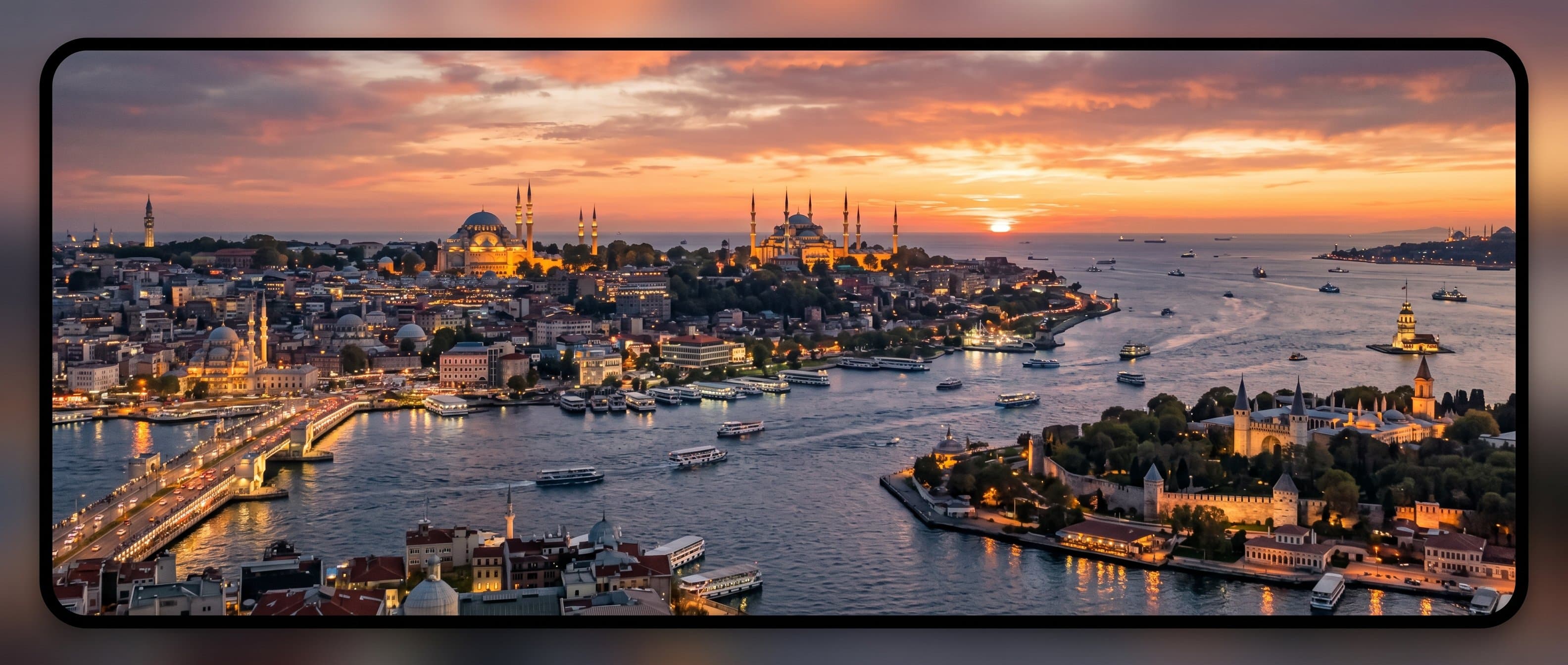
Istanbul is not just a city you visit; it is a city you feel. From the scent of roasted chestnuts on İstiklal Street to the silhouette of minarets piercing the sunset over the Golden Horn, it is an environment that rewards the curious and the bold. Pack your walking shoes, embrace the chaotic energy, and let the crossroads of the world work its magic on you. Ready to craft your perfect transcontinental itinerary? Explore more expert guides, gear reviews, and insider travel hacks at www.ainexusworld.com.
FAQ
- Is Istanbul safe for tourists? Yes, Istanbul is generally very safe. While violent crime is rare, petty theft like pickpocketing does occur in crowded bazaars and transit hubs. Always use common sense and be wary of friendly strangers inviting you to bars.
- What is the best time to visit Istanbul? September and October offer the best balance of pleasant weather (20-25°C), manageable crowd levels, and reasonable pricing. Spring (April-May) is also stunning, particularly during the Tulip Festival.
- How many days do I need in Istanbul? A minimum of 4 full days is required to see the major historical sites, explore the bazaars, and take a Bosphorus cruise. However, 7 days allows you to explore the vibrant Asian side and take day trips to the Princes' Islands.
- Do I need a visa to visit Istanbul? This depends on your passport. In 2026, UK and EU citizens can enter visa-free for 90 days. US citizens must purchase an eVisa online before arrival. Always check the official evisa.gov.tr portal.
- What is the local currency and can I use credit cards? The currency is the Turkish Lira (TRY). While credit cards (Visa/Mastercard) are widely accepted in hotels, restaurants, and shops, you must carry small cash denominations for street food vendors, local markets, and public toilets.