
Introduction
Welcome to the wine capital of the world, redefined. If you still picture Bordeaux merely as a stuffy enclave for aristocratic oenophiles swirling overpriced claret, it is time to update your itinerary for 2026. Today, Bordeaux is one of France's most dynamic, forward-thinking cities. It seamlessly bridges its UNESCO-protected 18th-century architecture with cutting-edge eco-hubs, thriving student energy, and a remarkably progressive urban mobility network. Bordeaux deserves a top spot on your travel list right now because it has perfected the art of the '15-minute city'. Thanks to extensive pedestrianisation and an ever-expanding tram network, you can wake up in a historic boutique hostel, cycle along the Garonne river, sample world-class oysters at a bustling market, and sip natural wine in a repurposed military barracks—all before lunch, without ever needing a car. For the internationally minded, digitally savvy traveller, Bordeaux offers the cultural clout of Paris with the laid-back, sun-drenched ethos of the southwest coast.
Best Time to Visit
Timing your trip to Bordeaux dictates your entire experience, from the weight of your backpack to the strain on your wallet. The absolute sweet spot for budget backpackers and digital nomads in 2026 is mid-to-late September. During this golden window, the suffocating summer heat breaks, transitioning into crisp, sunny days perfect for cycling. More importantly, this is the vendanges (grape harvest) season. The city hums with festive energy, vineyards open their doors for seasonal workers and tours, and the summer tourist crowds have largely evaporated back to their offices, dropping accommodation prices by up to 30%.
If you visit during the summer (June to August), brace yourself for intense heatwaves—temperatures frequently breach 35°C (95°F)—and peak pricing. While the lively outdoor café culture and riverfront festivals are incredible, budget accommodation books out months in advance. Winter (December to February) is quiet and damp, though the Christmas markets inject some charm. Spring (April to May) is beautiful but unpredictable, often bringing sudden Atlantic rain showers. Whenever you go, target the first Sunday of the month if possible; Bordeaux makes many of its top museums entirely free on this day.
Travel Planning & Booking
Reaching Bordeaux has never been easier. Bordeaux-Mérignac Airport (BOD) serves as a major hub for low-cost carriers like EasyJet and Ryanair, alongside legacy carriers like Air France and British Airways. However, if you are arriving from within Europe, the TGV (high-speed train) from Paris Montparnasse drops you at Bordeaux Saint-Jean station in a staggering two hours and four minutes. For maximum savings, book your TGV tickets exactly 90 days in advance via SNCF Connect when the lowest 'Ouigo' fares are released.
When it comes to accommodation and flights, a 10-to-12-week lead time is essential for the summer months, while 4 weeks is sufficient for winter. Visa requirements for 2026 require special attention due to the implementation of the ETIAS (European Travel Information and Authorisation System). UK, US, and UAE nationals can travel visa-free for up to 90 days but must secure an approved ETIAS waiver online before boarding their flight (costing €7). EU citizens enjoy full freedom of movement. Indian nationals must apply for a standard Schengen Visa well in advance through VFS Global. Ensure your passport is valid for at least three months beyond your planned departure date from the Schengen area.
Travel Insurance
Never skip travel insurance when visiting Bordeaux. While France boasts one of the world's best healthcare systems, non-EU residents will face steep out-of-pocket costs for emergencies. Furthermore, Bordeaux is a gateway to the Atlantic coast (Arcachon, Lacanau), where surfing and dune climbing are immensely popular—activities that basic policies often exclude. You need comprehensive cover that includes medical evacuation, trip cancellation (especially important given the frequency of European air traffic control strikes), baggage loss, and adventure sports. Practical Tip: If you are a UK citizen, ensure you bring your GHIC (Global Health Insurance Card) for access to state healthcare at a reduced cost, but remember it does not replace the need for travel insurance (it won't cover mountain rescue or repatriation).
Packing Guide
Bordeaux's proximity to the Atlantic Ocean means the weather can be capricious. The golden rule is smart-casual layering. The Bordelais dress well; think tailored trousers, quality knitwear, and smart trainers. Leave the excessively baggy sweatpants and neon activewear at home if you want to blend in. A lightweight, windproof rain jacket is essential year-round. Must-bring items include a universal travel adapter, a reusable water bottle (public fountains provide excellent drinking water), and a sturdy cross-body daypack to deter pickpockets on crowded trams. One item tourists consistently over-pack is heavy, formal evening wear. Unless you have reservations at a multi-Michelin-starred establishment, dark jeans, a crisp shirt or blouse, and clean trainers are perfectly acceptable for evening dining.
Accommodation
Choosing the right neighbourhood is critical. Chartrons is the former wine merchants' district, now transformed into a bohemian enclave of antique shops, boutique cafes, and weekend markets. It is perfect for those who want quiet charm. Saint-Pierre is the historic beating heart of the city—expect narrow cobblestone streets, endless dining options, and a vibrant nightlife, though it can be noisy. La Bastide, situated across the river on the Right Bank, is the top choice for budget-conscious digital nomads, offering cheaper stays, incredible views of the classic skyline, and proximity to the Darwin eco-hub.
Booking Tip: Always check if your hotel or hostel includes the local taxe de séjour (city tax) in the quoted price online, as it is often collected in cash or card upon arrival and ranges from €1 to €4 per night depending on the property's rating.
Getting Around Locally
Bordeaux's public transport system, TBM (Transports Bordeaux Métropole), is a masterclass in urban planning. Upon landing at Bordeaux-Mérignac, bypass the expensive taxis and take Tram Line A. For just €1.80 (around $2), it whisks you directly from the terminal to the city centre in 35 minutes. Alternatively, the 30'Direct express bus costs about €8 ($9) and goes straight to the main train station.
Once in the city, the four tram lines (A, B, C, D) are your best friends. They run from 5:00 AM until midnight (1:00 AM on weekends). Download the TBM app to buy digital tickets directly on your phone. A common tourist mistake is buying a ticket but forgetting to validate it at the yellow machines upon boarding the tram—plain-clothes inspectors frequently patrol the lines and hand out instant €50+ fines to unsuspecting visitors.
Top Tourist Attractions (Must-See)
Bordeaux's attractions range from the deeply historic to the boldly futuristic. Here is what you cannot miss:
- La Cité du Vin: This spectacular, decanter-shaped museum is an immersive journey into the history and culture of wine worldwide. Opening hours: 10:00 AM - 7:00 PM. Entry: €22 ($24) which includes a glass of wine at the panoramic rooftop belvedere. Best time: 10:00 AM. Insider tip: Skip the long afternoon queues by booking a time-slotted ticket online the day before.
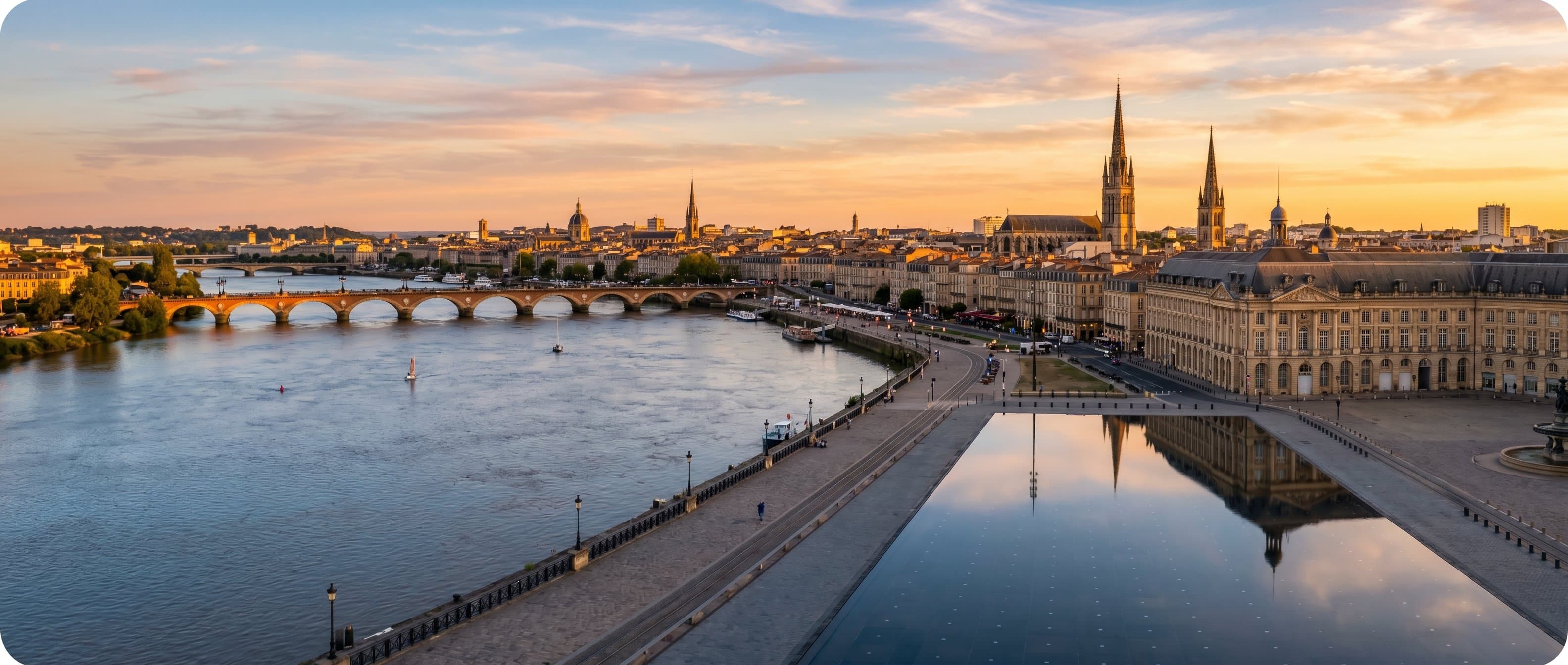
- Miroir d'Eau & Place de la Bourse: The world's largest reflecting pool sits in front of the stunning 18th-century Place de la Bourse. Operating 10:00 AM - 10:00 PM (April to October). Entry: Free. Best time: Sunset or twilight. Insider tip: Stand exactly in the centre of the pool when the mist sequence begins for the ultimate surreal photo opportunity.
- Darwin Eco-Système: A former military barracks turned urban utopia on the Right Bank, featuring an indoor skatepark, organic grocery store, street art, and the largest organic restaurant in France. Hours: 8:00 AM - 11:00 PM. Entry: Free to explore. Best time: Sunday brunch time. Insider tip: Grab an organic local beer at the Magasin Général and watch the skaters in the main hangar.
- Musée d'Aquitaine: The definitive museum for understanding Bordeaux's history, including its difficult but necessary exhibition on the city's role in the 18th-century transatlantic slave trade. Hours: 11:00 AM - 6:00 PM (Closed Mondays). Entry: €8 ($9). Best time: Early afternoon. Insider tip: Look for the cenotaph of Michel de Montaigne near the entrance.
- Tour Pey-Berland: The striking, freestanding bell tower next to the Saint-André Cathedral. Climbing its 231 narrow steps rewards you with the best panoramic view of the city. Hours: 10:00 AM - 1:15 PM and 2:00 PM - 6:00 PM. Entry: €6 ($7). Best time: Late afternoon for softer light on the rooftops. Insider tip: Entrance is strictly limited to 19 people at a time; book your slot online at least two days in advance.
- Les Halles de Bacalan: A massive gourmet food market located opposite La Cité du Vin, featuring over 20 local producers and chefs. Hours: 8:00 AM - 2:30 PM, 4:30 PM - 10:00 PM (varies by day). Entry: Free. Best time: Lunchtime (around 12:30 PM). Insider tip: Order a half-dozen Arcachon oysters from the seafood stalls and pair it with a crisp glass of Entre-Deux-Mers white wine for less than €15.
Local Food & Dining
Bordeaux's gastronomy is built on rich, comforting flavours. You must try the Cannelé, a small pastry with a thick, deeply caramelised crust and a soft, rum-and-vanilla centre (invented by local nuns in the 18th century). Entrecôte à la Bordelaise (rib steak cooked with a rich shallot and red wine reduction) is the definitive main course. For seafood lovers, freshly shucked Oysters from the Bassin d'Arcachon are essential, traditionally served with a small, spicy sausage called a crépinette. Vegetarians should note that traditional southwestern French cuisine is heavily meat-and-duck focused, but Bordeaux's modern culinary scene has exploded with excellent plant-based options, particularly around the Saint-Pierre district.
Safety & Emergency Contacts
Bordeaux is widely considered a very safe city for tourists, digital nomads, and solo female travellers. Violent crime is exceptionally rare. The primary nuisance is petty theft, specifically pickpockets operating on the crowded Tram Line B and around the bustling Place de la Victoire late at night. Be cautious when walking alone late at night near the Saint-Jean train station area (Gare Saint-Jean), as it can feel edgy. Stick to well-lit main avenues.
Familiarise yourself with the local emergency numbers. The European standard 112 works across France and operators usually speak English. If you need a pharmacy late at night, look for a Pharmacie de Garde (the green cross outside pharmacies will list the nearest open location). The nearest major international-standard hospital is the CHU de Bordeaux (Hôpital Pellegrin), which has a dedicated, massive emergency department (Urgences).
Useful Apps & Resources
Equip your smartphone before you arrive. The TBM app is non-negotiable for navigating buses, trams, and river shuttles. TheFork (LaFourchette) is brilliant for booking restaurant tables and often offers 20-50% off your food bill. SNCF Connect is vital if you plan to take day trips to Saint-Émilion or Arcachon by train. Uber operates extensively in Bordeaux if you need a late-night ride when the trams stop. Finally, the official tourism board website, bordeaux-tourism.co.uk, is an exceptionally well-maintained resource for checking temporary exhibition dates and purchasing the Bordeaux CityPass.
Closing
Bordeaux in 2026 offers an intoxicating blend of grand heritage and youthful, sustainable energy. Whether you are navigating the medieval alleys of Saint-Pierre, savouring cheap but exceptional wine on the quays, or using the city as a base camp to explore the Atlantic coast, Bordeaux rewards the curious and the hungry. It is a city that invites you to slow down, pull up a chair, and watch the world go by with a glass in hand. For more insider tips, hyper-local itineraries, and smart travel hacks for your European adventure, explore more at travelnexusworld.com.
FAQ
Is Bordeaux safe for tourists?
Yes, Bordeaux is very safe. The main risk is petty theft like pickpocketing in crowded areas (especially on trams and at the train station). Solo travellers can feel comfortable walking in the city centre at night.
What is the best time to visit Bordeaux?
September is the absolute best month. The weather is still warm, the summer tourist crowds have thinned, and you can experience the excitement of the annual grape harvest (vendanges) across the region's vineyards.
How many days do I need in Bordeaux?
A minimum of 3 full days is recommended. Dedicate day one to the historic centre and riverfront, day two to La Cité du Vin and the Chartrons district, and day three for a half-day trip to the nearby vineyards of Saint-Émilion.
Do I need a visa to visit Bordeaux?
From mid-2025/2026, UK, US, and UAE citizens travelling visa-free must apply online for an ETIAS authorisation (€7) before travel. Indian citizens require a Schengen Visa applied for in advance. EU citizens can enter freely.
What is the local currency and can I use credit cards?
The currency is the Euro (€). Bordeaux is virtually a cashless city; contactless credit and debit cards (Visa/Mastercard) are accepted almost everywhere, including for buying tram tickets directly at the machine or on the app.