
The Ultimate French Riviera Travel Guide 2026: Everything You Need to Know
The French Riviera, or Côte d'Azur, conjures images of mega-yachts in Monaco, celebrity-studded red carpets in Cannes, and private beach clubs in Saint-Tropez. But the true magic of this sun-drenched coastline lies in its accessibility. For 2026, the real story isn't the billionaire playgrounds; it is the revitalised regional train network (Zou!), the burgeoning sustainable travel movement, and the hidden coastal trails that cost absolutely nothing to explore. Whether you are a digitally savvy backpacker or a mid-range explorer seeking boutique experiences, the Riviera deserves its place on your itinerary right now. The compelling reason to visit in 2026? The region has heavily invested in off-season cultural infrastructure, meaning the spectacular perched villages and modern art museums are more accessible, less crowded, and more affordable than ever before.
Best Time to Visit
Timing is everything on the Côte d'Azur. The 'sweet spot' for a smart traveller in 2026 is late September to mid-October. The Mediterranean Sea retains its summer warmth, allowing for comfortable swimming without the oppressive August heat. Crucially, accommodation prices in Nice and Cannes drop by up to 40% compared to peak summer, and the TER trains run smoothly without the crush of July crowds.
Spring (April to May) brings the dazzling Cannes Film Festival and the Monaco Grand Prix, which are spectacular to witness but drive prices astronomically high. Winter (November to February) is the Riviera's best-kept secret for budget backpackers: the bright, crisp days are perfect for hiking the coastal paths, and the annual Lemon Festival (Fête du Citron) in Menton brightens up February. While some beachside restaurants board up for the winter, the major cities of Nice and Cannes remain vibrant, lived-in hubs year-round.
Travel Planning & Booking
Nice Côte d'Azur Airport (NCE) is the primary gateway to the Riviera. For 2026, numerous low-cost carriers and major airlines operate direct routes here. Travellers from the UK can frequently fly British Airways or EasyJet from London for under £50 if booked early. US travellers can utilise direct seasonal flights via Delta or United from New York (JFK/EWR), though flying into Paris (CDG) and taking the high-speed TGV train (roughly 6 hours to Nice) is an increasingly popular, lower-carbon alternative.
Booking lead times are critical. For summer visits, secure accommodation at least four to five months in advance. For the shoulder seasons of May or September, two months is sufficient. When booking, utilise platforms strategically: use Booking.com for flexible cancellation policies on regional guesthouses, Hostelworld for budget beds in Nice's centre, and Trainline or SNCF Connect to lock in advance train fares.
Visa Requirements (2026 Update): The landscape has changed with the implementation of the ETIAS (European Travel Information and Authorisation System). UK, US, and UAE nationals now require an approved ETIAS waiver prior to boarding, which costs €7 and lasts for three years. EU citizens continue to enjoy freedom of movement. Indian nationals must obtain a Schengen Visa via VFS Global before departure. Ensure your passport has at least six months of validity beyond your planned return date.
Travel Insurance
The French Riviera is a profoundly safe destination, but travel insurance is non-negotiable. Medical care in France is world-class but fiercely expensive for non-EU residents without an EHIC/GHIC card. A minor scooter accident or a twisted ankle on the rugged Cap d'Antibes hiking trails can result in a hefty hospital bill. Furthermore, the region is prone to occasional transport strikes (grèves) which can severely disrupt flights and trains.
Look for policies that specifically cover trip disruption due to industrial action, as well as medical coverage that includes emergency repatriation. If you plan on hiring a Vespa, ensure your policy explicitly covers motorised two-wheelers. World Nomads remains excellent for backpackers covering adventure sports, SafetyWing is ideal for digital nomads with flexible itineraries, and Allianz offers robust trip cancellation protections.
Packing Guide
The Riviera climate demands layers and a smart-casual sensibility. Locals dress impeccably; you won't see many French residents walking through the city centre in beachwear. Pack a tailored linen shirt or a breezy midi-dress—these transition perfectly from a morning market stroll to an evening aperitif.
Essentials include a high-quality, reef-safe sunscreen, a reusable water bottle (public fountains in Nice are safe and abundant), and water shoes. The famous beaches of Nice are made of large pebbles (galets), not sand, making barefoot walking agonising for the uninitiated. One item tourists consistently over-pack is heavy denim; the Mediterranean humidity makes jeans uncomfortable from May through September. Swap them for light linen trousers or breathable hiking shorts.
Accommodation
Basing yourself correctly dictates your budget. Nice is unequivocally the best hub for backpackers and mid-range travellers. It boasts the best transport links, the widest variety of food, and the most competitive hotel rates. Stay in the Vieux Nice (Old Town) for atmosphere and nightlife, or the Libération neighbourhood for a more local, bohemian vibe with excellent market access.
For a splurge, the legendary Le Negresco on the Promenade des Anglais offers unparalleled Belle Époque luxury. For a mid-range boutique experience, Hôtel Windsor features artist-designed rooms and a hidden tropical garden. Backpackers should book Villa Saint Exupéry Beach Hostel, renowned for its social atmosphere, cheap bar, and location just minutes from the central square. Booking tip: If visiting during summer, confirm your accommodation has modern air-conditioning, as many historic buildings do not.
Getting Around Locally
Transport on the Riviera is efficient and surprisingly cheap. From Nice Airport, ignore the expensive private taxis and hop on Tram Line 2 (Lignes d'Azur). For just €1.70, it whisks you directly into the city centre in 25 minutes. Once settled, the TER (Transport express régional) trains are your lifeline. They hug the coastline, stopping at almost every town from Cannes to Menton.
A common tourist mistake is hiring a car for the entire trip. Driving on the Riviera in summer is an exercise in frustration: traffic is at a standstill, parking is exorbitantly priced, and the coastal roads are daunting. Instead, download the SNCF Connect app for train tickets and the Lignes d'Azur app for Nice's bus and tram network. Use Uber if you get stuck after the trains stop running (usually around 11:30 PM).
Top Tourist Attractions (Must-See)
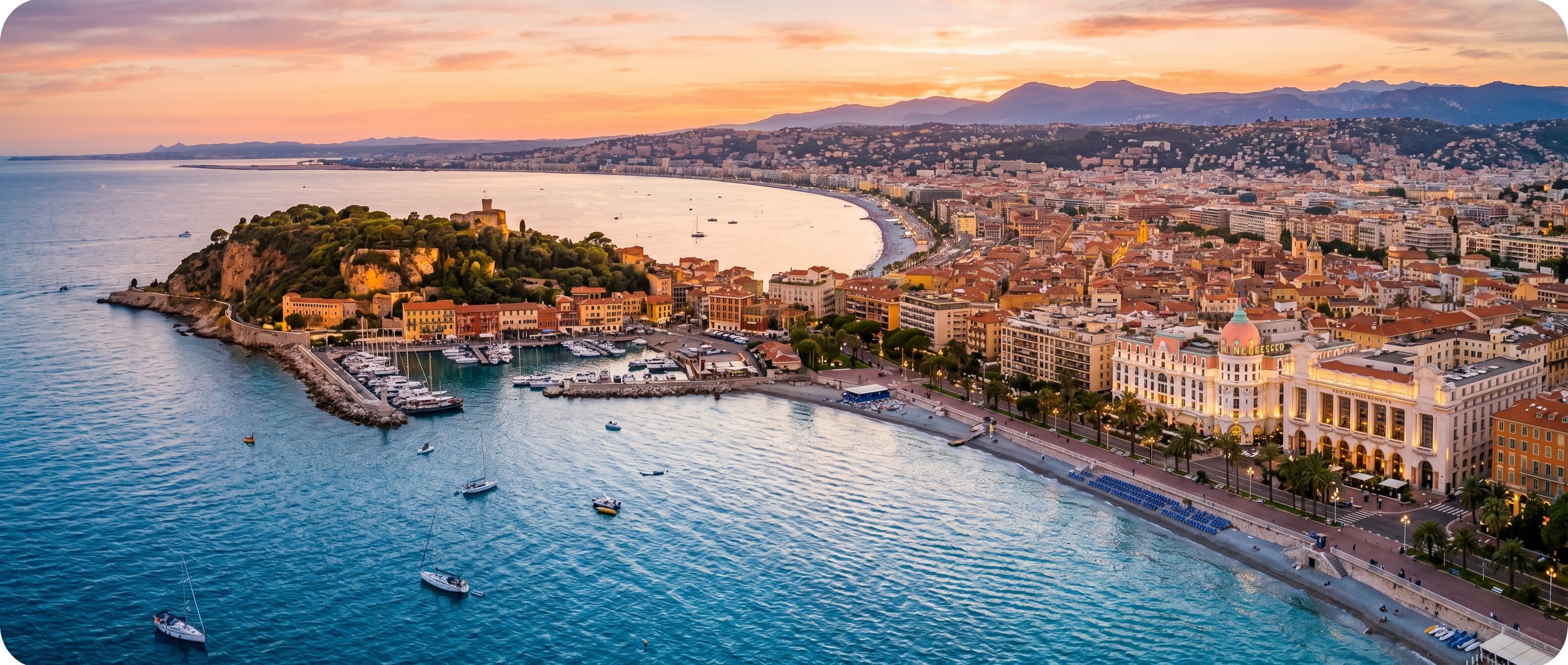
1. Promenade des Anglais (Nice): This iconic 7km walkway curves along the azure Baie des Anges. It is the beating heart of Nice. Entry: Free. Best time: Sunrise or sunset. Insider tip: Rent a blue 'Vélo Bleu' public bike to cycle the entire length efficiently.
2. Colline du Château (Nice): Offering the most famous panoramic views of Nice. Opening hours: 8:30 AM to 6:00 PM (varies by season). Entry: Free. Best time: Late afternoon for photography. Insider tip: Skip the exhausting stairs and take the free Art Deco elevator hidden in the rock face near the end of the Quai des États-Unis.
3. Eze Village & Exotic Garden: A stunning medieval village perched 427 metres above the sea. The Jardin Exotique at the very top offers mind-bending views. Hours: 9:00 AM - 4:30 PM (Winter) to 7:30 PM (Summer). Cost: €8. Insider tip: Take the bus (Line 82) from Nice instead of the train, as the train station is at sea level, requiring a brutal one-hour uphill hike to the village.
4. Villa Ephrussi de Rothschild (Saint-Jean-Cap-Ferrat): A magnificent pink palazzo surrounded by nine themed gardens. Hours: 10:00 AM - 6:00 PM. Cost: €17. Insider tip: The tea room has a terrace with sweeping views of the bay—perfect for an affordable slice of luxury.
5. Prince's Palace and Monaco-Ville (Monaco): See the changing of the guard at 11:55 AM daily in the pristine micro-state. Cost: €10 to tour the State Apartments. Best time: Before 11:00 AM to secure a viewing spot. Insider tip: Don't miss the nearby Oceanographic Museum built spectacularly into the cliff face.
6. Palais des Festivals et des Congrès (Cannes): Home to the Cannes Film Festival. Snap a photo on the red carpet steps. Entry: Varies based on exhibitions, but walking the steps is free. Insider tip: The real charm of Cannes is exploring the older Le Suquet neighbourhood just behind it.
Local Food & Dining
Niçoise cuisine is a vibrant, healthy blend of Mediterranean flavours, distinct from classic heavy French gastronomy. You must try Socca, a naturally gluten-free chickpea pancake baked in a wood-fired oven; it is the ultimate Riviera street food. Pan Bagnat is essentially a Salade Niçoise stuffed into a crusty, olive-oil-soaked bun—perfect for a beach picnic. Pissaladière is an onion tart topped with anchovies and olives.
For fine dining, Le Chantecler (inside Le Negresco) holds two Michelin stars and offers breathtaking gastronomy. For mid-range, authentic local dining, La Merenda in Vieux Nice (which famously has no telephone; you must walk by to book) serves incredible regional dishes. For street food, join the queue at Chez René Socca; order your food at the counter, grab a cheap glass of rosé, and sit at the communal tables. Dietary note: While traditional French cuisine is tough for vegans, Niçoise food relies heavily on naturally vegan ingredients like chickpeas, tomatoes, olives, and courgettes.
Safety & Emergency Contacts
The French Riviera is generally very safe for tourists, but pickpocketing is prevalent on crowded trains (especially the Nice-Monaco route) and at the Nice tram stops near the airport. Keep your valuables zipped and secure. Female travellers should feel comfortable walking in central Nice or Cannes at night, but caution is advised in the quieter residential areas past midnight.
Emergency Numbers (Dial from any phone):
- General EU Emergency: 112
- Medical / SAMU: 15
- Police (Police Secours): 17
- Fire (Sapeurs-Pompiers): 18
Useful Apps & Resources
Your smartphone is your best travel tool on the Riviera. Download SNCF Connect for all regional train tickets. Lignes d'Azur is essential for Nice's local buses and trams. TheFork (LaFourchette) is brilliant for booking restaurants and often offers 20-50% off food bills at participating venues. Google Maps works flawlessly here, including transit times. Finally, the official Nice Tourisme website (explorenicecotedazur.com) is constantly updated with current festival dates and temporary museum exhibits.
Closing
The French Riviera is far more than an exclusive enclave for the rich and famous. With its efficient public transport, brilliant street food, and free coastal hiking trails, it is entirely possible to experience the Mediterranean glamour on a backpacker's budget. Embrace the slow pace, savour a cheap glass of local rosé at sunset, and let the Côte d'Azur work its magic on you. For more detailed itineraries, hidden gem maps, and up-to-date travel hacks, keep exploring www.ainexusworld.com.
FAQ
Is the French Riviera safe for tourists?
Yes, the region is extremely safe. The primary risk is petty theft, such as pickpocketing on crowded trains or beach theft if you leave bags unattended while swimming.
Can I visit the Riviera on a tight budget?
Absolutely. By staying in Nice hostels, eating local street food like socca, and using the €1.70 tram and regional TER trains, you can keep costs remarkably low.
Do I need to speak French?
While English is widely spoken in hotels, major restaurants, and transit hubs, learning basic French greetings (Bonjour, Merci) is considered essential cultural etiquette.
Are the beaches sandy or pebbly?
It depends on the town. Nice has famous pebble beaches (galets), while Cannes and Antibes have soft sandy beaches. Always bring water shoes just in case.
Can I drink the tap water?
Yes, the tap water across the French Riviera is perfectly safe to drink and of high quality. Bring a refillable bottle to save money.