
Introduction
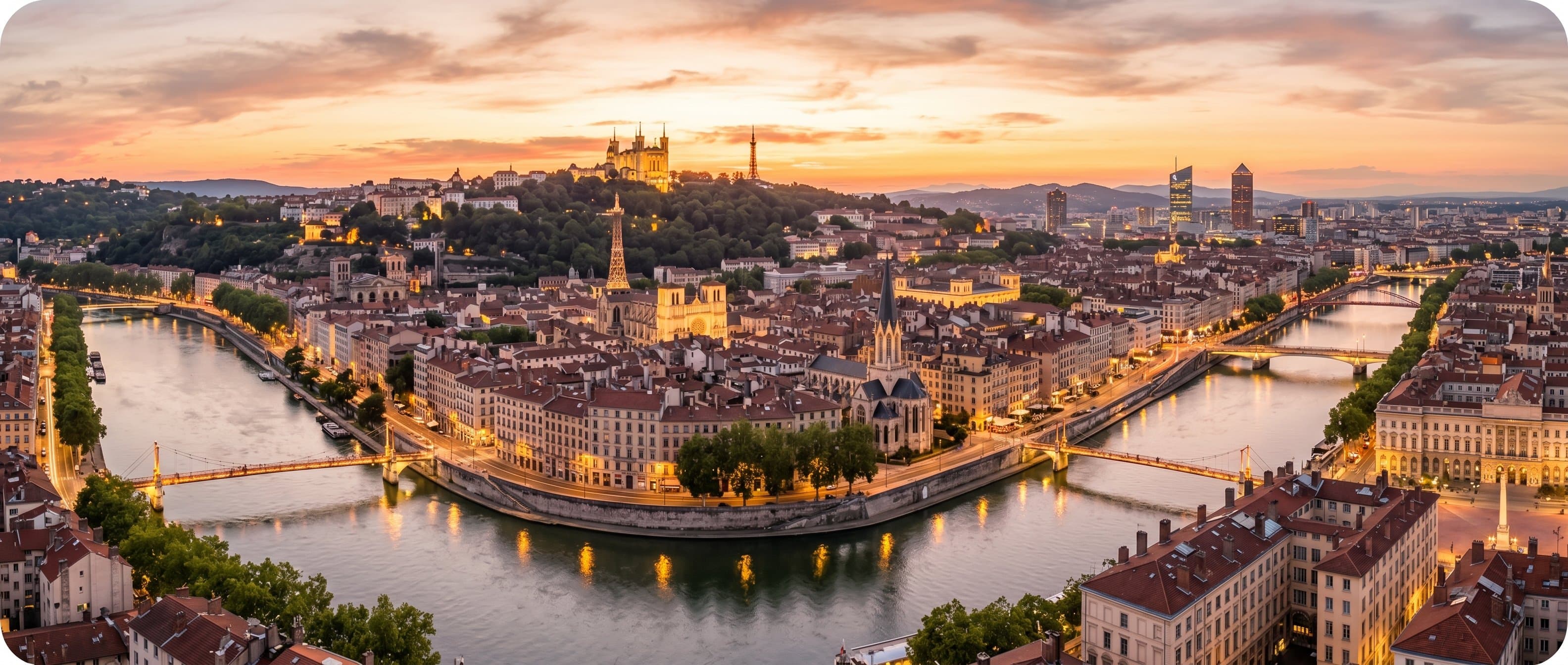
While Paris commands the global spotlight, those in the know quietly board a two-hour high-speed train south to France's true gastronomic capital: Lyon. Nestled at the confluence of the Rhône and Saône rivers, Lyon is a city where two millennia of history are woven into a vibrant, modern metropolis. Why does Lyon deserve a place on your 2026 travel itinerary right now? Because it offers an unparalleled balance of world-class culture and backpacker-friendly affordability. Unlike the saturated streets of the French capital post-Olympics, Lyon breathes. It boasts a UNESCO-listed Renaissance old town, Roman amphitheatres, and a culinary scene pioneered by the legendary Mères Lyonnaises. But the single most compelling reason to visit is its traboules—a secret network of covered passageways dating back to the silk weavers of the 4th century, allowing you to literally walk through the hidden heart of the city's history.
Best Time to Visit
Lyon is a city of distinct seasons, each offering a unique flavour for the international traveller. However, timing your visit carefully is crucial for balancing budget and experience.
- January to February: The deep winter brings chilly temperatures (averaging 5°C) and occasional frost. This is the lowest season for tourism, making it ideal for extreme budget backpackers seeking slashed hotel rates, though some smaller bouchons take their annual leave.
- March to April: Spring begins to thaw the city. Temperatures rise to a mild 15°C. The blossoming trees in the Parc de la Tête d'Or make this a beautiful, moderately priced time to visit before the summer crowds arrive.
- May to June: The Sweet Spot. The weather is perfectly warm (20-25°C), the café terraces spill out onto the cobblestones, and the Nuits de Fourvière festival begins, bringing music and theatre to the ancient Roman amphitheatres. Book well in advance.
- July to August: High summer. Temperatures frequently spike above 30°C. Many locals abandon the city for the coast, meaning some independent shops close, but the tourist crowds are at their peak. Pricing is high.
- September to October: Another excellent shoulder season. The grape harvest in the nearby Beaujolais and Côtes du Rhône regions brings a festive atmosphere. The weather is crisp and pleasant, and prices return to moderate levels.
- November to December: November is quiet and damp, but December transforms the city. The world-famous Fête des Lumières (Festival of Lights) occurs in early December, drawing millions. It is visually spectacular but requires booking accommodation six months ahead.
Travel Planning & Booking
Getting to Lyon has never been easier for the digitally savvy traveller. Lyon-Saint Exupéry Airport (LYS) is the main international hub, offering direct flights via easyJet and British Airways from London, and Emirates from Dubai. Alternatively, if you are flying into Paris Charles de Gaulle (CDG), a direct TGV train will whisk you directly from the airport terminal to Lyon Part-Dieu station in just two hours.
Booking Lead Times: For a 2026 trip, aim to book flights 3 to 4 months in advance for the best rates. If attending the Fête des Lumières, secure your hostel or hotel at least 6 months prior.
Visa Requirements (2026): The European Travel Information and Authorisation System (ETIAS) is now fully operational. - UK, US, & UAE Nationals: Must apply for an ETIAS waiver online before travelling (costs €7, valid for 3 years) for stays up to 90 days. - EU Nationals: Freedom of movement; a valid ID card or passport is all you need. - Indian Nationals: Require a standard Schengen Visa applied for via VFS Global well in advance. Ensure you have your return flight, travel insurance, and proof of accommodation ready for border control.
Travel Insurance
Travel insurance is not an optional extra for Lyon. First, for non-EU citizens applying for a Schengen visa (like Indian nationals), possessing travel medical insurance with a minimum coverage of €30,000 is a mandatory legal requirement. Second, Lyon is a hilly city—especially in the Croix-Rousse and Fourvière districts—and e-scooter or cycling accidents on the steep, cobbled streets are common among tourists. Look for a policy that covers medical emergencies, trip cancellations (crucial in an era of sudden strikes in France), lost baggage, and cover for standard adventure activities like urban cycling.
Packing Guide
Lyon's climate requires versatile packing. In summer, the heat trapped between the two rivers can be stifling—pack lightweight linens, breathable cottons, and a refillable water bottle. In winter, layers are essential to combat the biting winds off the Rhône. Must-bring items: A sturdy pair of comfortable walking trainers. Vieux Lyon is entirely paved with uneven cobblestones that will destroy fragile footwear and punish your feet. Cultural dress: The French appreciate smart-casual attire. While backpacks and shorts are fine for daytime exploring, switch to long trousers and a collared shirt or a modest dress for evening dining in traditional bouchons. What tourists over-pack: Heavy winter coats in spring/autumn. The hills will make you sweat; opt for a modular layering system instead.
Accommodation
Choosing the right neighbourhood dictates your entire Lyon experience. - Presqu'île: The peninsula between the rivers. It is the buzzing, commercial heart of the city. Perfect for first-timers. - Vieux Lyon: The Renaissance old town. Highly atmospheric and romantic, but can be noisy at night and crowded during the day. - La Guillotière: The diverse, hipster, and budget-friendly district on the left bank of the Rhône. Ideal for backpackers looking for cheap eats and alternative nightlife.
Booking Tip: When booking budget hostels in Lyon, check if the city tax (taxe de séjour) is included in the platform's price, as it is often collected in cash upon arrival.
Getting Around Locally
Lyon boasts one of the most efficient public transport networks in Europe, operated by TCL (Transports en Commun Lyonnais). It integrates four metro lines, seven tram lines, two funiculars, and hundreds of buses. Airport to City Centre: The sleek Rhônexpress tram takes you from LYS to Part-Dieu station in 30 minutes, but at nearly €17, it eats into a backpacker's budget. Insider Tip: Take the local TCL Bus 47 from the airport to Meyzieu Z.I., then switch to Tram T3. It takes 55 minutes but costs under €3. Common Tourist Mistake: Buying single tickets for every journey. If you plan to use transit more than three times a day, buy a 24-hour TCL pass or the Lyon City Card, which includes unlimited transport and museum entries.
Top Tourist Attractions (Must-See)
1. Basilique Notre-Dame de Fourvière Sitting atop the 'Hill of Praying', this stunning late-19th-century basilica dominates the city skyline. Its intricate mosaics are breathtaking. Hours: 7:00 AM - 7:00 PM. Cost: Free. Insider Tip: Take the funicular up, but walk down through the Rosary Gardens for incredible panoramic views.
2. Vieux Lyon & The Traboules The largest Renaissance district in Europe after Venice. The traboules are hidden corridors passing through buildings to connect parallel streets. Hours: 24/7 (residential areas, be quiet). Cost: Free. Insider Tip: Look for the bronze shield markers on the streets to find the entrances; the longest is between 54 Rue Saint-Jean and 27 Rue du Bœuf.
3. Parc de la Tête d'Or One of Europe's largest urban parks, featuring a free zoo, botanical gardens, and a boating lake. Hours: 6:30 AM - 10:30 PM. Cost: Free. Insider Tip: Rent a pedalo on the lake during a hot summer afternoon to escape the city heat.
4. Musée des Confluences A spectacular deconstructivist building at the exact point where the Rhône and Saône meet, exploring the story of humankind. Hours: 10:30 AM - 6:30 PM (Closed Mondays). Cost: €12 (Free with Lyon City Card). Insider Tip: You can access the rooftop gardens for free without buying a museum ticket.
5. Lugdunum - Roman Theatres Lyon was founded as the Roman capital of the Gauls in 43 BC. These remarkably preserved ancient theatres still host concerts today. Hours: 7:00 AM - 7:00 PM. Cost: Ruins are free; Museum is €4-7. Insider Tip: Visit at sunset and bring a picnic—locals love to sit on the ancient steps as the sun goes down.
6. Les Halles de Lyon Paul Bocuse The mythical indoor food market named after Lyon's most famous chef. It is a temple of French gastronomy. Hours: 7:00 AM - 10:30 PM (Closes early Sundays, Closed Mondays). Cost: Free entry. Insider Tip: Head to the Maison Sibilia stall to buy authentic Lyonnaise charcuterie for a riverside picnic.
7. Cathédrale Saint-Jean-Baptiste A majestic cathedral blending Romanesque and Gothic architecture, famous for its 14th-century astronomical clock. Hours: 8:15 AM - 7:45 PM. Cost: Free. Insider Tip: Time your visit for the top of the hour to watch the astronomical clock's mechanical roosters and angels move.
Local Food & Dining
You cannot truly experience Lyon without eating in a Bouchon—a convivial, wood-panelled tavern serving hearty, working-class food. Must-try dishes: Quenelle de Brochet (a delicate pike dumpling in a rich crayfish sauce), Salade Lyonnaise (frisée lettuce, bacon lardons, croutons, topped with a poached egg), and for dessert, the neon-pink Tarte aux Pralines. Dietary Note: Traditional Lyonnaise cuisine is heavily reliant on pork, offal, and butter. Vegans and vegetarians will find traditional bouchons very challenging, but the trendy Croix-Rousse neighbourhood offers excellent modern, plant-based alternatives.
Safety & Emergency Contacts
Lyon is generally a very safe city for international backpackers. Violent crime against tourists is exceptionally rare. However, like any major European hub, petty theft is a risk. Be particularly vigilant against pickpockets around Part-Dieu station and on the crowded Tram T1. Late at night, solo travellers should exercise caution around the Guillotière metro station and Place des Terreaux, where intoxicated crowds can gather.
Useful Apps & Resources
Digitise your trip for maximum efficiency. The TCL app is non-negotiable for navigating buses and metros. Use TheFork to secure discounts and reservations at mid-range restaurants. Velo'v is the official app for the city's excellent bike-sharing scheme. Naturally, Google Translate (with French downloaded offline) and Uber (for late-night returns when the metro stops at midnight) will be your safety nets.
Closing
Lyon rewards the curious. It is a city that doesn't just hand you its secrets on a silver platter; you have to wander through its hidden traboules, hike up its ancient Roman hills, and sit shoulder-to-shoulder with locals in a bustling bouchon to truly feel its pulse. For the budget backpacker, it offers the prestige of French gastronomy and history without the extortionate price tags of the capital. Pack your walking shoes, bring a voracious appetite, and prepare to fall in love with the true heart of France. For more deeply researched, actionable travel insights, continue your journey at travelnexusworld.com/.
FAQ
Is Lyon safe for tourists?
Yes, Lyon is very safe. The main concern is pickpocketing in crowded tourist areas and public transport. Exercise standard urban awareness, particularly at night around Guillotière.
What is the best time to visit Lyon?
May, June, September, and October offer the best balance of pleasant weather, moderate pricing, and vibrant city life. December is magical for the Festival of Lights but requires premium budgeting.
How many days do I need in Lyon?
A minimum of 3 full days is recommended. This allows one day for Vieux Lyon and Fourvière, one day for the Presqu'île and museums, and one day for the Croix-Rousse and Parc de la Tête d'Or.
Do I need a visa to visit Lyon?
For 2026, UK, US, and UAE citizens need an ETIAS waiver. EU citizens do not need a visa. Indian citizens require a pre-approved Schengen Visa.
What is the local currency and can I use credit cards?
The currency is the Euro (€). Credit and debit cards (Visa/Mastercard) are accepted almost everywhere, including bakeries for small purchases. However, keep some small Euro coins for market stalls and hostel city taxes.