
Introduction
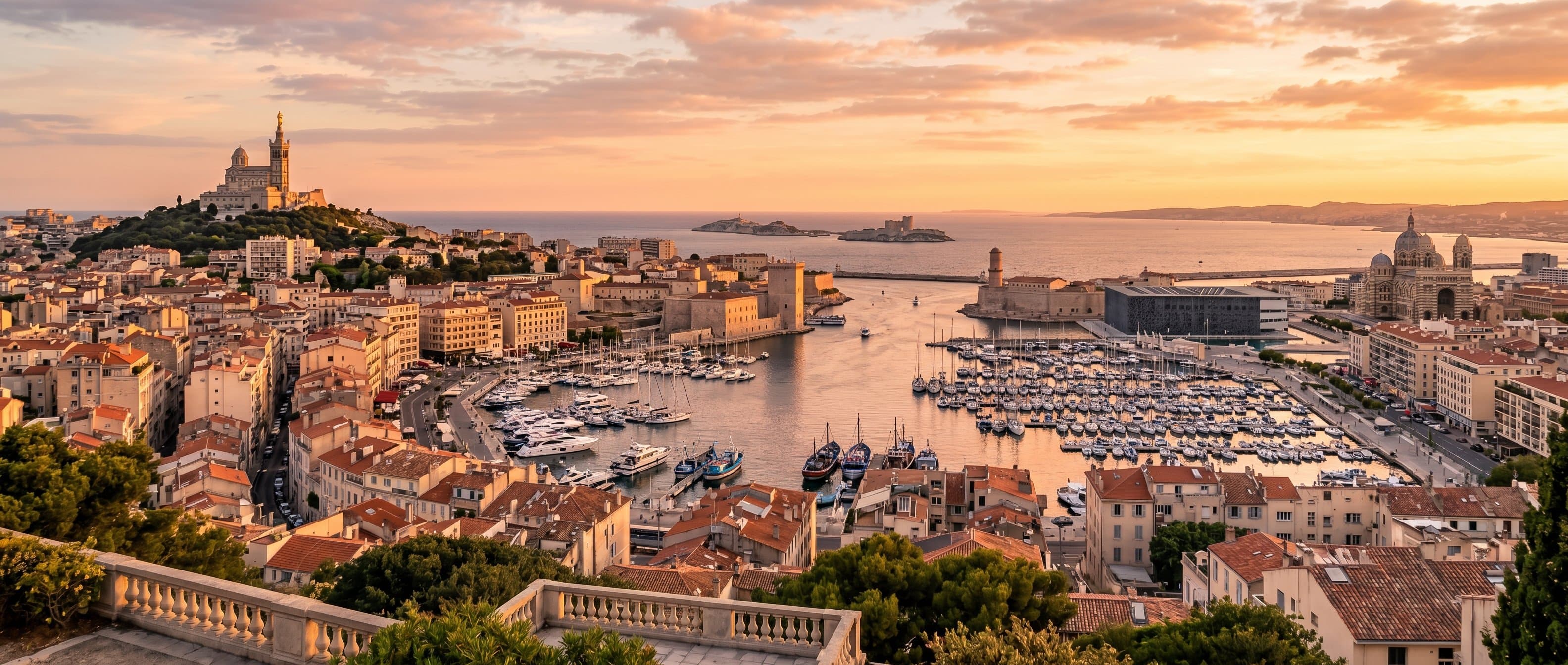
Marseille is the anti-Paris, and that is precisely its superpower. As France's oldest city, dating back 2,600 years, it wears its history not in pristine museums, but etched into the sun-bleached facades of Le Panier and the chaotic, fragrant stalls of the Noailles market. For the digitally savvy backpacker in 2026, Marseille represents the ultimate European sweet spot: a destination that remains unapologetically raw, culturally diverse, and significantly more affordable than the polished enclaves of the nearby French Riviera.
Why does Marseille deserve a place on your itinerary right now? Because it is experiencing a creative renaissance. Abandoned tobacco factories like La Friche la Belle de Mai have transformed into sprawling contemporary art and electronic music hubs. It is a city where you can hike the limestone cliffs of the Calanques in the morning, eat Senegalese street food for lunch, and sip Pastis by the Vieux-Port at sunset. It is gritty, glamorous, and relentlessly authentic.
Best Time to Visit
The golden rule of Marseille is to avoid the peak summer furnace if possible. The undeniable 'sweet spot' for budget backpackers and outdoor enthusiasts is September. The Mediterranean Sea retains its summer warmth, perfect for swimming in the Calanques, while the suffocating heat and crushing crowds of July and August have dissipated.
If you visit in summer, be aware of the Mistral, a fierce, cold north-westerly wind that can whip through the city, abruptly dropping temperatures and occasionally halting ferry services. June to August also brings strict access regulations to the Calanques National Park due to wildfire risks, with mandatory free reservations required for popular coves like Sugiton.
Travel Planning & Booking
Marseille Provence Airport (MRS) is an incredibly well-connected European hub. Budget carriers like Ryanair and easyJet operate daily routes from major hubs including London (Stansted and Gatwick), Berlin, and Rome. If flying from North America, you will typically connect via Paris (CDG) or London (LHR) using Air France or British Airways. To secure the best rates, book flights 2-3 months in advance, and use SNCF Connect to book high-speed TGV trains from Paris, which take just 3 hours.
Visa Requirements (Updated for 2026): The European Travel Information and Authorisation System (ETIAS) is now fully operational. UK, US, and UAE citizens must apply for an ETIAS waiver online (€7) at least 96 hours before departure. EU nationals enjoy freedom of movement with a valid ID card. Indian nationals must apply for a standard Schengen Visa through VFS Global prior to travel, ensuring they have comprehensive travel insurance and proof of funds.
Travel Insurance
Marseille demands robust travel insurance. While it is a European city with excellent healthcare, the primary draw for many backpackers is the Calanques National Park. The rugged limestone trails are notoriously slippery, and ankle sprains or dehydration are common. You must ensure your policy explicitly covers 'adventure activities' and hiking on unpaved terrain. Furthermore, with the occasional transport strikes (a staple of French culture), trip disruption cover is non-negotiable.
Practical Tip: Always carry your European Health Insurance Card (EHIC) or Global Health Insurance Card (GHIC) if you are from the UK or EU, but do not rely on it for repatriation or mountain rescue costs.
Packing Guide
Marseille's climate is classic Mediterranean, but the Mistral wind means evening temperatures can plummet unexpectedly. Your packing list must balance beach-ready gear with urban practicality.
One item tourists consistently over-pack is formal evening wear; Marseille is fiercely casual, and a nice pair of jeans with a smart top is acceptable in all but the most elite Michelin-starred establishments. You must bring durable hiking shoes with serious grip—the limestone rocks in the Calanques act like polished marble underfoot and standard trainers are dangerous.
Accommodation
Marseille is a city of distinct villages. For first-timers, the Vieux-Port (Old Port) is the most convenient, offering immediate access to ferries and the metro. Le Panier, the oldest district, is a labyrinth of pastel-coloured alleys and street art, perfect for romantic and cultural stays. For the backpacker crowd, Cours Julien is the undisputed champion—a gritty, graffiti-draped neighbourhood bursting with vintage shops, indie gig venues, and cheap tapas bars.
Booking Tip: Avoid booking accommodation in the immediate vicinity of Gare Saint-Charles (the main train station) or the northern districts (Quartiers Nord), as these areas can feel intimidating at night and lack the charm of the central districts.
Getting Around Locally
Marseille Provence Airport is situated 27km from the city centre. The most efficient option for budget travellers is the L91 Navette bus, which departs every 15 minutes and drops you directly at Gare Saint-Charles for roughly €10. From there, the RTM public transport network takes over.
Marseille has two metro lines, three tram lines, and an extensive bus network. Do not bother renting a car—traffic is chaotic and parking is expensive. Instead, download the RTM app and buy a 24-hour or 72-hour pass. One common tourist mistake is forgetting to validate paper tickets in the yellow machines before boarding trams or buses; plain-clothes inspectors patrol frequently and hand out instant €50 fines.
Top Tourist Attractions (Must-See)
1. Basilique Notre-Dame de la Garde
Perched 149 metres above the city, 'La Bonne Mère' is the symbol of Marseille.
Entry: Free | Hours: 7:00 AM - 6:00 PM | Tip: Hike up early in the morning to beat the suffocating midday heat and the tour bus crowds.
2. MuCEM (Museum of European and Mediterranean Civilisations)
A stunning cube of modern architectural lacework connected to the 17th-century Fort Saint-Jean.
Entry: €11 | Hours: 10:00 AM - 6:00 PM (Closed Tuesdays) | Tip: You can access the spectacular roof and walkways for free; you only pay to see the interior exhibitions.
3. Calanques National Park
A rugged coastal wonderland of deep, azure inlets carved into limestone cliffs.
Entry: Free | Hours: 24/7 (subject to fire risk closures) | Tip: For Calanque de Sugiton in summer, you must book a free permit online weeks in advance.
4. Château d'If
The 16th-century island fortress made famous by Alexandre Dumas's 'The Count of Monte Cristo'.
Entry: €6 (plus €11 ferry) | Hours: 10:00 AM - 5:00 PM (subject to wind) | Tip: Ferries are instantly cancelled if the Mistral wind blows; check the weather forecast before heading to the port.
5. Le Panier District
The historic heart of Marseille, full of artisan shops, sun-drenched squares, and monumental street art.
Entry: Free | Hours: 24/7 | Tip: Ditch Google Maps and deliberately get lost; look out for La Vieille Charité, a stunning 17th-century almshouse.
6. Palais Longchamp
A jaw-dropping 19th-century water tower and palace that houses the Fine Arts and Natural History museums.
Entry: Free (Park), €6 (Museums) | Hours: 8:00 AM - 8:00 PM | Tip: Bring a picnic from the Noailles market and enjoy the sprawling gardens behind the monument.
Local Food & Dining
Marseille's culinary scene is a mirror of its multicultural population. While Bouillabaisse (a complex fish stew) is the most famous dish, authentic versions cost upwards of €70 per person and must be ordered 24 hours in advance. For the budget backpacker, the city runs on North African influences, pizza (Marseille claims to have invented the wood-fired pizza truck), and Provençal street snacks.
Do not leave without trying Panisses—gloriously salty, deep-fried disks of chickpea flour, best consumed hot from a paper cone at a street market. Wash it down with Pastis, the local anise-flavoured spirit that turns cloudy when mixed with ice-cold water. Dietary Note: Vegetarians will thrive in Marseille compared to the rest of France, thanks to the heavy reliance on Mediterranean vegetables, North African couscous, and chickpea dishes.
Safety & Emergency Contacts
Marseille has a historical reputation for organized crime, but this almost never affects tourists. Your primary concern is petty theft. The Gare Saint-Charles train station and the chaotic streets of Noailles are hotspots for skilled pickpockets. Keep your phone out of your back pocket and use a cross-body bag. Avoid venturing into the Quartiers Nord (Northern Quarters - 13th, 14th, 15th, 16th arrondissements) as they suffer from socio-economic deprivation and drug gang activity, offering nothing of interest to tourists.
Useful Apps & Resources
To navigate Marseille like a local, your smartphone needs the right tools. The RTM app is vital for real-time bus, tram, and metro schedules. Citymapper works flawlessly here and is often better than Google Maps for walking directions through Le Panier. For dining, TheFork (LaFourchette) frequently offers 20-50% off restaurant bills if booked through the app. Always check the official tourism board at marseille-tourisme.com for updated Calanques access information.
Closing
Marseille is a city that requires you to lean in. It won't hand you its charm on a silver platter like Paris or Bordeaux; you have to earn it by wandering its steep alleys, haggling in its vibrant markets, and embracing its unapologetic energy. Whether you are scaling the white cliffs of the Calanques or debating the best pizza slice in Cours Julien, Marseille promises an adventure that is fiercely original. Pack your windbreaker, practice your 'Bonjour', and get ready to fall in love with the Mediterranean's most rebel city. For more expert guides and backpacker hacks, continue exploring ainexusworld.com.
FAQ
Is Marseille safe for tourists?
Yes, Marseille is generally safe for tourists in the central districts (Vieux-Port, Le Panier, Cours Julien). Standard urban caution is required regarding pickpockets, particularly around Gare Saint-Charles.
What is the best time to visit Marseille?
May, June, and September offer the best balance of warm beach weather, accessible hiking trails, and manageable crowds. August should be avoided due to intense heat and trail closures.
How many days do I need in Marseille?
A minimum of 3 full days is recommended. Dedicate one day to the historic centre and museums, one day to hiking or boating in the Calanques, and one day exploring local markets and street art.
Do I need a visa to visit Marseille?
For 2026, UK, US, and UAE citizens require an ETIAS waiver (€7). Indian citizens require a Schengen Visa. EU citizens have freedom of movement.
What is the local currency and can I use credit cards?
The currency is the Euro (€). Credit cards and contactless mobile payments are accepted almost everywhere, though you should carry €20-30 in cash for small market purchases and bakeries.