
Introduction
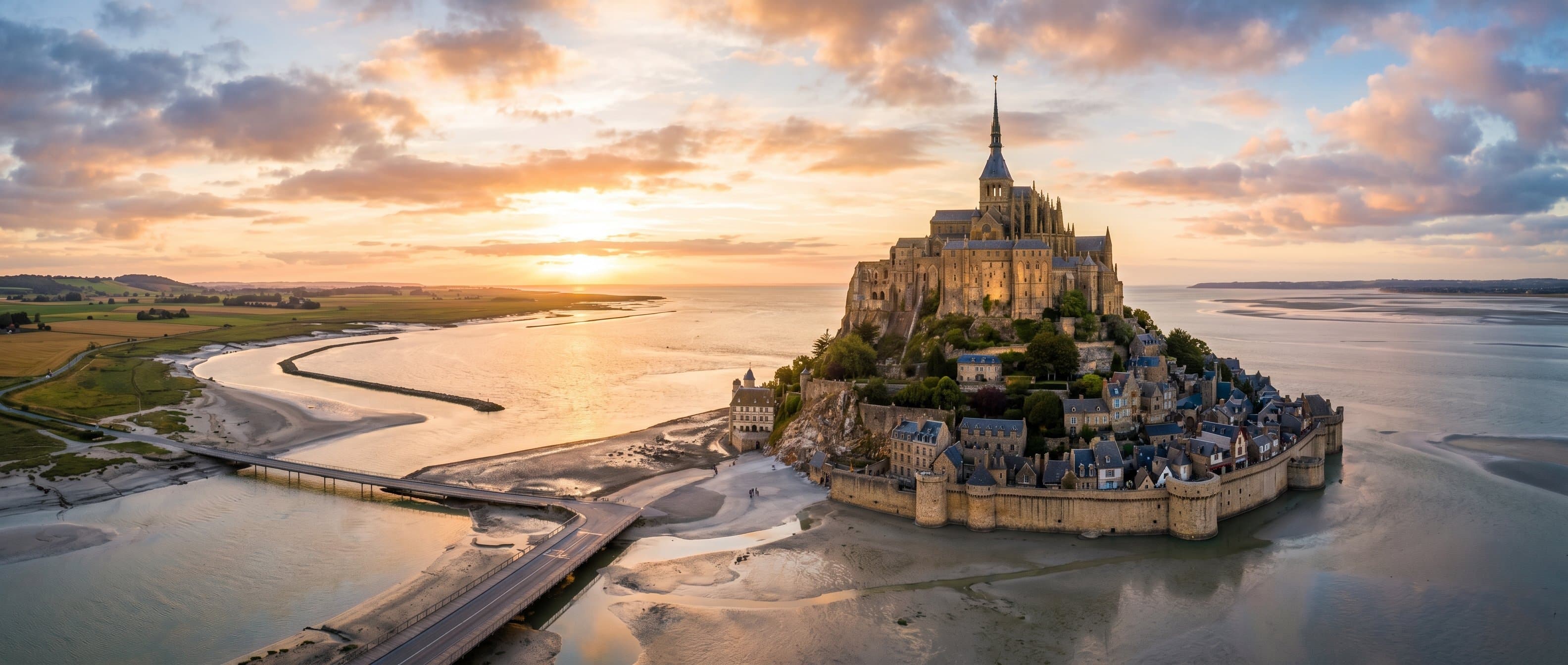
Rising from the mist where Normandy and Brittany merge, Mont Saint-Michel is a sight that defies logic and gravity. Crowned by a staggering Gothic abbey that seems to pierce the heavens, this UNESCO World Heritage site has drawn pilgrims for over a millennium. But why does it deserve a place on the modern backpacker's itinerary for 2026? Beyond the postcard-perfect facade lies a complex, living village governed by some of Europe's highest tides. The compelling reason to visit now is the recent ecological restoration of the bay, which has returned the Mont to a true island during spring tides—a spectacular phenomenon you can witness from the newly built pedestrian bridge. For the digitally savvy, internationally minded traveller, Mont Saint-Michel offers a chance to disconnect from urban chaos and step into a tangible piece of European history, provided you know how to navigate the crowds, the costs, and the treacherous quicksand.
Best Time to Visit
Timing is absolutely everything when visiting Mont Saint-Michel. The island is notorious for suffocating summer crowds, making shoulder seasons the undisputed sweet spot. Late September to October, or April to May, provides the perfect confluence of crisp weather, manageable foot traffic, and reasonable accommodation rates in nearby Pontorson. Crucially, you must align your visit with the lunar calendar. The "spring tides" (grandes marées), which occur 36 to 48 hours after a full or new moon, transform the bay dramatically. The water rushes in at what Victor Hugo described as "the speed of a galloping horse." If you visit during the winter months, you will share the medieval cobblestones with only a handful of hardy locals, though bracing sea winds require serious thermal layers. Avoid August entirely unless you enjoy shuffling shoulder-to-shoulder up steep stairs in stifling heat.
Travel Planning & Booking
Mont Saint-Michel is wonderfully isolated, meaning there is no direct airport or high-speed train station at its gates. The most efficient route for international travellers is flying into Paris Charles de Gaulle (CDG) or Orly (ORY), and catching the TGV (high-speed train) from Paris Gare Montparnasse to Rennes. From Rennes, a dedicated Keolis coach seamlessly transfers you directly to the Mont Saint-Michel visitor centre. Alternatively, you can fly into Rennes Bretagne Airport (RNS) via budget carriers like EasyJet from London. Booking your TGV tickets via SNCF Connect should be done exactly 90 days in advance to secure budget fares (as low as €15, compared to €80+ on the day). 2026 marks the enforcement of the ETIAS (European Travel Information and Authorisation System). UK, US, and UAE nationals must apply for this €7 digital waiver at least 72 hours before departure. Indian citizens must secure a standard Schengen Visa well in advance.
Travel Insurance
Never underestimate the Normandy coast. Travel insurance is critical for Mont Saint-Michel specifically because of the bay's unique hazards. The mudflats surrounding the island are notorious for hidden quicksand and rapidly rising tides. Every year, tourists who attempt to cross without a certified guide require helicopter rescue—a bill that will financially ruin an uninsured backpacker. When selecting cover, ensure it includes comprehensive emergency medical evacuation, trip cancellation (French transport strikes are not uncommon), and baggage cover. World Nomads is excellent for its robust adventure coverage, SafetyWing is ideal for digital nomads needing rolling monthly subscriptions, and Heymondo offers a brilliant 24/7 medical chat app. One practical tip: Always read the PDS (Product Disclosure Statement) to ensure "guided mudflat walking" is not excluded under extreme sports clauses.
Packing Guide
The microclimate of the bay is notoriously fickle. You can experience driving rain, brilliant sunshine, and biting winds all within a three-hour window. A high-quality, breathable windbreaker is non-negotiable, alongside layers of merino wool. Culturally, while France is highly secular, the Abbaye du Mont Saint-Michel remains a place of pilgrimage and active worship; bare shoulders and ultra-short shorts are frowned upon inside the sanctuary. The most crucial item specific to this destination is footwear with exceptional grip. The ancient cobblestones of La Grande Rue become incredibly slick when wet, and if you plan a bay walk, you'll need neoprene booties or be prepared to go barefoot. The number one item tourists mistakenly over-pack is the heavy wheeled suitcase. Dragging a 20kg spinner case up a 45-degree cobbled incline while dodging thousands of tourists is a nightmare—bring a rugged travel backpack instead.
Accommodation
Where you stay dictates your entire Mont Saint-Michel experience. The island itself (Intra-muros) is historic but prohibitively expensive and logistically challenging with luggage. La Caserne is the mainland strip just before the bridge—convenient, with decent mid-range hotels, but somewhat lacking in soul. Pontorson, located 9km away and connected by a direct shuttle bus or flat cycling path, is the budget backpacker's paradise. For luxury, Auberge Saint-Pierre (Intra-muros) offers 15th-century timber-framed rooms with bay views. For a solid mid-range option, Mercure Mont Saint Michel in La Caserne provides spacious, modern rooms and easy access to the night shuttles. Budget travellers should book the Auberge de Jeunesse HI Pontorson, a fantastic, clean hostel in the nearby town. Booking tip: Secure your room at least four months in advance for September, as the highest tides draw massive domestic crowds.
Getting Around Locally
Cars are strictly banned near the island. All visitors arriving by public transport or car drop-offs end up at the Tourist Information Centre on the mainland. From here, you have three choices to cross the 2.5km bridge to the island. The best option is "Le Passeur", a free, continuous shuttle bus that runs from 7:30 AM to midnight. Alternatively, you can walk the bridge (about 35 minutes), which offers the most spectacular, slow-reveal photography opportunities. You can also take a horse-drawn carriage (La Maringote) for a fee, though backpackers usually skip this. The most common tourist mistake is ignoring the shuttle schedule and getting stranded on the island after midnight, resulting in a freezing, pitch-black 45-minute walk back to the mainland hotels in La Caserne.
Top Tourist Attractions (Must-See)
1. Abbaye du Mont Saint-Michel: The crown jewel. This marvel of Gothic architecture defies gravity. It matters because it has served as a monastery, a formidable fortress during the Hundred Years' War, and a feared prison. Open 9:30 AM - 6:00 PM. Entry is €13. Best visited right at opening time to beat the bus tours. Insider tip: Book your time-slot ticket online weeks in advance; the queue for walk-ins can take hours.
2. La Grande Rue: The main medieval artery winding up the rock. It's a steep, narrow street lined with 15th and 16th-century houses. Free to wander, 24/7. Best seen at 7:00 AM or after 8:00 PM when the day-trippers vanish. Tip: Look above the souvenir shops to appreciate the original timber facades.
3. The Ramparts (Les Remparts): The defensive walls that kept the English at bay in 1434. They offer the best panoramic views of the bay. Free, open 24/7. Best at sunset. Tip: Use the ramparts to bypass the suffocating crowds on La Grande Rue when ascending.
4. Guided Bay Walk (Traversée de la Baie): Walking the mudflats barefoot. It's a visceral connection to the island's geography. Costs around €15-€20 for a 3-hour guided tour. Timing depends strictly on low tide. Tip: Never attempt this without a guide due to quicksand.
5. Eglise Paroissiale Saint-Pierre: The small parish church halfway up the mount. It matters because it houses a silver statue of Saint Michael. Free entry, open during daylight hours. Best for a quiet moment away from the chaos. Tip: Check out the tiny cemetery outside.
6. Barrage sur le Couesnon: The modern dam on the mainland. It flushes silt from the bay to keep the Mont an island. Free. Best visited during the tidal bore (mascaret) when the tide rushes in. Tip: The wooden deck here is the best place for a perfectly symmetrical photograph of the island.
Local Food & Dining
Normandy's culinary scene is rich, buttery, and deeply tied to the land and sea. You must try the Agneau de pré-salé (salt meadow lamb). These sheep graze on the bay's salt marshes, giving their meat a naturally seasoned, unique flavour. Cidre bouché (traditional cloudy cider) is the regional drink of choice, served in ceramic bowls. Galettes de sarrasin (savoury buckwheat crêpes) are the staple budget meal, traditionally filled with ham, cheese, and egg. For high-end dining, La Mère Poulard is world-famous for its wood-fire cooked, fluffy omelettes, though at €40+ it's an investment. For mid-range, La Sirène Lochet (Intra-muros) serves phenomenal galettes in an authentic, cramped upper room. For street food, grab a crêpe to go from La Mie Câline in Pontorson. Dietary note: Vegans will struggle in traditional Norman restaurants; a galette without butter or cheese must be explicitly requested (sans beurre, sans fromage).
Safety & Emergency Contacts
Mont Saint-Michel is incredibly safe regarding violent crime; the primary risks are environmental and pickpockets in crowded bottlenecks. The bay is genuinely dangerous. The tide comes in at roughly 60 metres per minute during spring tides. Do not walk into the bay alone, ever. Quicksand (sables mouvants) is scattered invisibly across the mudflats. If you find yourself sinking, do not panic and thrash; distribute your weight by falling backward and slowly pulling your legs free.
LOCAL EMERGENCY NUMBERS:
Police: 17
Ambulance (SAMU): 15
Fire (Sapeurs-Pompiers): 18
National/European emergency: 112
Nearest international hospital: Centre Hospitalier d'Avranches-Granville (59 Rue de la Liberté, 50300 Avranches).
Embassies are located in Paris: UK (+33 1 44 51 31 00, 35 Rue du Faubourg Saint-Honoré), US (+33 1 43 12 22 22, 2 Avenue Gabriel), India (+33 1 40 50 70 70, 15 Rue Alfred Dehodencq).
Useful Apps & Resources
To navigate Mont Saint-Michel like a pro, download SNCF Connect for all train and Keolis bus bookings. Meteo France is vital for accurate weather warnings and, crucially, daily tide tables. Uber is useful if you are stuck in Pontorson or Avranches and miss the last public bus. Google Translate is essential (download the offline French dictionary), as English proficiency drops significantly outside the main tourist shops. TheFork (LaFourchette) is great for securing dining reservations in nearby towns. Always check the official tourism board website at www.ot-montsaintmichel.com for real-time updates on bridge closures during exceptional tides.
Closing
Mont Saint-Michel is not just a destination; it is a profound atmospheric experience. By staying in nearby Pontorson, arriving at dawn, and understanding the rhythm of the tides, you can bypass the tourist traps and connect with the raw, medieval power of this tidal wonder. Ready to plan the rest of your European adventure? Explore more expertly crafted, budget-savvy guides at www.ainexusworld.com and travel smarter.