
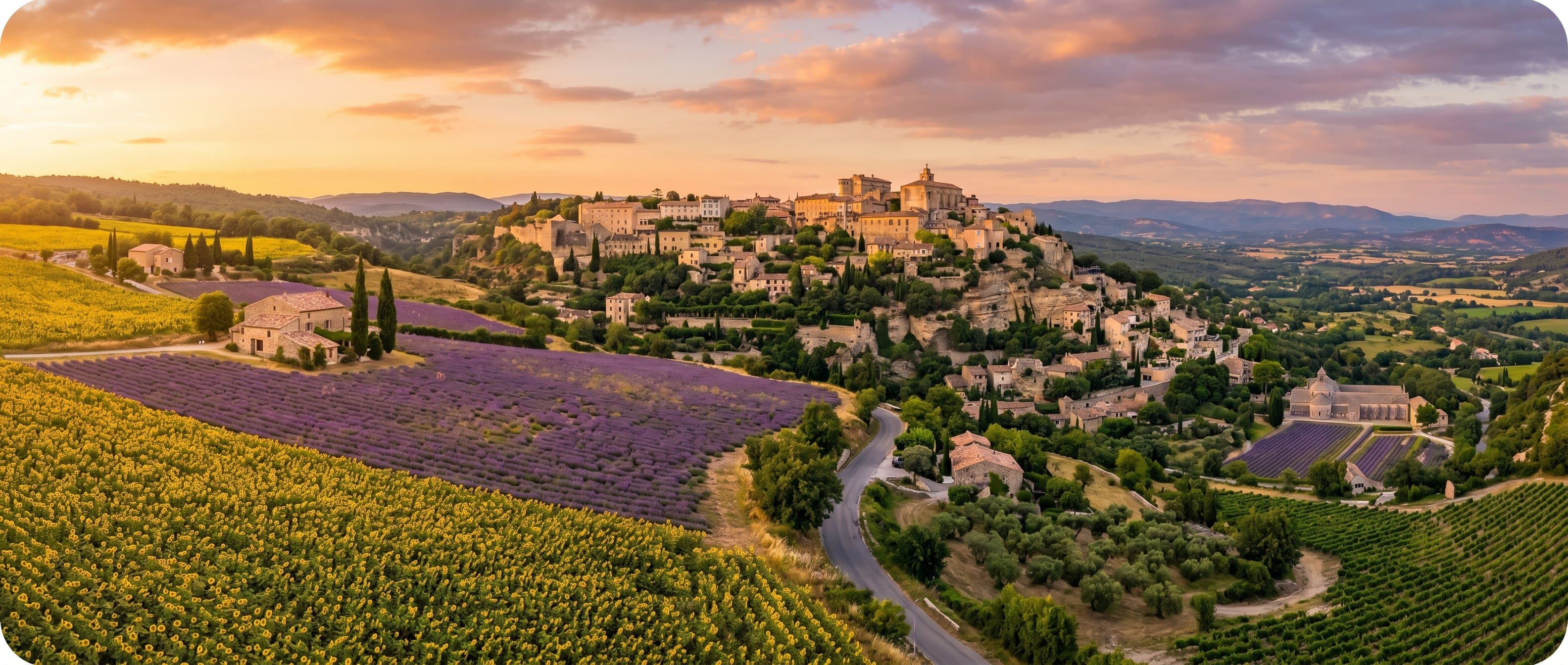
Introduction
For decades, Provence has been painted as the exclusive playground of billionaires and luxury retreat seekers. But as we step into 2026, this sun-drenched region of southern France has reclaimed its status as a must-visit for the savvy, internationally minded backpacker. Why does Provence deserve a top spot on your travel list right now? Because beyond the super-yachts of the Côte d'Azur lies a heartland of affordable slow travel. With the recent expansion of the Zou! regional bus and train network, the hidden hilltop villages of the Luberon and the dramatic limestone cliffs of the Calanques are more accessible to budget travellers than ever before. You can hike ancient Roman aqueducts at dawn, swim in azure Mediterranean coves by noon, and savour a bowl of authentic ratatouille in a medieval square by dusk—all without breaking the bank.
Best Time to Visit
Timing is everything in Provence. While the region boasts 300 days of sunshine a year, the experience shifts dramatically with the seasons.
January to March (Low Season): Expect crisp, cool weather (5-15°C) and the occasional fierce Mistral wind. Crowds are virtually non-existent, making it perfect for budget travellers. Accommodation prices drop by up to 40%. The highlight is the Truffle Market in Richerenches (January to March).
April to May (Shoulder Season): Spring brings warmth (15-25°C) and blooming wildflowers. This is ideal for hiking the Gorges du Verdon before the summer heat arrives. Prices begin to rise, but remain reasonable.
June to August (Peak Season): The lavender fields of Valensole burst into vibrant purple (late June to mid-July). However, this is when Provence is hottest (25-35°C), most crowded, and most expensive. The Festival d'Avignon in July transforms the city into an open-air theatre, but requires booking months in advance.
September to December: September is the absolute 'sweet spot' for Provence. The Mediterranean is still warm enough for swimming, the summer hordes have dispersed, the grape harvest (vendange) is in full swing, and prices drop back to mid-range. By November and December, Christmas markets pop up in Aix-en-Provence, though rural transport schedules thin out.
Travel Planning & Booking
Marseille Provence Airport (MRS) serves as the primary gateway, handling low-cost carriers like EasyJet and Ryanair from across Europe, alongside legacy carriers like British Airways and Air France. For those arriving from Paris, the TGV (high-speed train) to Avignon or Marseille takes just three hours.
Booking lead times in 2026 are critical: aim to book summer accommodation 4–5 months in advance, while shoulder-season trips need only 1–2 months. We recommend using SNCF Connect for booking all domestic trains, Hostelworld for scoping out budget stays in Marseille and Avignon, and TheFork to find dining discounts (up to 50% off) at local bistros.
Visa Requirements (2026 Update): The European Travel Information and Authorisation System (ETIAS) is fully operational. UK, US, and UAE nationals must apply for this €7 electronic waiver online at least 72 hours before departure (valid for 90 days of visa-free travel). Indian nationals still require a pre-approved Schengen Visa obtained through VFS Global. Ensure your passport has at least 6 months validity from your date of entry.
Travel Insurance
Provence is generally safe, but comprehensive travel insurance is non-negotiable. Firstly, the region is prone to summer wildfires, which can lead to abrupt transport cancellations and accommodation evacuations. Secondly, if you plan to kayak the Verdon Gorge or rock climb in the Calanques, you need coverage that includes adventure sports. Look for policies covering minimum €250,000 medical, €2,000 baggage, and full trip cancellation.
Top Providers:
1. World Nomads: Exceptional for active backpackers, covering over 200 adventure activities including climbing and kayaking.
2. SafetyWing: The most budget-friendly choice for digital nomads, offering a rolling monthly subscription.
3. Allianz Travel: Best for comprehensive trip cancellation, particularly useful if rail strikes disrupt your itinerary.
Practical Tip: Always save your policy number and the 24/7 emergency medical assistance number offline on your phone.
Packing Guide
The Provençal climate requires strategic packing. The Mistral—a cold, dry wind from the north—can make a sunny 20°C day feel like 10°C, even in spring. Layers are essential. Bring a lightweight, windproof jacket alongside your sunglasses and SPF50.
Cultural dress in France leans towards 'smart-casual'. Avoid activewear or beachwear unless you are actively hiking or on the sand. A light linen shirt and tailored trousers or a sundress will help you blend in perfectly. A must-bring item is a pair of sturdy, broken-in walking shoes with good grip; the cobblestones of Les Baux-de-Provence are notoriously slippery. One item tourists over-pack? Heavy jeans. Opt for breathable fabrics instead.
Accommodation
Provence offers brilliant bases depending on your travel style.
Marseille (Le Panier): Best for budget travellers and urban culture.
Avignon (Intra-Muros): Best for history lovers and rail connectivity.
Aix-en-Provence (Quartier Mazarin): Best for art, café culture, and boutique stays.
Luxury Pick: La Mirande (Avignon) - Set right next to the Palais des Papes, this offers ultimate historic opulence.
Mid-Range Pick: Hôtel de l'Horloge (Avignon) - A fantastic, centrally located 4-star hotel that often runs shoulder-season deals.
Budget Pick: Vertigo Vieux-Port (Marseille) - A highly-rated, vibrant hostel offering cheap dorms, communal dinners, and insider tips.
Booking tip: In rural Provence, look for 'Gîtes' (holiday cottages) or 'Chambres d'hôtes' (B&Bs) directly on local tourism websites to avoid massive platform commission fees.
Getting Around Locally
From Marseille Provence Airport, the cheapest route to the city centre is the Lebus+L13 to Vitrolles train station, followed by a TER train to Marseille St Charles (total cost around €6, 35 mins). A direct navette (shuttle bus) costs €10 and takes 30 mins.
Locally, the Zou! network integrates trains and buses across the region. Regional TER trains are brilliant for connecting major hubs (Avignon, Arles, Aix). For hilltop villages, local buses are required, though schedules can be sparse. Download the SNCF Connect and Zou! apps for live timetables.
Common tourist mistake: Forgetting to validate (composter) paper train tickets at the yellow machines before boarding, which results in hefty fines.
Top Tourist Attractions (Must-See)
1. Palais des Papes (Avignon): The largest Gothic palace in the world, serving as the papal residence in the 14th century. Hours: 9:00 AM - 6:00 PM. Entry: €12. Best time: 9:00 AM. Insider tip: Buy the combined ticket with the Pont d'Avignon to save money.
2. Gorges du Verdon: Europe's deepest canyon, offering breathtaking turquoise waters. Hours: 24/7. Entry: Free (kayak rentals €20/hour). Best time: Early morning. Insider tip: Rent an electric boat from Lac de Sainte-Croix if you don't want to paddle.
3. Calanques National Park (Marseille/Cassis): Dramatic limestone cliffs diving into the Mediterranean. Hours: Variable (often closed in summer due to fire risk). Entry: Free. Best time: May or September. Insider tip: Download the official 'Mes Calanques' app to check daily access restrictions.
4. Pont du Gard: An immaculate Roman aqueduct bridge. Hours: 9:00 AM - 8:00 PM. Entry: €9.50. Best time: Late afternoon for photography. Insider tip: Bring a swimsuit to swim in the Gardon river right beneath the arches.
5. Abbaye Notre-Dame de Sénanque: A 12th-century Cistercian abbey famous for its foreground of lavender. Hours: 9:45 AM - 11:00 AM & 2:00 PM - 5:00 PM. Entry: €8.50. Best time: Early July. Insider tip: Silence is strictly enforced inside; dress modestly.
6. Les Baux-de-Provence & Carrières de Lumières: A ruined fortress town and an immersive art exhibition in an old limestone quarry. Hours: 9:30 AM - 7:00 PM. Entry: €14.50. Best time: Weekday mornings. Insider tip: The quarry is quite cold inside (14°C), even in summer—bring a jumper.
7. MUCEM (Marseille): The Museum of European and Mediterranean Civilisations. Hours: 10:00 AM - 7:00 PM. Entry: €11. Best time: Afternoon. Insider tip: The rooftop and connecting bridge to Fort Saint-Jean are completely free to access.
Local Food & Dining
Provençal food relies heavily on olive oil, garlic, and fresh vegetables rather than heavy butter. Must-try dishes include Bouillabaisse (a complex Marseillaise fish stew), Ratatouille (stewed summer vegetables), Socca (chickpea flour pancake), and Calissons (almond and melon candies from Aix).
Dietary note: Vegans will fare much better here than in northern France, as many traditional dishes naturally omit meat and dairy.
High-End: Le Petit Nice Passedat (Marseille) - A 3-Michelin-star temple to Mediterranean seafood.
Mid-Range: Le Bouchon Provençal (Aix-en-Provence) - Perfect for a hearty, authentic €25 plat du jour.
Street Food/Market: Les Halles d'Avignon - A vibrant indoor market. Grab fresh tapenade, baguette, and local goat cheese for a budget-friendly €8 picnic.
Safety & Emergency Contacts
Provence is broadly very safe, but the moderate risk comes from opportunistic petty crime. Marseille, particularly around the St Charles station and the Vieux-Port late at night, requires caution regarding pickpockets. Never leave valuables visible in rental cars, as smash-and-grabs at tourist trailheads (like the Calanques) are common.
LOCAL EMERGENCY NUMBERS:
- Police: 17
- Ambulance (SAMU): 15
- Fire (Sapeurs-Pompiers): 18
- National/EU emergency: 112
- Nearest international hospital: Hôpital de la Timone (264 Rue Saint-Pierre, Marseille. +33 4 91 38 00 00).
Embassies (Marseille Consulates):
- UK Consulate: 24 Avenue du Prado, 13006 Marseille (+33 4 91 15 72 10)
- US Consulate: Place Varian Fry, 13286 Marseille (+33 1 43 12 48 85)
- Indian Embassy (handles south): 15 Rue Alfred Dehodencq, 75016 Paris (+33 1 40 50 70 70)
Useful Apps & Resources
1. SNCF Connect: Essential for booking all trains.
2. Zou!: For regional bus timetables.
3. TheFork (LaFourchette): For restaurant reservations and massive discounts.
4. Google Translate: Download the French language pack offline.
5. Uber: Reliable in Marseille and Aix (but rarely in rural villages).
Official Board: provence-alpes-cotedazur.com
Closing
Provence is not just a destination; it is an atmosphere. By embracing public transport, timing your visit for the shoulder seasons, and diving into the incredible local markets, you can experience the absolute best of southern France on a backpacker's budget. Let the scent of wild thyme and the warmth of the Mediterranean sun be your guide. Ready to craft your perfect itinerary? Continue exploring with us at travelnexusworld.com.
FAQ
Is Provence safe for tourists?
Yes, Provence is generally safe. The primary risk is petty theft and pickpocketing in busy tourist areas and major transit hubs like Marseille St Charles. Always lock rental cars and hide valuables.
What is the best time to visit Provence?
September is the optimal time. The intense summer heat and crowds have subsided, but the Mediterranean remains warm enough for swimming, and the grape harvest season begins.
How many days do I need in Provence?
A minimum of 7 days is recommended to see the highlights: 2 days in Marseille, 1 day in Aix-en-Provence, 2 days in Avignon, and 2 days exploring the Luberon villages or Verdon Gorge.
Do I need a visa to visit Provence?
In 2026, UK, US, and UAE citizens require an ETIAS electronic waiver for short stays. Indian nationals must apply for a standard Schengen Visa.
What is the local currency and can I use credit cards?
The currency is the Euro (€). Credit cards (Visa and Mastercard) are widely accepted, even in small bakeries, thanks to contactless payment, though carrying a small amount of cash is advised for rural markets.