
Introduction
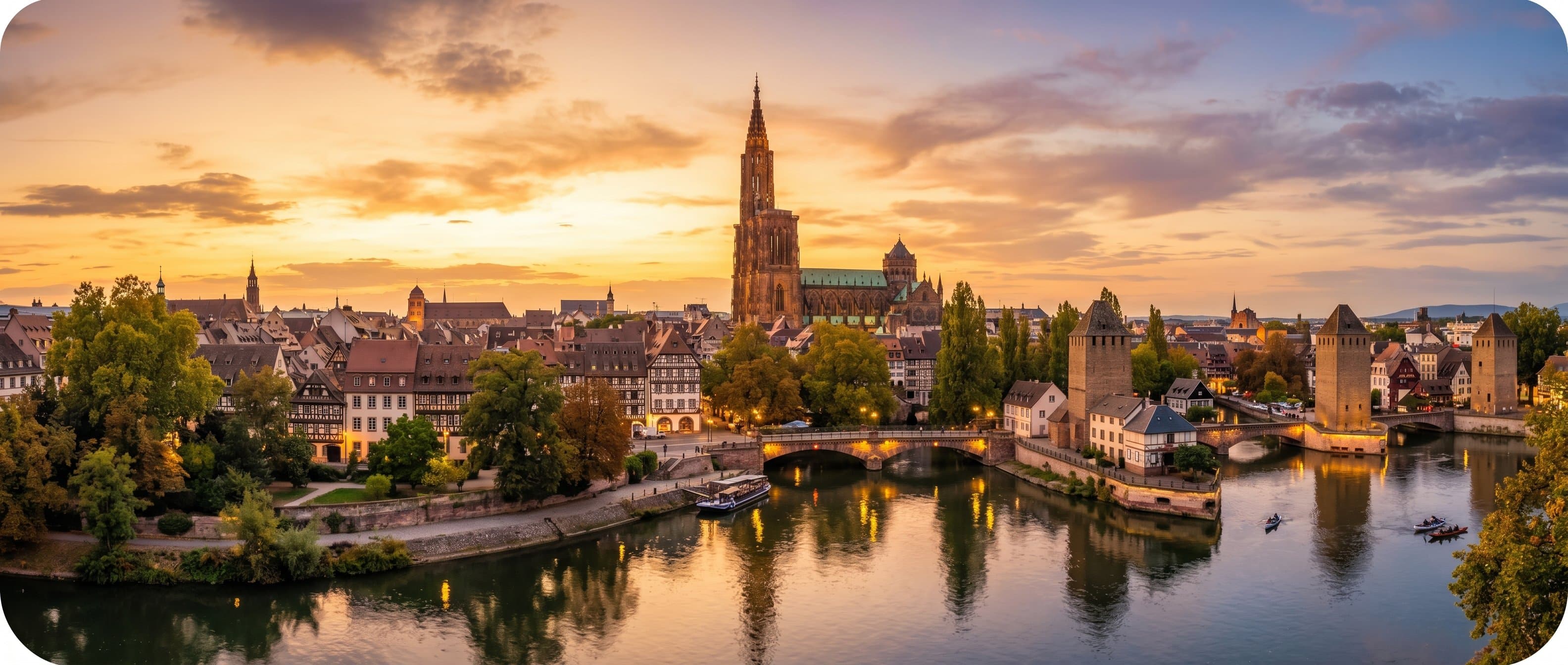
There is nowhere quite like Strasbourg. Straddling the border of France and Germany, the capital of the Grand Est region refuses to be pigeonholed. It is a city where you can eat hearty German-style sausages alongside delicate French pastries, all washed down with crisp Alsatian Riesling. For the modern backpacker or culturally curious traveller in 2026, Strasbourg deserves a priority spot on your European itinerary. What truly sets it apart right now is its exceptional commitment to sustainable travel. As France's premier cycling city, boasting over 600 kilometres of dedicated bike lanes, Strasbourg offers a virtually car-free historic centre that is as gentle on the budget as it is on the environment. Whether you are marvelling at the astronomical clock inside the towering Cathédrale Notre-Dame or sipping a craft beer in the student-heavy Krutenau district, Strasbourg rewards the slow, observant traveller.
Best Time to Visit
Strasbourg is a city of two distinct peaks. The summer months (June to August) bring warm weather and endless outdoor café culture, whilst December transforms the city into the 'Capital of Christmas' with its world-famous Christkindelsmärik. However, for the digitally savvy backpacker looking to stretch their budget, September is the undeniable sweet spot. The aggressive summer heat has mellowed to a pleasant 21°C, the peak tourist crowds have dispersed, and autumn festival season begins—all whilst accommodation prices drop by nearly 20% compared to August and December.
Travel Planning & Booking
Getting to Strasbourg is incredibly efficient thanks to France's TGV (high-speed train) network and the city's own international airport (SXB). If you are flying, airlines like Volotea, Ryanair, and EasyJet operate budget-friendly routes from major European hubs including London (Gatwick and Stansted) and Madrid. For train travel, a TGV from Paris Gare de l'Est takes just under two hours. You should aim to book transport and accommodation at least three months in advance, especially if you plan to visit during the December holiday season. Booking platforms: Use Skyscanner to track regional flight dips, Hostelworld for budget beds in Krutenau, and SNCF Connect for the best train fares. Visa requirements for 2026: UK, US, and UAE nationals can enter France visa-free for up to 90 days but must hold an approved ETIAS waiver (introduced mid-2025). EU citizens enjoy full freedom of movement. Indian nationals require a pre-approved Schengen Visa.
Travel Insurance
Never skip travel insurance when visiting Strasbourg. While France boasts excellent healthcare, unexpected events like a twisted ankle on La Petite France’s unforgiving medieval cobblestones or a cycling collision in the busy transit corridors can result in hefty out-of-pocket expenses. Ensure your policy covers standard medical care, trip cancellation (vital during the winter when snow can halt flights), and lost baggage. Recommended providers: World Nomads (exceptional for extended backpacker trips), SafetyWing (ideal for digital nomads needing a rolling monthly subscription), and Allianz (great for comprehensive medical evacuation). Practical tip: Always carry your provider's emergency contact number and your policy details offline on your phone; French hospitals will require proof of insurance or an upfront deposit upon admission.
Packing Guide
Your packing list for Strasbourg heavily depends on the season, but layering is the golden rule year-round. Bring breathable cottons for summer and a high-quality thermal base layer plus a waterproof coat for winter. Given the city's terrain, sturdy, broken-in walking boots are non-negotiable. Culturally, the French appreciate a neat, put-together appearance; leave the gym wear at the hostel unless you are actually jogging in Parc de l'Orangerie. Bring a universal European adapter (Type C/E) and a reusable water bottle to take advantage of the city's clean public fountains. What tourists over-pack: Heavy physical guidebooks and high heels—the latter will instantly get trapped in the historic centre's cobblestones.
Accommodation
Strasbourg’s neighbourhoods each offer a distinct flavour. Grande Île is the historic heart, perfect for short stays but pricey. Krutenau is the trendy, student-filled district brimming with affordable bars and vintage shops. Quartier Européen is quieter and features striking modern architecture. For luxury, the Hôtel Cour du Corbeau Strasbourg - MGallery is a spectacular 16th-century timber-framed masterpiece. Mid-range travellers will love Hôtel Léonor, offering chic design right in the city centre. Budget backpackers should book The People Hostel - Strasbourg, a vibrant, modern spot in Krutenau with excellent communal areas. Booking tip: Look for accommodation just outside the Grande Île (like the train station district) to save 15-20% whilst remaining within a 10-minute walk of the main sights.
Getting Around Locally
Arriving at Strasbourg Airport (SXB), the absolute best way to reach the city centre is the TER train. It takes precisely 9 minutes to reach Strasbourg Gare Centrale and costs a mere €3.20. Within the city, the CTS (Compagnie des Transports Strasbourgeois) operates an immaculate, futuristic tram network and reliable buses. However, cycling is king here. Rent a Vélhop (the city's bike-share scheme) for just a few euros a day. A common tourist mistake is renting a car; the city centre is heavily pedestrianised, parking is exorbitantly expensive, and navigating the one-way systems is a nightmare.
Top Tourist Attractions (Must-See)
1. Cathédrale Notre-Dame de Strasbourg: Victor Hugo called it a "gigantic and delicate marvel". It is stunning. Entry is free (platform €8), open 8:30 AM to 5:45 PM. Best visited right at opening to beat the tour groups. Insider tip: Be inside by 12:30 PM to witness the astronomical clock’s daily automated parade.
2. La Petite France: The former tanners' district, featuring waterways and timber-framed houses. Open 24/7, free. Best at dusk for photography. Tip: Walk to the very end of the district to see the Vauban Dam from a distance.
3. Barrage Vauban: A 17th-century defensive lock and bridge. Open 8:00 AM to 9:00 PM, free. Head to the panoramic terrace for the best unobstructed view of the cathedral.
4. Palais Rohan: A magnificent 18th-century palace housing three museums. Open 10:00 AM to 6:00 PM (closed Tuesdays), €7.50 entry. Tip: The Decorative Arts Museum inside is the most impressive of the three.
5. Parc de l'Orangerie: The city's oldest park. Open 24/7, free. Perfect for a budget-friendly picnic. Keep an eye out for the storks, the symbol of Alsace, nesting in the trees.
6. European Parliament: The heart of EU democracy. Free guided tours available but you must book weeks in advance and bring your passport.
Local Food & Dining
Alsatian cuisine is rich, hearty, and utterly delicious. You must try Tarte Flambée (Flammekueche), a thin, crispy dough topped with crème fraîche, onions, and lardons; Choucroute Garnie, fermented cabbage with various cuts of pork and sausage; and Kugelhopf, an almond-studded bundt cake. For high-end dining, book a table at the Michelin-starred Buerehiesel, set in a gorgeous greenhouse in Parc de l'Orangerie. For mid-range traditional fare, head to Maison des Tanneurs in La Petite France. For budget and street food vibes, Au Brasseur offers incredible artisan beers and €5 Tarte Flambée during happy hour. Dietary note: Traditional Alsatian food is incredibly meat-heavy. Vegetarians should look for 'Tarte Flambée Forestière' (mushroom base) or dine in the Krutenau district, which offers vast plant-based options.
Safety & Emergency Contacts
Strasbourg is a highly safe city, even for solo female travellers at night. Violent crime is rare, but petty theft (pickpocketing) is common in dense tourist areas like the Cathedral square, the train station, and particularly at the Christmas markets in December. Always zip your bags and never leave phones on café tables. In an emergency, dial 112 for the pan-European emergency service (English spoken). Local numbers: Police (17), Ambulance/SAMU (15), Fire (18). The nearest major international hospital is Nouvel Hôpital Civil (1 Place de l'Hôpital). If you lose your passport, the British Embassy in Paris, US Consulate General in Strasbourg, or Indian Embassy in Paris can assist.
Useful Apps & Resources
Arm your smartphone with these essentials: CTS App (for buying digital tram/bus tickets), SNCF Connect (for regional day trips to Colmar or Paris), TheFork (to secure restaurant reservations with discounts), Météo-France (for the most accurate micro-climate weather forecasts), and Google Translate (download the offline French pack). The official tourism board website, visitstrasbourg.fr, is updated constantly and is excellent for checking festival dates and museum closures.
Closing
Strasbourg is not just a stepping stone between France and Germany; it is a profound destination in its own right. With its sprawling bike lanes, welcoming taverns, and awe-inspiring architecture, it proves that world-class European travel doesn't have to break the bank. Pack your walking boots, brush up on your 'merci' and 'danke', and get ready to fall in love with Alsace. For more deep-dive itineraries and expert backpacker hacks, continue exploring at travelnexusworld.com.
FAQ
Is Strasbourg safe for tourists? Yes, it is incredibly safe. The main concern is pickpocketing in crowded areas, especially during the December Christmas markets.
What is the best time to visit Strasbourg? September offers the best balance of pleasant weather, fewer crowds, and lower prices, though December is unmissable for the Christmas markets.
How many days do I need in Strasbourg? A solid 3 to 4 days is perfect to explore the city centre, the European Quarter, and fit in a half-day trip to a nearby vineyard or Colmar.
Do I need a visa to visit Strasbourg? UK, US, and UAE citizens can visit visa-free for 90 days but will need an ETIAS waiver from 2025/2026. Indian citizens require a Schengen visa.
What is the local currency and can I use credit cards? The currency is the Euro (€). Credit cards (Visa/Mastercard) are accepted almost everywhere, though keeping a few euros in cash for small bakery purchases is wise.