
Introduction
Berlin defies singular definition. It is a city where bullet-pitted historical facades sit adjacent to cutting-edge architectural marvels, and where impromptu techno raves occur a stone's throw from UNESCO-listed museums. For the digitally savvy budget backpacker and the internationally minded explorer, Berlin in 2026 represents the pinnacle of European travel. Unlike the polished perfection of Paris or the expensive charm of London, Berlin embraces its raw, unapologetic edge. What makes Berlin an essential addition to your 2026 itinerary is its unrivalled, post-pandemic cultural renaissance—an explosion of independent art spaces, a globally unmatched vegan culinary scene, and a nightlife ecosystem that operates continuously from Friday night to Monday morning. The city remains astonishingly affordable compared to its Western European counterparts, offering high-value experiences without the exorbitant price tags.
Best Time to Visit
Berlin is a city of extremes when it comes to weather and atmosphere, transforming dramatically with the seasons. The brutal winters are legendary, but they bring enchanting Christmas markets and a stark, poetic beauty to the city's Soviet-era architecture. Summer, conversely, is an explosive celebration; Berliners spill out onto the pavements, dominating the parks, lakes, and open-air clubs. The undeniable 'sweet spot' for visiting is September. During this month, the sweltering heat of August has dissipated into comfortable, golden-hour warmth (around 20°C), but the open-air venues and beer gardens are still operating at full capacity. Moreover, September hosts the Berlin Marathon, injecting a palpable, electric energy into the city streets, yet avoiding the suffocating peak-summer tourist crowds at major attractions like the Reichstag.
Travel Planning & Booking
Entering Berlin has never been more straightforward, but 2026 introduces crucial updates. Flights arrive exclusively at Berlin Brandenburg Airport (BER), which has completely replaced the older Tegel and Schönefeld airports. Budget carriers like easyJet and Ryanair offer incredibly cheap connections from across Europe, whilst British Airways, United, and Delta run major international routes. For optimal pricing, book your flights 6–8 weeks in advance for European hops, and 3–4 months ahead for transcontinental journeys. In 2026, the European Travel Information and Authorisation System (ETIAS) is in full effect. UK and US citizens, alongside UAE nationals, must secure this €7 electronic waiver online before departure. Indian citizens continue to require a standard Schengen Visa, requiring an application at least two months prior. For accommodation and flights, Skyscanner remains supreme for airfare comparison, Hostelworld is essential for securing beds in highly-rated backpacker hubs like The Circus Hostel, and GetYourGuide (a Berlin-founded company) is brilliant for booking skip-the-line tickets for the TV Tower and Museum Island.
Travel Insurance
Never underestimate the necessity of travel insurance in Berlin. While Germany boasts world-class healthcare, it is notoriously expensive for uninsured non-residents. Furthermore, Berlin is a city best explored on two wheels; however, cycling alongside trams, aggressive local drivers, and navigating wet cobblestones results in a high rate of minor accidents for tourists. You require a policy that explicitly covers medical emergencies, trip cancellations, and lost baggage. Given Berlin's renowned clubbing and alternative scene, ensure your policy doesn't have hidden clauses voiding coverage if you have a drink. Providers like World Nomads are excellent for younger, adventurous backpackers, SafetyWing offers unbeatable flexibility for digital nomads staying for a month or more, and Allianz Travel provides robust, comprehensive cover for those wanting absolute peace of mind. One practical tip: Always carry your physical or digital insurance certificate, as German clinics will ask for proof of coverage before treating non-critical injuries.
Packing Guide
Berlin's climate is notoriously unpredictable, meaning layered clothing is non-negotiable. Even in peak summer, a sudden thunderstorm can drop temperatures by 10 degrees. Culturally, Berlin is the antithesis of 'dressed up'. The local uniform leans heavily towards practical, understated, and often entirely black clothing—especially if you harbour any ambitions of getting past the infamous bouncers at clubs like Berghain or Tresor. Must-bring items include a high-quality power bank (you will use your phone constantly for navigation and translation apps), an EU travel adapter, and a sturdy, water-resistant daypack. The single biggest mistake tourists make is over-packing formal wear and high heels. Berlin's streets are paved with unforgiving cobblestones, and turning up to a bar or club in a cocktail dress or a sharp suit will instantly mark you as a tourist and likely result in a denied entry. Pack comfortable, stylish trainers instead.
Accommodation
Berlin's sheer size means your choice of neighbourhood dramatically dictates your experience. Kreuzberg is the undisputed epicentre of alternative culture, street food, and nightlife. Mitte offers unparalleled access to historical landmarks and high-end shopping, perfect for first-timers. Friedrichshain, situated in the former East, caters to the hardcore techno crowd and budget backpackers. For a luxury stay, the Hotel Adlon Kempinski next to the Brandenburg Gate offers historic, five-star opulence. For mid-range travellers, the Michelberger Hotel in Friedrichshain provides a brilliant, design-led boutique experience that perfectly captures Berlin's creative spirit. Budget backpackers should book The Circus Hostel in Mitte, which boasts its own microbrewery and an unbeatable central location. Booking tip: Berlin hosts massive international trade fairs (like IFA in September). Always check the city's event calendar before booking, as hotel prices can triple during major conventions.
Getting Around Locally
Navigating from Berlin Brandenburg Airport (BER) to the city centre is incredibly efficient. The Airport Express train (FEX), alongside the S9 and S45 S-Bahn lines, takes roughly 30-40 minutes and costs €4.40 (requiring an ABC zone ticket). Once in the city, the integrated U-Bahn (underground), S-Bahn (overground), tram, and bus networks are phenomenal. Download the BVG Fahrinfo app to plan routes and buy digital tickets seamlessly. The most common—and costly—tourist mistake in Berlin is buying a paper transport ticket and forgetting to validate it. Plain-clothes inspectors patrol the trains ruthlessly, and failing to stamp your ticket in the yellow or red boxes on the platform will result in an immediate €60 fine, with no leniency given to foreigners.
Top Tourist Attractions (Must-See)
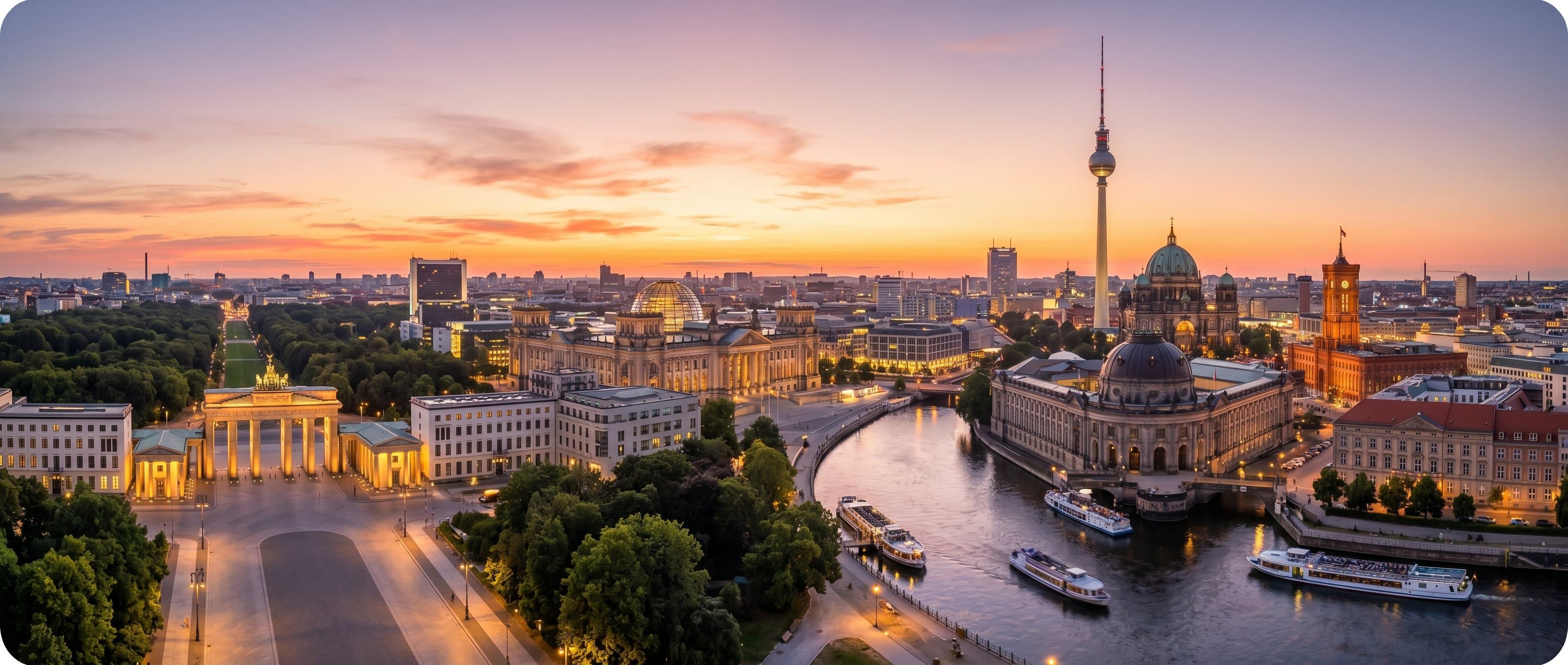
Berlin's attractions are weighty, profound, and visually striking. The Reichstag Building, housing the German parliament, features a stunning Norman Foster-designed glass dome representing political transparency. Entry is free, but you must register weeks in advance. The Memorial to the Murdered Jews of Europe is a deeply moving, labyrinthine installation of 2,711 concrete slabs; visit in the early morning for quiet reflection. Museum Island, a UNESCO World Heritage site, houses five world-class institutions, including the Pergamonmuseum (check 2026 partial closure updates) and the Neues Museum; buy a day pass for €24. The East Side Gallery is the longest surviving stretch of the Berlin Wall, now covered in political murals. Visit at dawn to snap photos without the crowds. The TV Tower (Fernsehturm) at Alexanderplatz offers 360-degree views from 203 metres up; secure a fast-track ticket for sunset. Finally, Tempelhofer Feld, an abandoned airport turned massive public park, is essential for experiencing local life. Hire a bicycle or rollerblades and cruise down the former runways.
Local Food & Dining
Berlin's culinary landscape is a reflection of its diverse, immigrant-rich population. You cannot leave without trying a Currywurst (chopped pork sausage drenched in a spiced ketchup-curry sauce). The best is found at Curry 36 in Kreuzberg. The Döner Kebab, arguably invented in Berlin by Turkish immigrants, is a late-night staple; brave the queue at Mustafa's Gemüse Kebap for a chicken and roasted vegetable masterpiece. For a modern, high-end experience, Nobelhart & Schmutzig enforces a strict 'brutally local' philosophy, serving only ingredients sourced from the greater Berlin area. For an exceptional mid-range meal, Wen Cheng offers life-changing, hand-pulled biang biang noodles that frequently draw lines around the block. Dietary note: Berlin is widely considered the vegan capital of Europe. Almost every restaurant, from budget street food stalls to Michelin-starred establishments, offers robust, creative plant-based options.
Safety & Emergency Contacts
Berlin is generally a very safe city for a major European capital. Violent crime against tourists is exceedingly rare. However, petty theft, particularly pickpocketing, is common around major transit hubs like Alexanderplatz, Zoologischer Garten, and on crowded U-Bahn trains. Visitors should exercise caution at night in Görlitzer Park and around Kottbusser Tor, where drug-related activities are prevalent. If you require assistance, dial 110 for the Police, and 112 for Ambulance and Fire services. The nearest major international-standard hospital in the centre is Charité - Universitätsmedizin Berlin in Mitte. Ensure you have the contact details for your local embassy saved; the UK, US, and Indian embassies are all centrally located in the Tiergarten and Mitte districts.
Useful Apps & Resources
To navigate Berlin like a local, your smartphone needs specific tools. BVG Fahrinfo is essential for public transport routing and purchasing digital tickets. Jelbi integrates all public transport, e-scooters, and shared cars into one platform. FreeNow is the preferred local alternative to Uber, allowing you to hail licensed taxis. Google Translate is vital, particularly the camera function for translating German menus. TheFork is excellent for securing last-minute restaurant reservations and finding discounts. For official tourism information, walking maps, and event listings, VisitBerlin.de is an outstanding, frequently updated resource.
Closing
Berlin is not a city that asks to be admired from afar; it demands to be experienced. Whether you are cycling down the runways of an abandoned airport, losing track of time in a dimly lit Kreuzberg basement, or standing in awe before the remnants of the Iron Curtain, the German capital will leave an indelible mark on your worldview. Pack your darkest clothes, charge your smartphone, and prepare for a city break unlike any other. For more expert travel guides, itineraries, and insider tips to elevate your global adventures, continue exploring www.ainexusworld.com.
FAQ
Is Berlin safe for tourists?
Yes, Berlin is remarkably safe. While petty crime like pickpocketing occurs in crowded areas and at transit hubs, violent crime is rare. Exercise standard urban awareness, particularly late at night.
What is the best time to visit Berlin?
September is the optimal time. The weather is comfortably warm, the intense summer crowds have thinned, and the city's outdoor beer gardens and clubs are still in full swing.
How many days do I need in Berlin?
A minimum of 4 to 5 days is recommended. The city is geographically massive, and splitting your time between historical landmarks, world-class museums, and diverse neighbourhoods requires at least four full days.
Do I need a visa to visit Berlin?
As of 2026, UK, US, and UAE citizens require an ETIAS waiver to enter Germany. EU citizens enjoy freedom of movement, whilst Indian citizens require a pre-approved Schengen Visa.
What is the local currency and can I use credit cards?
The currency is the Euro (€). While credit card acceptance has improved drastically post-pandemic, Berlin is still heavily reliant on cash. Always carry at least €50 in smaller notes for bakeries, street food, and late-night bars.