
Introduction
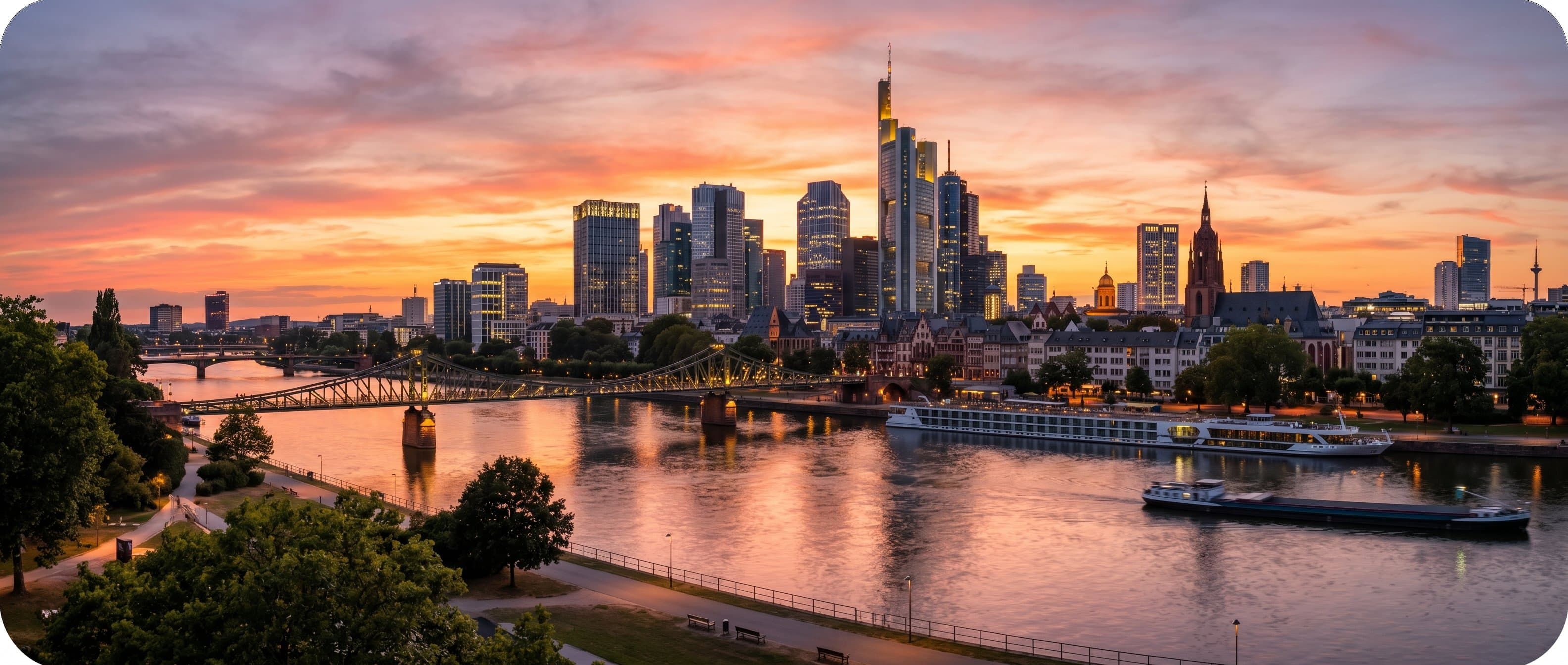
Frankfurt, often perceived as a city of finance, holds a delightful secret for the savvy traveller: a vibrant cultural heart and a surprising amount of green space, offering a unique blend of historical charm and modern dynamism. Beyond the skyscrapers, you'll uncover a rich tapestry of museums, traditional taverns serving local cider, and picturesque riverside promenades. This guide is your key to unlocking Frankfurt's authentic side, proving it's more than just a layover city – it's a destination brimming with character, especially for the internationally-minded, digitally savvy backpacker. Its compact city centre, excellent public transport, and plethora of free or low-cost activities make it an ideal hub for exploring Germany on a budget, perfectly bridging the gap between urban exploration and easy access to nature.
Best Time to Visit
Frankfurt offers distinct experiences throughout the year, each with its own charm:
- January (5-10°C): Cold, often with light snow. Low crowds, budget pricing. Perfect for museums and cosy taverns, escaping the chill indoors.
- February (5-12°C): Still chilly, but days are getting longer. Low crowds, budget pricing. Occasional Fasching (Carnival) events bring some local festivities and a splash of colour.
- March (10-15°C): Mild, spring blossoms begin to appear. Moderate crowds, pricing starts to rise slightly. Ideal for early spring walks along the Main River and enjoying the city awakening.
- April (15-20°C): Pleasant, vibrant with spring flowers. High crowds around Easter and during cherry blossom season. Pricing moves to mid-range. A beautiful time to be outdoors.
- May (18-25°C): Warm and sunny, perfect for outdoor activities. High crowds for Ascension Day and Pentecost holidays. Pricing is expensive. Many outdoor markets and festivals begin.
- June (22-30°C): Hot, long daylight hours. Very high crowds for summer festivals (e.g., Wäldchestag). Peak pricing. Enjoy riverside activities and numerous beer gardens.
- July (25-32°C): Hottest month, lively atmosphere. Very high crowds. Peak pricing. Explore indoor attractions during midday heat, then enjoy balmy evenings by the river.
- August (24-31°C): Hot, vibrant with tourists. Very high crowds, especially during the renowned Museumsuferfest. Peak pricing. A fantastic time for open-air events and river cruises.
- September (20-26°C): Warm, pleasant autumn begins. High crowds, particularly for the smaller local Oktoberfest celebrations. Expensive pricing. Apple wine season is in full swing.
- October (15-22°C): Pleasant, crisp autumn air. Moderate crowds for the Frankfurt Book Fair. Moderate pricing. Ideal for hiking in nearby Taunus hills and enjoying traditional hearty food.
- November (10-16°C): Cool, leading up to winter. Low crowds, budget pricing before the Christmas markets begin. Good for cosy cafes and indoor activities.
- December (5-12°C): Cold, festive atmosphere. Moderate crowds for the magical Christmas markets. Moderate pricing, rising closer to Christmas itself. Enjoy glühwein and twinkling lights.
Sweet Spot Recommendation:
For budget backpackers, the 'sweet spot' is **late March to early April** or **mid-October to early November**. You'll enjoy milder weather, fewer crowds than peak summer, and more favourable accommodation prices. Plus, the transition of seasons offers beautiful scenery, particularly the spring blossoms or autumn foliage.
Travel Planning & Booking
Frankfurt Airport (FRA) is one of Europe's busiest hubs, making it incredibly accessible for international travellers.
Best Flight Routes & Airlines:
- From London (LHR/LGW): British Airways, Lufthansa, EasyJet, Ryanair (to Hahn, not FRA). Duration: ~1.5 hours.
- From New York (JFK/EWR): Lufthansa, United, Delta, Condor. Duration: ~7-8 hours.
- From Delhi (DEL): Lufthansa, Air India. Duration: ~8-9 hours.
- From Dubai (DXB): Emirates, Lufthansa. Duration: ~6.5 hours.
Booking Lead Times:
For the best prices, aim to book international flights 4-6 months in advance, and within Europe, 2-3 months out.
Top 3 Booking Platforms:
- Skyscanner: Excellent for comparing flight prices across various airlines and finding the cheapest days to fly. Use its "Everywhere" feature for broader travel inspiration if your dates are flexible.
- Google Flights: Powerful for tracking price changes, exploring flexible dates with its calendar view, and identifying multi-city itineraries, invaluable for budget travellers.
- Booking.com: While primarily known for accommodation, it also offers competitive flight deals and packages, which can be useful for bundling hotel and flight for potential savings.
Visa Requirements (for 2025/2026):
Germany is part of the Schengen Area, which dictates unified visa policies.
- UK Nationals: Visa-free for short stays (up to 90 days in any 180-day period). However, from mid-2025, UK citizens will need to apply for an ETIAS (European Travel Information and Authorisation System) waiver online before travel. This is not a visa but a travel authorisation.
- US Nationals: Visa-free for short stays (up to 90 days in any 180-day period). Also subject to ETIAS from mid-2025.
- EU Nationals: Visa-free, free movement within the Schengen Area. No ETIAS required.
- Indian Nationals: A Schengen visa is required. Apply at the German Embassy or Consulate in India. Requirements typically include a completed application form, passport valid for at least three months beyond the intended departure date, flight itinerary, proof of accommodation, travel insurance, and proof of sufficient funds (€45 per day). Processing can take up to 15 working days, so apply well in advance (3-6 months before travel).
- UAE Nationals: Visa-free for short stays (up to 90 days in any 180-day period). Also subject to ETIAS from mid-2025.
Entry Documentation Checklist:
Valid passport (at least 6 months validity from your planned departure date), return/onward flight tickets, proof of accommodation, travel insurance, sufficient funds to cover your stay, and your ETIAS approval (if applicable from mid-2025).
Travel Insurance
Why insurance matters for Frankfurt: While Germany boasts excellent healthcare, costs for non-EU visitors can be substantial. For a backpacker, medical emergencies, lost baggage, or trip cancellations can quickly derail your budget and experience. Theft, though rare, can happen, and having coverage for electronics or important documents offers peace of mind.
Cover to look for:
- Medical emergencies: Minimum €30,000 coverage is often a Schengen visa requirement. Ensure it covers hospital stays, doctor visits, and emergency repatriation.
- Trip cancellation/interruption: Essential for unforeseen circumstances like illness, family emergency, or travel disruptions.
- Lost/stolen baggage: Crucial for backpackers carrying essential gear and electronics.
- Adventure activities: If you plan on engaging in activities like hiking in the Taunus or extensive cycling tours.
3 Recommended Providers:
- World Nomads: A long-standing favourite among backpackers and adventure travellers. Offers flexible policies that can be extended or even purchased after you've started your trip. Ideal for longer, spontaneous journeys.
- SafetyWing: Known for its affordable, subscription-based travel medical insurance, particularly popular with digital nomads. It offers continuous coverage and is excellent for those with flexible or long-term travel plans.
- Allianz Travel Insurance: A well-established provider offering a range of comprehensive plans, including strong medical evacuation coverage and options for high-value items, providing robust protection for your trip.
Practical Tip:
Always carry a digital and physical copy of your insurance policy, including emergency contact numbers, stored separately from your main wallet or phone. This redundancy can be a lifesaver.
Packing Guide
Climate-specific clothing checklist:
- Spring/Autumn (March-May, Sept-Nov): Layers are key. A light jacket, waterproof outer shell, sweaters/jumpers, long-sleeved tops, sturdy comfortable walking shoes, and a scarf are essential.
- Summer (June-August): Light, breathable clothing (cotton/linen), shorts, t-shirts, a sun hat, sunglasses, and swimwear (for local lakes/pools) are recommended. Evenings can be cooler, so a light jumper or cardigan is still useful.
- Winter (Dec-Feb): A warm, insulated and waterproof coat, thermal layers, a warm hat, gloves, and a scarf are necessary. Waterproof boots with good grip are also advised.
Cultural dress considerations:
Germans generally dress practically and neatly. While no strict dress codes exist for most tourist sites, smart casual is always a good bet. For churches or historical sites, avoid overly revealing clothing (e.g., bare shoulders/midriffs), though this is more for respectful consideration than strict enforcement.
Must-bring items specific to Frankfurt:
- Reusable water bottle: Tap water in Frankfurt is safe and delicious. Save money and plastic waste.
- Compact umbrella/rain jacket: Weather can change quickly, even in summer.
- Power bank: Essential for navigating, taking photos, and staying connected on the go.
- Comfortable walking shoes: You'll be doing a lot of exploring on foot across the city's diverse districts.
- Small backpack/daypack: For daily essentials, snacks, and souvenirs.
One item tourists over-pack:
Too many formal outfits. While Frankfurt has a significant business side, for a budget backpacker, practical and versatile clothing that can be dressed up or down with accessories is far more useful than multiple pairs of dress shoes or suits.
Accommodation
Frankfurt offers a range of accommodation suitable for backpackers, from lively hostels to budget hotels, with excellent public transport making many areas accessible.
3 Best Neighbourhoods to Stay:
- Ostend (East End): A trendy, evolving district with a youthful vibe, close to the European Central Bank and a growing number of cool bars and eateries. Excellent public transport links. Type: Budget-friendly, nightlife, culture.
- Sachsenhausen: Located south of the Main River, known for its traditional apple wine taverns (Apfelweinlokale) and charming cobbled streets. It offers a more authentic, village-like atmosphere with a lively nightlife. Type: Culture, nightlife, foodies.
- Bahnhofsviertel (Station Quarter): While traditionally edgy, this area around the central station has seen significant redevelopment. It's incredibly convenient for transport and offers some great budget hotel options. Exercise caution late at night in certain alleys. Type: Convenience, budget, urban exploration.
1 Luxury Pick:
Roomers Frankfurt, a Member of Design Hotels™ (Gutleutstraße 85, 60329 Frankfurt am Main). Known for its chic design, trendy bar, and spa facilities. Expect prices from €200-400 per night. A splurge for a special occasion.
1 Mid-Range Pick:
Motel One Frankfurt-Römer (Berliner Str. 55, 60311 Frankfurt am Main). Stylish, modern rooms in a central location, just steps from the historic Römer. Offers excellent value for money, typically €80-150 per night.
1 Budget Pick:
A&O Frankfurt Galluswarte Hostel (Mainzer Landstraße 226, 60327 Frankfurt am Main). A modern hostel offering both private rooms and dormitory beds, well-connected by public transport. Prices from €25-50 for a dorm bed per night.
Booking Tip:
For budget travel, look for accommodation that includes breakfast to save on daily food costs. Hostels often have communal kitchens, another great money-saver. Book well in advance, especially if travelling during major festivals or trade fairs, as prices can skyrocket.
Getting Around Locally
Frankfurt boasts an excellent, integrated public transport system (RMV) that is efficient and easy to navigate.
Airport to City Centre (Frankfurt Airport - FRA to Frankfurt Hauptbahnhof - Main Station):
- S-Bahn (Suburban Train): Lines S8 and S9 run frequently (every 10-15 minutes) from the Regionalbahnhof (Terminal 1).
- Cost: Approximately €5.80 for a single adult ticket (RMV fare zone 5090).
- Time: 10-12 minutes.
- Tip: Buy tickets from the RMV machines at the Regionalbahnhof (Terminal 1, Level 0) or Fernbahnhof (Terminal 1, long-distance trains). Remember to validate your ticket before boarding.
- Taxi:
- Cost: Approximately €30-40.
- Time: 20-30 minutes, depending on traffic conditions.
- Tip: Available outside all terminals. Ensure the meter is running or agree on a fixed price beforehand.
- Uber/Bolt:
- Cost: Approximately €25-35.
- Time: 20-30 minutes.
- Tip: Download the app before arrival and request a ride. Follow in-app instructions to designated pick-up points at the airport.
Best Local Transport Modes:
- S-Bahn & U-Bahn (Underground): The backbone of the city's transport, connecting all major areas and attractions efficiently.
- Tram: Great for shorter distances within the city centre and for sightseeing as they run above ground, offering views of the city.
- Bus: Complements the rail network, especially useful for areas not directly served by trains or trams, and for late-night connections.
Recommended Apps:
- RMV-App: Official app for planning routes, checking schedules, and purchasing digital tickets for all public transport in the Frankfurt Rhine-Main region. Absolutely essential.
- Google Maps: Excellent for real-time navigation, walking, cycling, and public transport directions, showing delays and alternative routes.
One Common Tourist Mistake:
Not validating their public transport ticket. Many tickets in Germany need to be stamped in a small machine (Entwerter) located on platforms or inside buses/trams before your journey begins. Failing to do so can result in a hefty fine (€60+).
Top Tourist Attractions (Must-See)
- Römerberg:
- Why it matters: The historic heart of Frankfurt, featuring the iconic Römer (city hall) and beautifully reconstructed half-timbered houses. It's where Holy Roman Emperors were once crowned and the famous Christmas market thrives.
- Opening hours: 24/7 (square is always open). Römer interior visits are limited and subject to events.
- Entry cost: Free (square).
- Best time of day: Early morning for photos without crowds, or late afternoon/evening for its magical ambiance when illuminated.
- Insider tip: Look for the 'Gerechtigkeitsbrunnen' (Fountain of Justice) in the square's centre. During major festivals like the Wäldchestag, it's known to flow with wine instead of water!
- Location: Römerberg 23, 60311 Frankfurt am Main
- Städel Museum:
- Why it matters: One of Germany's most important art museums, boasting a collection spanning 700 years of European art, from Old Masters (Rembrandt, Vermeer) to Impressionists (Monet, Renoir) and contemporary works.
- Opening hours: Tue, Wed, Fri-Sun 10 AM - 6 PM; Thu 10 AM - 9 PM; Mon closed.
- Entry cost: Approximately €16 (adults), free for children under 12. Free entry with a Museumsufer Ticket.
- Best time of day: Weekday mornings to avoid crowds, especially for popular exhibitions.
- Insider tip: Plan at least 3-4 hours to properly explore the vast permanent collection. Check their website for current temporary exhibitions, which are often world-class.
- Location: Schaumainkai 63, 60596 Frankfurt am Main
- Goethe House and Museum:
- Why it matters: The birthplace and childhood home of Johann Wolfgang von Goethe, Germany's most famous writer. This meticulously restored house offers a fascinating insight into 18th-century life and the environment that shaped a literary genius.
- Opening hours: Mon-Sat 10 AM - 6 PM; Sun/public holidays 10 AM - 5:30 PM.
- Entry cost: Approximately €10 (adults), €4 (students).
- Best time of day: Mid-morning to early afternoon.
- Insider tip: Don't miss the adjacent Goethe Museum, which complements the house with a collection of art from Goethe's era, providing further context to his life and work.
- Location: Großer Hirschgraben 23-25, 60311 Frankfurt am Main
- Main Tower:
- Why it matters: Frankfurt is famously known for its impressive skyline, and this is the only skyscraper open to the public with an observation deck. It offers unparalleled panoramic 360-degree views of the city, the Main River, and surrounding areas.
- Opening hours: Daily 10 AM - 9 PM (summer, April-Oct); 10 AM - 7 PM (winter, Nov-March).
- Entry cost: Approximately €9 (adults), €6.50 (students).
- Best time of day: Sunset for breathtaking views as the city lights come alive, but expect more crowds. Early evening is also a less crowded alternative.
- Insider tip: Check weather conditions before you go; a clear day makes all the difference for visibility. Consider a 'Skyline Card' if you plan on visiting multiple attractions for potential discounts.
- Location: Neue Mainzer Str. 52-58, 60311 Frankfurt am Main
- Palmengarten (Palm Garden):
- Why it matters: One of Germany's largest and most beautiful botanical gardens, a tranquil green oasis in the heart of the city, featuring diverse plant collections from around the world housed in stunning greenhouses.
- Opening hours: March-Oct: 9 AM - 6 PM; Nov-Feb: 9 AM - 4 PM.
- Entry cost: Approximately €9 (adults), €4 (students).
- Best time of day: Anytime, but especially pleasant on a sunny afternoon to stroll through the outdoor gardens and explore the greenhouses.
- Insider tip: Look out for the various themed gardens, the beautiful rose garden, and the impressive Tropicarium, a huge greenhouse replicating different tropical climates.
- Location: Siesmayerstraße 61, 60323 Frankfurt am Main
- Kleinmarkthalle:
- Why it matters: A vibrant indoor market offering fresh produce, gourmet foods, international delicacies, and local specialities. It's a feast for the senses and a fantastic spot for a budget-friendly lunch or snack.
- Opening hours: Mon-Fri 8 AM - 6 PM; Sat 8 AM - 4 PM; Sun closed.
- Entry cost: Free.
- Best time of day: Lunchtime (12 PM - 2 PM) for the bustling atmosphere and to sample a variety of food stalls.
- Insider tip: Head to the upper floor for delicious local snacks, a glass of crisp Riesling, or traditional 'Apfelwein' and enjoy the vibrant view over the market below.
- Location: Hasengasse 5-7, 60311 Frankfurt am Main
- Museum Embankment (Museumsufer):
- Why it matters: A fantastic cluster of world-class museums situated along both banks of the Main River. From the German Film Museum to the Museum of World Cultures, there's something to pique every interest, all within walking distance.
- Opening hours: Vary per museum, generally 10 AM - 6 PM (some offer late opening on Thursdays until 9 PM).
- Entry cost: Varies per museum (typically €8-16). Consider the 'Museumsufer Ticket' for €21 (valid for 2 consecutive days for all participating museums, highly recommended for budget travellers).
- Best time of day: Weekday mornings to avoid the busiest periods.
- Insider tip: Purchase the Museumsufer Ticket online or at any participating museum if you plan to visit more than two. Take a leisurely stroll along the river between museum visits, enjoying the views.
- Location: Along the Main River, specifically Schaumainkai (south bank) and Brückenstraße (north bank)
Local Food & Dining
Frankfurt's culinary scene expertly blends hearty traditional Hessian fare with diverse international influences.
4-5 Must-try Dishes/Drinks:
- Frankfurter Würstchen: The original frankfurter, a slender boiled sausage made of pure pork. Often served simply with mustard and a piece of bread, a true classic.
- Grüne Soße (Green Sauce): A cold, creamy herb sauce made with seven specific fresh herbs (borage, chervil, cress, parsley, pimpernel, sorrel, chives), sour cream, and quark. Traditionally served with boiled potatoes and hard-boiled eggs, or with Schnitzel.
- Handkäse mit Musik: A pungent, sour milk cheese (Handkäse) marinated in oil, vinegar, onions, and caraway seeds. The 'Musik' playfully refers to the flatulence-inducing properties of the onions. A truly local and distinctive experience.
- Apfelwein (Äppelwoi): Frankfurt's signature apple wine, a tart, alcoholic cider (typically 5-6% ABV). Traditionally served in a 'Bembel' (stoneware jug) and drunk from a 'Geripptes' (ribbed glass). A must-try.
- Bethmännchen: Small, spherical marzipan and almond pastries, often decorated with three almond halves. While available year-round, they are especially popular around Christmas.
1 High-end Restaurant:
Carmelo Greco (Darmstädter Landstraße 80, 60598 Frankfurt am Main). A Michelin-starred Italian restaurant, renowned for its elegant ambiance, impeccable service, and exquisite, refined dishes. Expect a tasting menu from €150+ per person. Reservations are essential.
1 Mid-range Restaurant:
Atschel (Wallstraße 7, 60594 Frankfurt am Main, Sachsenhausen). A classic, bustling apple wine tavern in Sachsenhausen, serving hearty, traditional Hessian food like Schnitzel, Rippchen mit Kraut (smoked pork chops with sauerkraut), and, of course, authentic Grüne Soße. Main courses typically range from €15-25.
1 Street Food/Market Recommendation:
Kleinmarkthalle (Hasengasse 5-7, 60311 Frankfurt am Main). Beyond fresh produce, it's a fantastic spot for a budget-friendly lunch. Try a 'Fleischkäsebrötchen' (meatloaf sandwich), a local sausage (like a Frankfurter Rindswurst), or some 'Handkäse' at one of the bustling food stalls. Grab a glass of local Riesling or Apfelwein for the full experience.
Dietary Note:
While German cuisine can be meat-heavy, Frankfurt is increasingly vegetarian and vegan-friendly, particularly in areas like Nordend or Bornheim. Most restaurants will have at least one vegetarian option, and larger supermarkets stock vegan alternatives. Don't be shy to ask "Haben Sie vegetarische/vegane Optionen?" (Do you have vegetarian/vegan options?).
Safety & Emergency Contacts
Frankfurt is generally a safe city for tourists, even for solo backpackers, with a strong sense of public order.
Safety Level:
Safe. Most areas are well-lit and populated.
Specific areas or situations to be aware of:
The area immediately around Frankfurt Hauptbahnhof (main train station), particularly some side streets in the Bahnhofsviertel, can feel a bit gritty late at night due to an active drug scene and prostitution. While generally not dangerous for tourists, it's wise to be aware of your surroundings, avoid walking alone in poorly lit alleys, and keep valuables secure. Pickpocketing can occur in crowded tourist spots (e.g., Römerberg, Kleinmarkthalle) or on public transport, so always be mindful of your belongings.
LOCAL EMERGENCY NUMBERS (real, accurate for Frankfurt/Germany):
- Police: 110
- Ambulance: 112
- Fire: 112
- National Emergency (General): 112 (This number connects to Police, Ambulance, and Fire services across Germany)
Nearest International Hospital/Clinic:
Universitätsklinikum Frankfurt (Theodor-Stern-Kai 7, 60590 Frankfurt am Main). It's a major university hospital with excellent facilities, comprehensive care, and often has English-speaking staff, making it suitable for international visitors. For non-emergencies, look for 'Hausarzt' (general practitioner) clinics.
UK Embassy Contact:
- Name: British Consulate General Frankfurt
- Phone: +49 (0)69 716790 (Main Switchboard)
- Address: Bockenheimer Landstraße 42, 60323 Frankfurt am Main, Germany
- Email: (Contact via online form on Gov.uk website for consular services)
US Embassy Contact:
- Name: U.S. Consulate General Frankfurt
- Phone: +49 (0)69 7535-0
- Address: Giessener Str. 30, 60435 Frankfurt am Main, Germany
- Email: [email protected] (for general enquiries, consular services often via online portals)
Indian Embassy Contact:
- Name: Consulate General of India, Frankfurt
- Phone: +49 (0)69 1530050
- Address: Friedrich-Ebert-Anlage 26, 60325 Frankfurt am Main, Germany
- Email: [email protected]
UAE Embassy Contact:
- Name: Embassy of the United Arab Emirates in Berlin (nearest for full consular services, Frankfurt hosts a visa centre)
- Phone: +49 (0)30 51651900
- Address: Hiroshimastraße 18-20, 10785 Berlin, Germany
- Email: [email protected]
Useful Apps & Resources
Enhance your Frankfurt experience with these essential digital tools:
- RMV-App: (iOS/Android) The official app for public transport in the Frankfurt Rhine-Main region. Use it for planning routes, checking real-time schedules, and purchasing digital tickets. Absolutely essential for getting around.
- Google Maps: (iOS/Android) Indispensable for navigation, finding walking directions, identifying nearby points of interest, and getting real-time transit updates for all modes of transport.
- Google Translate: (iOS/Android) Invaluable for quick translations of menus, signs, or communicating with locals who may not speak English. Download the German language pack for offline use.
- DB Navigator: (iOS/Android) If you plan on taking longer train journeys from Frankfurt to other German cities or beyond, this official German rail app is indispensable for checking schedules, booking tickets, and staying updated on train status.
- PayPal: (iOS/Android) Widely accepted in Germany for online purchases, and increasingly for contactless payments in shops and restaurants. Good for splitting bills too.
Official Tourism Board Website:
www.frankfurt-tourismus.de - The official portal for visitor information, upcoming events, attraction details, and useful tips directly from the city's tourism office.
Closing
Frankfurt is far more than its financial district facade suggests. It's a city pulsating with history, rich in culture, and refreshingly green, offering an accessible and engaging experience for the discerning backpacker. From the charming apple wine taverns of Sachsenhausen to the world-class museums along the Main, and the soaring views from the Main Tower, it’s a destination that constantly surprises and delights. So pack your bags, embrace the 'Äppelwoi', and let Frankfurt reveal its genuine charm. Your next European adventure awaits, and www.ainexusworld.com is here to guide you every step of the way.
FAQ
- Is Frankfurt safe for tourists?
Frankfurt is generally considered a safe city for tourists. The city centre and main tourist areas are very safe during the day and evening. As with any major city, it's wise to be aware of your surroundings, especially in crowded areas like train stations or markets where pickpocketing can occur. The area immediately around the main train station (Bahnhofsviertel) can feel a bit grittier at night due to some social issues, but serious crime against tourists is rare. - What is the best time to visit Frankfurt?
The best time to visit Frankfurt for good weather and lively events is during late spring (May-June) or early autumn (September-October). However, for budget backpackers aiming to avoid peak prices and crowds, the shoulder seasons of late March-April or mid-October-early November offer milder weather and better deals on accommodation and flights, without sacrificing much on activities. - How many days do I need in Frankfurt?
For a good overview of Frankfurt's main attractions and a taste of its culture, a stay of 3 to 4 full days is recommended. This allows you to explore the historic centre, visit several museums, enjoy the local cuisine, and perhaps take a half-day trip to a nearby area like the Taunus hills. If you plan to use Frankfurt as a base for wider regional exploration, a week would be ideal. - Do I need a visa to visit Frankfurt?
Visa requirements depend on your nationality. Nationals from the EU/Schengen Area do not need a visa. UK, US, and UAE citizens can generally enter visa-free for up to 90 days, but from mid-2025, they will require an ETIAS travel authorisation. Indian nationals require a Schengen visa, which must be obtained in advance from the German Embassy or Consulate in India. Always check the latest requirements well before your trip. - What is the local currency and can I use credit cards?
The local currency in Frankfurt, and throughout Germany, is the Euro (€). Credit and debit cards (Visa, Mastercard, American Express) are widely accepted in most shops, restaurants, and hotels, especially in tourist areas. However, smaller cafes, traditional taverns (particularly in Sachsenhausen), and market stalls may prefer or even only accept cash ('Bargeld'). It's always a good idea to carry some cash for smaller purchases and tipping.