
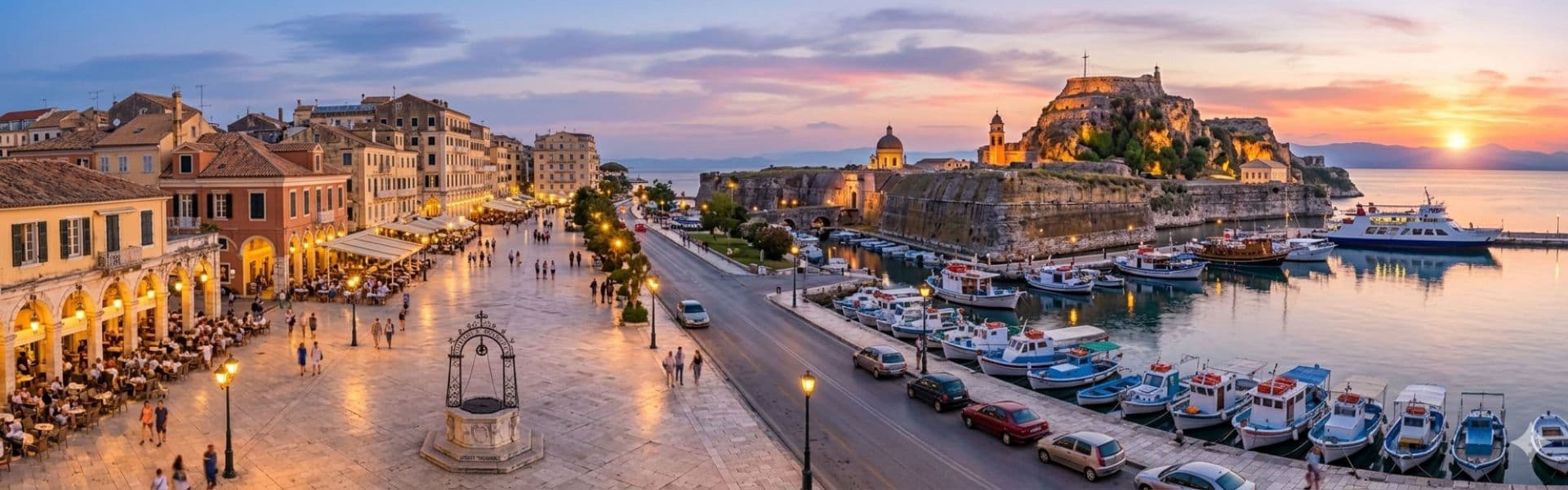
Introduction: Why Corfu is Your 2026 Essential
Corfu (Kerkyra) is not your typical Greek island. While the Cyclades offer white-washed minimalism and volcanic soil, Corfu—the northernmost of the Ionian islands—is a lush, emerald expanse of more than three million olive trees, Venetian fortresses, and a history shaped by Italian, French, and British rule. In 2026, Corfu stands out as the premier destination for the 'Slow Travel' movement. Unlike the frantic pace of Santorini, Corfu invites you to lose yourself in the labyrinthine 'kantounia' (narrow alleys) of its UNESCO-listed Old Town or trek the 220km Corfu Trail, which has seen a massive infrastructure upgrade for the 2026 season.
The specific reason to visit Corfu right now? The island has successfully pivoted towards sustainable tourism, offering new eco-hostels and farm-to-table cooperatives that allow backpackers to experience authentic Greek life without the 'over-tourism' felt in other Mediterranean hubs. Whether you are a digital nomad seeking a high-speed Wi-Fi connection in a 17th-century mansion or a hiker looking for the rugged solitude of the Pantokrator mountain range, Corfu delivers a sophisticated yet gritty experience that rewards the curious traveller.
Best Time to Visit: A 12-Month Breakdown
Understanding Corfu’s microclimate is essential for budget management and experience quality. The island is significantly greener—and rainier—than southern Greece.
- January: Cold (8-13°C). Most tourist infrastructure is closed. Ideal for writers and those seeking total solitude. Pricing: Lowest.
- February: Similar to January but with the famous Corfu Carnival (influenced by Venice). A unique time to see local traditions. Pricing: Budget.
- March: Wildflowers begin to bloom. High rainfall but beautiful for photographers. Pricing: Budget.
- April: Orthodox Easter is the highlight. Expect the 'Pot Throwing' tradition in the Old Town. Weather is mild (15-18°C). Pricing: Moderate.
- May: The 'Sweet Spot'. The sea is still crisp, but the island is vibrant, and crowds are thin. Pricing: Affordable.
- June: Perfect beach weather (24-28°C) without the August heatwaves. All ferry routes and flights are operational. Pricing: Moderate.
- July: Peak season. Very hot (30°C+). High energy, crowded beaches, and vibrant nightlife. Pricing: Peak.
- August: The busiest month. Expect humidity and crowded transport. Book months in advance. Pricing: Peak.
- September: Second 'Sweet Spot'. The sea is at its warmest, and the air is cooling. Excellent for hiking. Pricing: Affordable.
- October: The start of the harvest season. Warm days, cooler nights. Some rain begins. Pricing: Moderate.
- November: Tourist season ends. Greyer skies, but the olive harvest provides a local look at island life. Pricing: Budget.
- December: Quiet, festive, and rainy. A local experience centered around Corfu Town. Pricing: Budget.
Travel Planning & Booking
For 2026, flight connectivity to Corfu International Airport (CFU) has expanded. Budget carriers like Ryanair and EasyJet operate frequent routes from London, Berlin, and Milan. From North America or Asia, the most efficient route is a connection via Athens (ATH) using Aegean Airlines, which runs 5-8 daily shuttle flights to the island. To secure the best rates, book at least 4 months in advance for summer travel.
Visa Requirements (2025/2026 Update):
• UK & US: Visa-free for up to 90 days within a 180-day period. Note: The ETIAS (European Travel Information and Authorisation System) is now mandatory for these nationals.
• EU: Full freedom of movement.
• India: Requires a Schengen Visa (Type C). Apply through Global Visa Center World (GVCW).
• UAE: Visa-free for UAE citizens for up to 90 days.
Travel Insurance: Non-Negotiable Protection
Corfu’s narrow, winding roads and the popularity of scooter rentals make high-quality travel insurance essential. Look for policies that specifically cover 'moped/scooter riding' (often an add-on) and 'adventure activities' if you plan to hike the Corfu Trail. Recommended providers include World Nomads for comprehensive adventure cover, SafetyWing for low-cost medical for nomads, and Allianz for reliable cancellation protection. Practical Tip: Ensure your policy includes 'Repatriation of Remains' and 'Emergency Evacuation', as serious medical cases are often airlifted to Athens.
Packing Guide
Corfu is more formal than the party islands of Ios or Mykonos. Essentials: A sturdy pair of hiking boots (for the limestone trails), a reusable water bottle (tap water in the town is drinkable but heavy in minerals; many prefer filtered), and a universal power adapter (Type C/F). Cultural consideration: When visiting monasteries like Paleokastritsa, shoulders and knees must be covered—a lightweight linen scarf is perfect for this. One item tourists over-pack: Formal evening wear. Even the high-end tavernas embrace 'island chic'—clean linen trousers and a polo shirt or a simple sundress are sufficient.
Accommodation: Where to Anchor
1. Corfu Old Town (UNESCO Site): Stay here for culture and history. Luxury Pick: Siorra Vittoria Boutique Hotel (Classic Venetian charm).
2. Paleokastritsa: The island's most scenic coast. Mid-Range Pick: Akrotiri Beach Resort Hotel (Unbeatable views).
3. Agios Georgios (South): Best for backpackers and hikers. Budget/Boutique Pick: Sunrock Backpackers Hostels (Famous for sunsets and organic farm food).
Getting Around Locally
The Green Bus (KTEL) network is surprisingly efficient for backpackers, connecting the capital to major coastal hubs for €2.50 - €5.00 per journey. Within the city, the Blue Bus serves the suburbs. Common Mistake: Renting a low-power 50cc scooter for two people. Corfu’s hills are steep; you need at least 125cc (and a valid motorcycle license) to navigate safely.
Top Tourist Attractions (Must-See)
- The Old Fortress (Palaio Frourio): Venetian masterpiece with 360-degree views. Open 08:00-20:00. Cost: €6. Insider Tip: Visit at sunset for the best photography.
- Achilleion Palace: Built by Empress Sissi of Austria. Open 09:00-18:00. Cost: €10. Insider Tip: Book tickets online to skip the morning cruise ship queues.
- Paleokastritsa Monastery: 13th-century spiritual site perched on a cliff. Open 09:00-13:00 & 15:00-20:00. Cost: Free (Donations welcome).
- Angelokastro: A Byzantine castle on a sheer cliff. Open 10:00-17:30. Cost: €3. Insider Tip: Wear proper shoes; the path is slippery.
- Canal d'Amour (Sidari): Unique sandstone formations. Open 24/7. Cost: Free. Insider Tip: Arrive by 08:00 to avoid the crowds.
- The Corfu Trail: A 220km cross-island trek. Open 24/7. Cost: Free. Insider Tip: Download the 'Corfu Trail' app for offline GPS tracking.
Local Food & Dining
Corfiot cuisine is distinct from the mainland. Try Pastitsada (veal or cockerel cooked with spicy cinnamon-heavy gravy and thick pasta) and Sofrito (veal in a garlic and vinegar sauce).
• High-end: Venetian Well (Corfu Town) – romantic and sophisticated.
• Mid-range: Taverna Ninos – the gold standard for authentic local dishes.
• Street Food: The Dairy (Galaktokomeio) – try the local rice pudding (rizogalo) or a fresh pita gyros from any shop on Georgiou Theotoki Square.
Safety & Emergency Contacts
Corfu is very safe, with low violent crime. The biggest risks are sunstroke and road accidents. Local Emergency Numbers: Police: 100 | Ambulance: 166 | Fire: 199 | National Emergency: 112 | Tourist Police: +30 26610 30265. The Corfu General Hospital is located in Kontokali. For consular issues, the British Honorary Consulate is at 13 Plateia G. Theotoki (+30 26610 30055).
Useful Apps & Resources
- KTEL Corfu: Real-time bus schedules.
- Wolt: The primary food delivery app in Corfu Town.
- Corfu Travel Guide (Official): By the Ionian Islands Region.
- Moovit: Accurate public transport routing.
- Google Translate: Use the camera feature for Greek menus.
Explore the wonders of the Ionian with us. For more deep-dive guides into the Greek islands, visit www.ainexusworld.com and start planning your next escape.