
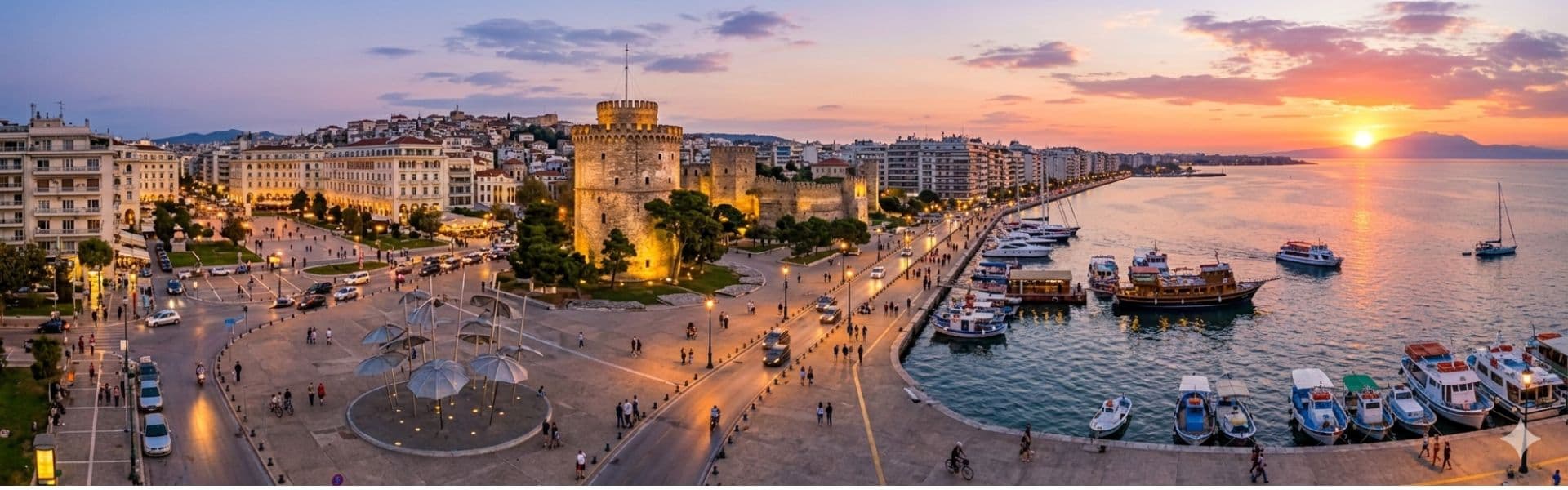
Thessaloniki: Greece’s Cultural and Gastronomic Powerhouse
While Athens claims the ancient glory, Thessaloniki claims the soul. For the traveller in 2026, Thessaloniki offers a more relaxed, authentic, and affordable alternative to the capital. Known as 'the bride of the Thermaic Gulf', this city is a mosaic of Roman, Byzantine, Ottoman, and Jewish history. The compelling reason to visit right now? The long-awaited Thessaloniki Metro is fully operational, transforming the city from a traffic-heavy hub into a seamless, modern metropolis while preserving the 'halaro' (relaxed) pace of life that locals swear by.
Best Time to Visit
Thessaloniki is a year-round destination, but timing your visit affects both your wallet and your experience.
- January - February: Cold and damp (5-12°C). Ideal for museum lovers and budget seekers. Crowds are non-existent.
- March - April: Spring brings blossoms and manageable temperatures (12-18°C). Orthodox Easter is a massive cultural event, though prices spike.
- May - June: The 'Sweet Spot'. Warm days (20-28°C), lively waterfront, and the Reworks Agora festival. Peak greenery in the surrounding hills.
- July - August: Hot and humid (30°C+). Locals flee to nearby Halkidiki. The city is quieter, but the heat can be oppressive for urban hiking.
- September - October: Another prime window. The Thessaloniki International Fair and International Film Festival create a buzzing atmosphere. Sea temperatures are still warm.
- November - December: The air turns crisp. Christmas markets at Aristotelous Square are charming.
Travel Planning & Booking
Fly into Thessaloniki Airport 'Makedonia' (SKG). Major carriers include Aegean Airlines (full service) and Ryanair (budget). For 2026, book flights 3-4 months in advance. Use Skyscanner for price comparisons and Google Flights for tracking fare drops. Visa Requirements: For 2026, UK, US, and UAE nationals will require an ETIAS travel authorisation to enter the Schengen Area. EU nationals have freedom of movement. Indian nationals require a standard Schengen Visa, which should be applied for at least 60 days before departure.
Travel Insurance
In Thessaloniki, insurance is vital for more than just medical emergencies. The city is safe, but luggage delays and ferry cancellations (if heading to the islands) are common. Look for policies covering 'Adventure Activities' if you plan to hike Mount Olympus. Recommended providers: World Nomads (best for flexibility), SafetyWing (best for price), and Allianz (best for comprehensive medical evacuation).
Packing Guide
Thessaloniki's humidity means you should pack breathable fabrics. Must-brings: Comfortable walking shoes (for the Upper Town’s cobbles), a portable power bank, and a reusable water bottle. Cultural Note: Modest clothing (covering shoulders and knees) is required for the Byzantine churches. Tourists often over-pack heavy jackets; unless it’s mid-winter, a light windbreaker or denim jacket is sufficient for the evening breeze.
Getting Around Locally
The Thessaloniki Metro (Line 1 & 2) is the primary transport mode in 2026, connecting the railway station to the south-eastern suburbs. A single ticket costs €1.20. For areas not covered by rail, the OASTH bus network is extensive. Tourist Mistake: Not validating your paper bus ticket. Inspections are frequent and fines are heavy (€60+). Use the OASTH Bus app for real-time arrivals.
Top Tourist Attractions
- The White Tower: The city's landmark. Hours: 08:30-20:00. Cost: €6. Tip: The audio guide is excellent for understanding the city's dark Ottoman history.
- Rotunda: A Roman mausoleum turned church, then mosque. Hours: 08:00-18:00. Cost: €6. Tip: Look up at the mosaics; they are some of the finest in the world.
- Ano Poli (Upper Town): The only part of the city to survive the 1917 Great Fire. Cost: Free. Best at sunset for views over the Gulf.
- Kapani & Modiano Markets: The sensory heart of the city. Hours: 08:00-16:00. Cost: Free. Insider Tip: Buy local olives and graviera cheese here for a DIY picnic.
- Archaeological Museum: Holds the gold of the Macedonian kings. Hours: 08:00-20:00. Cost: €8.
- Agios Dimitrios Crypt: The underground remains of the city's patron saint's martyrdom. Hours: 08:00-20:00. Cost: Free.
Local Food & Dining
Thessaloniki is Greece's culinary capital. You must try Bougatsa (custard pie) at Bougatsa Giannis and Trigona Elenidi (syrup-soaked pastry cones). For a mid-range meal, Sebrico offers modern Greek cuisine near the port. For high-end, Mourga focuses on 'anarchist' seafood with no fixed menu. Dietary Note: Greece is incredibly vegan-friendly; look for 'Nistisimo' (fasting) food on any menu.
Safety & Emergency Contacts
Thessaloniki is very safe. The main risk is petty theft in the crowded Monastiriou Street area. Local Emergency: Police (100), Ambulance (166), Fire (199), National Emergency (112).
Closing
Thessaloniki is a city that requires you to slow down. Between the ancient walls and the modern coffee culture, you’ll find a rhythm unlike anywhere else in Europe. Start planning your journey at ainexusworld.com for more deep-dives into the Balkan gateway.
FAQ
Is Thessaloniki safe? Yes, extremely, though standard urban vigilance applies. How many days? 3 days for the city, 5 if including Mount Olympus. Is it expensive? It is significantly cheaper than Athens or the Greek islands.