
Introduction
Sicily is not merely a region of Italy; it is an entirely distinct Mediterranean universe. For the internationally minded backpacker and culturally curious traveller, Sicily in 2026 demands your immediate attention. Why? Because it sits perfectly at the intersection of affordability, profound historical depth, and unparalleled culinary excellence. While northern European cities and mainland Italian hotspots like Rome and Florence buckle under the weight of overtourism, Sicily’s vast landscape—from the smoking craters of Mount Etna to the labyrinthine, jasmine-scented streets of Palermo—retains an authentic, rugged charm. The island tells the story of the Mediterranean through its architecture and food: Greek temples, Roman amphitheatres, Arab domes, and Norman cathedrals all share the same sun-baked earth. The one compelling, specific reason to visit Sicily right now is the island's burgeoning sustainable agriturismo movement. A new generation of Sicilians is transforming ancient farmhouses (masserie) into eco-friendly hubs, offering travellers an immersive, farm-to-table experience that directly supports local communities.
Best Time to Visit
To truly appreciate Sicily, timing is everything. The island experiences a classic Mediterranean climate, but its sheer size means weather can vary wildly from the coastal beaches to the mountainous interior. The absolute 'sweet spot' for a visit is the shoulder season: specifically, May and September. During these months, the intense, stifling heat of mid-summer is absent, yet the Mediterranean Sea remains warm enough for swimming. You will avoid the exorbitant peak-season pricing and the suffocating crowds of August, when mainland Italians descend upon the island for their annual Ferragosto holidays.
Spring (April to June) blankets the island in vibrant wildflowers, making it the premier season for hiking Mount Etna or exploring the Valley of the Temples. Autumn (September to October) is harvest season—ideal for foodies eager to partake in wine, olive, and pistachio festivals (such as the famous Bronte Pistachio Festival in October). Winter (November to March) is the budget backpacker's dream. While coastal towns become quiet and beach days are off the table, the cities of Palermo and Catania remain vibrant, and prices drop by up to forty percent. You can even ski on the slopes of Mount Etna in January and February—an unforgettable experience of viewing the sea from a snow-capped active volcano.
Travel Planning & Booking
Planning a Sicilian adventure requires a blend of digital savvy and Mediterranean patience. The island is served by two main international gateways: Catania Fontanarossa Airport (CTA) in the east, and Palermo Falcone Borsellino Airport (PMO) in the west. For UK travellers, British Airways and EasyJet offer frequent, direct flights from London to both cities. US travellers often find the most economical routes flying into Rome (FCO) or Milan (MXP) and taking a short domestic hop via ITA Airways or Ryanair, though seasonal direct flights from New York (JFK) to Palermo are occasionally available. To secure the best rates, aim to book flights 3 to 4 months in advance, especially if travelling between June and September.
Regarding visas, 2026 brings the full enforcement of the ETIAS (European Travel Information and Authorisation System) for visa-exempt nationals. UK, US, and UAE citizens will need to apply for this €7 electronic waiver online before departure. Indian nationals must apply for a standard Schengen Visa well in advance through VFS Global. Ensure your passport is valid for at least three months beyond your intended departure date from the Schengen Area, and always carry digital and physical copies of your accommodation bookings and return flights, as border control in Italy has become increasingly stringent.
Travel Insurance
Travel insurance is not a luxury in Sicily; it is an absolute necessity. While Italy boasts a high standard of public healthcare, the logistics of navigating medical emergencies on a sprawling, rugged island can be daunting. Furthermore, Sicily is an adventure destination. If you plan to hike the volcanic ash trails of Mount Etna, scuba dive off the Aeolian Islands, or navigate the chaotic traffic of Palermo on a rented Vespa, you must ensure your policy specifically covers adventure activities and motor-scooter rentals.
Look for policies offering robust medical cover (minimum $100,000), trip cancellation, and lost baggage (crucial during busy European summer transit). World Nomads is highly recommended for backpackers due to its comprehensive adventure sports coverage. SafetyWing is the perfect alternative for digital nomads on open-ended trips, offering flexible, subscription-based cover. Allianz Travel Insurance provides phenomenal comprehensive packages for shorter, higher-budget trips. Practical Tip: Always keep a digital copy of your insurance certificate offline on your phone, along with the 24-hour emergency assistance number, as mobile signal can vanish instantly in the Sicilian mountains.
Packing Guide
Packing for Sicily requires versatility. The climate shifts dramatically depending on your altitude and the season. In the summer months, lightweight, breathable fabrics such as linen and moisture-wicking cotton are essential to combat the relentless heat. However, the one item tourists perpetually over-pack is heavy denim; leave the jeans at home between June and September.
Cultural dress considerations are vital. Italy is a deeply Catholic country, and entry to majestic sites like the Monreale Cathedral or Syracuse’s Duomo requires modest dress—shoulders and knees must be covered. A lightweight pashmina or scarf is the perfect space-saving solution to drape over your shoulders before entering religious sites. Must-bring items specific to Sicily include sturdy, closed-toe walking shoes with strong grip (volcanic rock is razor-sharp and notoriously slippery) and a high-quality, reef-safe sunscreen. If travelling in the shoulder or winter seasons, a windproof jacket is mandatory for coastal evenings and mountain excursions.
Accommodation
Sicily’s accommodation scene spans aristocratic palaces to humble, family-run hostels. For the best experience, base yourself in dynamic neighbourhoods. In Palermo, the historic Kalsa district is an atmospheric maze of street art, hidden piazzas, and brilliant street food. In Catania, the Centro Storico puts you within walking distance of the bustling fish market and Baroque architecture. For a coastal retreat, the island of Ortigia (the historical heart of Syracuse) is unparalleled in its romance and walkable charm.
If your budget allows a splurge, the Grand Hotel Timeo in Taormina is an iconic luxury property offering sweeping views of Mount Etna and the Greek Theatre. For mid-range comfort, Hotel Porta Felice in Palermo offers brilliant value, an incredible rooftop breakfast, and a wellness centre right by the seafront. Budget backpackers and solo travellers should head straight to Ostello Bello Palermo, renowned for its vibrant social atmosphere, exceptionally clean dorms, and central location. Booking Tip: In smaller towns, booking directly through the property's website or via a quick WhatsApp message can often secure you a better rate or free breakfast compared to major aggregation platforms.
Getting Around Locally
Navigating Sicily is part of the adventure. Upon arriving at Palermo Airport (PMO), the most efficient route to the city centre is the Prestia e Comandè bus, costing roughly €6.50 and taking 45 minutes. Alternatively, the Trinacria Express train connects the airport to Palermo Centrale station for €6.20. Catania Airport (CTA) is even closer to its city; the ALIBUS shuttle runs every 25 minutes to the centre for just €4.00.
For intercity travel, Trenitalia operates reliable, scenic regional trains along the coast (Palermo to Cefalù, or Catania to Syracuse). However, to reach inland destinations like Agrigento, the intercity bus networks (SAIS Autolinee or AST) are far faster and more reliable than the train. Download the Omio app to seamlessly compare bus and train times. One common tourist mistake is underestimating driving times. If you hire a car, be aware that Sicilian drivers are notoriously aggressive, and rural roads are often poorly maintained. Furthermore, never drive into a city’s Zona Traffico Limitato (ZTL) unless you want a hefty fine mailed to your home country months later.
Top Tourist Attractions (Must-See)
1. Valley of the Temples (Agrigento): A UNESCO World Heritage site showcasing some of the most exceptionally preserved Ancient Greek architecture outside of Greece. The sheer scale of the Temple of Concordia is breathtaking. Open daily 8:30 AM to 8:00 PM (extended in summer). Entry is €12. Best visited in the late afternoon to witness the sandstone glow against the setting sun. Insider Tip: Enter via the higher entrance (Temple of Juno) so your entire walk through the valley is downhill.
2. Mount Etna: Europe’s highest and most active volcano. It matters because it physically and culturally shapes the entire eastern coast of Sicily. Cable cars and 4x4 buses run from Rifugio Sapienza. Entry to the park is free, but cable car/4x4 packages cost around €65. Best visited early morning before cloud cover rolls in. Insider Tip: Do not attempt to hike to the summit craters without an official vulcanologist guide; it is illegal and highly dangerous.
3. Palermo Cathedral: A masterclass in architectural fusion, reflecting the island's history through Norman, Moorish, Gothic, and Baroque styles. Open 7:00 AM to 7:00 PM. Basic entry is free; roof access is €7. Best visited early morning. Insider Tip: Pay the extra fee for the roof access; the panoramic views over Palermo’s terracotta roofs towards the mountains are unparalleled.
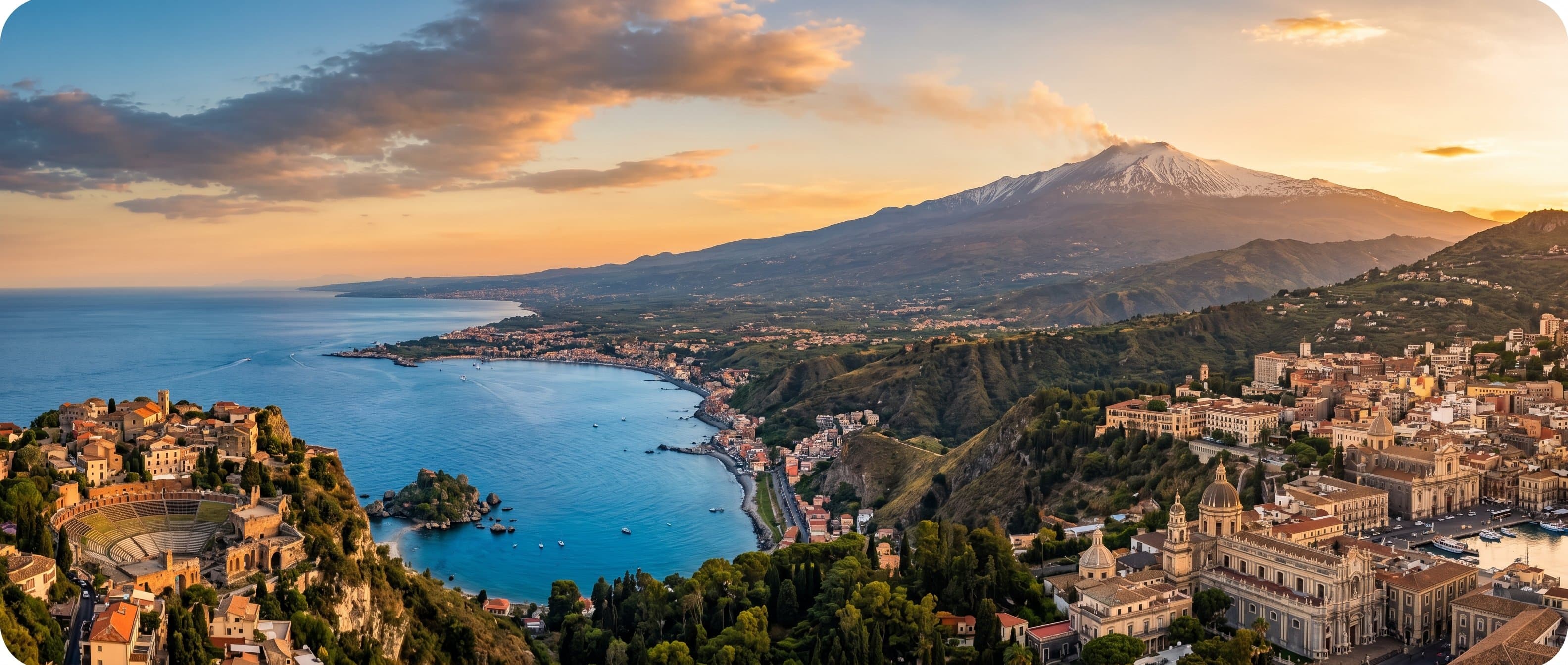
4. Taormina Ancient Theatre: A spectacular Greco-Roman amphitheatre framing the smoking peak of Mount Etna and the azure Ionian Sea. Open 9:00 AM to sunset. Entry is €13.50. Best visited right at opening time to beat the cruise ship crowds. Insider Tip: Check the local schedule; catching a live concert or opera here on a summer evening is a life-changing experience.
5. Ortigia Island (Syracuse): The historical centre of Syracuse, a labyrinth of blindingly white Baroque facades, hidden courtyards, and sweeping sea views. Open 24/7. Free to wander. Best at dusk. Insider Tip: Walk down to the Fonte Aretusa at sunset, then grab a cocktail at a waterfront bar to watch the sky turn violently pink.
6. Cefalù Beach and Duomo: A postcard-perfect medieval town pressed between a towering rocky crag (La Rocca) and a sandy crescent beach. The Norman Duomo is free to enter (8:00 AM - 6:00 PM). Insider Tip: Hike La Rocca (entry €5) before the midday heat for spectacular views, then reward yourself with an afternoon swimming in the Tyrrhenian Sea.
Local Food & Dining
Sicilian cuisine is an unpretentious, flavour-packed testament to the island's diverse conquerors. You must try Arancini (in the east) or Arancine (in the west)—deep-fried rice balls traditionally stuffed with meat ragù and peas. Pasta alla Norma is the quintessential Catania dish, featuring macaroni tossed in rich tomato sauce, fried aubergine, and a heavy grating of salted ricotta. For street food, Panelle (chickpea fritters) are a staple in Palermo. Finally, breakfast in Sicily during summer demands Granita con Brioche—an icy, sweetened slush (almond or lemon) served with a warm, fluffy pastry.
For a spectacular fine-dining experience, La Madia in Licata holds two Michelin stars and offers an ingenious, artistic take on traditional Sicilian memories. For a bustling mid-range experience, Osteria dei Vespri in Palermo serves exceptional traditional dishes in a historic square. To experience authentic, chaotic street food, weave your way into Palermo’s Mercato di Ballarò and locate the stalls serving fresh panelle and sfincione (thick-crust Sicilian pizza). Dietary Note: While Italy is surprisingly brilliant at catering to Coeliac disease (senza glutine), vegans may struggle slightly outside major cities, though dishes like Caponata and Pasta al Pomodoro are naturally plant-based.
Safety & Emergency Contacts
Sicily is generally a safe destination for tourists. Violent crime against visitors is exceedingly rare. The infamous Mafia (Cosa Nostra) is an organised crime syndicate that does not target tourists; your biggest risk is petty theft in crowded markets or on public transport in Palermo and Catania. Always wear your bag across your body and remain vigilant in crowds. The other significant hazard is crossing the road—pedestrian crossings are treated merely as suggestions by local drivers. Make eye contact and walk purposefully.
Should an emergency arise, the European emergency number 112 functions across the island. The nearest top-tier international hospital is ISMETT (Istituto Mediterraneo per i Trapianti) in Palermo, though Ospedale Cannizzaro in Catania is also highly equipped for emergencies.
Useful Apps & Resources
To navigate Sicily like a local, your smartphone is your best tool. Trenitalia is essential for checking regional train schedules and buying tickets without queuing. Omio is fantastic for comparing bus and train routes across the island. Google Translate (with Italian downloaded for offline use) will save you in rural villages where English is virtually non-existent. TheFork is brilliant for discovering highly-rated local restaurants and securing instant bookings (often with 20-50% discounts). Finally, Moovit is incredibly helpful for untangling the often confusing urban bus networks in Palermo and Catania. For official updates and event calendars, bookmark VisitSicily.info, the regional tourism board’s website.
Closing
Sicily is not a destination for those seeking a highly manicured, predictable holiday. It is wild, raw, occasionally frustrating, but overwhelmingly beautiful. It rewards the patient traveller with flavours, vistas, and historical echoes that linger in the soul long after the trip ends. Pack light, eat adventurously, and let the island set the pace. For more expert backpacking itineraries, hidden gems, and budget travel hacks for Europe and beyond, continue exploring the comprehensive guides at www.ainexusworld.com. Buon viaggio!
{{#if INCLUDE_FAQ}}FAQ
Is Sicily safe for tourists? Yes, very safe. The main risks are petty pickpocketing in crowded markets and the chaotic traffic. The local mafia has no interest in tourists.
What is the best time to visit Sicily? May, June, September, and October. You avoid the blistering August heat and the massive crowds, while still enjoying warm seas and beautiful weather.
How many days do I need in Sicily? A minimum of 7 days is required to see either the east (Catania, Etna, Taormina, Syracuse) or the west (Palermo, Cefalu, Agrigento). To drive the whole island comfortably, plan for 10-14 days.
Do I need a visa to visit Sicily? As of 2025/2026, UK, US, and UAE passport holders will need an ETIAS waiver to enter Italy. Indian nationals require a Schengen Visa.
What is the local currency and can I use credit cards? The Euro (€). While cards are widely accepted in hotels, larger restaurants, and supermarkets, you must carry cash for street food markets, small cafes, and rural areas.
{{/if}}