
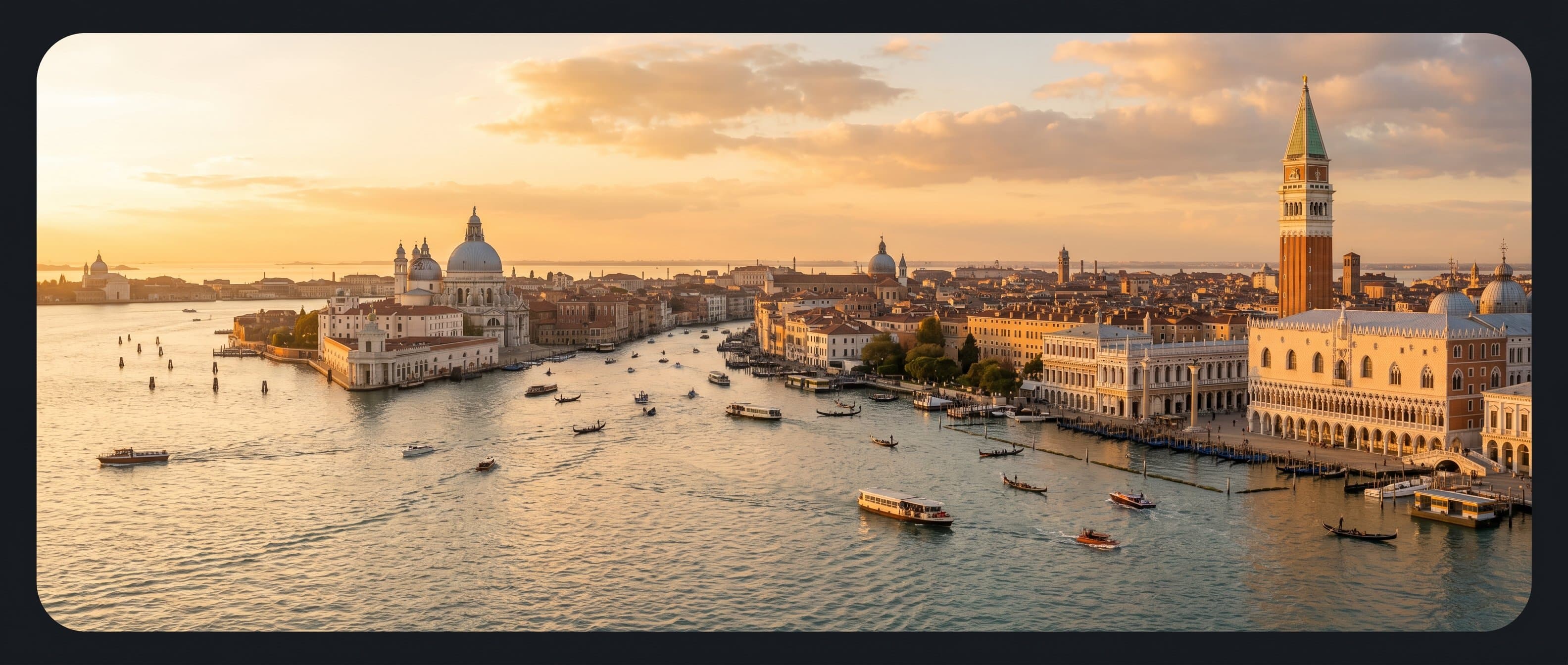
The Ultimate Venice Travel Guide 2026: Everything You Need to Know
Venice is a city that defies logic. Built on 118 submerged islands connected by over 400 bridges, it is an architectural miracle that has captured the imagination of travellers for centuries. But why does Venice deserve a place on the backpacker's list right now? Because in 2026, the city is undergoing a profound transformation. With the full implementation of the day-tripper entry fee and a renewed local focus on sustainable tourism, the infamous daytime crowds are finally being managed. For the overnight traveller—especially the digitally savvy backpacker aged 28 to 55—this means reclaiming the authentic Venetian twilight. When the cruise ships depart and the day-trippers vanish, you are left with misty canals, echoing footsteps down narrow calli, and lively bacari (local wine bars) serving up the true flavour of the Veneto.
Best Time to Visit
Timing your trip to Venice is the difference between a magical escape and a crowded, sweaty endurance test. The lagoon's climate fluctuates dramatically, and the city's events calendar dictates both pricing and foot traffic. Your absolute 'sweet spot' for 2026 is late September to early October. The stifling summer heat has dissipated, the Venice Film Festival crowds have flown home, and the lagoon glows with an autumnal golden light. Plus, you'll beat the late-autumn acqua alta (high water) season.
If you prefer cooler weather and absolute budget pricing, January is a hauntingly beautiful, mist-shrouded month to wander the canals without another soul in sight. Beware of February, which brings the Carnival (Carnevale); while spectacular, accommodation prices triple and the city bursts at the seams. Summer (June to August) is generally best avoided by budget backpackers due to intense humidity, peak flight pricing, and the pungent aroma of the lagoon at low tide.
Travel Planning & Booking
Reaching Marco Polo Airport (VCE) is highly convenient from most major global hubs. European travellers can rely on EasyJet, Ryanair (often flying into nearby Treviso Airport - TSF), and British Airways. From the US, direct seasonal flights via Delta (JFK to VCE) or American Airlines offer ease, though budget-minded travellers often find better deals flying into Milan (MXP) and taking the high-speed Trenitalia Frecciarossa train to Venice Santa Lucia station (a majestic 2.5-hour journey). To secure the best rates, book your flights 3 to 4 months in advance.
When it comes to platforms, use Skyscanner to track multi-city European routes, Trainline or Omio for booking the vital Italian railway connections, and Booking.com for securing accommodation with free cancellation—a must for flexible backpackers. 2026 Visa Crucial Update: The ETIAS (European Travel Information and Authorisation System) is now strictly enforced. UK, US, and UAE nationals must apply online for this €7 pre-authorisation at least 72 hours before departure. EU citizens maintain freedom of movement. Indian nationals must apply for a standard Schengen Visa well in advance, providing full biometrics and flight itineraries.
Travel Insurance
If there is one city where travel insurance is non-negotiable, it is Venice. You are navigating centuries-old, uneven cobblestones, slippery moss-covered steps, and crowded water buses. Dropped phones in the Grand Canal and twisted ankles on the Rialto Bridge are daily occurrences. Ensure your policy covers emergency medical evacuation (water ambulances are incredibly expensive), trip interruption (strikes—scioperi—in Italy's transport sector are common), and baggage protection.
Providers like World Nomads excel for active travellers venturing into the Dolomites after Venice, while SafetyWing provides excellent, rolling coverage for digital nomads. A practical tip: Always carry a printed copy of your insurance certificate. Italian medical clinics often require physical documentation alongside your passport before initiating non-lifesaving treatment.
Packing Guide
The single biggest mistake tourists make in Venice is bringing a massive, hard-shell wheelie suitcase. You will have to drag it over dozens of stepped bridges, infuriating locals and exhausting yourself. A 40L travel backpack is your best friend here. Venice’s climate requires layering. In summer, pack breathable linens and moisture-wicking fabrics, but remember the cultural dress code: shoulders and knees must be covered to enter St. Mark's Basilica and other churches. A lightweight pashmina is an essential daypack item for this purpose. In winter, thermal base layers, a windproof coat, and waterproof boots (for unexpected acqua alta) are vital.
Accommodation
Venice is divided into six sestieri (neighbourhoods). Budget backpackers and digital nomads should base themselves in Cannaregio—a vibrant, residential area with authentic bacari and lower prices—or Dorsoduro, the university district brimming with art galleries and affordable late-night eats. If you want absolute convenience for early flights, Mestre (the mainland district) offers hyper-modern hostels right next to the train station, just a 10-minute, €1.50 ride into the historic centre. Booking tip: Ensure your accommodation explicitly states whether it is in 'Venezia Centro' or 'Mestre'.
Getting Around Locally
Navigating the labyrinth is part of the fun. From Marco Polo Airport, the most scenic (and expensive) route is the Alilaguna water bus (€15, 1h 15m), but the smart backpacker takes the ATVO Express Bus (€10, 20 mins) directly to Piazzale Roma. Inside the city, walking is your primary mode of transport. When your feet ache, the ACTV vaporetto (water bus) is essential. Single tickets are a steep €9.50, so immediately buy a 1-day (€25) or 3-day (€45) pass if you plan to island-hop. Download the AVM Venezia Official App to buy tickets digitally and avoid kiosk queues. One common tourist mistake: Not validating your paper ticket at the white electronic machines before boarding. The fines are ruthless and spot-checks are frequent.
Top Tourist Attractions (Must-See)
Venice’s heavy hitters are famous for a reason. Start with St. Mark's Basilica, a masterpiece of Italo-Byzantine architecture. It opens at 9:30 AM, but arrive by 8:45 AM to beat the queue. Basic entry is €3, though paying the extra €5 to see the Pala d'Oro (golden altarpiece) is well worth it. Next door is the Doge's Palace (€30), the historic seat of Venetian power. Go after 3:00 PM when the tour groups have thinned out, and book the 'Secret Itineraries' tour to see Casanova's prison cell. Do not miss the Peggy Guggenheim Collection (€16) in Dorsoduro; this modern art haven on the Grand Canal offers a refreshing contrast to Renaissance art. Finally, take Vaporetto Line 12 to Burano Island. Famous for its neon-coloured fishermen's houses and lace-making, it is a photographer's dream. Insider tip for Burano: Visit at golden hour when the day-trippers have left, and the setting sun makes the colourful facades glow.
Local Food & Dining
Venetian cuisine is heavily focused on seafood from the lagoon. You must try Cicchetti—Venetian tapas consisting of crostini topped with whipped salted cod (baccalà mantecato) or spicy meatballs, washed down with an Ombra (a small glass of local wine). Try Sarde in Saor (sweet and sour sardines with pine nuts and raisins) and Bigoli in Salsa (thick pasta in an onion and anchovy sauce). For a mid-range sit-down meal, head to Trattoria Al Gatto Nero on Burano for their legendary seafood risotto. For authentic street food on a budget, Bacareto da Lele near Piazzale Roma offers mini-sandwiches and wine for under €5. Dietary note: Vegans will find Venice challenging but not impossible; look for 'accidentally vegan' dishes like pasta e fagioli (bean soup) without the pancetta.
Safety & Emergency Contacts
Venice is overwhelmingly safe regarding violent crime. However, the sheer density of crowds around the Rialto Bridge and St. Mark's Square makes it a paradise for skilled pickpockets. Wear your daypack on your front in crowded vaporettos and never leave your phone on a café table. Also, beware of the 'rose scam' where vendors aggressively place a flower in your hand and demand payment. The national emergency number is 112, but you can also dial 113 directly for the Police, 118 for an Ambulance, and 1530 for the Coast Guard (vital if you have a boating emergency). The nearest international-standard hospital is Ospedale SS. Giovanni e Paolo (Castello 6777), right in the city centre.
Useful Apps & Resources
Ditch generic apps and go local. CheBateo? is an absolute lifesaver—it translates to 'Which Boat?' and provides real-time vaporetto schedules. AVM Venezia handles your transport ticketing. The Fork is brilliant for securing last-minute restaurant reservations and snagging 20-50% off food bills at participating eateries. Google Maps works decently, but be prepared for GPS to bounce off the narrow stone alleyways. Always rely on the yellow signs painted on buildings directing you to 'San Marco' or 'Rialto'. Finally, check the official tourism portal, Venezia Unica (veneziaunica.it), for city passes and museum bundles.
Closing
Venice is a city that requires patience, curiosity, and a willingness to get profoundly, beautifully lost. By adopting the habits of a smart, sustainable traveller, you'll uncover a Venice that remains vibrant, proud, and completely intoxicating. Put away the map, follow the sound of clinking glasses down a dark alleyway, and let the Floating City reveal its secrets to you. Ready to plan your next Italian adventure? Explore more insider guides and travel hacks at ainexusworld.com.