
Introduction
There is a persistent, enchanting myth that Verona exists merely as a backdrop to Shakespeare's star-crossed lovers. While the fictional Juliet continues to draw millions to her famed balcony, the true magic of Verona lies in its spectacularly layered history, unpretentious elegance, and dynamic street life. As we look toward 2026, Verona rightfully claims its place as Northern Italy's most compelling destination for the digitally savvy, internationally minded backpacker. Unlike its hyper-touristed neighbour, Venice, Verona remains a living, breathing city where authentic Italian life unfolds daily in bustling piazzas and quiet, fresco-adorned alleyways.
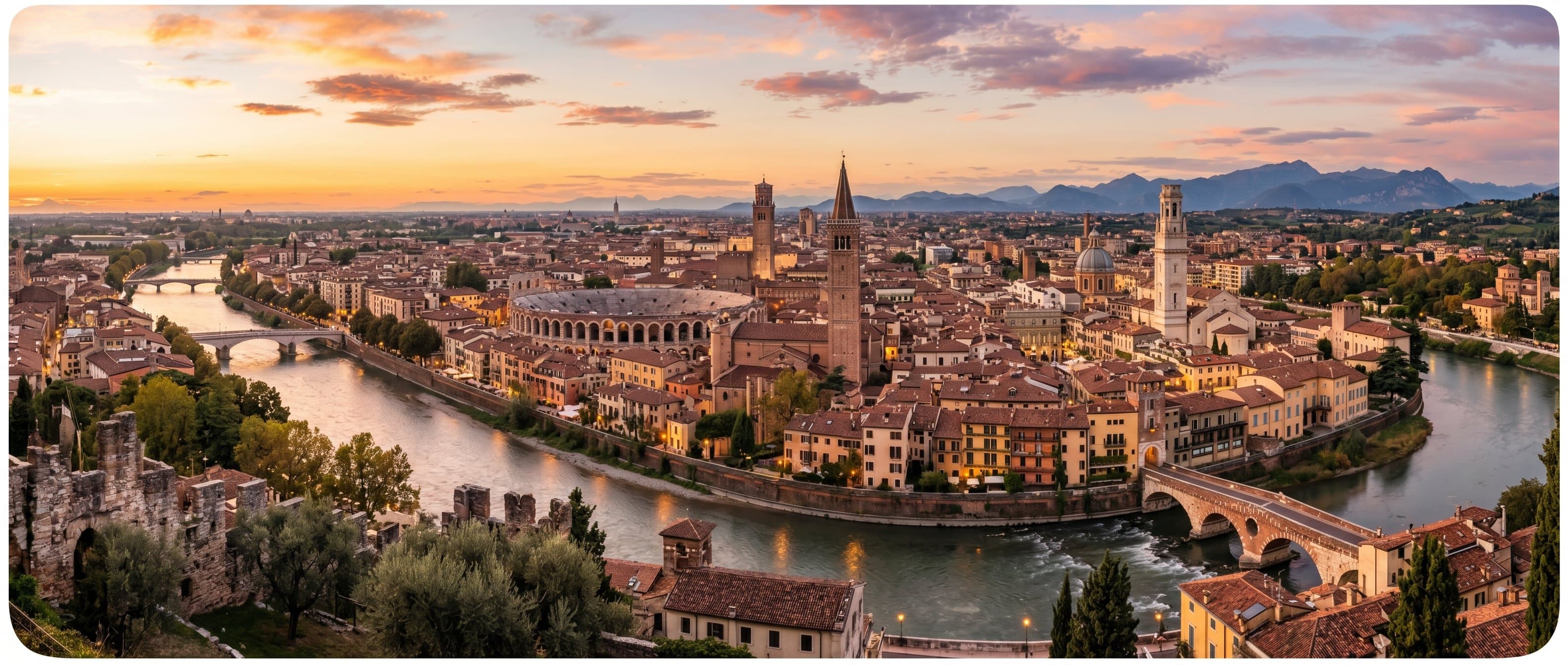
Why does Verona deserve a spot on your 2026 itinerary? Beyond the affordability compared to Milan or Florence, it is the city's unparalleled juxtaposition of eras. In a single morning, you can sip espresso in the shadow of a remarkably intact 1st-century Roman amphitheatre, walk across a bridge fortified by medieval warlords, and browse avant-garde fashion boutiques. The city serves as a masterclass in 'la dolce vita', offering world-class Valpolicella wines, hearty regional gastronomy, and a strategic position that makes it the perfect launchpad for exploring Lake Garda and the Dolomites. Verona rewards those who slow down, look up at the fading Renaissance frescoes on the palazzos, and embrace the rhythm of the Veneto.
Best Time to Visit
Verona experiences a humid subtropical climate, meaning summers are intensely hot and winters can be remarkably crisp. The absolute 'sweet spot' for budget backpackers and cultural explorers is late May to early June, or September to October. During these shoulder seasons, the brutal summer humidity has either yet to arrive or already broken, the skies are a brilliant cobalt blue, and accommodation prices drop significantly from their August peaks.
If you are a culture enthusiast, summer holds one major draw: the Verona Arena Opera Festival. Running from June to September, witnessing a performance inside the ancient Roman amphitheatre under the stars is nothing short of transcendent. However, backpackers should note that the city is flooded with well-heeled tourists during this period, driving up the cost of hostels and mid-range hotels. Winter brings a quiet, atmospheric charm to the city, especially when the Christmas markets take over Piazza dei Signori, though the damp chill requires serious layering.
Travel Planning & Booking
Verona is served by the Valerio Catullo Airport (VRN), though many international travellers find cheaper long-haul flights into Milan Malpensa (MXP) or Venice Marco Polo (VCE), seamlessly connecting to Verona Porta Nuova via Italy's ultra-efficient Trenitalia or Italo high-speed rail networks. When booking flights from the UK, British Airways and Ryanair offer direct routes to VRN. From the US, you will typically connect through major European hubs like Frankfurt or Munich via Lufthansa or United Airlines.
For 2026, travellers must be acutely aware of the new ETIAS (European Travel Information and Authorisation System) regulations. British, American, and UAE nationals, who traditionally enjoyed visa-free travel to the Schengen zone, must now apply for an ETIAS waiver online prior to departure. The process is swift, but arriving without it will result in denied boarding. Indian nationals continue to require a standard Schengen Visa, applied for well in advance. Always ensure your passport is valid for at least three months beyond your planned date of departure from the Schengen area.
Travel Insurance
Do not let Italy's world-class healthcare system lull you into a false sense of security; comprehensive travel insurance remains an absolute necessity for Verona. Why? The city's charming but unforgiving cobblestones are notorious for causing sprained ankles, and while violent crime is virtually non-existent, the crowded areas around Casa di Giulietta are prime hunting grounds for opportunistic pickpockets targeting smartphones and passports. Furthermore, if you plan to rent a Vespa or take day trips to the rugged trails of Lake Garda, you must ensure your policy covers adventure activities. Ensure your chosen policy offers robust coverage for trip cancellations—especially important given the unpredictability of European rail strikes.
Packing Guide
Packing for Verona requires a delicate balance between backpacker practicality and Italian sartorial elegance. Italians pride themselves on 'la bella figura' (making a good impression). Leave the baggy sweatpants and worn-out trainers at home; instead, pack smart-casual layers. A lightweight, tailored jacket or a chic linen shirt will help you blend in perfectly. The absolute must-bring item is a pair of high-quality, broken-in walking shoes with thick soles to absorb the impact of uneven medieval pavements.
One item tourists consistently over-pack is heavy, bulky outerwear in the shoulder seasons. Verona's climate is highly changeable, making lightweight layering far more practical. If visiting in summer, pack a breathable scarf or shawl—churches like the Basilica di San Zeno Maggiore strictly enforce a modest dress code, denying entry to anyone with bare shoulders or knees.
Accommodation
Verona’s accommodation scene caters to every bracket, but location is everything. The Centro Storico (Historical Centre) is the most convenient but expensive. For the budget-conscious backpacker, Veronetta—situated just across the Adige River—is the city's vibrant university quarter, brimming with affordable osterias, craft beer bars, and alternative art spaces. Alternatively, the San Zeno neighbourhood offers a quieter, deeply authentic local vibe while remaining within walking distance of the core attractions. Booking three to four months in advance is highly recommended, especially if your dates align with the Opera Festival or the Vinitaly wine fair in April.
Getting Around Locally
Upon arriving at Valerio Catullo Airport, the most efficient transit is the Aerobus (Line 199), which departs every 20 minutes and drops you squarely at Verona Porta Nuova train station for €7. From there, the city unfolds. Verona is fundamentally a walking city. Its historic core is compact, largely pedestrianised, and infinitely rewarding to explore on foot.
For longer journeys, the ATV (Azienda Trasporti Verona) bus network is reliable and cheap. One common tourist mistake is renting a car to see the city. Verona's centre is a strict ZTL (Zona a Traffico Limitato); driving into it without a permit will result in hefty automated fines. If you need a taxi, use the FreeNow app rather than attempting to hail one on the street, which is not standard practice in Italy.
Top Tourist Attractions (Must-See)
No trip to Verona is complete without stepping inside the Arena di Verona. Older than the Colosseum, this 1st-century amphitheatre is impeccably preserved. Try to visit right at opening time to avoid the midday sun and the massive tour groups. Next, navigate to the Casa di Giulietta (Juliet's House). While the balcony itself is a 20th-century addition, the 13th-century building and the bronze statue of Juliet in the courtyard have an undeniable, chaotic charm.
For sweeping views, cross the river to the Teatro Romano and Museo Archeologico, or take the funicular up to Castel San Pietro at sunset—the panoramic vistas over the terracotta rooftops are staggeringly beautiful and entirely free from the outside terrace. Art and history buffs must explore the Castelvecchio Museum, a formidable red-brick fortress housing a stellar collection of medieval and Renaissance art, brilliantly restored by architect Carlo Scarpa.
Local Food & Dining
Veronese cuisine is robust, deeply traditional, and less reliant on the tomato-heavy sauces of southern Italy. You must try Bigoli con le Sarde (thick, hand-pressed pasta with a rich sardine and onion sauce) and Risotto all'Amarone, which uses the region's famous, deeply complex red wine to create a rich, purple-hued masterpiece. Adventurous eaters might sample Pastissada de Caval, a slow-cooked horse meat stew that dates back to the Ostrogothic period and remains a beloved local delicacy.
Vegetarians will find solace in exceptional local cheeses like Monte Veronese and seasonal dishes featuring radicchio and asparagus. To save money, follow the local custom: drink your morning espresso standing at the bar (al banco) for around €1.20, rather than sitting at a table where a service charge (coperto) will heavily inflate the bill.
Safety & Emergency Contacts
Verona is exceptionally safe, boasting a low violent crime rate. As a backpacker, your primary concern will be petty theft in highly congested tourist choke-points, specifically around Piazza delle Erbe and the entrance to Juliet’s House. Always keep bags zipped and slung across your body. The city's main hospital, Ospedale di Borgo Trento, is highly regarded and accustomed to treating foreigners. In any true emergency, the pan-European 112 number will connect you to an English-speaking dispatcher who can route you to police, fire, or medical services.
Useful Apps & Resources
Digital preparation will elevate your Verona experience. Download the ATV Bus Verona app for seamless digital public transport ticketing. Trenitalia is essential for booking day trips to Lake Garda or Venice. TheFork offers excellent last-minute discounts at local restaurants, while FreeNow is the go-to taxi-hailing application. For official updates, the Verona Tourism Board (visitverona.it) is an invaluable resource for checking current museum hours and festival line-ups.
Closing
Verona is a city that captures the heart quietly but permanently. It offers the depth of Rome, the romance of Venice, and the culinary pedigree of Bologna, all wrapped in a manageable, walkable package that respects the budget backpacker. Whether you are sipping an Aperol Spritz as the sun dips behind the Arena, or getting lost in the labyrinthine streets of Veronetta, the city delivers pure, unadulterated Italian magic. Start planning your 2026 adventure today, and discover more insider guides at www.ainexusworld.com.
FAQ
Is Verona safe for tourists?
Yes, Verona is incredibly safe. Violent crime is rare. The main risk is pickpocketing in crowded areas like Juliet's Balcony and Piazza delle Erbe.
What is the best time to visit Verona?
Late May, June, and September offer the best balance of pleasant weather, manageable crowds, and access to the famous summer Opera Festival.
How many days do I need in Verona?
A 3-day trip is perfect. It gives you enough time to see the Roman ruins, explore the museums, and take a half-day trip to nearby Lake Garda.
Do I need a visa to visit Verona?
For 2026, UK, US, and UAE citizens will need an ETIAS waiver to enter Italy visa-free for up to 90 days. Indian citizens require a Schengen Visa.
What is the local currency and can I use credit cards?
The currency is the Euro (€). Credit cards and contactless payments are widely accepted everywhere, though keeping a few coins for small coffee purchases or tips is advisable.