
The Ultimate Barcelona Travel Guide 2026: Everything You Need to Know
Introduction
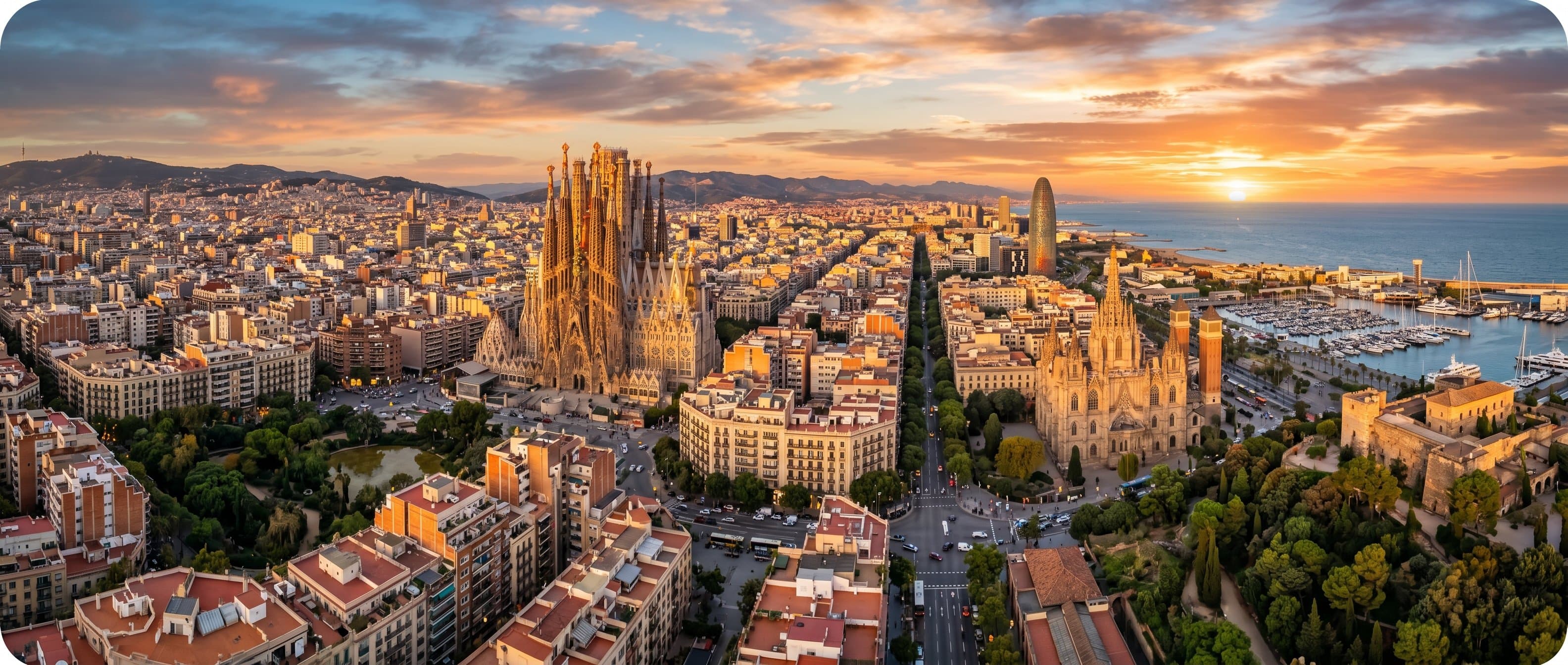
There is a distinct, electric energy that hums through the sun-drenched streets of Barcelona. Long considered the crown jewel of the Mediterranean, the Catalan capital seamlessly marries the gothic antiquity of its Roman roots with the avant-garde brilliance of Antoni Gaudí. But why does Barcelona deserve a top spot on your 2026 travel itinerary? As the city edges closer to the much-anticipated completion of the Sagrada Família (slated to finish its major towers this year), there has never been a more historic moment to visit. For the budget backpacker, internationally minded digital nomad, or culturally curious traveller, Barcelona is pioneering sustainable tourism, offering expansive pedestrianised 'superblocks' and enhanced public transport that make exploring both affordable and environmentally friendly. It is a city where you can admire world-class art in the morning, devour authentic tapas in a bustling market by noon, and watch the sunset over the Balearic Sea—all on a modest budget.
Best Time to Visit
Timing your visit to Barcelona is the difference between an enchanting Catalan escape and a sweaty, overcrowded slog. The absolute sweet spot for 2026 is the shoulder season, specifically May to mid-June and September to October. During these months, the Mediterranean sun is warm enough for beach days (averaging 20-25°C), but the stifling heat and overwhelming tourist hordes of August are notably absent.
If you visit in late September, you will coincide with La Mercè, Barcelona's largest annual festival. The city explodes with free concerts, spectacular fire runs (correfocs), and towering human castles (castells). Winter (January to February) is fantastic for budget backpackers seeking the lowest accommodation prices and crowd-free museum visits, though beach days will be off the table. Avoid August if possible; the humidity is punishing, many independent local restaurants close for their annual holidays, and premium pricing is the norm across all booking platforms.
Travel Planning & Booking
Getting to Barcelona is remarkably straightforward thanks to Josep Tarradellas Barcelona-El Prat Airport (BCN), one of Europe's best-connected hubs. For flights from the UK, EasyJet and British Airways offer dozens of daily routes from London, Manchester, and Edinburgh. US travellers can find direct flights via United Airlines (Newark) and Delta (JFK).
Booking lead times are critical in 2026. You must book flights at least 2-3 months in advance for summer dates, and secure major attraction tickets (like the Sagrada Família) at least three weeks prior. We recommend using Skyscanner for flexible date comparisons, Booking.com for secure hostel and mid-range hotel reservations with free cancellation, and GetYourGuide for skip-the-line attraction tickets.
Visa Requirements for 2026: A major change for 2025/2026 is the implementation of ETIAS (European Travel Information and Authorisation System).
- UK, US, & UAE Nationals: You can enter visa-free for up to 90 days within a 180-day period, but you must apply for an ETIAS waiver online before departure (costs approx €7).
- EU Nationals: Complete freedom of movement with a valid ID card or passport.
- Indian Nationals: Must apply for a standard Schengen Visa well in advance, requiring proof of accommodation, flights, and financial means.
Travel Insurance
Travel insurance is not an optional luxury in Barcelona; it is a vital necessity. While violent crime is incredibly rare, Barcelona holds an unfortunate reputation for highly skilled pickpockets, particularly around Las Ramblas, the Gothic Quarter, and on the Metro. You need a policy that offers robust coverage for stolen electronics and baggage, as well as comprehensive medical cover.
Top Providers for 2026:
- World Nomads: Ideal for backpackers. They cover a massive range of adventure activities and offer excellent tech/gear protection.
- SafetyWing: Perfect for digital nomads. It functions as a monthly subscription and covers standard medical and travel delays at a highly affordable rate.
- Allianz Travel: Best for comprehensive trip cancellation and interruption cover.
Packing Guide
Barcelona’s style is effortlessly chic but highly practical. As a coastal Mediterranean city, the climate dictates your wardrobe. For summer, pack breathable linens, comfortable walking trainers (sneakers), and a reliable pair of sunglasses. For winter, layer up with a mid-weight jacket and a scarf.
Must-bring items: A slash-proof, zip-closure crossbody bag. Backpacks are prime targets for pickpockets on the Metro. A universal European travel adapter, a reusable water bottle (tap water is safe, though highly chlorinated), and a portable power bank for long days of navigating via Google Maps.
Cultural dress considerations: While beachwear is perfect for Barceloneta, walking around the city centre shirtless or in just a bikini is actually illegal and can result in a hefty fine. When visiting the Cathedral of Barcelona or Sagrada Família, shoulders and knees must be covered.
What tourists over-pack: High heels. The Gothic Quarter and El Born are heavily cobbled. Stilettos will ruin your feet and your night out. Stick to stylish flats or comfortable, clean trainers.
Accommodation
Choosing the right neighbourhood makes or breaks your Barcelona experience.
Gràcia (Boutique/Authentic): Once an independent village, Gràcia retains a bohemian, local feel with leafy plazas and independent cafes. Casa Gràcia is an exceptional boutique hostel/hotel hybrid offering private suites and stylish dorms.
Eixample (Mid-Range/Architecture): Characterised by its grid-like layout and Gaudí masterpieces. Stay at Sercotel Rosellón, where the rooftop terrace offers unparalleled, unobstructed views of the Sagrada Família.
El Born (Luxury/Nightlife): Winding medieval streets packed with the city's best cocktail bars and tapas joints. For a luxury splurge, The Barcelona EDITION offers world-class amenities and a striking rooftop pool.
Booking Tip: Barcelona imposes a strict tourist tax (expected to rise slightly in 2026 to around €4-5 per night depending on accommodation type). Factor this into your daily budget, as it is usually payable in cash or card directly at the reception upon arrival.
Getting Around Locally
From Josep Tarradellas Barcelona-El Prat Airport, the most efficient budget route is the Aerobús (A1 for Terminal 1, A2 for Terminal 2). It costs €7.25, takes 35 minutes, and drops you at Plaça de Catalunya. The Metro L9S is €5.50 but often requires a change. Taxis offer a flat rate of around €30-40 to the city centre.
Locally, Barcelona’s public transport network (TMB) is exceptionally clean, air-conditioned, and efficient. The absolute best investment is the T-Casual ticket (approx €12.15 for 10 journeys). Note: The T-Casual is for individual use only and cannot be shared between multiple people on the same journey.
Recommended Apps: Download TMB App for real-time bus and metro tracking, and Cabify or Free Now (Uber operates in a limited capacity due to local taxi regulations).
Common Tourist Mistake: Renting a car. Parking is astronomically expensive, streets are narrow, and the city is highly walkable. Rely entirely on foot and the Metro.
Top Tourist Attractions (Must-See)
- Sagrada Família: Gaudí’s unfinished masterpiece. It matters because it is the architectural symbol of Barcelona. Hours: 9:00 AM - 6:00 PM (varies by season). Cost: €26. Best time: 9:00 AM or late afternoon for the stained-glass light. Insider tip: Book weeks in advance; tickets rarely exist at the door.
- Park Güell: A surreal public park boasting mosaic dragons and gingerbread gatehouses. Hours: 9:30 AM - 7:30 PM. Cost: €10. Best time: First entry slot of the day to beat the blistering sun and crowds. Insider tip: Pack your own water and snacks; the on-site cafes are heavily overpriced.
- Casa Batlló: Gaudí’s oceanic residential redesign on Passeig de Gràcia. Hours: 9:00 AM - 10:00 PM. Cost: €35. Best time: Evening for the 'Magic Nights' rooftop concert series. Insider tip: The audio guide (augmented reality tablet) is genuinely worth using here.
- The Gothic Quarter (Barri Gòtic): The labyrinthine medieval heart of the city. Hours: 24/7. Cost: Free. Best time: Early morning (7:00 AM) to experience the historic alleys entirely empty. Insider tip: Look for the Roman temple columns hidden inside a courtyard on Carrer del Paradís.
- Mercado de La Boqueria: Europe's most famous food market. Hours: 8:00 AM - 8:30 PM (Closed Sundays). Cost: Free to enter. Best time: 10:00 AM before the cruise ship crowds arrive. Insider tip: Walk past the fruit juice stalls at the front; the real, affordable gems (and freshest seafood) are towards the back.
- Picasso Museum: Houses over 4,000 early works of Pablo Picasso. Hours: 10:00 AM - 7:00 PM (Closed Mondays). Cost: €15. Best time: Thursday afternoons. Insider tip: Entry is completely free on Thursday afternoons from 4:00 PM and the first Sunday of each month, but you still must book a time slot online in advance.
Local Food & Dining
Catalan cuisine is a magnificent surf-and-turf collision of Mediterranean ingredients. You must try Pa amb tomàquet (rustic bread rubbed with garlic, ripe tomatoes, and olive oil), Patatas Bravas (fried potatoes with spicy sauce and aioli), Jamón Ibérico (acorn-fed cured ham), and Crema Catalana (a citrus-and-cinnamon-infused custard similar to crème brûlée).
- High-End: Disfrutar ($$$) located in Eixample. Ranked among the best restaurants in the world, serving mind-bending Mediterranean tasting menus.
- Mid-Range: Cervecería Catalana ($$). A bustling, no-reservations tapas institution. Expect a wait, but the crispy camembert and fresh seafood montaditos are worth it.
- Street Food/Market: Pinotxo Bar inside the Boqueria Market ($). Sit at the counter and point at whatever is fresh that day—usually incredible chickpeas with morcilla (blood sausage).
Dietary Note: Vegetarians and vegans will thrive in Gràcia, but traditional Catalan tapas relies heavily on pork and seafood. Always clarify if a dish has jamón, as locals sometimes treat it as a seasoning rather than meat!
Safety & Emergency Contacts
Barcelona is extremely safe regarding violent crime, but the petty theft is practically an Olympic sport. Be hyper-vigilant in Metro stations (especially Sants and Espanya), on Las Ramblas, and at the beach. Never leave your phone on a restaurant table, and never hang your bag on the back of a chair.
Local Emergency Numbers:
- General/National Emergency: 112 (European standard, operators speak English)
- National Police (Policía Nacional): 091
- Local Police (Guardia Urbana): 092
- Ambulance/Medical: 061
- Fire Brigade: 080
- Tourist Police (SATE): +34 932 853 834 (Specifically for filing police reports in foreign languages)
Embassies:
- UK Consulate: +34 933 66 62 00 (Av. Diagonal, 477, 13th Floor, 08036)
- US Consulate: +34 932 80 22 27 (Paseo Reina Elisenda de Montcada, 23, 08034)
- India Consulate: +34 932 12 09 16 (C/ Doctor Fleming, 21, Entrada B, Local 1, 08017)
Useful Apps & Resources
Arm yourself with these digital tools before landing:
- TMB App: The official transport app for Metro and bus schedules.
- Cabify: The premier ride-hailing app, preferred over Uber in Barcelona.
- TheFork: Essential for booking restaurant tables and finding steep dining discounts.
- Google Translate: Download the Spanish and Catalan language packs offline.
- WhatsApp: The absolute standard for communicating with local tour guides and Airbnb hosts.
Closing
Barcelona is a city that demands to be felt rather than just seen. Whether you are marvelling at the colossal spires of the Sagrada Família, sharing plates of garlicky bravas in a packed Gràcia plaza, or losing yourself in the ancient shadows of the Gothic Quarter, this Catalan capital will leave an indelible mark on your soul. Prepare well, stay street-smart, and let the Mediterranean rhythm dictate your days. Ready to plan your next great adventure? Discover more expert travel insights, digital nomad tips, and budget itineraries at travelnexusworld.com.
FAQ
Is Barcelona safe for tourists?
Yes, it is highly safe regarding violent crime. However, petty theft and pickpocketing are rampant, particularly in crowded tourist zones and on the Metro. Use a crossbody bag and remain vigilant.
What is the best time to visit Barcelona?
May, June, September, and October. These shoulder-season months offer beautiful Mediterranean weather, fewer crowds than August, and the chance to enjoy local festivals like La Mercè.
How many days do I need in Barcelona?
A minimum of 4 full days is recommended to comfortably see the major Gaudí architectural sites, explore the Gothic Quarter, enjoy the food scene, and spend an afternoon at the beach or Montjuïc.
Do I need a visa to visit Barcelona?
For UK, US, and UAE nationals, no visa is required for stays under 90 days, but an ETIAS waiver is mandatory starting in 2025/2026. Indian citizens require a Schengen visa.
What is the local currency and can I use credit cards?
The currency is the Euro (€). Credit and debit cards (Visa/Mastercard) are accepted almost everywhere, including for small purchases. Contactless payment is the norm, but carrying €20-30 in cash is smart for small bakeries or tips.