
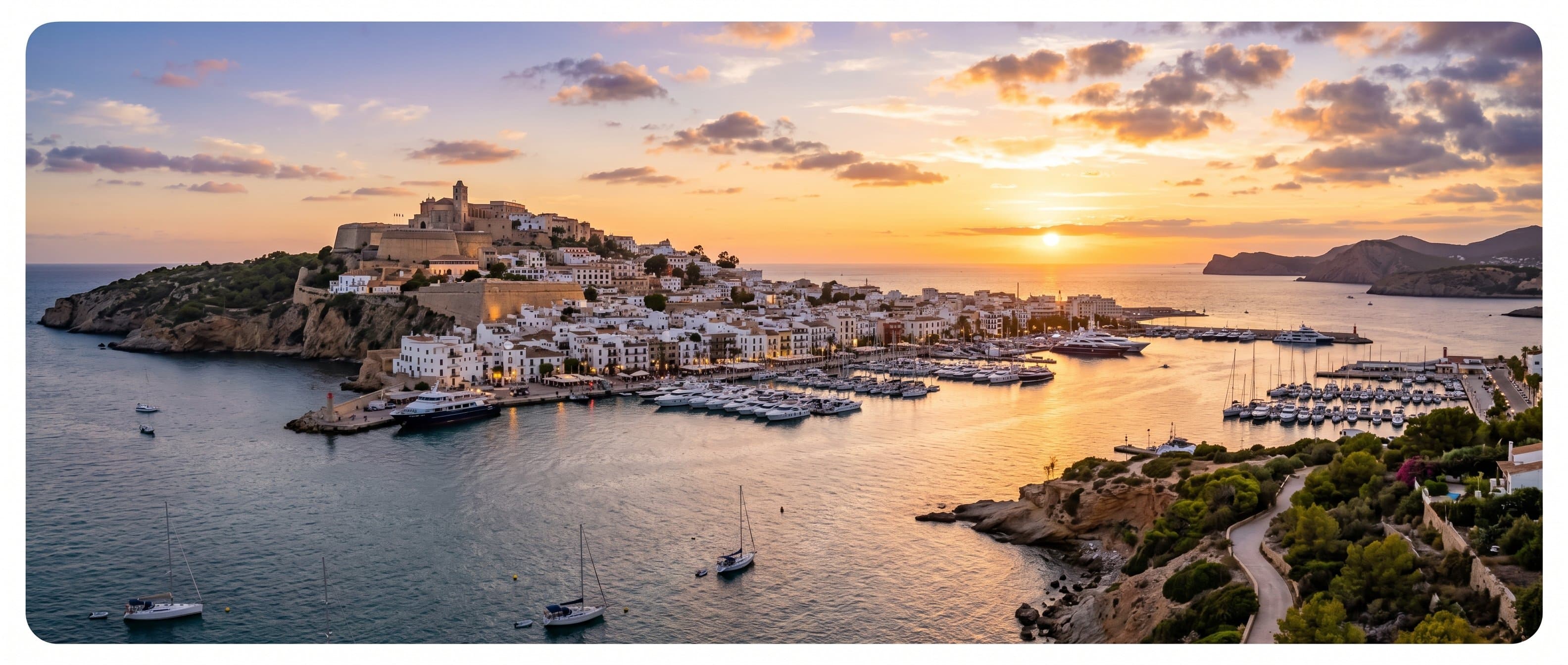
The Ultimate Ibiza Travel Guide 2026: Everything You Need to Know
Meta Description: Discover the ultimate Ibiza travel guide for 2026. Explore hidden calas, budget backpacker tips, up-to-date visa rules, and local secrets for an epic trip.
Target Keywords: Ibiza travel guide 2026, Ibiza budget backpacker, best beaches Ibiza, Ibiza transport tips, Dalt Vila guide, Ibiza off the beaten path, Ibiza travel itineraries, Spain island hopping, ETIAS Ibiza 2026.
Introduction
For decades, Ibiza has been synonymous with pulsating superclubs and sunset DJ sets. However, the Ibiza of 2026 has matured, revealing a destination that deserves a place on every discerning traveller's list for entirely different reasons. Beyond the strobe lights lies the 'White Isle'—a rugged, pine-clad sanctuary brimming with UNESCO-protected history, bohemian artisan markets, and some of the Mediterranean's most spectacular, translucent coves.
One compelling, unique reason to visit Ibiza right now is its rapid transition towards sustainable, agro-tourism and wellness culture. The north of the island, particularly around Sant Joan, has become a haven for off-grid yoga retreats, farm-to-table dining, and hidden hiking trails that culminate at deserted cliff edges. For the digitally savvy backpacker or mid-range explorer, Ibiza offers the ultimate duality: you can dance until dawn on Friday, and spend Saturday morning meditating on the quiet, golden sands of Cala Llentrisca. Whether you are tracing the cobblestones of a 16th-century fortress or savouring fresh seafood by the water, Ibiza promises a transformative Mediterranean escape.
Best Time to Visit
Timing your Ibiza trip is the single most crucial decision you will make, dictating everything from your budget to your personal space on the beach.
- January to March: The island is fast asleep. Weather is mild to cool (10-15°C). While prices are rock-bottom, 80% of tourist infrastructure, including many hotels and restaurants, is closed.
- April to May: The awakening. Temperatures hit 18-24°C. Opening parties begin in late May. This is beautiful for hiking and cycling, with wildflowers blooming and manageable crowds.
- June: The energy shifts. Weather is hot (25-28°C), the sea warms up, and clubs are fully operational. Prices rise sharply.
- July to August: Peak madness. Temperatures exceed 30°C. Expect overcrowded beaches, premium pricing on everything, and intense heat. Only recommended if your primary goal is the major club residencies.
- September: The closing parties take place. The sea is wonderfully warm, but the frenetic summer energy begins to wane.
- October to December: October is pleasantly warm (22°C) and excellent for budget travellers. November and December see the return of quiet, local island life, with increased rainfall and cool breezes.
The Sweet Spot: Late September to early October. The Mediterranean Sea has been baking all summer and is perfectly warm for swimming. The closing parties offer legendary nightlife if you want it, but the island’s daytime pace softens, and accommodation prices drop by up to 40% compared to August.
Travel Planning & Booking
Flying into Ibiza Airport (IBZ) is straightforward from most major European hubs. The best budget routes from the UK are operated by Ryanair, EasyJet, and Jet2 flying direct from London, Manchester, and Bristol. If you are flying from the US, India, or the UAE, you will typically route through Madrid (Barajas) or Barcelona (El Prat) before taking a short 45-minute connecting flight via Iberia, Vueling, or Air Europa.
Booking Lead Times: For a summer trip (June-September), book flights and accommodation at least 4–5 months in advance. Ibiza's budget options disappear astonishingly fast.
Top 3 Booking Platforms:
- Hostelworld: Essential for solo backpackers to find the few genuine budget community hubs (like Amistat Island Hostel).
- Booking.com: Best for securing flexible cancellation policies on mid-range agroturismo stays and guesthouses.
- Skyscanner: Crucial for tracking multi-city itineraries if you plan to island-hop from Mallorca or mainland Spain.
Visa Requirements (2026 Updates): Spain is part of the Schengen Area. Starting in mid-2025/2026, the ETIAS (European Travel Information and Authorisation System) is mandatory for visa-exempt nationalities.
- UK & US Citizens: Visa-free for up to 90 days in any 180-day period, but an approved ETIAS waiver (€7) is strictly required before boarding.
- EU Citizens: Freedom of movement; only a valid National ID or Passport required.
- Indian Nationals: A pre-approved Schengen Visa is required. Processing times can take up to 4-6 weeks in peak summer.
- UAE Nationals: Visa-free for 90 days, but subject to the new ETIAS requirement.
Entry Checklist: Passport (valid for 3 months beyond departure date), return flight ticket, ETIAS approval (if applicable), and proof of sufficient funds and accommodation (occasionally checked at border control).
Travel Insurance
Never underestimate the necessity of robust travel insurance in Ibiza. Beyond standard delays and lost luggage, Ibiza presents specific risks. Scooter and quad bike accidents on the island's winding, poorly lit rural roads are incredibly common. Additionally, private medical care in Ibiza is prohibitively expensive.
Cover to look for: Ensure your policy explicitly covers "Class 1/2" motor scooters (if you plan to rent one), adventure activities like cliff jumping or scuba diving, and comprehensive medical evacuation to the mainland if specialist surgery is required.
3 Recommended Providers:
- World Nomads: The gold standard for backpackers; allows you to buy or claim while already travelling and covers a massive range of adventure sports.
- SafetyWing: Phenomenal for digital nomads seeking an affordable, subscription-style safety net.
- Allianz Travel: Best for comprehensive, high-tier trip cancellation protection, particularly useful if you've booked expensive club tickets or VIP packages.
Practical Tip: Always photograph your rental scooter from every angle before driving away. Unscrupulous rental agencies in San Antonio frequently try to charge tourists for pre-existing scratches.
Packing Guide
Ibiza's climate is classic Mediterranean. Summer requires lightweight, breathable linens and cottons. Winter requires layers, as old stone buildings lack central heating.
Clothing Checklist: Swimwear, a linen shirt for evening dining, comfortable walking trainers for exploring Dalt Vila's steep cobbles, and a light jacket for coastal evening breezes.
Cultural Dress: While Ibiza is famously liberal, Spanish culture remains respectful. Walking through town centres or entering churches in a bikini or bare-chested is frowned upon (and technically illegal in some municipalities, risking a fine).
Must-Bring Items: Reef-safe sunscreen (protect the Posidonia oceanica meadows), a European 2-pin plug adapter, and a durable reusable water bottle.
Tourist Over-pack: Stilettos and heavy, formal clubwear. Ibiza’s vibe, even in high-end venues, is "boho-chic" or elevated casual. Cobblestones and sand make high heels a logistical nightmare.
Accommodation
Choosing the right neighbourhood dictates your entire Ibiza experience.
- Ibiza Town (Dalt Vila & Surroundings): Best for culture, boutique shopping, and high-end dining. Upscale and romantic.
- Sant Antoni de Portmany (San Antonio): The undisputed hub for budget backpackers and famous sunsets. It can be rowdy, but it offers the cheapest beds and food.
- Santa Eulalia: Perfect for a quieter, more mature vibe, excellent gastronomy, and wellness retreats.
Accommodation Picks:
- Luxury: OKU Ibiza (San Antonio surrounds) – A stunning, brutalist-meets-boho five-star retreat with laid-back energy and sensational poolside DJs.
- Mid-Range: Hostal La Torre (Cap Negret) – Set on a cliffside, offering one of the most iconic, relaxed sunset views on the island without breaking the bank.
- Budget/Unique: Amistat Island Hostel Ibiza (San Antonio) – The best-equipped hostel on the island, featuring a pool, communal kitchens, and organised group events.
Booking Tip: If travelling in July or August, look for "Agroturismos" (farm stays) in the central island (like Santa Gertrudis). They are often cheaper than coastal hotels and offer a beautifully authentic, quiet escape from the crowds.
Getting Around Locally
Transport in Ibiza requires patience. From the airport to the city centre, your best budget option is the L10 Bus, which runs every 20-30 minutes, costs roughly €3.60, and takes 30 minutes to reach Ibiza Town. Taxis are available at the official rank outside arrivals; a ride to Ibiza Town costs €15-€20, while a trip to San Antonio runs €30-€40.
Best Local Transport: The island's bus network is cheap and covers major towns, but it rarely reaches secluded beaches. Renting a scooter (approx. €25-40/day) is the ultimate way to explore, granting access to hidden northern calas.
Recommended Apps: Download Ibiza Bus for official timetables, and Cabify (as Uber's presence is severely restricted due to local taxi union laws).
Common Tourist Mistake: Relying entirely on taxis at 4:00 AM after a club closes. The queues can be hours long. Always use the Discobus—a cheap, dedicated night bus network linking major clubs and resorts safely.
Top Tourist Attractions (Must-See)
- Dalt Vila (Old Town): Why it matters: This UNESCO World Heritage site is a breathtaking 16th-century fortress featuring winding alleys and panoramic views. Hours: 24/7 (museums vary). Cost: Free to walk. Best Time: Early morning or late afternoon to avoid the blistering heat. Insider Tip: Wear high-grip shoes; the ancient cobblestones are notoriously slippery.
- Es Vedrà Viewpoint (Torre des Savinar): Why it matters: A mystical, uninhabited limestone rock rising 400m out of the sea, steeped in local legends and magnetic anomalies. Hours: 24/7. Cost: Free. Best Time: Sunset. Insider Tip: Bring a picnic and arrive 2 hours before sunset to secure a viewing spot on the cliffs.
- Las Dalias Hippy Market: Why it matters: The heartbeat of Ibiza's bohemian past, featuring artisan crafts, live acoustic music, and street food. Hours: Saturdays 10:00 AM - 8:00 PM (Night markets in summer). Cost: Free entry. Best Time: Saturday morning. Insider Tip: Haggle politely, but recognise that genuine handmade goods warrant their price.
- Cala Comte: Why it matters: Frequently voted the most beautiful beach on the island, featuring shallow turquoise waters and views of offshore islets. Hours: 24/7. Cost: Free. Best Time: 9:00 AM. Insider Tip: There is virtually no shade; bring your own umbrella or risk severe sunburn.
- Puig de Missa (Santa Eulalia): Why it matters: A fortified 16th-century church perched on a hill, offering insight into how locals defended against pirate attacks. Hours: 10:00 AM - 2:00 PM. Cost: Free. Best Time: Morning. Insider Tip: Walk through the adjacent tiny graveyard for incredible coastal views.
- Cova de Can Marçà: Why it matters: A multi-level cave system once used by smugglers, featuring stalactites and underground lakes. Hours: 10:30 AM - 5:30 PM. Cost: €12. Best Time: Midday (it offers a cool escape from the sun). Insider Tip: The guided tour includes an artificial light and water show that is slightly kitsch, but the cliffside café outside offers stellar views.
Local Food & Dining
Ibicenco cuisine is a rich, rustic blend of Mediterranean seafood and hearty farm ingredients.
- Must-try dishes: Bullit de Peix (a traditional fish stew followed by a saffron rice dish cooked in the broth), Sofrit Pagès (a hearty stew of chicken, lamb, and Ibizan sausages like sobrasada), and Flaó (a unique medieval dessert pie made of sheep/goat cheese and spearmint). Wash it down with a glass of Hierbas Ibicencas, an aniseed-flavoured herbal liqueur served on ice.
- High-end: Es Tragón (San Antonio) – The island's first Michelin-starred restaurant, offering highly inventive tasting menus celebrating local produce.
- Mid-range: La Bodega (Ibiza Town) – Situated at the foot of Dalt Vila, it serves sensational, reasonably priced tapas in a lively, cavernous setting.
- Street Food/Budget: Bar San Juan (Ibiza Town) – A historic, no-reservations local institution offering massive portions of traditional food at backpacker prices.
Dietary Note: Traditional Spanish food leans heavily on pork and seafood. However, Ibiza is one of Europe's most vegan-friendly destinations, with countless plant-based cafes particularly clustered around Santa Gertrudis and San Juan.
Safety & Emergency Contacts
Ibiza is generally very safe, with low levels of violent crime. However, petty theft is rampant during summer. Pickpockets target crowded sunset spots, busy markets, and sleeping tourists on beaches. Avoid walking alone on unlit rural roads at night, and never leave valuables unattended in your rental car. Drink spiking is unfortunately reported in major clubs; never leave your drink unattended.
Local Emergency Numbers (Real & Verified):
- National Emergency (All services, English spoken): 112
- Ambulance: 061
- National Police (Policía Nacional - serious crimes): 091
- Local Police (Policía Local - traffic/noise): 092
- Fire Brigade: 080
Nearest International Hospital: Policlinica Nuestra Señora del Rosario (Vía Romana, 18, 07800 Eivissa). For public emergencies, head to Hospital Can Misses.
Embassy Contacts:
- UK Vice Consulate (Ibiza): Avenida Isidoro Macabich 45, 1º, 07800 Ibiza. Tel: +34 93 366 6200
- US Consular Agency (Palma de Mallorca - closest to Ibiza): Edificio Reina Constanza, Carrer de Porto Pi, 8, 9D, 07015 Palma. Tel: +34 971 40 89 65
- Indian Embassy (Madrid - jurisdiction covers Ibiza): Avenida de Pío XII, 30-32, 28016 Madrid. Tel: +34 913 09 88 70
Useful Apps & Resources
- Ibiza Bus: Essential for navigating the island’s public transport and Discobus schedules.
- Cabify: The most reliable ride-hailing app on the island (better than Uber here).
- Dice: The best app for discovering and booking underground gigs, club nights, and events securely.
- TheFork: Great for securing restaurant reservations and finding up to 30% discounts on food bills.
- Google Translate: Download the Spanish (and ideally Catalan) language packs for offline use.
- Official Tourism Board: ibiza.travel – Excellent for verifying official hiking routes and cultural agendas.
Closing
Ibiza is an island of beautiful contradictions. It will happily drain your wallet at a superclub, but it will just as freely offer you a priceless, golden sunset over Es Vedrà. By planning ahead, respecting local customs, and venturing beyond the major resorts, you will discover a soulful, breathtaking destination that begs to be returned to year after year. For more insider guides, hidden itineraries, and global travel inspiration, continue exploring at travelnexusworld.com.
FAQ
- Is Ibiza safe for tourists? Yes, violent crime is rare. The main hazards are pickpockets in crowded areas, opportunistic theft from rental cars, and road accidents. Keep your wits about you and standard travel precautions apply.
- What is the best time to visit Ibiza? The ultimate sweet spot is late September to early October. The weather is still warm, the sea is perfect for swimming, and prices begin to drop significantly as the peak summer crowds depart.
- How many days do I need in Ibiza? A minimum of 5 days is recommended to balance nightlife, historical sightseeing in Dalt Vila, and exploring the serene beaches of the north.
- Do I need a visa to visit Ibiza? Ibiza is in Spain (Schengen Area). UK, US, and UAE citizens are visa-free for up to 90 days but will require an ETIAS from mid-2025/2026. Indian nationals require a pre-arranged Schengen Visa.
- What is the local currency and can I use credit cards? The currency is the Euro (€). Credit and debit cards (Visa/Mastercard) are accepted almost everywhere, from taxis to small cafes. Carry around €50 in cash for small purchases at hippy markets or rural beach shacks.