
Introduction
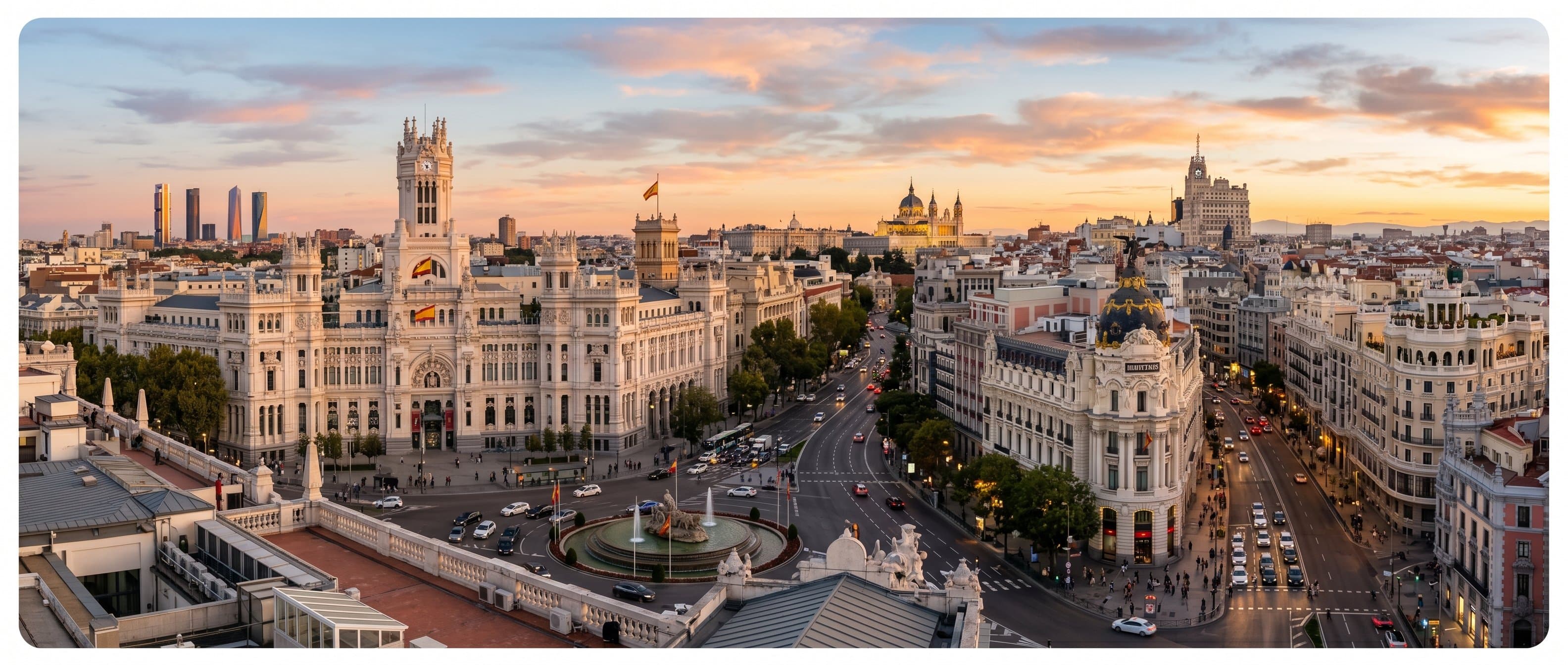
Madrid in 2026 is no longer just a stopover on the way to the coast; it is the definitive European destination for the discerning traveller. While Barcelona offers the sea and Paris offers the romance, Madrid offers the vida—a lifestyle so infectious it transforms visitors into temporary locals. The city has recently undergone a significant transformation with the completion of the 'Madrid Nuevo Norte' project and the total renovation of the Santiago Bernabéu Stadium, turning the city into a futuristic hub of sport, business, and leisure. Whether you are here for the 'Golden Triangle of Art' or the late-night vermut tradition, Madrid delivers an intensity and warmth that is unmatched in Northern Europe.
Best Time to Visit
Madrid’s climate is continental—dry and prone to extremes. Choosing your window is essential for comfort. The 'sweet spot' is undoubtedly May to June. During these months, the city is in full bloom, the terraces (terrazas) are buzzing, and the heat is pleasant rather than punishing. Alternatively, October offers golden light and crisp air, perfect for museum-hopping.
Seasonal Breakdown
- January: Cold (5-10°C). Clear blue skies. Low crowds. Great for budget travellers.
- February: Chilly (5-12°C). ARCOmadrid art fair brings a creative buzz.
- March: Unpredictable (10-15°C). Spring begins to stir; prices start to rise.
- April: Pleasant (15-20°C). Easter processions (Semana Santa) are culturally significant.
- May: Warm (18-25°C). San Isidro Festival brings traditional dress and concerts. Peak season.
- June: Hot (22-30°C). Madrid Pride (MADO) is one of the largest in the world.
- July: Very Hot (25-35°C). High summer. Locals head to the coast. Afternoon siestas are mandatory.
- August: Scorchingly Hot (25-38°C). Many local shops close, but Veranos de la Villa festival offers great evening culture.
- September: Warm (20-28°C). The city wakes up again. Fashion week begins.
- October: Pleasant (15-22°C). The best month for walking tours and Retiro Park’s autumn colours.
- November: Cool (10-16°C). Frequent rain, but fewer tourists at major galleries.
- December: Cold (5-12°C). Christmas markets in Plaza Mayor and spectacular lights.
Travel Planning & Booking
For a seamless 2026 experience, book flights 4-6 months in advance. For accommodation, 3 months is the threshold for the best boutique hotels. Booking Platforms: Use Skyscanner for flight comparisons, Booking.com for the widest hotel inventory, and GetYourGuide for skip-the-line tickets to the Prado and Royal Palace.
Visa Requirements 2026
- UK Nationals: Visa-free for up to 90 days. ETIAS (European Travel Information and Authorisation System) is mandatory for 2026.
- US Nationals: Visa-free for 90 days. Mandatory ETIAS registration required before travel.
- EU Nationals: No visa required; freedom of movement applies.
- Indian Nationals: Standard Schengen Visa required. Must apply via BLS International Spain.
- UAE Nationals: Visa-free for 90 days (Schengen waiver).
Travel Insurance
Travel insurance is non-negotiable for Spain. While the healthcare is excellent, private costs for tourists are high. Ensure your policy covers theft (pickpocketing is common in tourist areas) and medical repatriation. Recommended providers include World Nomads (adventure/flexibility), SafetyWing (value for digital nomads), and Allianz Assistance (comprehensive premium coverage).
Packing Guide
Madrid is a stylish city. Think 'Smart Casual'. Must-Bring: Comfortable leather trainers (for cobblestones), a light trench coat for spring/autumn, and high-quality sunglasses. Cultural Note: Short-shorts and flip-flops are for the beach; in Madrid, they mark you instantly as a tourist. Locals dress up for dinner, even on Tuesdays. Over-packed item: Heavy umbrellas—Madrid is one of Europe's sunniest capitals; a light foldable one is plenty.
Accommodation
1. Salamanca (Luxury): The 'Golden Mile'. Stay at the Rosewood Villa Magna for understated elegance and world-class service. Best for high-end shopping and safety.
2. Malasaña (Boutique/Vibe): The hipster heartland. Stay at the Only YOU Boutique Hotel Madrid. It’s set in a restored 19th-century palace and offers a brilliant social atmosphere.
3. Chamberí (Mid-Range/Authentic): A residential gem. Stay at Hotel Orfila or Dear Hotel Madrid for stunning rooftop views. Perfect for those who want to escape the Gran Vía crowds.
Getting Around Locally
Airport to City: The Cercanías C1 train is the fastest (25 mins, €2.60). The Exprés Aeropuerto bus (yellow) runs 24/7 for €5. Taxis have a flat rate of €30 to the central M-30 zone. Inside the City: The Metro is exceptionally clean and efficient. Use the Multi Card (contactless). Common Mistake: Relying on Uber. Use Cabify—it’s the local favourite, often cheaper and with better cars.
Top Tourist Attractions
- The Prado Museum: The world's finest collection of European art. Hours: 10:00-20:00. Cost: €15. Tip: Free entry Mon-Sat 18:00-20:00, but queues start at 17:00.
- Royal Palace: Western Europe’s largest palace. Hours: 10:00-19:00. Cost: €14. Tip: Book the first slot of the day to see the Throne Room without the crowds.
- Retiro Park: A UNESCO World Heritage site. Hours: 06:00-00:00. Cost: Free. Tip: Visit the Crystal Palace at sunset for incredible photos.
- Reina Sofia: Home to Picasso’s 'Guernica'. Hours: 10:00-21:00. Cost: €12. Tip: The garden courtyard is a peaceful spot for a coffee.
- Santiago Bernabéu Stadium: The new 2026 multi-purpose hub. Hours: 09:30-19:00. Cost: €25+. Tip: Even non-football fans will enjoy the panoramic roof walk.
- Temple of Debod: An authentic Egyptian temple. Hours: 10:00-20:00. Cost: Free. Tip: The best spot in the city for sunset views over the Casa de Campo.
Local Food & Dining
Spanish dining is a marathon, not a sprint. Lunch starts at 14:00, dinner at 21:00. Must-try: Cocido Madrileño (chickpea stew) and Bocadillo de Calamares (squid sandwich). Fine Dining: DiverXO (3 Michelin stars) for a theatrical experience. Mid-Range: Sala de Despiece in Ponzano for innovative tapas. Market: Mercado de San Miguel—touristy but essential for a first-timer's vermut and oyster pairing.
Safety & Emergency Contacts
Madrid is generally very safe, but pickpockets are professional in Puerta del Sol and Plaza Mayor. Keep bags in front of you. Emergency Numbers: National Emergency: 112, Police: 091, Ambulance: 061. Hospital: Hospital Universitario La Paz (+34 917 27 70 00).
Useful Apps
- Citymapper: Best for navigating the Metro and bus lines.
- Cabify: For reliable, high-quality ride-hailing.
- TheFork (ElTenedor): For restaurant reservations and discounts.
- Google Translate: Essential for menus in non-tourist districts.
- Metro de Madrid Official: Real-time train data.
Closing
Madrid is a city that demands you slow down and savour the moment. From the velatón at a local bar to the silent majesty of the Velázquez galleries, it is a destination that rewards the curious. Start planning your 2026 adventure today. For more expert travel insights and global guides, explore ainexusworld.com.
FAQ
Is Madrid safe for solo travellers? Yes, it is one of the safest capitals in Europe. Normal urban precautions apply regarding petty theft.
How many days do I need? 3 days for the highlights, 5 days if you want to include a day trip to Toledo or Segovia.
Can I drink tap water? Yes, Madrid has some of the best quality tap water in Spain.