
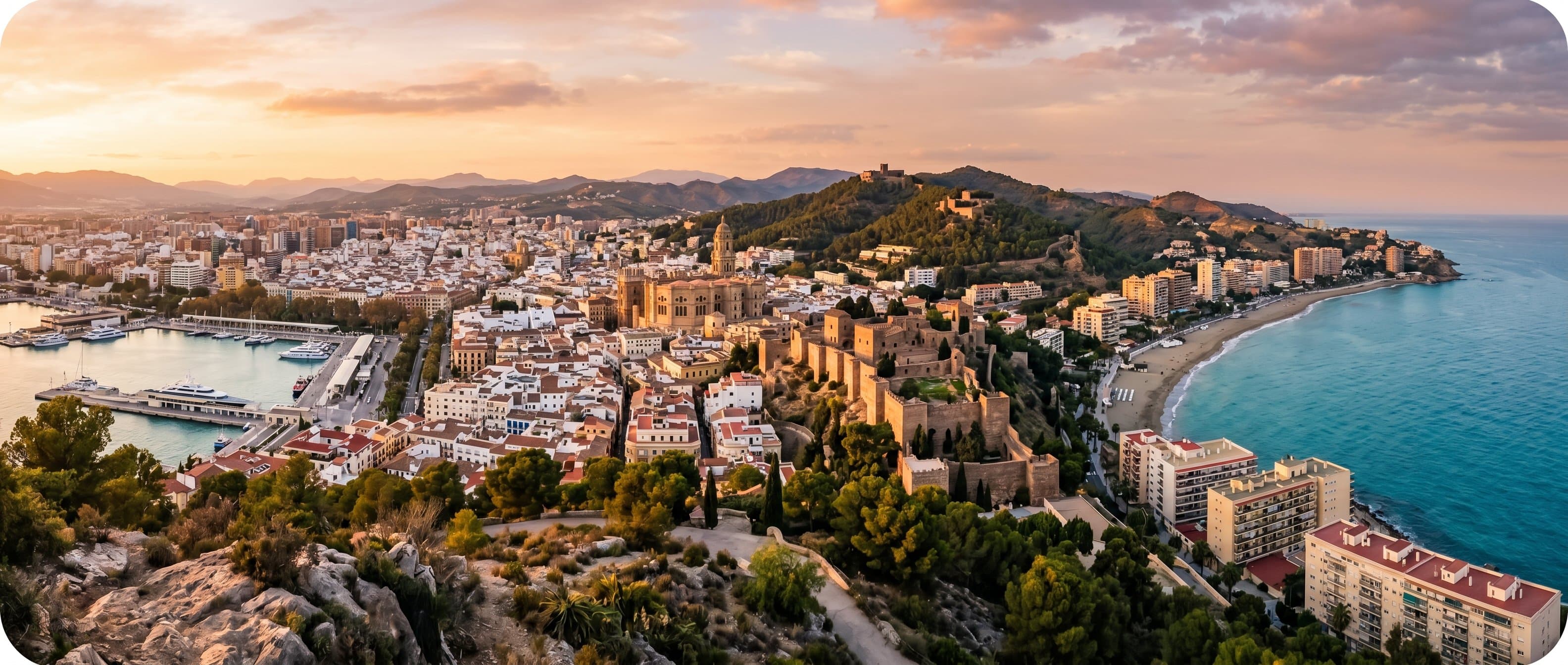
The Ultimate Malaga Travel Guide 2026: Everything You Need to Know
Introduction
For decades, Malaga was treated as little more than a transit hub—an airport where sun-seeking holidaymakers touched down before immediately catching a transfer to Marbella or Torremolinos. But skip ahead to 2026, and ignoring Malaga is a traveller's biggest mistake. Today, this 3,000-year-old port city stands proudly as Andalusia's dynamic cultural capital. Why does Malaga deserve a place on your list right now? It is the rare European city that has successfully modernised without losing its soul. It boasts more than 30 world-class museums, a burgeoning tech scene (anchored by Google's new cybersecurity centre), and a culinary landscape that elevates traditional Andalusian fare to modern artistry. For the digitally savvy backpacker and the culturally curious explorer, Malaga offers the perfect alchemy of affordability, authenticity, and Mediterranean charm.
Best Time to Visit
Malaga enjoys over 300 days of sunshine a year, making it a year-round destination, but timing your visit correctly can vastly improve your experience. The absolute sweet spot is late September to October. The blistering heat of summer has dissipated, leaving behind balmy 24°C days perfect for beach lounging and sightseeing. The Mediterranean Sea retains its summer warmth, yet accommodation prices drop by up to 30% compared to August. If you're seeking cultural immersion, consider August for the Feria de Málaga, an explosive week of street parties, flamenco, and sherry drinking, though you must brace for peak crowds and premium pricing. Spring (March to May) is equally beautiful, with the scent of orange blossoms perfuming the historic centre, particularly leading up to the solemn yet spectacular Semana Santa (Holy Week) processions.
Travel Planning & Booking
Getting to Malaga has never been easier. Málaga-Costa del Sol Airport (AGP) is Spain's fourth busiest. Travellers from the UK have dozens of daily direct options via EasyJet, Ryanair, and British Airways. From the US, United Airlines operates a seasonal direct flight from Newark (EWR), while daily connections via Madrid (MAD) on Iberia make it easily accessible year-round. When booking, aim for a lead time of 2-3 months for flights, extending to 6 months if travelling during Easter or August. For accommodation, use Booking.com for wide-ranging hostel and guesthouse reviews, Hostelworld for budget backpacker networking, and the local Spanish platform Destinia for occasional regional discounts.
Visa Requirements for 2026: Crucially, 2026 sees the full implementation of the ETIAS (European Travel Information and Authorisation System). UK, US, and UAE nationals travelling visa-free must apply for an ETIAS online (€7 fee) at least 96 hours prior to departure. Indian nationals still require a pre-approved Schengen Visa, which involves submitting an itinerary, financial proof, and biometric data at a VFS Global centre. EU citizens continue to enjoy freedom of movement with just a national ID card. Always carry a valid passport (with at least 3 months validity beyond your planned departure from the Schengen area) and proof of onward travel.
Travel Insurance
Do not let the laid-back Mediterranean vibe fool you—travel insurance is essential for Malaga. While Spain boasts excellent public healthcare, non-EU tourists (and UK tourists relying solely on a GHIC card) can face steep out-of-pocket costs for private clinics or emergency repatriation. Furthermore, if you plan to tackle the famous Caminito del Rey—a high-altitude gorge walk an hour from the city—standard policies often exclude such "adventure activities." Look for comprehensive cover that includes medical evacuation, trip cancellation, baggage loss, and specific adventure sports add-ons. World Nomads is excellent for active backpackers, SafetyWing provides flexible subscriptions for digital nomads staying longer, and Heymondo offers a fantastic user-friendly app with 24/7 medical chat. Practical Tip: Save the local emergency number (112) and your insurer's international hotline in your phone, and keep a digital copy of your policy in your Google Wallet.
Packing Guide
Packing for Malaga requires a versatile approach. In summer, breathable fabrics like linen and cotton are non-negotiable. However, from November to March, the temperature drops sharply once the sun sets, requiring light layers and a reliable jacket. Culturally, Spaniards dress smartly; while shorts are fine for the beach, local men rarely wear them to dinner, and entering the Malaga Cathedral requires covered shoulders and knees. Must-bring items include a high-quality SPF 50 sunscreen (expensive locally), polarized sunglasses, and comfortable walking shoes for the slippery cobblestones of the historic centre. The one item tourists consistently over-pack? Massive beach towels. Every hostel and hotel provides them, or you can buy a cheap, lightweight fouta (Turkish towel) at the local market.
Accommodation
Choosing where to stay dictates your Malaga experience. Centro Histórico is the beating heart—perfect for first-timers who want to step out directly into the action. Soho, the "Arts District," is ideal for trendy backpackers and digital nomads, bursting with street art, specialty coffee shops, and craft beer bars. La Malagueta is best if your priority is rolling out of bed onto the sand. For luxury, the Gran Hotel Miramar GL offers palatial elegance overlooking the sea. For mid-range comfort, Room Mate Larios boasts an unbeatable location on the main pedestrian artery and a stunning rooftop bar. For budget travellers, The Urban Jungle Hostel provides an eco-friendly, highly social atmosphere right in the centre. Booking tip: Properties in the historic centre are often in restricted traffic zones—if you hire a car, confirm parking arrangements before booking.
Getting Around Locally
Málaga-Costa del Sol Airport is brilliantly connected. The C1 Cercanías train is the undisputed champion: it takes just 12 minutes to reach Málaga Centro-Alameda station and costs under €2. Alternatively, the Line A Express Bus runs 24/7, costs €4, and takes 15-25 minutes. Once in the city, the historic centre is entirely pedestrianised and highly walkable. For longer trips, the EMT local bus network is exceptionally reliable and clean. Download the 'EMT Málaga' app for live tracking. A common tourist mistake is relying solely on taxis within the centre; the one-way street system often means a 5-minute walk takes 15 minutes by car. Stick to your feet, or rent a city bike for exploring the coastal promenades.
Top Tourist Attractions (Must-See)
1. The Alcazaba: This 11th-century Moorish fortress is Malaga's answer to the Alhambra. It matters because it showcases the city's deep Islamic history. Open 9:00 AM – 8:00 PM (summer), entry is €3.50. Best visited right at 9:00 AM to avoid crowds. Insider tip: Buy a combined ticket with Gibralfaro for €5.50 to save money.
2. Castillo de Gibralfaro: Looming above the Alcazaba, this 14th-century castle offers the best panoramic views of the city and bullring. Open 9:00 AM – 8:00 PM (summer), entry €3.50. Best at sunset. Insider tip: The walk up is incredibly steep; take bus 35 up and walk down.
3. Museo Picasso Málaga: Housed in a beautiful 16th-century palace, this museum houses over 200 works donated by the artist's family. Open 10:00 AM – 7:00 PM, entry €12. Insider tip: Entry is free every Sunday during the last two hours of opening.
4. Málaga Cathedral (La Manquita): Known as the "one-armed lady" because its second tower was never finished. Open 10:00 AM – 6:00 PM, entry €8. Insider tip: Pay the extra €4 for the rooftop tour—the views are spectacular.
5. Mercado Central de Atarazanas: A bustling 19th-century market built into an old Moorish shipyard. Open 8:00 AM – 3:00 PM (Mon-Sat), free entry. Best at 1:00 PM for lunch. Insider tip: The stained glass window at the rear is a masterpiece; don't miss it.
6. Centre Pompidou Málaga: The first branch of the Parisian art institution outside France, housed under a colourful glass cube. Open 9:30 AM – 8:00 PM (closed Tuesdays), entry €9. Insider tip: The surrounding Muelle Uno area is perfect for evening cocktails after your visit.
Local Food & Dining
You haven't experienced Malaga until you've tasted its cuisine. The absolute must-try is the Espeto de Sardinas—fresh sardines skewered on bamboo and roasted over open olive-wood fires on the beach. Pair it with Porra Antequerana, a thicker, richer cousin of gazpacho topped with jamón and egg. For dessert, seek out Tarta Malagueña, made with almonds and sweet local wine. For high-end dining, book a table at José Carlos García (Michelin-starred) in Muelle Uno for avant-garde Andalusian cuisine. For mid-range, El Pimpi is an absolute institution; the food is solid, but you go for the historic ambiance and sweet wine straight from the barrel. For an authentic street food/market experience, head to Bar Central inside the Atarazanas Market for sizzling garlic prawns and fried aubergine with cane honey. Dietary note: Vegans may struggle with traditional tapas (which rely heavily on pork and seafood), but the Soho district has excellent plant-based restaurants like La Vegana.
Safety & Emergency Contacts
Malaga is considered a very safe city, boasting one of the lowest violent crime rates in Europe. However, petty crime like pickpocketing is common in highly congested tourist areas, particularly on Calle Larios, around the Cathedral, and at the beach when bags are left unattended. Always remain vigilant. Be cautious of the "rosemary women" near the Cathedral who will aggressively try to hand you a sprig of rosemary and demand money.
LOCAL EMERGENCY NUMBERS:
- Police (National): 091
- Local Police: 092
- Ambulance/Medical: 061
- Fire: 080
- Tourist Police (SATE - English speaking): +34 951 92 61 61
- National emergency (All services): 112
The nearest top-tier international hospital is Vithas Málaga (Av. del Pintor Sorolla, 2), which has excellent English-speaking staff.
Embassy Contacts:
- UK Consulate: Calle Mauricio Moro Pareto, 2, 2º, 29006 Málaga. +34 952 35 23 00.
- US Consular Agency: Avenida Juan Gómez "Juanito", 8, Edificio Lucía 1º C, 29640 Fuengirola (30 mins from Malaga). +34 952 47 48 91.
- Indian Embassy: (Nearest in Madrid) Avenida de Pío XII, 30, 28016 Madrid. +34 913 09 88 70.
Useful Apps & Resources
To navigate Malaga like a local, ensure your smartphone is loaded with the right tools. Download EMT Málaga for real-time local bus tracking. Use Cabify (the Spanish Uber equivalent) for safe, metered ride-hailing. TheFork (ElTenedor) is essential for restaurant reservations and often secures up to 30% off food bills. Renfe is vital if you plan to take trains to nearby towns like Ronda or Cordoba. Finally, Google Translate (with the offline Spanish pack downloaded) is crucial for translating menus. For official updates, always check the local tourism board at visita.malaga.eu.
Closing
Malaga in 2026 is a city in its golden era. It has shed its reputation as a mere transit hub and blossomed into a destination that holds its own against Seville and Granada. Whether you're sipping sweet Moscatel wine in a 200-year-old tavern, exploring ancient Moorish walls, or enjoying the avant-garde art scene of Soho, Malaga promises an experience that is both deeply traditional and refreshingly modern. Pack your bags, brush up on your Spanish greetings, and get ready to fall in love with the capital of the Costa del Sol. For more insider guides, expert itineraries, and travel hacks, be sure to explore ainexusworld.com.
FAQ
Is Malaga safe for tourists?
Yes, Malaga is extremely safe. Violent crime is exceptionally rare. Your primary concern should be pickpockets in crowded tourist zones and beaches. Use common sense, keep valuables secure, and you will have a trouble-free trip.
What is the best time to visit Malaga?
Late September to October offers the best combination of warm Mediterranean waters, comfortable sightseeing temperatures, and lower prices compared to the peak summer months.
How many days do I need in Malaga?
Three to four full days are ideal to see the main attractions, enjoy the beach, and soak up the culinary scene without rushing. If you plan to do day trips to Ronda or the Caminito del Rey, extend to five or six days.
Do I need a visa to visit Malaga?
Starting in 2026, UK, US, and UAE citizens travelling visa-free must apply for an ETIAS online prior to travel. Indian nationals require a Schengen visa. EU citizens only need a valid national ID.
Can I drink the tap water in Malaga?
Yes, the tap water in Malaga is safe to drink, heavily regulated, and widely consumed by locals, though it has a higher mineral content which some travellers find tastes slightly different.