
Introduction
For decades, Mallorca was pigeonholed as a package-holiday monolith, a sun-and-sand factory for Northern Europe. But the Mallorca of 2026 is an entirely different beast. The island has aggressively pivoted towards sustainable tourism, heavily protecting its marine reserves and transforming the UNESCO-listed Serra de Tramuntana into a globally recognised hub for hikers, cyclists, and digital nomads. Why does Mallorca deserve a place on your itinerary right now? Because the island has successfully reclaimed its cultural heritage. From the restored 13th-century fincas (rural estates) operating as off-grid agroturismos to the strict new regulations preserving the pristine beaches of Es Trenc and Cap de Formentor, Mallorca is experiencing a genuine renaissance.
For the modern budget backpacker and digitally savvy traveller, this translates to unparalleled access to raw, authentic Balearic culture. You can spend your mornings tackling the dramatic Dry Stone Route (GR 221), your afternoons swimming in the secluded Cala Llombards, and your evenings eating cutting-edge, affordable tapas in Palma's historic Santa Catalina district. Mallorca offers the infrastructure of a major European destination with the rugged, untamed beauty of an isolated Mediterranean outpost.
Best Time to Visit
Timing your visit to Mallorca is the single most crucial decision you will make. The island's character shifts violently between seasons. The undisputed 'sweet spot' for backpackers and adventure travellers is late September through October. During this window, the Mediterranean Sea retains its summer warmth (averaging 24°C), but the oppressive August heat and overwhelming cruise-ship crowds have dissipated. Prices for mid-range and budget accommodation drop by up to 30%, and the hiking trails of the Tramuntana become safe and comfortable to navigate.
If you are travelling specifically for cycling or hiking, February and March are legendary for the almond blossom season, turning the central plains into a sea of white and pink. However, sea swimming is strictly for the brave during these months. Avoid July and August unless your budget is limitless and your tolerance for crowded beaches is exceptionally high; the government has recently implemented capacity limits on popular calas during these peak months to prevent over-tourism.
Travel Planning & Booking
Mallorca's Palma de Mallorca Airport (PMI) is one of Europe's busiest hubs, meaning flight connectivity is exceptional. To secure the best fares, especially if travelling between May and September, you must book flights at least three to four months in advance. Budget airlines like EasyJet and Ryanair offer daily connections from London (LGW/LHR) and Manchester, whilst United Airlines runs a highly popular seasonal direct route from Newark (EWR) for US travellers.
2026 marks the full implementation of the ETIAS (European Travel Information and Authorisation System). UK, US, and UAE nationals must apply online for this €7 waiver at least 72 hours before departure. EU citizens maintain absolute freedom of movement. Indian nationals must apply for a standard Type C Schengen Visa through the Spanish consulate well in advance of their trip. Ensure your passport is valid for at least three months beyond your planned date of departure from the Schengen area.
Travel Insurance
Do not let the proximity to mainland Europe lull you into a false sense of security; travel insurance is non-negotiable for Mallorca. If you plan on renting a scooter to navigate the coastal roads, or tackling the steep, scree-heavy trails of the Puig Major, you are engaging in high-risk activities. Medical care on the island is world-class, but private hospital fees (such as at Hospital Quirónsalud Palmaplanas) will bankrupt an uninsured backpacker. Ensure your policy explicitly covers 'adventure sports' if you plan on canyoning in the Gorg Blau or deep-water soloing along the eastern cliffs.
Practical Tip: Carry a physical copy of your insurance details and emergency assistance number. Mobile data blackspots are common deep within the Tramuntana mountains.
Packing Guide
Mallorca's microclimates dictate a strategic packing approach. The coastal areas are humid and warm, while the mountain villages like Valldemossa can be chilly, especially in the evenings. Pack breathable, moisture-wicking layers for the daytime, and a lightweight fleece or windbreaker for mountain evenings. A sturdy pair of trail running shoes is essential; standard flip-flops are utterly useless on the rocky descents to hidden coves like Cala s'Almunia.
Culturally, Spain is relaxed but retains certain modesties. Walking through Palma's historic centre or entering the Cathedral in swimwear is strictly prohibited and often fined. Pack a lightweight linen shirt or sarong for urban exploration. Do not bother bringing heavy hiking boots unless you are doing multi-day winter treks; they take up too much room and are overkill for the well-maintained summer trails.
Accommodation
Palma's Santa Catalina neighbourhood is the beating heart for international travellers—a former fishermen's district now teeming with specialty coffee shops, rooftop bars, and vibrant markets. If you want mountain isolation, Deià offers unparalleled beauty, though it skews heavily towards luxury. For backpackers, the area around Plaça d'Espanya in Palma offers the best value and absolute unmatched connectivity via the Intermodal bus/train station.
Booking Tip: Accommodation in rural fincas (agroturismos) is heavily regulated to prevent mass commercialisation. Book these unique stays directly through their websites rather than major OTAs, as they often hold back their best rooms and offer free breakfast for direct bookings.
Getting Around Locally
Palma's airport is incredibly close to the city centre. The A1 EMT bus is the quintessential backpacker choice, departing every 15 minutes, costing just €5, and dropping you at Plaça d'Espanya in under 30 minutes. Taxis are heavily regulated and will cost around €30 to the centre.
For exploring the island, the TIB (Transport de les Illes Balears) red and yellow intercity buses are phenomenal. In a major 2026 update, you no longer need paper tickets; simply tap your contactless bank card when boarding and exiting. The system automatically caps your daily fare. However, a common tourist mistake is relying on buses to reach the most secluded beaches; public transport won't get you to the hidden gems of the south-east coast. For that, renting a small, manual-transmission car is essential. Book far in advance, as island rental stock is strictly capped.
Top Tourist Attractions (Must-See)
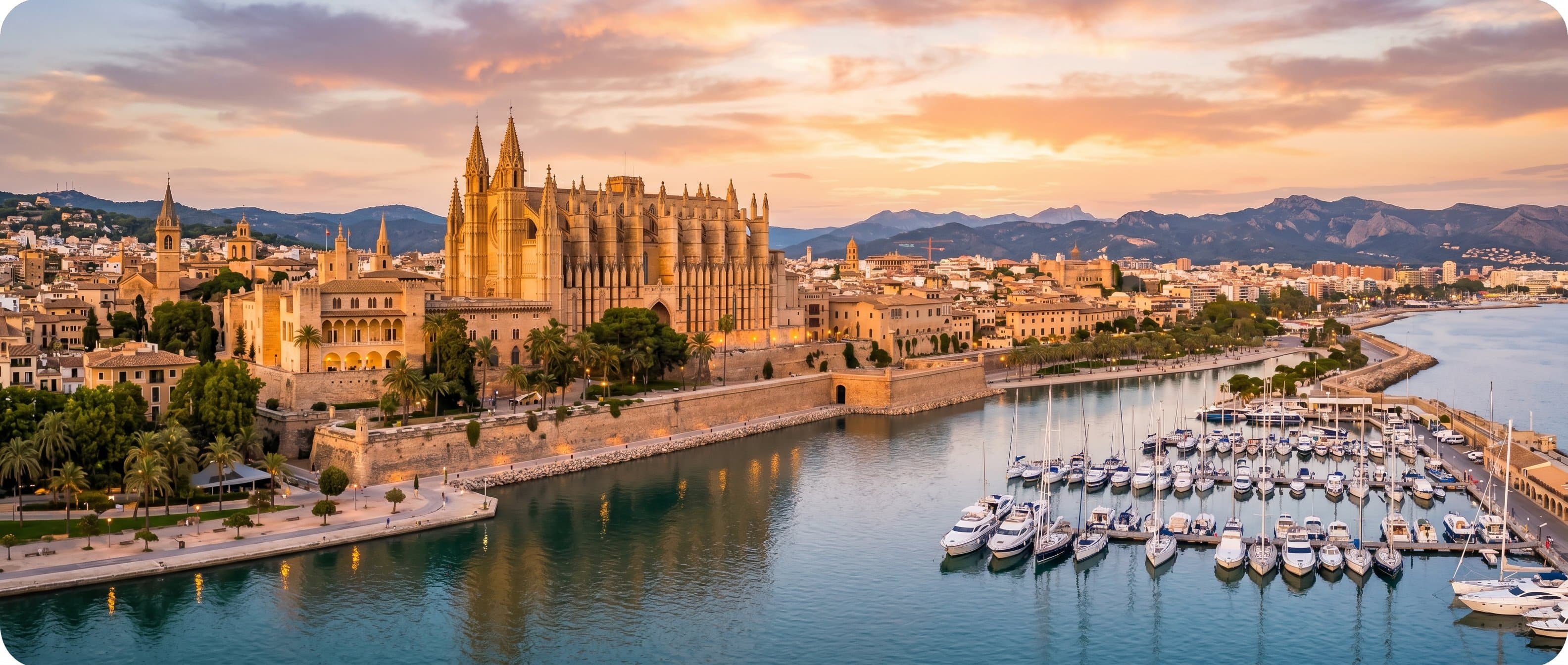
1. Palma Cathedral (La Seu): A sandstone masterpiece of Gothic architecture sitting directly on the waterfront. Its massive rose window casts stunning colourful shadows across the nave. Opening: 10:00 AM - 5:15 PM (varies by season). Cost: €10. Best Time: 10:00 AM. Insider Tip: Book skip-the-line tickets online to avoid the brutal morning queues.
2. Castell de Bellver: One of the few circular castles in Europe, offering 360-degree views of Palma Bay. Opening: 10:00 AM - 6:00 PM (closed Mondays). Cost: €4 (Free on Sundays). Best Time: Late afternoon. Insider Tip: Walk up through the surrounding pine forest rather than taking a taxi; the trail is beautiful.
3. Serra de Tramuntana & Sa Calobra: A UNESCO World Heritage mountain range featuring the terrifyingly winding Sa Calobra road. Opening: 24/7. Cost: Free. Best Time: Early morning before the cyclist pelotons arrive. Insider Tip: The road has 26 hairpin bends; if you are an inexperienced driver, take the ferry from Port de Sóller instead.
4. Cap de Formentor: The northernmost point of the island, where sheer cliffs drop into the sea. Opening: Restricted driving hours in summer (10 AM - 10:30 PM). Cost: Free. Best Time: Sunset. Insider Tip: During summer, you MUST take the shuttle bus from Port de Pollença; private cars face massive fines during restricted hours.
5. Cuevas del Drach (Dragon Caves): A spectacular underground cave system featuring Lake Martel, one of the largest subterranean lakes in the world. Opening: 10:00 AM - 5:00 PM. Cost: €17.50 online. Best Time: First tour of the day. Insider Tip: Sit at the very front during the classical music concert on the lake for the best acoustics.
6. Alcúdia Old Town: An impeccably preserved medieval town surrounded by 14th-century walls. Opening: 24/7. Cost: Free. Best Time: Tuesday or Sunday mornings. Insider Tip: Visit during the market days (Tues/Sun) to buy incredible local cured meats directly from farmers.
7. Ferrocarril de Sóller: A vintage 1912 wooden train that chugs through the mountains from Palma to Sóller. Opening: Departures daily from 10:30 AM. Cost: €28 return. Best Time: First train out. Insider Tip: Sit on the left side of the carriage departing Palma for the best valley views.
Local Food & Dining
Mallorcan cuisine is a robust, peasant-style gastronomy rooted in pork, almonds, olive oil, and seasonal vegetables. You must try an Ensaimada, a spiral pastry dusted in icing sugar made with pork lard (saïm); it is the island's culinary icon. Sobrassada is a raw, cured sausage made from ground pork, paprika, and spices, typically spread on toasted local bread. For a heartier meal, order Tumbet, a traditional vegetable dish similar to ratatouille, featuring layers of fried aubergine, potatoes, and red bell peppers topped with tomato sauce. Note for vegetarians: Traditional Mallorcan food is extremely meat-heavy, even dishes that appear vegetarian often use pork fat as a base.
For fine dining, Marc Fosh in Palma offers accessible Michelin-starred tasting menus. For an authentic mid-range experience, Celler Sa Premsa serves massive portions of traditional stews amongst giant wine barrels. For budget/street food, grab fresh oysters and jamón ibérico at the bustling Mercat de l'Olivar.
Safety & Emergency Contacts
Mallorca is exceptionally safe, with violent crime against tourists being exceedingly rare. However, the island is heavily targeted by professional pickpockets, particularly around the Cathedral, the intermodal bus station, and the weekend markets. Do not leave bags unattended on the beach, and avoid wandering alone highly intoxicated through the Magaluf or El Arenal areas at night, as petty theft is common. Dehydration and heatstroke are the most common medical emergencies for hikers; always carry 3 litres of water into the Tramuntana.
Should you face an emergency, dial 112 for the pan-European emergency dispatch. The world-class Hospital Son Espases in Palma handles all major trauma and severe medical emergencies, offering English-speaking liaison staff.
Useful Apps & Resources
Your smartphone is your best tool for navigating the island efficiently. The MobiPalma app is absolutely essential for tracking urban buses and finding public parking. Cabify is the primary ride-hailing app, operating much like Uber (which has a very limited presence). Use AEMET for the most accurate, hyper-local weather forecasting—crucial before mountain hikes. TheFork is brilliant for booking tables at in-demand restaurants and often provides 30% discounts. Finally, download Maps.me and cache the island map for offline use, as mobile data frequently drops out in the Tramuntana valleys.
Closing
Mallorca is an island that rewards the curious. Step away from the all-inclusive resorts, hike the ancient dry-stone terraces, eat in century-old cellers, and swim in calas only accessible by foot. The balmy Mediterranean breeze and the scent of wild rosemary await you. Ready to start planning? Dive deeper into our travel guides and let travelnexusworld.com be your compass for your 2026 adventures.
FAQ
- Is Mallorca safe for tourists? Yes, exceptionally safe. The main risks are heatstroke during summer hikes and petty pickpocketing in crowded markets in Palma.
- What is the best time to visit Mallorca? Late September and October offer the perfect balance of warm sea temperatures, fewer crowds, and lower prices.
- How many days do I need in Mallorca? A minimum of 7 days is recommended to split your time between exploring Palma, hiking the Tramuntana, and relaxing on the eastern calas.
- Do I need a visa to visit Mallorca? From 2025/2026, UK, US, and UAE citizens need an ETIAS waiver (€7). EU citizens have free movement. Indian citizens require a Schengen Visa.
- What is the local currency and can I use credit cards? The currency is the Euro (€). Credit and debit cards are widely accepted everywhere via contactless, but you should carry about €50 in cash for rural mountain bakeries and small purchases.