
Introduction
There is a saying in Spain: 'Quien no ha visto Sevilla, no ha visto maravilla' (He who has not seen Seville has not seen a marvel). As we move into 2026, Seville remains an essential destination for the internationally minded, digitally savvy backpacker. While other European capitals struggle with overtourism and skyrocketing prices, Seville has consciously evolved, pedestrianising its historic centre and expanding its cycle networks without losing its soul. It offers the holy grail of travel: profound historical depth, a vibrant, authentic street life, and remarkable affordability. The compelling reason to visit right now? Seville's newly revitalised Triana district, where historic ceramic workshops have been transformed into dynamic creative spaces and independent tapas bars that refuse to compromise on tradition. It's the perfect sweet spot between cultural preservation and modern backpacker infrastructure.
Best Time to Visit
Timing your visit to Seville is absolutely critical. The city is nicknamed the 'Frying Pan of Europe' for good reason. For backpackers aged 28-55 looking to maximise outdoor exploration, the sweet spot is late April to May, or late September to October. During these windows, you avoid the brutal summer sun while enjoying long, balmy evenings perfect for hopping between tapas bars. If you visit in April, you may overlap with the world-famous Feria de Abril or Semana Santa, though be prepared for higher accommodation prices and intense crowds. If you want a budget-friendly option without the heatstroke, November offers crisp days, fewer tourists, and excellent value for money.
Travel Planning & Booking
Seville's San Pablo Airport (SVQ) is well-connected, but smart travellers often fly into Madrid or Malaga and take the high-speed AVE train. For 2026, airlines like Ryanair, Vueling, and EasyJet dominate the budget flight routes from major hubs like London, Paris, and Rome. Booking lead times should be at least three months in advance for spring travel, but you can often find six-week lead time bargains for autumn. When booking, Skyscanner remains essential for comparing budget routes, Booking.com offers the most robust inventory of hostels and mid-range pensions in the old town, and Omio is indispensable for securing cheaper advance train tickets across Spain.
Travel Insurance
Never skip travel insurance when visiting southern Spain. While Seville is remarkably safe, petty theft around major sites like the Cathedral is a reality. More importantly, the extreme summer heat frequently causes medical emergencies for unprepared tourists. Your cover must include medical expenses, trip cancellation (especially if travelling during the volatile spring festival season), and baggage cover. Always look for policies that cover emergency repatriation.
Packing Guide
Seville's climate dictates your wardrobe. In summer, breathable linen and cotton are non-negotiable, alongside a high-quality SPF 50 sunscreen. Culturally, Andalusians dress remarkably well; you'll want to leave the athleisure wear at home if you want to blend in at local tapas bars. When visiting the Cathedral, shoulders and knees must be covered. The one item tourists consistently over-pack? Heavy boots. Seville is flat and highly walkable; a comfortable, stylish pair of supportive trainers is all you need.
Accommodation
Seville's neighbourhoods offer distinct flavours. Barrio Santa Cruz is the historic, romantic heart, but it can feel tourist-heavy. Triana, across the river, is the authentic, gritty birthplace of flamenco. The Alameda de Hércules is the hipster, nightlife epicentre perfect for the 28-55 demographic. Always cross-check the exact location on Google Maps; the labyrinthine streets of the old town mean taxis cannot reach many front doors, requiring you to haul your backpack over cobblestones.
Getting Around Locally
The EA (Especial Aeropuerto) bus is the budget backpacker's best friend, running from SVQ to the city centre in 35 minutes for just a few euros. Locally, Seville is built for walking. For longer distances, the Sevici public bike scheme is excellent, and the city boasts a small but efficient tram line (MetroCentro). A common tourist mistake is relying on Uber for short trips within the old town—the one-way systems make walking significantly faster.
Top Tourist Attractions (Must-See)
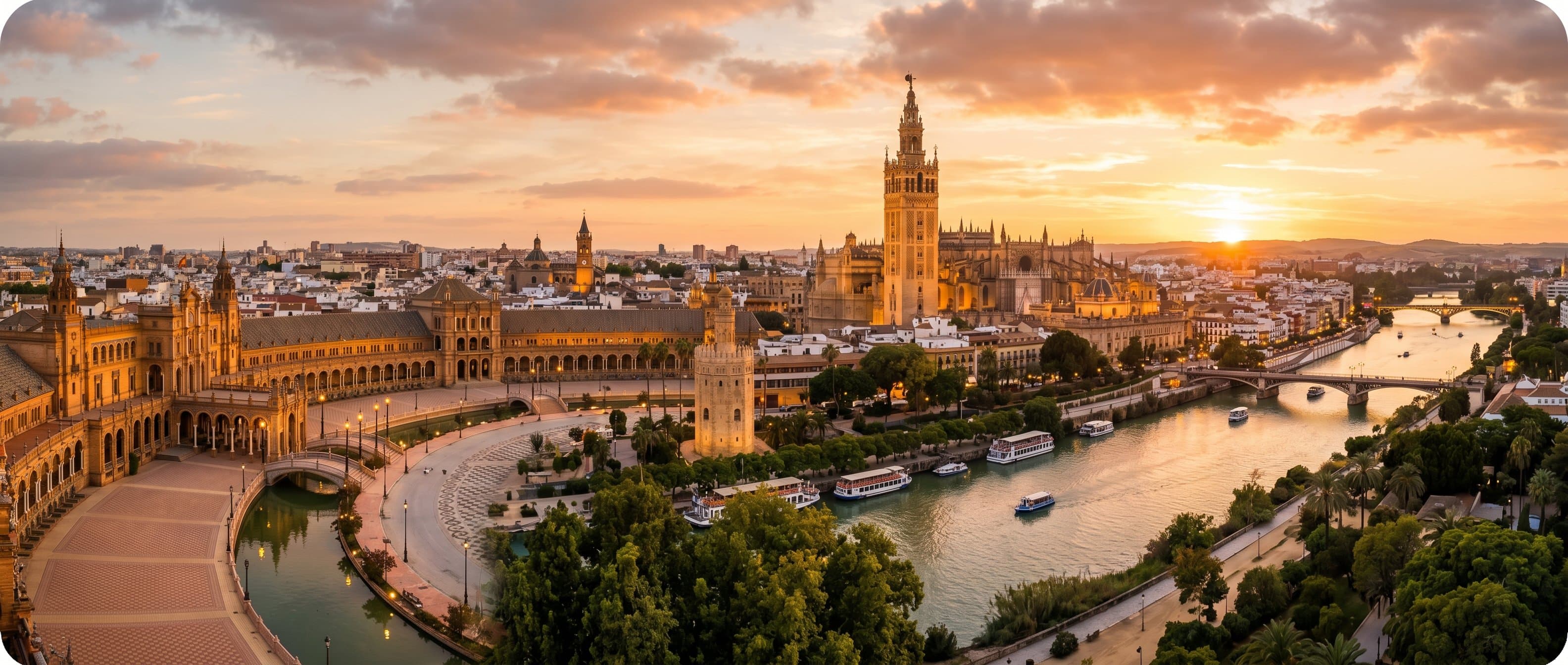
The Real Alcázar is the crown jewel, a breathtaking Moorish palace that demands booking weeks in advance. The Cathedral of Seville and La Giralda offer gothic grandeur and sweeping city views. Plaza de España is a sweeping, tiled architectural marvel best seen at golden hour. Metropol Parasol (Las Setas) provides the best sunset viewpoint in the city. The Torre del Oro stands guard over the Guadalquivir river, holding maritime history. Finally, Parque de María Luisa offers shaded respite from the midday sun.
Local Food & Dining
Andalusian cuisine is built on humble, high-quality ingredients. You must try Salmorejo (a thick, garlic-heavy cold tomato soup), Carrillada de cerdo (melt-in-the-mouth pork cheeks), and Espinacas con garbanzos (spinach with chickpeas—a Moorish legacy). Pair everything with a crisp Cruzcampo beer or a glass of dry Manzanilla sherry. Vegetarians will find Seville easier than the rest of Spain, but always specify 'sin carne ni atún' (without meat or tuna), as tuna is often considered a garnish rather than meat.
Safety & Emergency Contacts
Seville is very safe, with a low violent crime rate. However, pickpocketing is an art form around the Cathedral, the Alcázar, and on the EA Airport bus. Keep your valuables secure and avoid engaging with individuals offering 'free' rosemary sprigs in exchange for a 'donation'—it's a classic distraction scam. If you need medical help, the public Hospital Universitario Virgen del Rocío is excellent, though Quirónsalud Sagrado Corazón is often preferred by those with private international insurance due to English-speaking staff.
Useful Apps & Resources
To navigate Seville like a local, download Cabify (the preferred ride-hailing app in Spain), TUSSAM for real-time bus tracking, and TheFork (ElTenedor) for restaurant reservations and heavy discounts. Renfe is essential for train travel, and Google Translate's camera function will save you when reading handwritten tapas menus.
Closing
Seville is not just a city you visit; it's a city you feel. From the haunting cry of flamenco bleeding out of a Triana doorway to the smell of orange blossoms in the spring air, it rewards those who slow down and adapt to its rhythm. Eat late, walk everywhere, and let Andalusia work its magic. For more expertly crafted itineraries and travel hacks, continue exploring travelnexusworld.com.