
Introduction
Welcome to the ultimate Valencia travel guide 2026. If you are searching for a Spanish destination that perfectly balances rich historical tradition with striking modern innovation, Valencia deserves the top spot on your traveller's list right now. While Barcelona and Madrid grapple with overwhelming tourist numbers, Valencia remains an authentic, breathable Mediterranean haven. The single most compelling reason to visit Valencia in 2026 is its unmatched integration of urban living and green spaces—best exemplified by the Jardín del Turia, a sprawling 9-kilometre park built in a diverted riverbed that snakes right through the city centre. For the digitally savvy backpacker or mid-career nomad, Valencia offers high-speed connectivity, an exceptionally affordable cost of living, world-class gastronomy, and over 300 days of sunshine a year.
Best Time to Visit
Valencia's Mediterranean climate means it is a genuinely year-round destination, but timing your visit depends heavily on your tolerance for heat and crowds. The absolute 'sweet spot' for a backpacker or independent traveller is May or late September. During these months, the Mediterranean Sea is warm enough for swimming, the evening air is perfectly balmy, and accommodation prices drop significantly from the August peak.
If you want to experience Valencian culture at its most explosive, visit in March for Las Fallas—a UNESCO-recognised festival where the city erupts in street parties, massive satirical sculptures (ninots), and earth-shaking firework displays before burning the monuments to the ground. Be warned, though: prices triple, and you must book flights and hostels at least six months in advance. Summer (July and August) is ferociously hot and crowded; locals often flee to cooler climates, leaving the city centre to tourists. Winter (December to February) is surprisingly mild, making it an excellent time for budget-conscious digital nomads to hunker down in affordable Airbnb rentals and explore the historic sights without queuing.
Travel Planning & Booking
Reaching Valencia is easier than ever in 2026. The city is served by Valencia Airport (VLC), located just 8 kilometres from the city centre. For UK travellers, Ryanair, EasyJet, and British Airways offer direct flights from London, Manchester, and Bristol. US travellers will typically need to connect through Madrid (via Iberia or American Airlines) or fly into a major European hub like Frankfurt or Paris before catching a short-haul flight to VLC. Alternatively, the AVE high-speed train connects Madrid to Valencia in just under two hours—an incredibly efficient option.
Booking lead times vary by season. For Las Fallas (March) or the height of summer, book your accommodation 4-6 months out. For shoulder season (May, September, October), 1-2 months is sufficient. In terms of platforms, Booking.com remains the gold standard in Europe for finding boutique hostels and mid-range hotels, while Hostelworld is essential for solo backpackers looking to secure bunks in social hubs like Ruzafa. For local transport between Spanish cities, the Omio app is indispensable for comparing train, bus, and flight prices.
Travel Insurance
Never underestimate the necessity of robust travel insurance, even in a developed European nation like Spain. For Valencia specifically, coverage matters because you will likely be cycling heavily (valenbisi is everywhere), participating in water sports along Malvarrosa Beach, or navigating crowded markets where pickpocketing occasionally occurs. You need a policy that covers medical emergencies, trip cancellations (crucial if train strikes occur), baggage loss, and adventure activities. When selecting coverage, ensure it includes protection for lost electronics, as digital nomads carry expensive gear. A practical tip: Keep digital copies of your policy number and emergency contact numbers saved offline on your phone, and always get a police report (denuncia) if items are stolen, as your insurer will demand it.
Packing Guide
Valencia's weather dictates a smart, layer-focused approach to packing. In summer, breathable linens, moisture-wicking t-shirts, and reliable SPF 50 sunscreen are non-negotiable. In winter, bring a medium-weight jacket and a scarf—while days are sunny, evenings near the sea get remarkably chilly. Culturally, Spaniards dress well; ditch the oversized sweatpants if you want to blend in. For visiting religious sites like the Valencia Cathedral, ensure your shoulders and knees are covered. A specific must-bring item for Valencia is a reusable water bottle to take advantage of the numerous public fountains, saving you money and reducing plastic waste. One item tourists consistently over-pack is heavy denim—jeans are uncomfortably warm from May through September. Swap them for lightweight chinos or breathable travel trousers.
Accommodation
Choosing the right neighbourhood is critical to your Valencia experience. Ruzafa is the undisputed hipster and nightlife hub, packed with vintage shops, craft beer bars, and vegetarian cafes—perfect for younger backpackers and digital nomads. Barrio del Carmen (El Carmen) forms the historic heart of the city, characterised by winding medieval streets, street art, and proximity to major monuments; it is ideal for first-timers. Benimaclet is the student district, offering the most affordable tapas and a heavily local, bohemian vibe. When booking, double-check if your accommodation has air conditioning—it is absolutely essential from June to September, yet some budget hostels still only offer fans.
Getting Around Locally
Getting from Valencia Airport to the city centre is exceptionally straightforward. The Metrovalencia lines 3 (Red) and 5 (Green) connect the airport directly to downtown stations like Xàtiva or Colón in just 25 minutes. A single ticket costs around €4.80. Taxis are available outside arrivals, costing €25-€30 to the centre, while ride-hailing apps like Cabify operate seamlessly. Locally, Valencia is exceptionally flat and boasts over 160 kilometres of bike lanes, making cycling the best way to get around. The public Valenbisi scheme is cheap and accessible. One common tourist mistake is relying heavily on taxis; the city centre is remarkably compact, and walking or cycling is almost always faster than navigating the one-way traffic systems.
Top Tourist Attractions (Must-See)
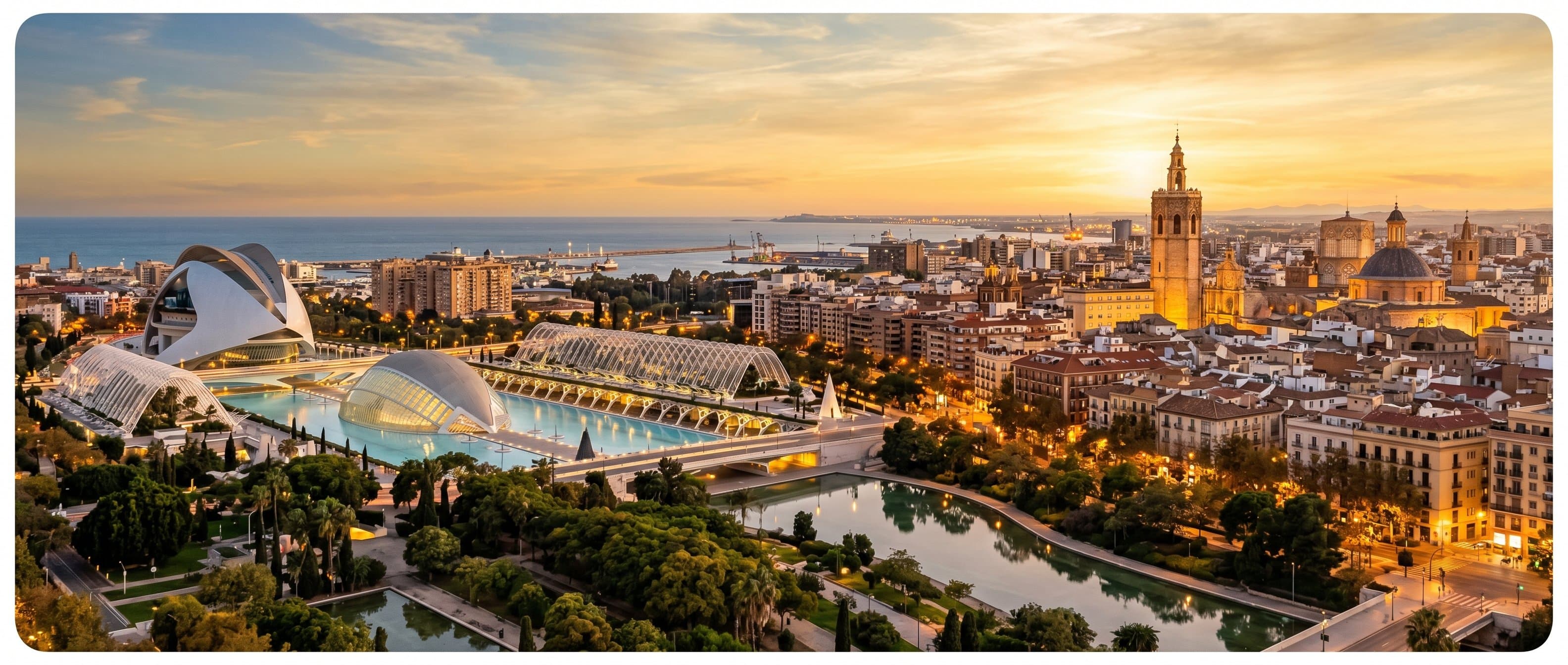
Valencia's attractions bridge the gap between ancient history and sci-fi futurescapes. The City of Arts and Sciences (Ciudad de las Artes y las Ciencias) is the crown jewel. Designed by Santiago Calatrava, this futuristic complex matters because it is an architectural marvel housing a science museum, an opera house, and the largest aquarium in Europe. Valencia Cathedral is famous for claiming to house the genuine Holy Grail; climb the Miguelete bell tower for panoramic city views. La Lonja de la Seda (The Silk Exchange) is a masterpiece of late Gothic architecture and a UNESCO World Heritage site, illustrating Valencia's historical wealth. Mercado Central is one of Europe's largest running indoor markets, a sensory overload of fresh produce, meats, and cheeses. Finally, the Jardín del Turia is a stunning 9-kilometre park that gives the city its lungs, perfect for a morning run or an afternoon picnic.
Local Food & Dining
You cannot visit Valencia without eating Paella, but you must know the rules: authentic Paella Valenciana is made with chicken, rabbit, flat green beans, and sometimes snails—not seafood. It is traditionally eaten at lunchtime, never for dinner. Another must-try is Horchata, a sweet, milky drink made from tiger nuts (chufas), traditionally dipped with sweet pastries called fartons. For an evening drink, order Agua de Valencia, a potent cocktail of cava, orange juice, vodka, and gin. For dietary requirements, vegetarians will find an incredibly welcoming scene in the Ruzafa neighbourhood, though traditional tapas bars lean heavily towards meat and seafood. Don't leave without trying Esgarraet, a traditional tapas dish of roasted red peppers, cured cod, garlic, and high-quality olive oil.
Safety & Emergency Contacts
Valencia is extremely safe, ranking consistently as one of the safest major cities in Europe. Violent crime is exceptionally rare. The primary issue for tourists is petty theft—specifically pickpocketing in crowded areas like the Mercado Central, on bus line 35 to the City of Arts and Sciences, and along Malvarrosa Beach. Never leave your phone resting on a café table. If you require emergency assistance, the general EU emergency number is 112. Valencia has excellent healthcare infrastructure; if you fall ill, large international hospitals are equipped with English-speaking staff and top-tier facilities.
Useful Apps & Resources
To navigate Valencia like a local in 2026, load your smartphone with the right tools. Cabify is the preferred ride-hailing app, often more reliable than Uber in Spain. EMT València provides live bus tracking and route planning. Valenbisi is necessary to unlock the public bicycles scattered across the city. TheFork (ElTenedor) is essential for booking restaurants and often secures you 30-50% off the food bill if booked at off-peak times. Finally, the official Visit Valencia website and app offer downloadable audio guides and the ability to purchase the Valencia Tourist Card directly.
Closing
Valencia is a city that doesn't just invite you to observe it; it begs you to live in it. Whether you are cycling through the lush Turia Gardens, debating the nuances of authentic paella with a local, or staring up at the futuristic ribs of the City of Arts and Sciences, Valencia will leave an indelible mark on your traveller's soul. For more expert guides, deep-dive itineraries, and budget tips for navigating Europe in 2026, continue exploring travelnexusworld.com. Your next great adventure is just a click away.
FAQ
Is Valencia safe for tourists? Yes, Valencia is remarkably safe. The main concern is pickpocketing in crowded tourist areas and markets, so keep your valuables secure.
What is the best time to visit Valencia? May and September offer the best balance of warm weather, lower prices, and fewer crowds compared to the sweltering peak summer months.
How many days do I need in Valencia? A minimum of 3 to 4 days is required to see the historical centre, visit the City of Arts and Sciences, and spend an afternoon at the beach.
Do I need a visa to visit Valencia? EU citizens do not. From 2025/2026, UK, US, and UAE citizens need an ETIAS waiver, while Indian citizens require a full Schengen Visa.
What is the local currency and can I use credit cards? The currency is the Euro (€). Credit and debit cards are accepted almost universally, even for small purchases, though carrying a little cash for markets is wise.