
Introduction
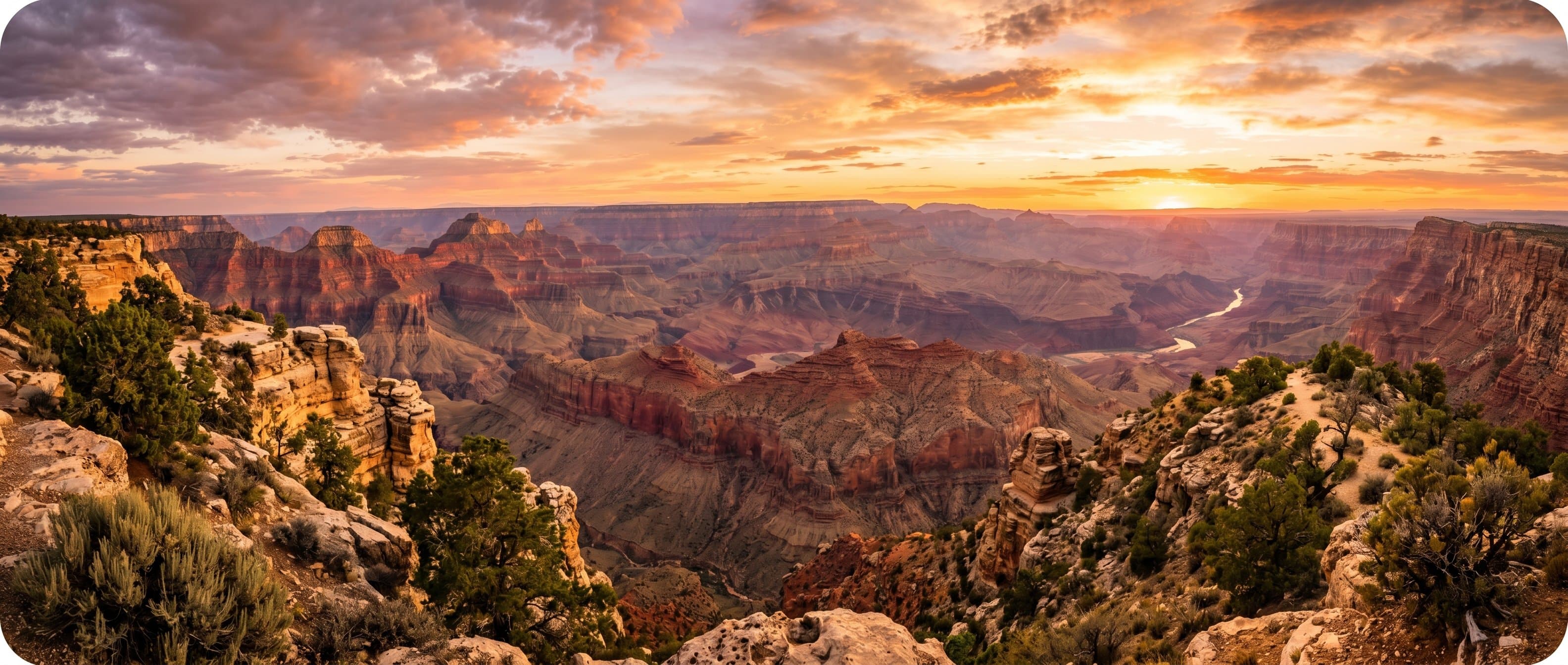
There are few places on Earth that genuinely defy description, but the Grand Canyon is undoubtedly one of them. Plunging 6,000 feet into the Earth's crust and stretching across 277 miles of dramatic, sun-baked Arizona desert, this UNESCO World Heritage site demands a place on every traveller's bucket list. For the digitally savvy backpacker in 2026, the Grand Canyon offers the ultimate antidote to screen fatigue: profound isolation, challenging trails, and the opportunity for deep nature connection. What makes the Grand Canyon uniquely compelling right now is the National Park Service's renewed commitment to sustainable tourism and dark-sky preservation, ensuring that the stargazing here remains some of the most spectacular in the Northern Hemisphere.
Best Time to Visit
Timing your visit is critical for both safety and budget. The sweet spot for backpackers is late April to mid-May, or late September to October. During these shoulder months, you avoid the blistering summer heat (where inner-canyon temperatures regularly exceed 40°C) and the freezing winter ice, whilst also bypassing peak summer crowds. Spring brings blooming desert wildflowers, whilst autumn offers crisp, clear skies ideal for hiking the Bright Angel Trail. Bear in mind that the North Rim closes entirely from mid-October to mid-May due to heavy snowfall. Key events include the Grand Canyon Star Party in June, which gathers astronomers for eight nights of celestial observation.
Travel Planning & Booking
The most cost-effective and practical route for international travellers is flying into Phoenix Sky Harbor International Airport (PHX) or Las Vegas Harry Reid International Airport (LAS). British Airways offers direct flights from London Heathrow to Phoenix, whilst Delta and United provide extensive domestic connections. From Phoenix, it's a 3.5-hour drive or shuttle ride north to the South Rim. Because of post-pandemic travel surges continuing into 2026, you must book in-park accommodation and backcountry permits at least 6 months in advance. Use Recreation.gov for camping permits and shuttle tickets, Booking.com for flexible cancellations in nearby Flagstaff, and Skyscanner for flight tracking.
Visa Requirements: UK and EU nationals must secure an ESTA (Electronic System for Travel Authorization) prior to travel, allowing up to 90 days of visa-free entry. Indian and UAE nationals require a B1/B2 tourist visa, which involves an embassy interview and should be applied for at least 3-4 months prior to your intended travel dates. Always carry your physical passport, as border control checkpoints are common on the highways surrounding the park.
Travel Insurance
Travel insurance is absolutely non-negotiable for the Grand Canyon. The primary risk isn't crime; it's the environment. A helicopter medical evacuation from the bottom of the canyon can cost upwards of $20,000-30,000 out of pocket. You need a policy that explicitly covers adventure activities (including hiking below 6,000 feet) and high-altitude rescue. World Nomads is highly recommended for backpackers due to its comprehensive adventure sports cover. SafetyWing offers excellent rolling monthly policies for digital nomads, whilst Allianz is superb for high-value trip cancellation protection. Practical tip: Ensure your policy includes 'Search and Rescue' (SAR) cover, as standard medical evacuation often only kicks in once you reach a hospital.
Packing Guide
The Grand Canyon is an environment of extremes. In a single day, you might experience sub-zero temperatures at the rim at dawn and scorching 35°C heat at the canyon floor by noon. Climate-specific checklist: moisture-wicking base layers, a lightweight fleece, a packable windproof jacket, zip-off hiking trousers, and sturdy, broken-in hiking boots. You must bring a dedicated hydration system (minimum 3-litre capacity), electrolyte tablets, and a wide-brimmed hat. Cultural note: When visiting the nearby Navajo Nation or Hopi Reservation, modest dress (covering shoulders and knees) is expected. What tourists over-pack: Heavy denim jeans. They are useless for hiking, take days to dry, and offer zero protection against the fierce Arizona sun or sudden evening chills.
Accommodation
Staying directly inside the park (Grand Canyon Village) is expensive but saves hours of driving. For budget backpackers, the best approach is camping or staying in nearby hub towns. Luxury: El Tovar Hotel, situated directly on the canyon rim, offering historic grandeur and unbeatable sunrise access. Mid-range: Yavapai Lodge, located in the woodland half a mile from the rim, offering practical amenities and easy access to the shuttle system. Boutique/Budget: Grand Canyon International Hostel in Flagstaff. Although a 90-minute drive from the park, it provides a vibrant backpacker community, affordable dorms, and daily organised shuttles to the South Rim. Booking tip: If in-park lodges are full, check the Xanterra booking portal daily at 7:00 AM MST for last-minute cancellations.
Getting Around Locally
If arriving via Phoenix or Las Vegas, renting a car is the standard choice, but budget backpackers can use Groome Transportation shuttles to reach Flagstaff, then connect to the South Rim via the Arizona Shuttle. Once inside the Grand Canyon Village, leave the car behind. The National Park Service operates a brilliant, free shuttle bus system (Blue, Red, Orange, and Purple routes) that connects all major trailheads, lodges, and viewpoints. Recommended apps: Download the official NPS App for offline maps and real-time shuttle tracking. Common tourist mistake: Trying to drive Hermit Road during summer. It is closed to private vehicles from March to November; you must use the Red Route shuttle or rent a bicycle.
Top Tourist Attractions (Must-See)
- Bright Angel Trail: The quintessential canyon hike. Descend to the 1.5-mile or 3-mile resthouses for mind-bending perspective. (Open 24/7; National Park Entry $35/vehicle or $20/pedestrian; Best at 6:00 AM. Insider tip: Do not attempt to hike to the river and back in one day.)
- South Kaibab Trail to Ooh Aah Point: Offers un-obscured, panoramic views because it follows a ridge line rather than a side canyon. (Open 24/7; Park Entry fee applies; Best at sunrise. Insider tip: There is no water on this trail; carry your own.)
- Desert View Watchtower: A historic 70-foot stone tower designed by Mary Colter in 1932, reflecting Ancestral Puebloan architecture. (Open 8:00 AM - 6:00 PM; Free with park entry; Best at late afternoon. Insider tip: The ground floor offers unique indigenous art and cultural demonstrations.)
- Hopi Point: The ultimate sunset viewing location along Hermit Road. (Open 24/7; Accessible via Red Shuttle; Best at dusk. Insider tip: Walk west to Mohave Point after sunset to avoid the massive shuttle queue.)
- Yavapai Geology Museum: The best place to understand the canyon's complex geological strata, featuring panoramic windows. (Open 8:00 AM - 6:00 PM; Free; Best mid-day to escape the heat. Insider tip: Use the 3D topographical map to trace your planned hiking route.)
- Mather Point: The most accessible and famous viewpoint, located right behind the main visitor centre. (Open 24/7; Free; Best at dawn. Insider tip: Walk 10 minutes east along the Rim Trail to find entirely empty viewpoints away from the tour bus crowds.)
Local Food & Dining
Whilst no one visits the Grand Canyon strictly for the gastronomy, you must try the regional Southwestern staples. Look out for the Navajo Taco (chilli, cheese, and lettuce served on traditional fluffy frybread), Elk Chilli, Prickly Pear Margarita (made from the local cactus fruit), and Pine Nut cookies. High-end: El Tovar Dining Room offers a classic upscale atmosphere with dishes like sustainable salmon and bison ribeye. Mid-range: Arizona Steakhouse provides hearty, carb-heavy meals perfect after a long hike, right on the rim. Street food/Market: Stop by the Cameron Trading Post (just east of the park) for authentic and affordable Navajo frybread. Dietary note: Vegan options are sparse within the park; stock up on high-protein plant-based snacks at the Flagstaff Whole Foods before arriving.
Safety & Emergency Contacts
The Grand Canyon is generally very safe regarding crime, but the environmental hazards are extreme. The main dangers are heat exhaustion, hyponatremia (water intoxication/loss of salt), and falling from the rim while taking photographs. Always stay at least six feet from the edge. Never approach elk or squirrels, as both can be highly aggressive and carry diseases.
LOCAL EMERGENCY NUMBERS:
- Police/Fire/Ambulance: 911
- National Park Service Dispatch (Tourist Police/Rangers): +1-928-638-7805
- National Emergency: 911
- UK Consulate General (Los Angeles, covering AZ): +1-310-481-0031. 2029 Century Park E #1350, Los Angeles, CA 90067.
- US Passport Agency (For US Citizens in emergency): +1-877-487-2778. Western Passport Center, 7373 E Rosewood St, Tucson, AZ 85710.
- Consulate General of India (San Francisco, covering AZ): +1-415-668-0662. 540 Arguello Blvd, San Francisco, CA 94118.
- UAE Consulate General (Los Angeles, covering AZ): +1-310-551-6534. 1999 Avenue of the Stars #1250, Los Angeles, CA 90067.
Useful Apps & Resources
Cell service is notoriously patchy inside the park, so download these beforehand. 1. NPS App: The official park app, download the Grand Canyon section for offline maps and shuttle times. 2. Recreation.gov: Essential for booking permits and backcountry passes. 3. AllTrails: Crucial for downloading offline topographic maps of the inner canyon trails. 4. Just Ahead: A GPS-based audio tour that acts as a personal guide while driving. 5. Grand Canyon Conservancy App: Offers deep dives into geology, history, and indigenous culture. For official updates, visit the National Park Service website: www.nps.gov/grca.
Closing
The Grand Canyon is a destination that will humble you, exhaust you, and ultimately leave you in awe. Whether you're watching the red rocks turn to gold at sunrise or pushing your limits on the Bright Angel Trail, a trip here in 2026 is an essential rite of passage for any serious backpacker. Pack wisely, respect the raw power of the environment, and prepare for the adventure of a lifetime. For more expert backpacking guides and in-depth itineraries across the United States and beyond, explore more at ainexusworld.com.
FAQ
- Is Grand Canyon safe for tourists? Yes, from a crime perspective it is incredibly safe. The real danger lies in the harsh environment—heatstroke, dehydration, and falls are the primary risks. Always follow NPS guidelines.
- What is the best time to visit Grand Canyon? April/May and September/October offer the best balance of moderate temperatures, accessible trails, and manageable crowd levels.
- How many days do I need in Grand Canyon? A minimum of 3 days is recommended. This allows one day for rim views and sunset, one day for a strenuous inner-canyon hike, and one day for historic sites and recovery.
- Do I need a visa to visit Grand Canyon? As it is located in the United States, international visitors need either an ESTA (UK/EU citizens) or a standard US B1/B2 Tourist Visa (India/UAE citizens).
- What is the local currency and can I use credit cards? The currency is the US Dollar (USD). Credit cards (Visa/Mastercard) are accepted almost everywhere inside the park, but carry small bills for shuttle drivers and tribal craft vendors.