
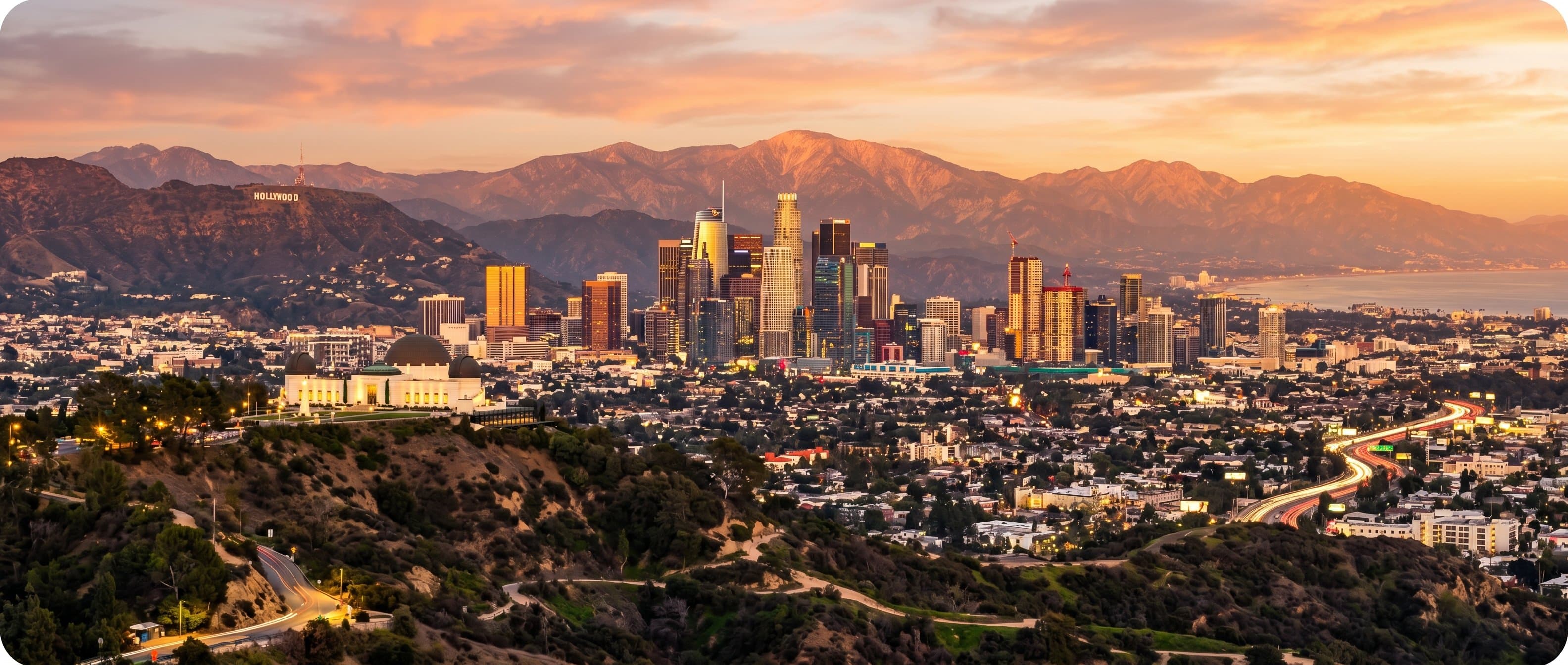
The Ultimate Los Angeles Travel Guide 2026: Everything You Need to Know
Introduction
Los Angeles often evokes images of gridlocked freeways and exclusive Hollywood velvet ropes. Yet, for the internationally minded, digitally savvy traveller of 2026, the real Los Angeles is undergoing a renaissance of accessibility and culture. Driven by major public transport expansions leading up to the 2028 Olympics, the city has never been easier for budget backpackers to explore. The compelling reason to visit LA right now? The breathtaking culinary explosion happening in its street food scene and revitalised neighbourhoods like the Arts District and Silver Lake. You don't need a sports car or a massive budget to experience the authentic heartbeat of this city—just a TAP card, a healthy appetite, and a sense of adventure.
Best Time to Visit
Los Angeles boasts famously agreeable weather year-round, but understanding its micro-seasons is crucial for a successful trip. The 'sweet spot' for a budget-conscious backpacker is mid-September to late October. During these months, the intense summer heat subsides, the notorious 'June Gloom' (a marine layer that keeps mornings grey from May to early July) is gone, and the summer tourist hordes have returned to work and school, driving accommodation prices down. You will also catch the tail-end of outdoor cinema seasons and local harvest festivals like the Original Farmers Market Fall Festival. Spring (March to May) is another excellent window, offering vibrant wildflower blooms in the nearby state parks, though you risk elevated prices around Easter and spring break.
Travel Planning & Booking
Flying into Los Angeles International Airport (LAX) remains the most common entry point. The best flight routes from the UK are direct flights from London Heathrow via British Airways or Virgin Atlantic, whilst budget travellers can often find cheaper one-stop routes via Icelandair or JetBlue. For optimal pricing, aim to book your flights three to four months in advance.
For booking your trip, utilise Skyscanner to track flight price drops over a month-long period. Booking.com is exceptionally useful for finding mid-range boutique hotels and established hostels with flexible cancellation policies, while Hostelworld remains indispensable for targeting backpacker-specific digs in Venice Beach or Downtown LA (DTLA).
Visa Requirements for 2026: UK and EU nationals generally require an ESTA under the Visa Waiver Programme, allowing stays of up to 90 days. This must be applied for at least 72 hours before departure. US nationals obviously require no visa. Indian and UAE nationals require a B1/B2 tourist visa, a process that mandates an embassy interview and can take months to secure, so plan well in advance. Your entry documentation checklist should include a passport valid for six months beyond your stay, proof of onward travel, and a printed copy of your first night’s accommodation.
Travel Insurance
Healthcare in the United States is notoriously expensive. A minor accident or a sudden illness in Los Angeles can result in bills running into the tens of thousands of dollars. Therefore, comprehensive travel insurance is non-negotiable. Look for policies offering a minimum of $2 million in medical cover, alongside trip cancellation, baggage loss, and specific cover if you plan on undertaking adventure activities like surfing in Malibu or hiking the rugged trails of the San Gabriel Mountains.
Top 3 Providers:
- World Nomads: Designed specifically for adventurous backpackers, offering flexible cover you can buy or extend while already on the road.
- SafetyWing: Ideal for digital nomads on extended trips, operating on a highly affordable, subscription-based model.
- Allianz Travel: Offers robust, comprehensive plans with excellent customer service and high medical evacuation limits.
Practical Tip: Always keep a digital copy of your insurance policy on your phone and a printed copy in your daypack. US hospitals will often ask for insurance details immediately upon admission.
Packing Guide
Los Angeles is characterised by microclimates. You might be sweltering in the San Fernando Valley and shivering by the time you reach Santa Monica. Therefore, layers are your best friend. Pack breathable cotton or linen for the day, but always carry a light fleece or denim jacket for the evening marine chill.
Must-bring items: A high-quality, reef-safe sunscreen (the Californian sun is deceivingly strong), a reusable water bottle to stay hydrated (tap water is safe to drink), and comfortable, worn-in walking shoes. Despite the car culture, you will walk heavily in neighbourhoods or museums.
Cultural dress considerations: Los Angeles is incredibly casual. 'Smart casual' here often just means a clean pair of trainers and dark jeans. You rarely need formal wear unless visiting a highly exclusive fine-dining establishment or a specific members' club.
What tourists over-pack: Heavy winter coats. Unless you are heading up to the local mountains for snow sports in winter, a medium-weight jacket over a jumper is the absolute maximum you'll need, even in January.
Accommodation
Choosing where to stay dictates your entire LA experience. The city is vast, so pick a base near the activities you value most.
- Downtown LA (DTLA): Best for architecture, world-class dining, and excellent transit links.
- Silver Lake / Echo Park: Best for hipster cafes, indie music venues, and vintage shopping.
- Venice / Santa Monica: Best for beach access, active lifestyles, and backpacker hubs.
Luxury Pick: The Beverly Hills Hotel. Even if just for a cocktail at the Polo Lounge, this iconic pink palace offers unapologetic Old Hollywood glamour. Mid-Range Pick: The Hoxton, Downtown LA. Located in a beautifully restored historic building, offering chic, compact rooms and a stunning rooftop pool. Boutique/Unique Pick: Freehand Los Angeles. A high-end hostel/hotel hybrid in DTLA that perfectly bridges the gap between boutique hotel and backpacker social hub, featuring the award-winning Broken Shaker rooftop bar.
Booking Tip: Accommodation taxes in LA add around 14-15% to your final bill. Ensure the platform you are using includes taxes in its initial display to avoid a nasty shock at checkout.
Getting Around Locally
The days of absolutely needing a car in LA are fading. From LAX, the absolute best budget option is the FlyAway Bus ($9.75), which provides direct service to Union Station in DTLA or Van Nuys. Taxis and ride-shares (Uber/Lyft) from LAX now require a shuttle ride to the 'LAX-it' lot and will cost between $40-$70 depending on traffic and destination.
For local transit, the LA Metro system (light rail and subway) has vastly improved with the Regional Connector. It costs $1.75 per ride. The E Line now connects East LA straight through to Santa Monica, making beach trips from downtown seamless. Download the Transit App for real-time tracking.
Common Tourist Mistake: Underestimating travel times. A 10-mile journey can take 15 minutes at midnight or 75 minutes at 5:00 PM. Always check Google Maps for real-time traffic before departing.
Top Tourist Attractions (Must-See)
1. Griffith Observatory
Why it matters: Offers the best panoramic views of the LA basin and the Hollywood Sign, plus fascinating astronomical exhibits.
Opening Hours: Tue-Fri 12:00 PM - 10:00 PM; Sat-Sun 10:00 PM - 10:00 PM. Closed Mondays.
Entry Cost: Free (Planetarium shows $10, Parking $10/hour).
Best Time: Late afternoon to watch the sunset and the city lights turn on.
Insider Tip: Skip the expensive parking by taking the DASH Observatory bus from the Vermont/Sunset Metro station for just 50 cents.
2. The Getty Center
Why it matters: A billion-dollar architectural marvel housing incredible European art, set amongst stunning gardens overlooking the city.
Opening Hours: Tue-Sun 10:00 AM - 5:30 PM (Saturdays until 8:00 PM).
Entry Cost: Free, but requires a timed-entry reservation. Parking is $25 ($15 after 3 PM).
Best Time: Early morning for fewer crowds, or after 3 PM for discounted parking.
Insider Tip: Pack a picnic! The central garden is one of the few places at the museum where you are encouraged to sit on the grass and eat your own food.
3. Los Angeles County Museum of Art (LACMA)
Why it matters: The largest art museum in the western US, famous for the 'Urban Light' installation.
Opening Hours: Mon, Tue, Thu 11:00 AM - 6:00 PM; Fri 11:00 AM - 8:00 PM; Sat-Sun 10:00 AM - 7:00 PM. Closed Wednesdays.
Entry Cost: $25 for adults.
Best Time: Weekday mornings.
Insider Tip: The Urban Light installation is outside and free to visit 24/7. It is best photographed at dusk.
4. Santa Monica Pier & Venice Boardwalk
Why it matters: The quintessential Southern California beach experience, blending historic amusement rides with Venice's eclectic street culture.
Opening Hours: 24/7 (Amusement park hours vary, typically 11:00 AM - 9:00 PM).
Entry Cost: Free to walk.
Best Time: Early morning to avoid the intense midday crowds.
Insider Tip: Rent a bicycle and ride the Marvin Braude Bike Trail (The Strand) between Santa Monica and Venice rather than walking the whole way.
5. Grand Central Market
Why it matters: A historic food hall operating since 1917, representing the diverse culinary fabric of Los Angeles.
Opening Hours: Daily 8:00 AM - 9:00 PM.
Entry Cost: Free entry, food prices vary.
Best Time: 11:30 AM before the massive lunch rush hits.
Insider Tip: Grab a pupusa from Sarita's Pupuseria, then head to the back to ride the historic Angels Flight funicular railway across the street.
6. The Academy Museum of Motion Pictures
Why it matters: The definitive museum dedicated to the art, science, and history of moviemaking.
Opening Hours: Sun-Thu 10:00 AM - 6:00 PM; Fri-Sat 10:00 AM - 8:00 PM.
Entry Cost: $25 adults.
Best Time: Weekday afternoons.
Insider Tip: The rooftop terrace on the sphere building is free to access and offers spectacular, unobstructed views of the Hollywood Hills.
Local Food & Dining
The soul of LA is in its food. Do not leave without trying Al Pastor Tacos (shaved pork from a vertical spit, typically served with pineapple), a French Dip Sandwich (invented in LA), Korean BBQ in Koreatown, and a fresh California Sushi Roll.
- High-End: Providence. Located on Melrose Avenue, this two-Michelin-star restaurant offers an unparalleled, sustainable seafood tasting menu. It's a massive splurge but an unforgettable culinary journey.
- Mid-Range: Republique. Set in a stunning historic building originally built for Charlie Chaplin, this vibrant spot serves phenomenal French-inspired California fare. The weekend brunch is legendary.
- Street Food: Leo's Tacos Truck (La Brea & Venice Blvd location). The undisputed king of the Al Pastor taco in LA. Expect a queue, but it moves quickly.
Dietary Note: Los Angeles is arguably the most vegan/vegetarian-friendly city on earth. Almost every restaurant, from food trucks to fine dining, offers substantial, high-quality plant-based options.
Safety & Emergency Contacts
Los Angeles is generally safe for tourists, provided you exercise standard urban common sense. The violent crime rate affecting tourists is low, but property crime (like smash-and-grabs from parked cars) is common. Never leave visible luggage or valuables in a parked car. Be cautious in the Skid Row area of DTLA, which faces a severe homelessness crisis and can be overwhelming and unpredictable, particularly at night.
Local Emergency Numbers:
- Police, Ambulance, Fire (National Emergency): 911
- LAPD Non-Emergency (Tourist Police equivalent): 1-877-275-5273 (1-877-ASK-LAPD)
Nearest International Hospital: Cedars-Sinai Medical Center, 8700 Beverly Blvd, Los Angeles, CA 90048 (+1 310-423-3277).
Embassy & Consulate Contacts:
- British Consulate General: 2049 Century Park E # 3100, Los Angeles, CA 90067. (+1 310-789-0031)
- Consulate General of India: 4300 Wilshire Blvd, Los Angeles, CA 90010. (+1 323-938-1414)
- US Citizens (Passport Emergency): Los Angeles Passport Agency, 11000 Wilshire Blvd Suite 1000. (+1 877-487-2778)
Useful Apps & Resources
To navigate 2026 LA effectively, your smartphone needs these tools:
- Uber / Lyft: Essential for point-to-point journeys where public transit fails.
- Transit App: The most accurate real-time tracker for the LA Metro bus and rail network.
- Citizen: Provides real-time safety alerts and incident reporting based on your location.
- Yelp: Still the most widely used review platform in the US; essential for finding reliable food options.
- Google Maps: Crucial for its traffic layer to avoid rush hour bottlenecks.
Official Resource: Visit Los Angeles (www.discoverlosangeles.com) is the official tourism board, excellent for checking dates for temporary exhibitions and local festivals.
Closing
Los Angeles is not a city that hands itself to you on a silver platter; it requires a bit of digging, a sense of direction, and an open mind. But once you peel back the superficial layers of Hollywood glitz, you discover a mosaic of rich cultures, astounding food, and rugged natural beauty. Whether you are catching the sunset from the Griffith Observatory or eating a $2 taco on a street corner, LA will leave an indelible mark on you. Start planning your Californian adventure today, and for more expertly curated itineraries and travel hacks, continue exploring www.ainexusworld.com.
FAQ
Is Los Angeles safe for tourists?
Yes, generally safe. Stick to well-lit, populated areas at night, avoid walking through Skid Row in DTLA, and never leave valuables visible in rental cars.
What is the best time to visit Los Angeles?
September and October offer the best combination of warm weather, thinner crowds, and lower accommodation costs.
How many days do I need in Los Angeles?
A minimum of four full days is recommended to see the major highlights without spending your entire trip exhausted in transit.
Do I need a car to visit LA?
Not necessarily. While a car offers maximum flexibility, the expanded Metro rail lines and ride-share apps make it entirely possible to do a budget-friendly, car-free trip.
What is the tipping culture like?
Tipping in the US is mandatory in practice. Expect to leave 18-20% at sit-down restaurants, $1-$2 per drink at bars, and 15-20% for ride-share drivers and tour guides.