
Introduction
Yellowstone National Park deserves a permanent place on every intrepid traveller's bucket list right now. As we move into 2026, the park is actively refining its visitor experience to balance the surge in global tourism with vital conservation efforts, meaning the infrastructure for budget backpackers and independent explorers is better than ever. The single most compelling reason to visit Yellowstone is its status as a living, breathing supervolcano. Nowhere else on Earth can you witness half of the world's active geysers concentrated in one accessible area, juxtaposed against sweeping alpine valleys teeming with megafauna. For the digitally savvy, internationally minded backpacker, Yellowstone offers a profound digital detox. It is a place where the Wi-Fi is famously non-existent, forcing you to look up from your screen and lock eyes (from a safe distance, of course) with a roaming bison or a grizzly bear foraging in the sagebrush.
Best Time to Visit
Yellowstone's distinct seasons drastically alter the visitor experience. Winter (December to March) transforms the park into a silent, snow-covered dreamscape accessible only by snowmobile or snowcoach. Crowds are virtually non-existent, but most roads are closed. Spring (April to May) brings the thaw, gushing waterfalls, and adorable newborn wildlife, though unpredictable snowstorms and muddy trails are common. Summer (June to August) is the peak season. The weather is glorious, all roads and facilities are open, but you will share the boardwalks with millions of other tourists. Prices for accommodation and rental cars skyrocket during these months. Autumn (September to October) offers a brilliant display of golden aspens, active wildlife preparing for winter, and crisp, clear days. The undeniable 'sweet spot' for a budget backpacker is the second half of September. During this window, the Elk Rut (mating season) is in full swing, the oppressive summer crowds have dissipated, mosquito numbers have plummeted, and you can still access the entirety of the Grand Loop Road before the winter closures begin in late October.
Travel Planning & Booking
For international travellers, the most efficient route into Yellowstone is flying into Bozeman Yellowstone International Airport (BZN) in Montana or Jackson Hole Airport (JAC) in Wyoming. Major airlines like United, Delta, and British Airways (often via codeshare with American Airlines) offer seamless connections through hubs like Denver, Salt Lake City, or Chicago. If you plan to sleep under a roof inside the park, you must book a staggering 12 months in advance through Xanterra Parks & Resorts. For budget backpackers looking to camp, sites on Recreation.gov open on a rolling six-month basis and sell out within minutes. The top booking platforms for this trip include Recreation.gov (essential for securing national park campsites), Skyscanner (for tracking fluctuating flight prices into regional airports), and Turo (a car-sharing app that is often significantly cheaper than traditional rental desks in Bozeman). Visas are a crucial consideration. For 2026, UK and EU nationals must secure an ESTA (Electronic System for Travel Authorization) under the Visa Waiver Programme, costing $21. US citizens simply need a valid government-issued ID. Nationals from India and the UAE must apply for a B1/B2 tourist visa well in advance, as interview wait times can be lengthy. Always carry a printed copy of your ESTA/Visa, your America the Beautiful National Parks Pass, and proof of onward travel.
Travel Insurance
Never venture into Yellowstone without robust travel insurance. This is not a standard city break; you are entering a high-altitude wilderness fraught with unique hazards. You need specific cover for adventure activities, emergency medical evacuation (helicopter rescues are incredibly expensive in the US), and trip cancellation. Yellowstone's weather is notoriously fickle; a sudden September blizzard can close roads, forcing you to alter flights or book last-minute hotels. Outstanding providers include World Nomads, favoured for their comprehensive adventure sports cover and backpacker-friendly policies; SafetyWing, which offers brilliant flexibility for digital nomads on extended trips; and Allianz Travel Insurance, known for their rigorous medical evacuation protocols. Practical tip: Ensure your policy explicitly covers 'hiking up to 3,000 metres' and includes wildlife-related injuries, as standard city-break policies often exclude wilderness incidents.
Packing Guide
Packing for Yellowstone requires mastering the art of layering. At an average elevation of 2,400 metres, temperature swings of 20°C in a single day are entirely normal. Your checklist must include a moisture-wicking base layer, an insulating mid-layer (fleece or down jacket), and a high-quality waterproof shell. In terms of cultural dress, the American West is distinctly casual; robust hiking boots and practical outdoor gear are accepted everywhere, even in the historic Old Faithful Inn dining room. Must-bring items specific to Yellowstone include EPA-approved Bear Spray (buy or rent this locally, as you cannot fly with it), high-powered binoculars for wildlife spotting in the Lamar Valley, and a reusable water bottle to reduce plastic waste. The one item tourists consistently over-pack is formal evening wear; leave the heels and crisp blazers at home, as Yellowstone's culture is rooted entirely in outdoor practicality.
Accommodation
Securing accommodation is the biggest hurdle for Yellowstone visitors. The three best regions to base yourself are West Yellowstone (a bustling gateway town immediately outside the West Entrance, perfect for budget travellers), Canyon Village (the most central location inside the park), and Gardiner (the historic North Entrance, excellent for accessing wildlife-rich northern valleys). For a true luxury splurge, the historic Old Faithful Inn offers rustic grandeur just steps from the famous geyser. For a mid-range stay, Canyon Lodge & Cabins provides newly renovated, sustainable lodging in the heart of the park. Budget backpackers should look to the Madison Campground (book via Recreation.gov) or the West Yellowstone B&B and Hostel for an affordable bed and a kitchen to cook your own meals. Booking tip: If park lodges are full, check the Xanterra website obsessively at 30 days and 7 days prior to your arrival date; this is when major tour groups release their unsold rooms.
Getting Around Locally
Getting from Bozeman Airport (BZN) to the park centre takes about two hours. You have limited options: the Karst Stage airport shuttle ($100-$150 return), a private taxi (prohibitively expensive), or renting a vehicle. Yellowstone is aggressively car-dependent. There is absolutely no public transport or 'metro' system connecting the park's attractions. The best local transport mode is a rental car or an arranged guided tour. To navigate, download GuideAlong (formerly Gypsy Guide), a brilliant GPS-triggered audio tour app that works without mobile signal. The most common tourist mistake is underestimating driving times. The Grand Loop Road is 142 miles long, but traffic jams caused by bison crossing the road (affectionately termed 'bison jams') can easily turn a 20-mile drive into a two-hour ordeal. Always top up your fuel when the tank hits half-full.
Top Tourist Attractions (Must-See)
1. Old Faithful Geyser: The crown jewel of the park. It matters because of its incredible predictability, erupting roughly every 90 minutes. Cost: Covered by park entry ($35/vehicle or $80 annual pass). Best time: Before 9:00 AM. Insider tip: Skip the crowded benches and hike up Observation Point for a panoramic, crowd-free view of the eruption.
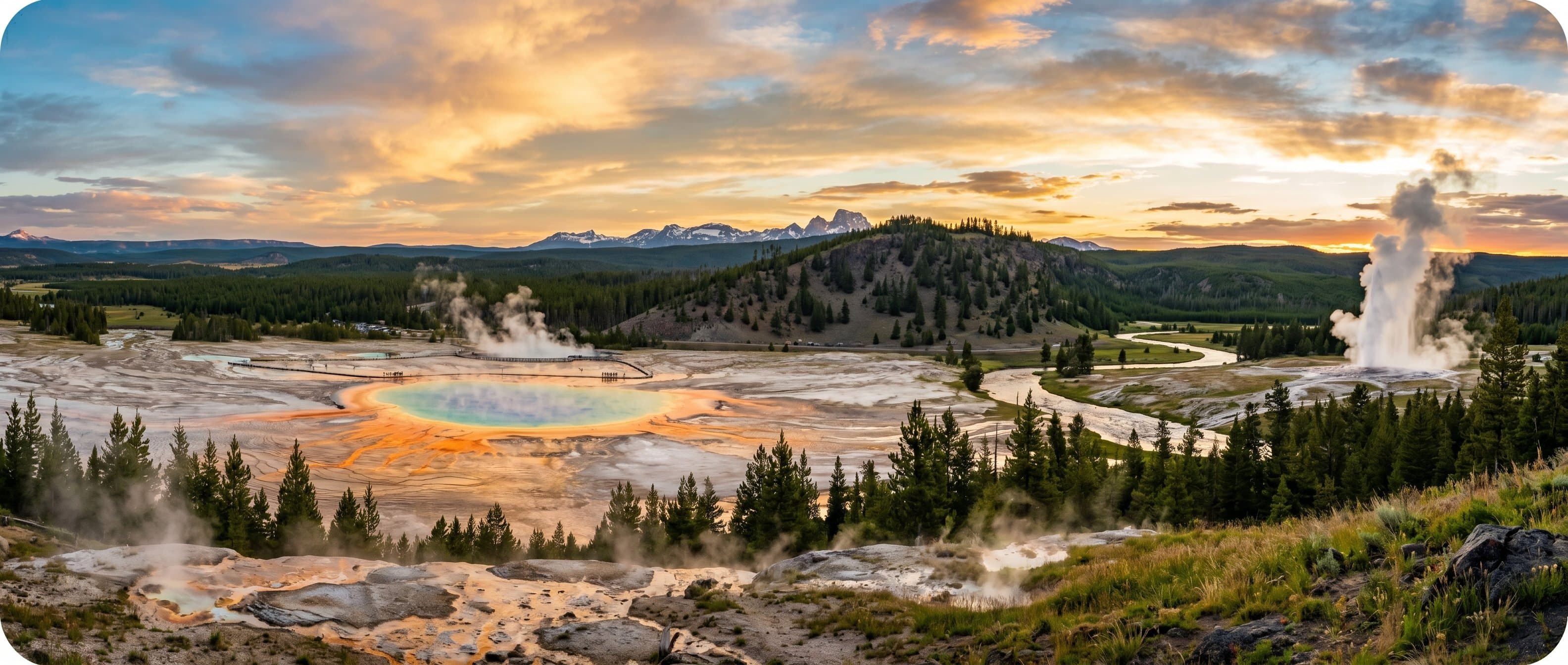
2. Grand Prismatic Spring: The largest hot spring in the US, famous for its vivid rainbow colours caused by thermophile bacteria. Cost: Free with entry. Best time: Midday, when the sun is highest to burn off the morning fog and illuminate the colours. Insider tip: The ground-level boardwalk is crowded; instead, hike the Fairy Falls trail to the Grand Prismatic Overlook for the best photographs.
3. Grand Canyon of the Yellowstone: A breathtaking 20-mile-long canyon featuring the thunderous Lower Falls. Cost: Free with entry. Best time: Early morning for optimal light. Insider tip: Take the grueling but rewarding Uncle Tom's Trail (if open) or the Brink of the Lower Falls trail to feel the immense power of the water.
4. Lamar Valley: Known as 'America's Serengeti,' this is the premier spot for wildlife viewing, particularly wolf packs and massive bison herds. Cost: Free with entry. Best time: Dawn or dusk. Insider tip: Bring a spotting scope and look for clusters of serious wildlife photographers—they usually know exactly where the wolves are hiding.
5. Mammoth Hot Springs: A complex of surreal travertine terraces that look like an inside-out cave. Cost: Free with entry. Best time: Late afternoon. Insider tip: Elk frequently graze right on the lawns of the Mammoth hotel area; keep your distance, especially during the autumn rut.
6. Hayden Valley: Another phenomenal wildlife corridor situated centrally in the park. Cost: Free with entry. Best time: Sunrise. Insider tip: This area is notorious for thick morning fog and bison jams, so factor an extra hour into your driving itinerary.
Local Food & Dining
The culinary scene in Yellowstone is functional but features some distinct regional highlights. You absolutely must try a Bison Burger, locally sourced Idaho Trout, warming Elk Chili, and anything flavoured with local Huckleberries (especially the ice cream). For a high-end dining experience, the Old Faithful Inn Dining Room offers an atmospheric, historic setting (reservations essential). A fantastic mid-range option is the Roosevelt Lodge Cookhouse, which serves hearty barbecue and cowboy-style baked beans in a rustic setting. For budget/street-food vibes, head to Ernie's Bakery and Deli in West Yellowstone to grab massive, affordable sandwiches before heading into the park. Dietary note: Vegan and vegetarian options have improved significantly across park lodges, with Beyond Meat burgers and plant-based chilis now widely available.
Safety & Emergency Contacts
Yellowstone is generally very safe from a crime perspective, but the environmental hazards are significant. The most crucial safety rule is staying strictly on the designated boardwalks in thermal areas; the crust is fragile, and the boiling acidic water below is fatal. Furthermore, you must maintain a strict distance of 100 yards (91 metres) from bears and wolves, and 25 yards (23 metres) from all other wildlife, including bison and elk. Bison may look slow, but they can sprint at 35 mph and injure dozens of tourists who try to take selfies too closely. Elevation sickness is also a risk; drink plenty of water. If you require emergency assistance, dial 911 from any phone. The park also has its own National Park Service Dispatch at +1-307-344-2228. The nearest comprehensive medical facility is Bozeman Health Deaconess Hospital (931 Highland Blvd, Bozeman, MT), though basic stabilization can occur at the Mammoth Clinic inside the park. Embassy contacts for international travellers (handling severe emergencies or lost passports) are primarily based in Washington D.C. or regional hubs like San Francisco.
Useful Apps & Resources
Since cell service is practically non-existent beyond the main villages, you must download apps for offline use before arriving. 1. NPS Yellowstone App: The official park app, essential for offline maps and predicting Old Faithful's eruption times. 2. GuideAlong: The best investment you'll make—a GPS-based audio tour that acts as a virtual tour guide in your car. 3. AllTrails: Crucial for downloading offline hiking trail maps. 4. Recreation.gov: Necessary for managing any campground reservations. 5. AccuWeather: For tracking sudden mountain storms. Your primary official resource should be the official National Park Service website: nps.gov/yell.
Closing
Yellowstone National Park is a profound reminder of the raw, untamed power of the natural world. Whether you are a budget backpacker pitching a tent under the vast Wyoming sky, or a digital nomad seeking a genuine disconnection from the modern world, this geothermal wonderland will leave an indelible mark on your soul. By planning meticulously, respecting the wildlife, and embracing the unpredictable elements, your 2026 adventure will be nothing short of legendary. Ready to start building your ultimate American road trip? Discover more expert travel guides, gear reviews, and budget hacks at www.ainexusworld.com.
FAQ
Is Yellowstone National Park safe for tourists? Yes, provided you respect nature. The primary dangers are not crime, but environmental factors. Staying on boardwalks in thermal areas and keeping a minimum of 25 to 100 yards away from wild animals ensures a safe trip.
What is the best time to visit Yellowstone National Park? September is the optimal time for budget backpackers. The brutal summer crowds thin out, the autumn colours are stunning, and the elk rut provides phenomenal wildlife viewing opportunities.
How many days do I need in Yellowstone National Park? To truly do it justice without rushing, you need 4 to 5 days. This allows you to explore the distinct upper and lower loops of the park, factoring in the slow driving speeds and inevitable wildlife traffic jams.
Do I need a visa to visit Yellowstone National Park? Yellowstone is in the United States. UK and EU citizens need an approved ESTA. Citizens from India, the UAE, and many other nations require a formal B1/B2 tourist visa, which must be secured well before booking flights.
What is the local currency and can I use credit cards? The currency is the US Dollar (USD). Credit and debit cards (Visa, Mastercard) are accepted at all park lodges, petrol stations, and visitor centres. However, it is wise to carry around $50-$100 in small bills for tipping camp hosts, buying firewood, or in case card machines go down due to internet outages.